
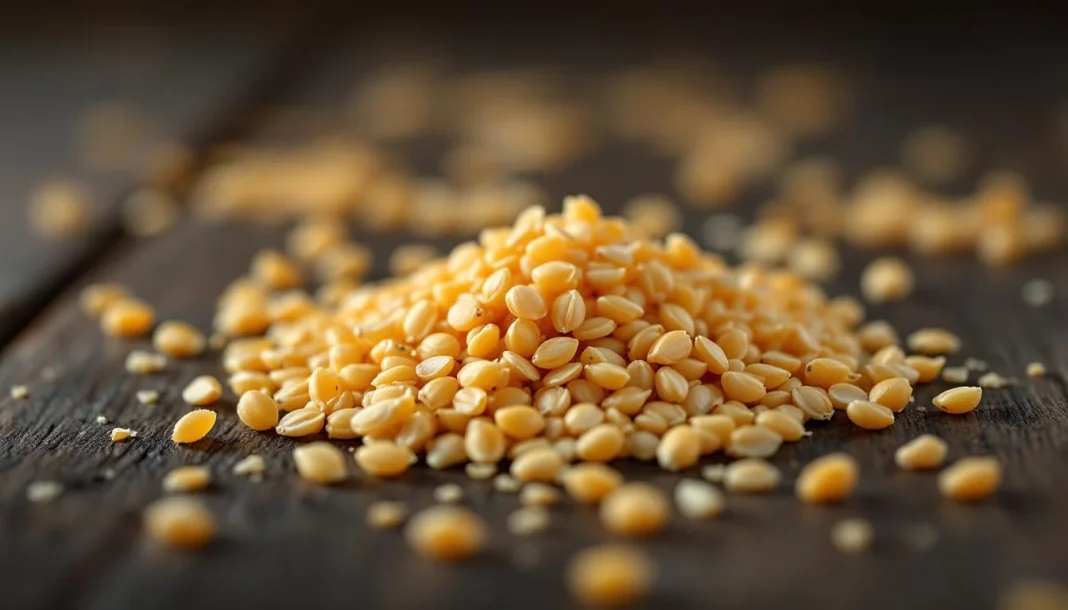
There are things we can't see, but without them, everything falls apart.
Carapils is that kind of malt. It doesn't add color. It doesn't add aroma. It doesn't leave any distinct taste on the tongue. But without it, the beer's foam dissipates as quickly as the morning sun, the body is delicate, and the sensation of drinking it slips away without a chance to hold on.
They call it "silent malt." We call it the invisible foundation.
Origin and history
Carapils originated in Germany, where the art of brewing was elevated to a precise science centuries ago. This malt was developed by the Weyermann Malting Company—a long-established malt mill located in Bamberg, Franconia region of Bavaria.
Weyermann was founded in 1879 by Johann Baptist Weyermann. By the early 20th century, the Weyermann family began experimenting with low-temperature malt caramelization techniques—not for color or flavor, but to retain the non-fermentable dextrin chains.
Carapils officially emerged as a commercial product around the mid-20th century. The original purpose was clear: to improve foam stability and mouthfeel for lighter beers like Pilsners—beers where purity of color and flavor is paramount.
The name “Carapils” combines “Cara”—from caramel, referring to the production process—and “Pils”—from Pilsner, the type of beer it was designed to serve. This name later became a registered trademark of Weyermann, although many other producers also have similar products under the names Dextrin Malt or Carafoam.
Bamberg is not only famous for its smoked Rauchbier beer. The region is also the capital of the German malt industry, with a tradition spanning over 500 years. Weyermann remains the world's largest producer of specialty malts, and Carapils is still one of their flagship products.
Throughout the 20th century, as industrial breweries needed to optimize costs while maintaining foam quality, Carapils became the standard solution. It allowed for the use of high proportions of secondary grains such as rice or corn without making the beer too "boney".
Production process
Carapils belong to the malt caramel family, but in the palest color spectrum — almost colorless.
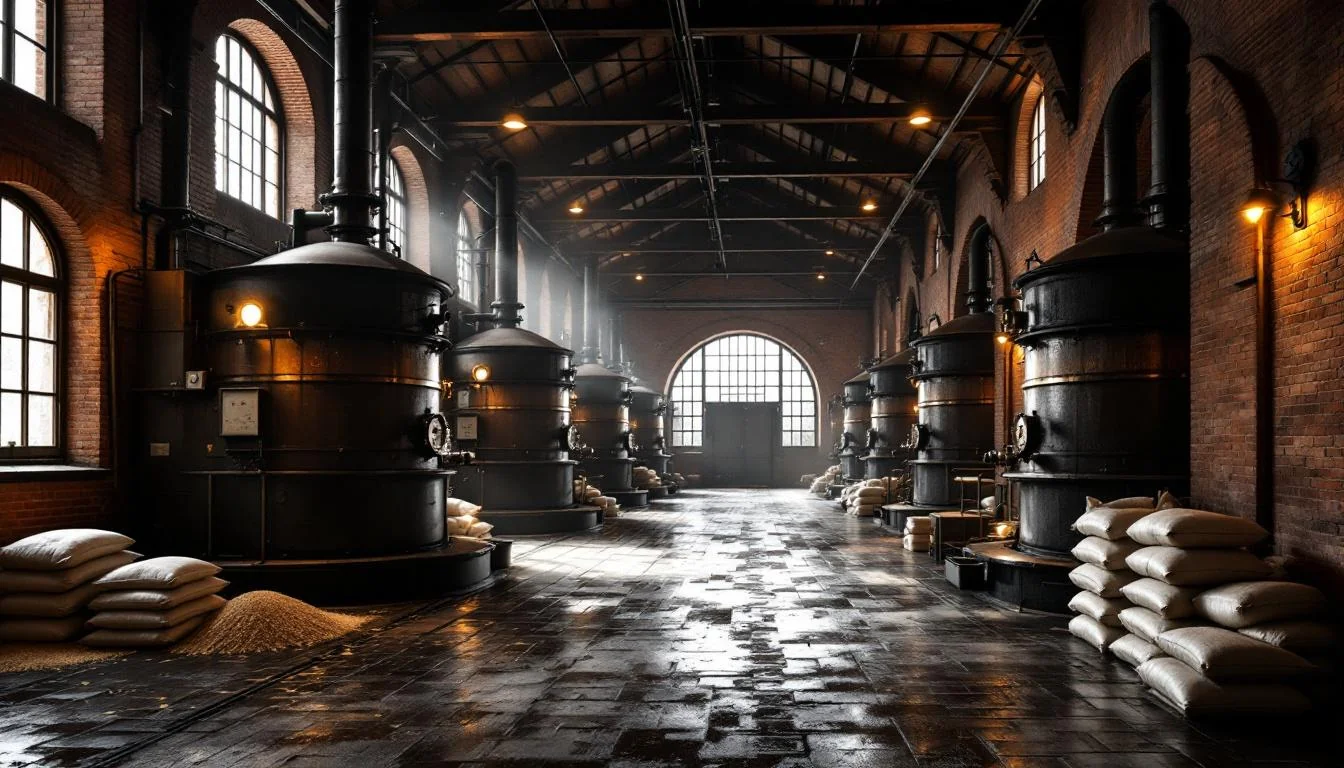
The process begins with European barley, usually a variety grown in Bavaria or neighboring regions. The grains are soaked in water and germinated like any other malt. But the difference lies in the next stage.
Instead of drying immediately after germination, green malt is placed in a special rotary oven. Here, the temperature is gradually raised from 45°C to around 65-75°C—the optimal temperature range for enzymes to convert starch into sugar. This process takes place inside the malt grain, creating simple sugars and dextrin.
Next, the temperature is raised further to 100-120°C. At this temperature, the sugars inside the grain caramelize slightly and "lock" into a glassy form. Because the temperature is not too high and the time is not too long, the Maillard reaction hardly occurs — therefore, the malt retains a very pale color.
As a result, the malt grains have a pale outer shell, and inside, sugars and dextrins have been "hardened." When brewing beer, these dextrins dissolve into the wort but are not consumed by the yeast, creating a full-bodied beer with a persistent head.
Technical specifications
Carapils is at the lightest end of the malt caramel spectrum, with a color index of 3 to 5 EBC, equivalent to approximately 1.5 to 2.5 Lovibond. At this level, it has almost no effect on the final color — a Pilsner will still retain its pure straw-yellow hue even with the use of Carapils.
Carapils' extractability ranges from 75% to 78%, lower than the malt base but still significant. More importantly, however, is the composition of that extract—largely dextrin and non-fermentable sugars, not maltose.
The protein content in Carapils is typically between 10-111 TP3T, sufficient to contribute to foam retention without clouding the beer. This is a key difference from some darker caramel malts that can produce a creamy head of foam.
The moisture content of the finished malt is below 6%, ensuring a long shelf life. Because it is caramel malt that has been completely transformed within the grain, Carapils does not require fine grinding — in fact, a slightly coarser grinding helps avoid leaching issues.
It's worth noting that Carapils are unable to convert starch themselves because the enzymes are deactivated during the heating process. They are entirely dependent on enzymes from the malt base. However, since the starch is already converted within the grain, this is not a practical issue.
Flavor and color
If we had to describe the taste of Carapils in one word, it would be "nothing".
And that's exactly what brewers need from it.
Carapils is designed to be sensoryally invisible. It doesn't carry the caramel sweetness of its Caramunich or Carahell siblings. No bread notes, no biscuit notes, nothing at all. In a glass of beer mixed with Carapils, this malt is completely silent.
But it does something else.
The mouthfeel—that's Carapils' domain. When you drink a beer made with this malt, the body is fuller, smoother. It's not sweetness, but a sense of "substance"—like the difference between plain water and lightly carbonated water. Your mouth can feel the weight of each sip.
The foam is where Carapils truly shines. The dextrins and long-chain proteins from the malt form a thin film around the bubbles, preventing them from breaking apart quickly. The smooth, white foam clings to the sides of the glass, leaving behind "Belgian lace" streaks—a hallmark of a properly brewed beer.
In terms of color, Carapils are almost transparent. Using 5-10% Carapils in a recipe doesn't create any noticeable difference in color. This is why it's preferred in lighter beers like Pilsner, Helles, or Blonde Ale—where purity is the standard.
Some brewers describe Carapils as the “liner” of a glass of beer — nobody notices it, but without it, the whole experience would be different.
Typical beer style
Carapils is the most versatile malt in the specialty category. It can be featured in almost any beer style without altering its core characteristics.
Pilsner and related lines Lager light beer Carapils are most commonly used in this type of beer. These beers have a thin body due to the use of light malt with high fermentation. Carapils add body without adding color or flavor—exactly what Pilsners need. Industrial breweries often use 3-5% Carapils to balance out the "bones" caused by the use of a lot of rice or corn.
In IPA In both dry and bitter beers, Carapils play a fundamental role. Hoppy beers often have issues with foam stability because hop compounds can disrupt the foam structure. Carapils help to balance this out. Many modern West Coast IPA recipes use 5-8% Carapils to maintain the white foam that contrasts with the beer's golden color.
Belgian beer —especially Belgian Blonde and Tripel — also frequently use Carapils. These beers are high in alcohol but light in body, and Carapils help create a fuller feel without making the glass feel heavy.
Even in wheat beer In beers like Witbier or Hefeweizen, where wheat protein naturally contributes to the opacity, a small amount of Carapils can still improve foam stability—especially important for styles typically served in tall glasses with a thick head of foam.
Even Stout dark beer Carapils are sometimes used, even though dark-roasted malts already provide sufficient dextrin. In light-bodied recipes like Dry Irish Stout, Carapils add smoothness without increasing sweetness.
Comparison with malts in the same group
Carapils belongs to a small family of malts specializing in improving beer body and foam. Each member has its own unique characteristics.
Carafoam—also from Weyermann—is the "twin brother" of Carapils. The two are almost identical in color and function. The main differences lie in the production process and possibly in the type of barley used. In fact, many brewers use the two names interchangeably.
Dextrin Malt is a generic name for similar products from other manufacturers. Briess (USA), Malteries Franco-Belges (Belgium), and many other companies have their own versions. The color ranges from 2 to 6 EBC, and the effectiveness is comparable.
Carahell—another Weyermann product—is slightly darker in color, around 20-30 EBC. It's still lighter than typical caramel malts, but offers a bit more sweetness and a warmer yellow hue. Carahell is suitable for those who want both body and a touch of added flavor.
Honey Malt and Melanoidin Malt are sometimes considered as alternatives, but they are fundamentally different. Both carry characteristic flavors—a light honey or toasted taste—while Carapils are completely neutral.
If the goal is to improve body and foam without changing anything else in the beer, Carapils or Malt Dextrin are the only correct options.
How to recognize when enjoying it
Recognizing Carapils in a glass of beer isn't easy. In fact, if it does its job well, you won't notice its presence—you'll only perceive the absence of imperfections.
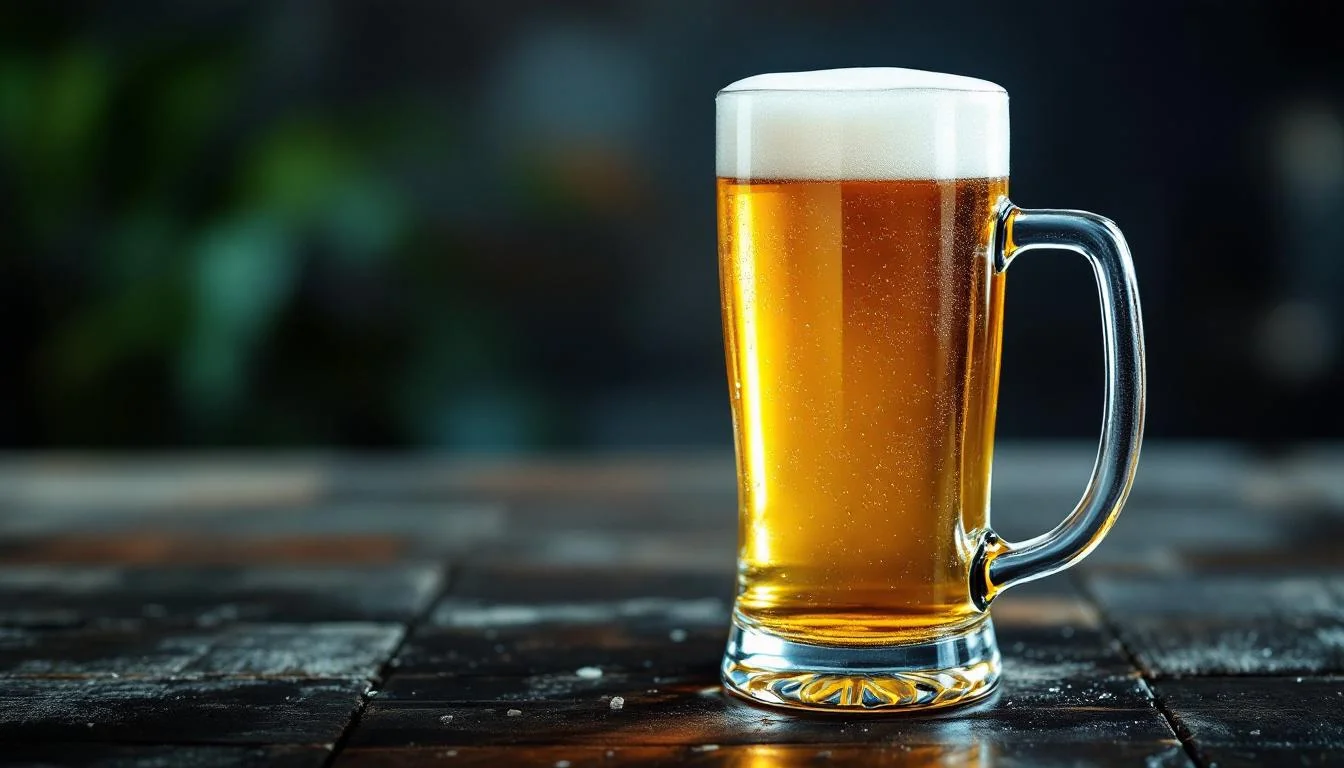
Observe the foam first. A beer with Carapils will retain its foam longer—not just for a few seconds after pouring, but throughout the drinking process. The foam clings to the sides of the glass, leaving fine white streaks as the beer level drops. This is a sign that the proteins and dextrin are at work.
When drinking, pay attention to the sensation in your mouth. Carapils beers are usually smoother and fuller, though not as sweet or heavy. That's the difference between "slipping away" and "lingering." Your mouth senses the weight of the liquid, even though your mind can't quite put a name to it.
Comparison is the best way to understand. If you have the opportunity to drink the same style of beer from two different producers — one using Carapils, one not — the difference will be much clearer.
Sometimes, the most important things are the ones we can't name. Carapils is like that—an invisible foundation, holding everything else in its place.
Next time you raise your glass, take a moment to admire the foam before you drink. Perhaps that's when Carapils is quietly doing its work.