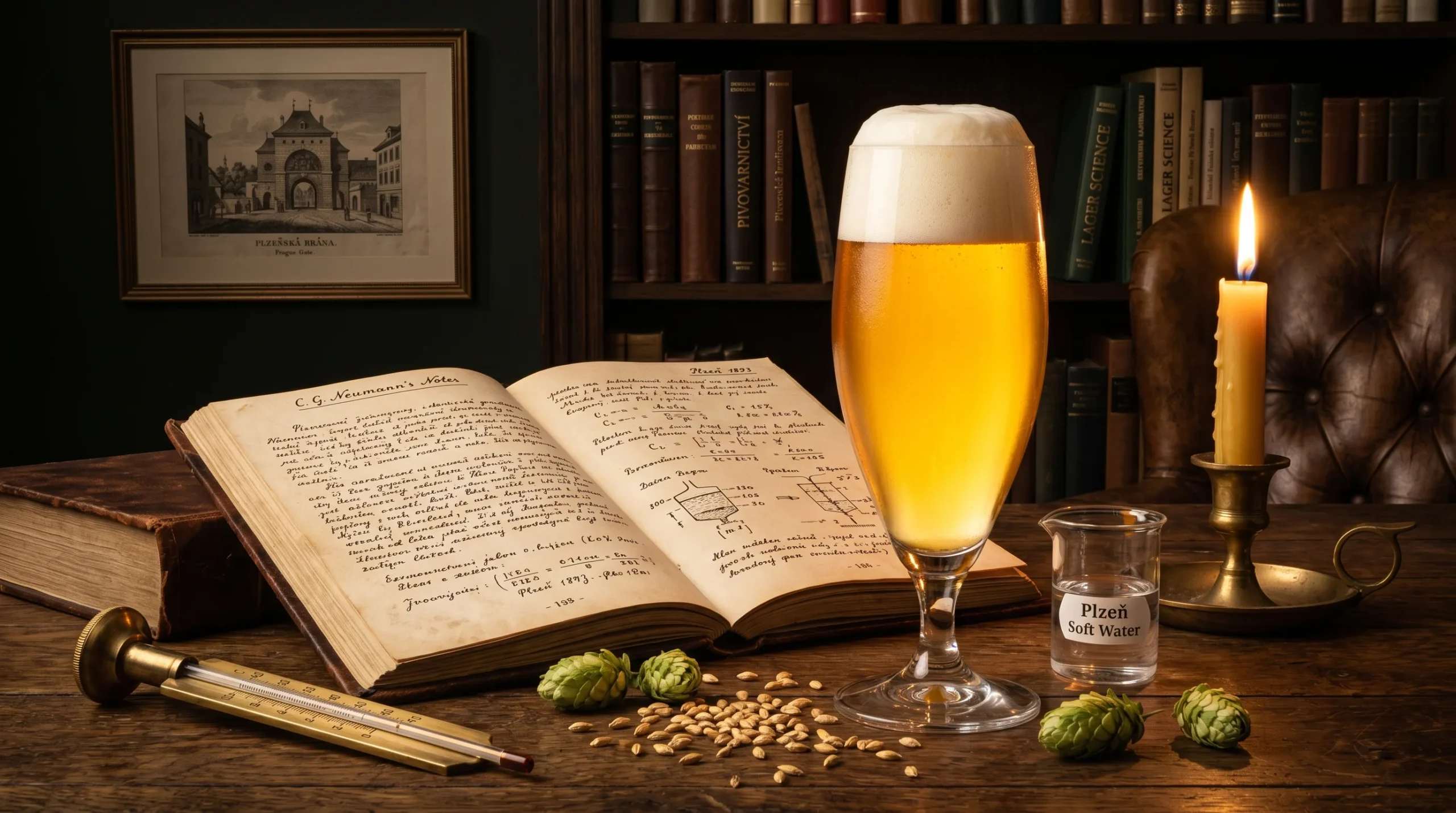
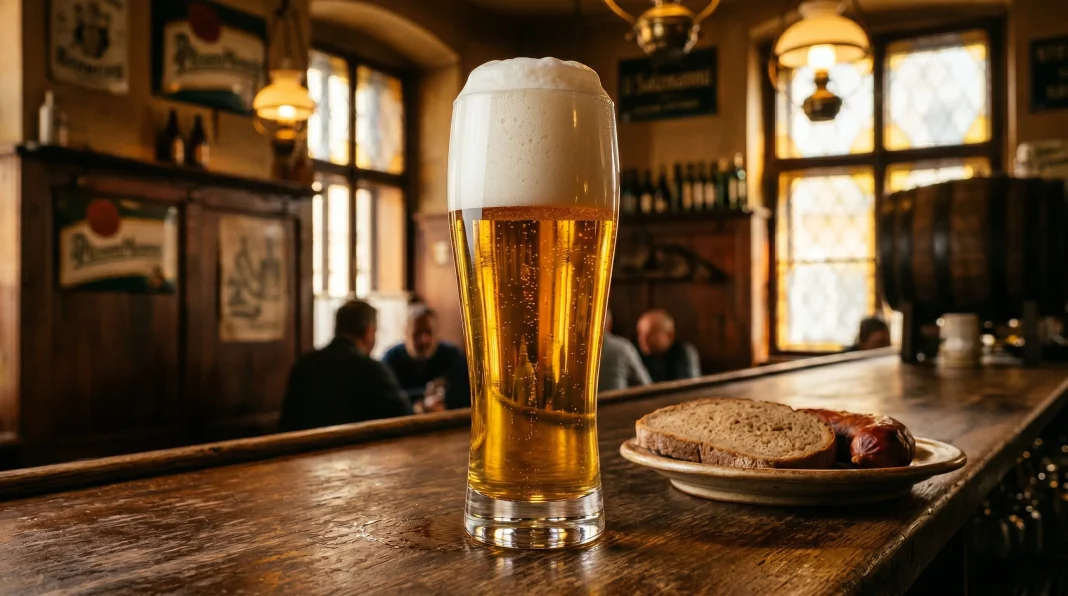
There's a fact that few people notice: The most difficult beer to brew in the world is not Imperial Stout barrel-aged, not Lambic aged for 3 years, and not Belgian Quadrupel.. The hardest beer to make is a German Pilsner.
Why? Because Pilsner had nothing to "hide" his mistakes.
An Imperial Stout can hide flaws behind its bold chocolate character and strong alcohol. An IPA can hide flaws behind its intense citrus hops. A Belgian Quadrupel can hide flaws behind complex fruit esters. But a Pilsner—clear gold, light body, delicate hops— Any mistake will be immediately apparent.. A hint of diacetyl (an undesirable butterscotch), a little oxidation, a slightly off-character yeast — and the whole beer is ruined.
This is why the German brewer said:“If a brewery can make Pilsner well, that brewery can make any style..Pilsner is final check of brewing technique.
This article is about the most overlooked yet most technically demanding style of beer brewing. light beer. Pilsner, Helles, Kölsch, Blonde Ale, Cream Ale, and dozens of variations. Most beers sold worldwide fall into this category. Most beers you've drunk fall into this category. And most of them—sadly—are not good light beers.
What is Light Beer?
There is no official definition, but according to the BJCP and other standard beer organizations, "light beer" can be understood as:
- Low to medium ABV: 3.5-5.5%
- Body light to medium-light: feels thin, not full
- Character clean: little or no complex yeast esters
- Pale yellow to yellowish: neither brown nor black
- High carbonation: lots of carbonation, refreshing
- Low to medium bitterness: not a strong IPA
This is the beer style Designed for quick and heavy drinking.. Beer during meals. Beer after work. Beer in the garden on a summer day. This is it. “"Everyday drinks"” of the beer world.
Why Is "Simple" So Difficult?
There's a saying in the brewing world:“Anyone can brew a good IPA. Only truly skilled brewers can make a good Helles.”
The reason lies in philosophy. Strong beer, complex beer, multi-flavored beer — they rely on intensity To make an impression. Strong hops, bold malt, high alcohol content, complex character. The brewer may elevate one or more elements to compensate for the others.
Light beer doesn't have that kind of space. Every element has to... perfect balance. The malt is perfectly sweet—too much cloying, too little bland. The hops are perfectly bitter—too much off-balance, too little flat. The yeast is extremely clean—any ester will ruin the "neutral" character the style demands. Carbonation is precise. Fermentation temperature is accurate to the degree.
This is why Pilsner Czech and Helles Bavaria are considered the pinnacle of brewing technique. — not because they are complicated, but because they require absolute control.
This Article
This is an article about Art in Simplicity. We will go through:
- Bohemian Pilsner and German Pilsner — Two original Pilsner styles, born from a brewing revolution in 1842.
- Helles and Kölsch — Two German schools of thought opposed to Pilsner
- Blonde Ale, Cream Ale, and Light Lager — Modern American version
- European Pale Lager and American Adjunct Lager — Mass-market commercial beer
- English Pale Ale and Belgian Pale Ale — Traditional Pale Ale style (different from the American Pale Ale of this song) Bitter Beer)
The final section is for Vietnamese readers — what light beers are available in Vietnam, and an important question: Can Saigon Beer, 333, and Larue be considered "good" light beers?
But first, let's start with... a small town in Bohemia in 1842 — where all modern light beer originated.
Pilsen 1842 — The Revolution That Changed Beer Worldwide
To understand modern light beer, one must begin with a specific story: November 11, 1842, in the town of Pilsen (Plzeň) in Bohemia.
Before that day, most European beers were ale — Beer fermented at high temperatures, with complex character, often cloudy, brown or black in color, and full-bodied. Pilsner beer didn't exist yet. Clear golden beer didn't exist yet. The concept of "quick-drink beer" was still unfamiliar.
A Beer Crisis
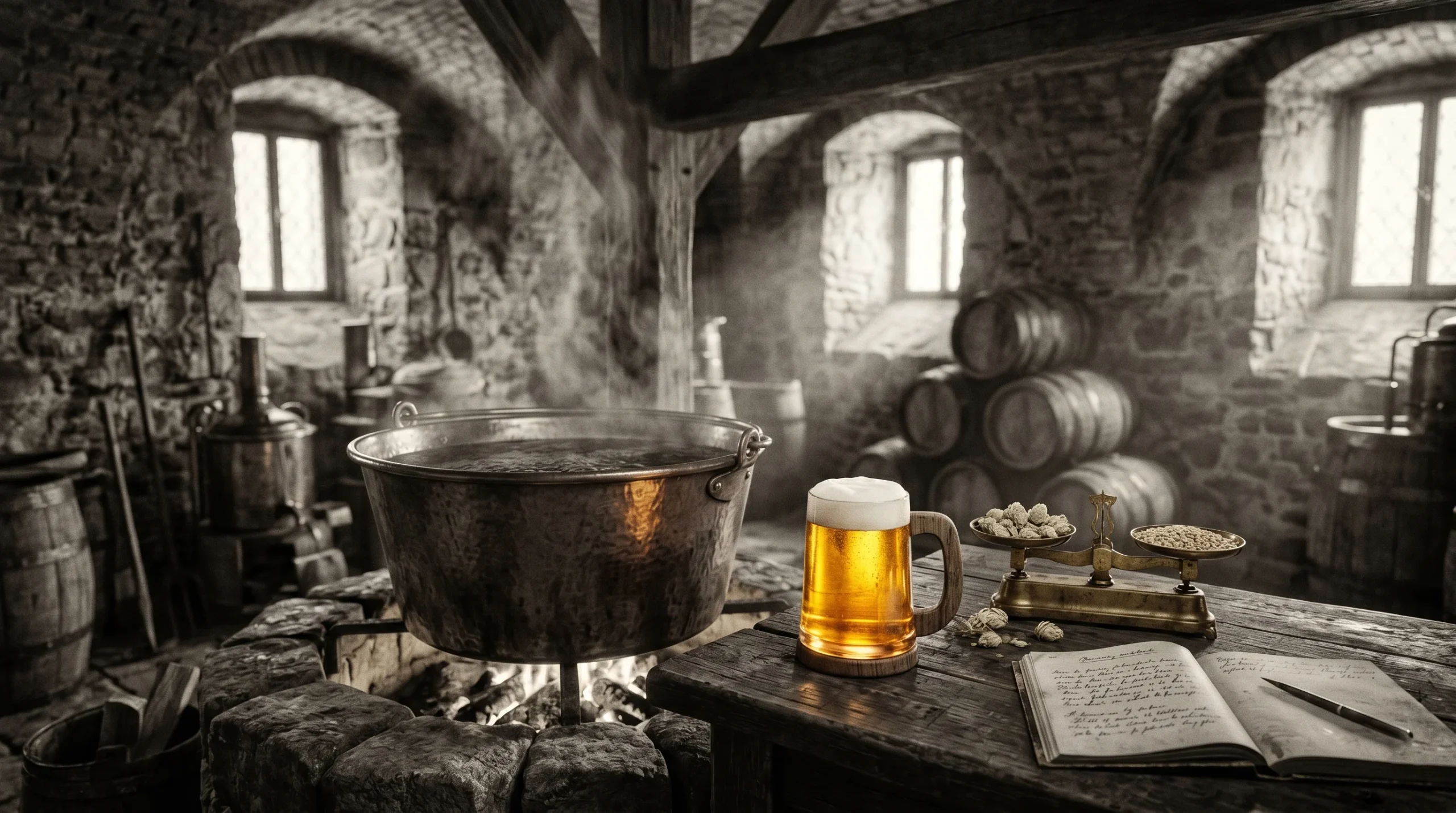
In the early 1840s, the town of Pilsen in Bohemia (now the Czech Republic) was in crisis. Local beer—mostly traditional ale—was often spoiled due to poorly controlled fermentation techniques. In 1838, the people of Pilsen 36 crates of beer spilled onto the street. They protested in front of town hall against the poor quality of the beer. This was a historic moment: residents demanded that town hall do something.
Pilsen City Hall decided to establish brand new brewery — Bürgerliches Brauhaus (later called Pilsner Urquell). They hired Josef Groll, a young Bavarian brewer with progressive ideas.
Josef Groll and the Lager Revolution
Josef Groll brought Bavaria lager technique — Bottom-fermentation at low temperatures (8-12°C) with a specific strain of Saccharomyces pastorianus yeast. This differs from top-fermentation at 18-25°C of traditional ale.
Lager fermentation is much slower (4-8 weeks instead of 1-2 weeks like ale), but it produces beer. bleach — With less ester yeast, the character of malt and hops shines through.
Groll combines Bavarian lager techniques with 4 Pilsen local factors:
1. Pilsen ultra-soft water — Extremely low mineral content (especially calcium and magnesium). This is a rare type of water — most European waters have high mineral content. Soft water allows the hop and malt characteristics to shine through, not being masked by mineral flavors.
2. Special Moravia Malt (Barley Malt) — Moravia (the eastern region of Bohemia) has a tradition of producing high-quality barley malt. Groll used very pale malt (Pilsner malt) — much paler than the typical German malt of the time.
3. Hops Saaz from the Žatec region — Hops Saaz has a subtle "noble" character — floral, hints of spice, not harsh. To this day, Saaz is still considered one of the world's finest hop varieties..
4. Bavarian Lager Yeast — Groll, a bottom-fermenting yeast strain, is sourced from Munich, allowing for authentic traditional lager.
November 11, 1842 — History Was Written
Groll's first beer was served on November 11, 1842. The reaction was shock.
The people of Pilsen had never seen beer like this before: gold as clear as crystal., A thick, characteristic white foam, delicate malt aroma, floral hops, a light yet deep body, and a clean finish. This is a a completely new style of beer.
Within a few years, "Pilsner" spread throughout Europe. Each country developed its own version — German Pilsner, Dutch Pilsner, Austrian Pilsner, Belgian Pilsner. By the beginning of the 20th century, Pilsner had become dominant. over 80% global beer market.
Helles — Bavarian Reaction
Pilsner has become so successful that Bavarian breweries—the home of Josef Groll—have had to react. Pilsner is eating into the market share of traditional Bavarian beers (dunkles lager, stronger hops).
In 1894, Spacen brewery in Munich Releasing a new style — Helles (“light” in German). This is Bavaria's direct response to Czech Pilsner: also clear gold, also lager, also light — but malt-forward, The hops are lighter, and the character is softer.
Helles became Pilsner's Bavarian rival. The two styles coexisted for nearly 130 years, representing two philosophies: Pilsner (hops-forward, sharper), Helles (malt-forward, softer).
Kölsch — Cologne's Response
In northern Germany, the city of Cologne has its own problems. Cologne has a long tradition. top-fermentation (Ale) is a long-standing tradition — even for a time, bottom-fermentation (lager) was banned in Cologne.
When Pilsner and Helles from Bavaria and Bohemia flooded in, Cologne brewers couldn't switch to lager (due to tradition). They developed a hybrid solution — Kolsch.
Kölsch is ale was "larger"“ — Top-fermentation with ale yeast at warm temperatures, followed by cold-conditioning (like lager) at low temperatures for 4-6 weeks. The result: a beer with the clean character of ager but retaining the light ester of ale. Clear golden like Pilsner, but with the "fruity-soft" character that lager lacks.
In 1986, Kölsch Konvention This agreement was signed between Cologne breweries — protecting the name “Kölsch” exclusively for beer brewed in the Cologne region (similar to Champagne in France). Germany's unique beer style is geographically protected..
A Lesson from History
In the 180 years from 1842 to the present, light beer has become the largest beer category globally. Thousands of breweries, millions of bottles every day, billions of people drink from them.
But there's one important detail: It all stemmed from a moment in Pilsen in 1842.. A young Bavarian brewer. A super-smooth brew. A local hop variety. A radical decision.
This is how history brewing works: the right moment, in the right place, with the right people — can change the world.
Pilsner — Bohemian vs German, Two Paths
Pilsner has become the world's most popular beer style. But there's a little-known fact: Not all Pilsners are the same.. There are two core Pilsner schools, opposing in philosophy — Bohemian (Czech) and German.
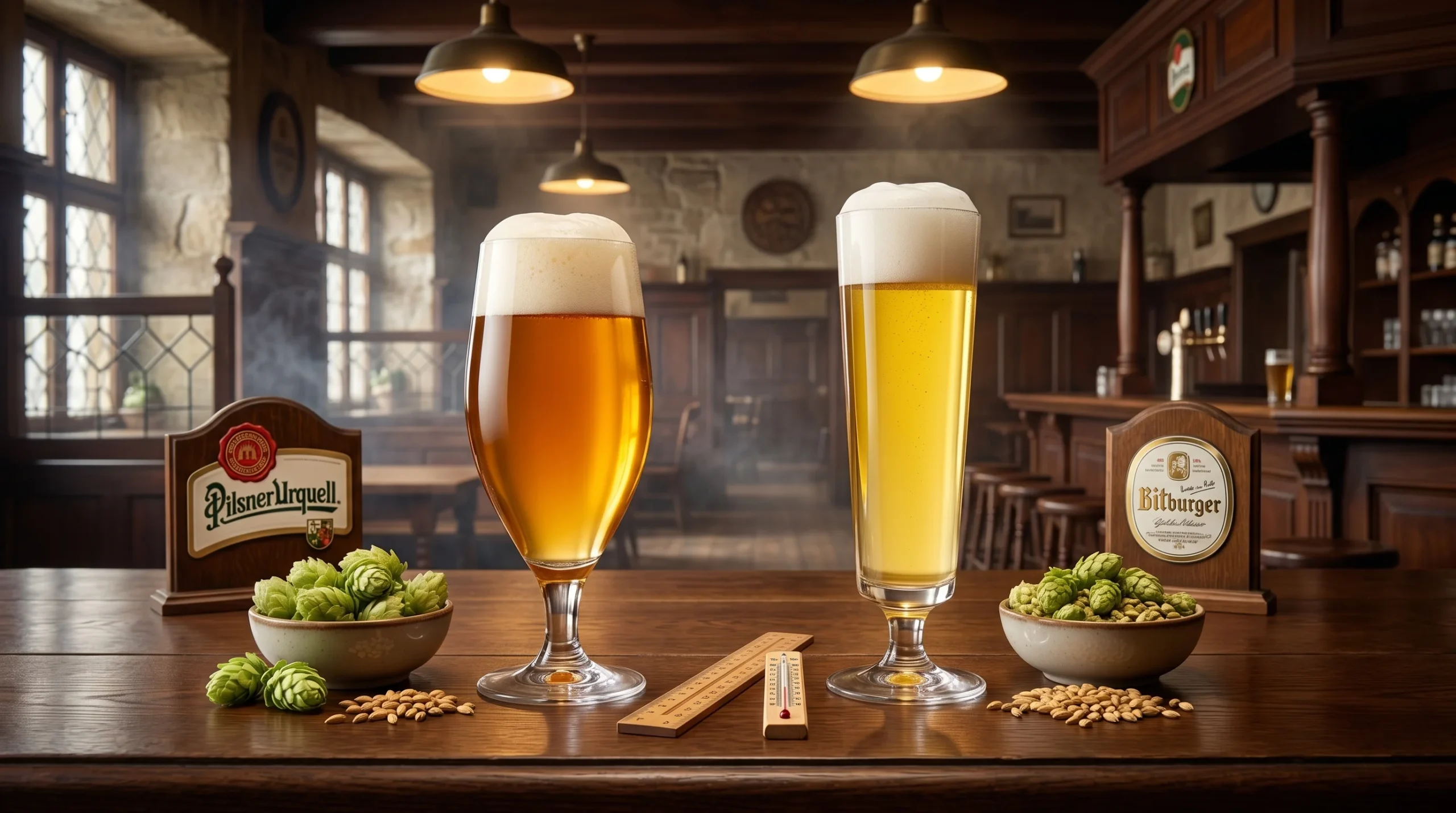
Czech / Bohemian Pilsner— Original Version
This is the Pilsner style. original — created by Josef Groll in 1842. Features:
- Color: darker yellow (golden), not as pale as German Pilsner
- Smell: malt rich, bread-like, hint of light caramel, Saaz floral and spicy hops
- TasteMalt-forward but balanced with hops, semi-dry finish.
- BodyMedium, fuller than German Pilsner
- Bitterness: medium-high (35-45 IBU)
- HopsUse only Saaz (Czech noble hops)
- Water: ultra-soft (Pilsen water signature)
Bohemian Pilsner has character “rounder” And "fuller" compared to German Pilsner. This is a Pilsner that can be drunk as a small meal — enough malt to satisfy, enough hops to balance.
A classic example:
- Pilsner Urquell — The original brewery of Josef Groll. Still brewing continuously since 1842. This is gold standard by Bohemian Pilsner.
- Budweiser Budvar (Czech Republic) — This is not American Budweiser. This is the original Budweiser from České Budějovice, Czech Republic.
- Staropramen — Brewery Prague, Pilsner, Czech is a different classic.
German Pilsner — The Refined Bavarian Edition
When Czech Pilsner spread to Germany, German brewers didn't copy it — they fine-tuning. German Pilsner was created with a different character:
- Color: lighter, paler straw yellow than Bohemian
- SmellHops stand out more than malt, with subtle floral and spice characteristics.
- Taste: hops-forward, drier, sharper finish
- BodyLight to medium-light, sleeker than Bohemian
- Bitterness: High (30-40 IBU), very prominent
- HopsMainly Hallertau, Tettnang, Spalt (German noble hops)
- WaterHarder than Pilsen water, contains minerals.
Pattern: Bohemian = malt-balanced. German = hops-forward.
Geographical reason: Bavarian and Northern German water is not as soft as Pilsen. German brewers have to compensate by using stronger hops and milder malt. The result is a unique style. “"sharper, drier"” — Suitable for German tastes.
A classic example:
- Bitburger — The most popular German Pilsner internationally
- King Pilsener — Pilsner from northern Germany, dry and sharp
- Jever Pilsener — Extremely hops-forward, famously a "bittersweet" character
- Rothaus Tannenzäpfle — Classic handcrafted Pilsner from the Black Forest
How difficult is it to cook good Pilsner?
As mentioned in Section 1, Pilsner is one of the styles. most difficult to cook. The specific reason:
1. There is no space to hide errors. The Pilsner is a clear, golden yellow with a light body and subtle character. Any flaws—diacetyl, oxidation, sulfur, or a mismatch in yeast character—are immediately apparent from the first sip.
2. Lager fermentation is slow. 4-8 weeks at low temperatures (8-12°C). Compared to 1-2 weeks for ale at 18-25°C. Breweries require precise temperature control, large storage space, and patient.
3. Diacetyl rest critical. In lager fermentation, diacetyl (the compound that creates the undesirable butterscotch character) can accumulate. Brewers must perform a “diacetyl rest”—raising the temperature to 18-20°C for 2-3 days so the yeast consumes the diacetyl. Doing this at the wrong time equals spoiled beer.
4. Accurate hop timing. Pilsner requires hops for bittering (60-minute boil) plus hops for aroma (1-15 minute boil). One minute off = character off.
5. Water chemistry. Brewery needs to adjust the water to mimic soft Pilsen (for Bohemian) or Bavarian/Northern German chemistry (for German). This is chemistry, not art.
This is why Modern craft brewery fears Pilsner. Most craft breweries prefer brewing IPAs — robust hops mask flaws. Brewing Pilsner is putting yourself to the ultimate test — and most fail.
If you see a craft brewery with Pilsner on the menu, and that Pilsner is good—that's a sign of a highly skilled brewery.
Helles, Kölsch, Cream Ale — Three Contrasting Pilsner Styles
Pilsner is a light style of beer. most famous, However, it is not the only style. There are three other important styles that represent philosophies opposed to Pilsner — Helles (Bavaria), Kölsch (Cologne), and Cream Ale (USA).
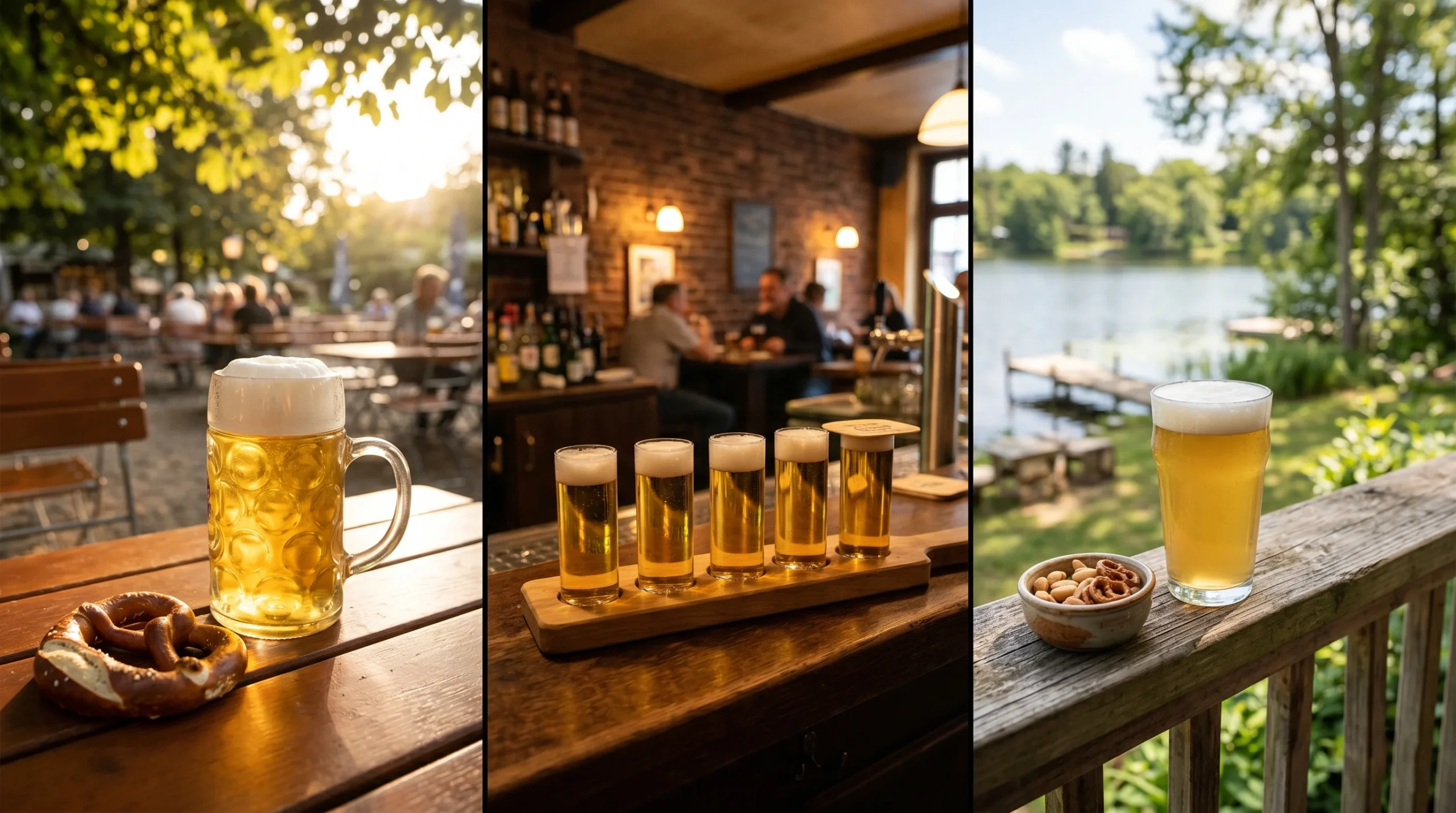
Helles — Bavaria's Soft Answer
Helles ("light" in German) was founded in 1894 in Munich as a Bavarian reaction to the Czech Pilsner movement. Its philosophy is the opposite: Malt-forward, soft, balanced.
Feature:
- Color: a brilliant, clear pale yellow
- Smell: Soft malt, hints of toasted bread, and very subtle noble hops in the background.
- TasteMalt-forward, gentle sweetness, medium body, hops just right for balance.
- Bitterness: Low to medium (15-25 IBU)
- BodyMedium, fuller than Pilsner
The difference between Pilsner vs Helles:
| Element | Pilsner | Helles |
|---|---|---|
| Main character | Hops | Malt |
| Bitterness | Medium-High | Low-Medium |
| Finish | Dry, sharp | Smooth, gentle |
| Mood | Sharper, focused | Softer, comfortable |
Helles is beer. “"Drink all day"” Bavarian classic — a biergarten. When you go to Munich and sit in a biergarten under a summer chestnut tree, the beer in a maß (1 liter) glass is Helles, not Pilsner. This is a harmonious beer, not harsh, not "spike" — just a smooth malt body.
A classic example:
- Augustiner Lagerbier Hell Helles Munich is ranked number one in the world by many beer judges.
- Spaten Münchner Hell — Brewery created the style in 1894
- Weihenstephaner Original Helles — From the world's oldest brewery (1040)
- Andechs Vollbier Hell — Helles Abbey, Bavaria, rare and venerable
Kolsch — Cologne Hybrid
Kölsch is Germany's unique beer style is geographically protected.. According to the Kölsch Convention 1986, only beer brewed in the Cologne region can be called "Kölsch" — similar to Champagne in France.
Philosophy: The best combination of ale and lager.:
- Top-fermentation with yeast ale (mild character ester)
- Cold-conditioning for 4-6 weeks, like lager (character clean).
- Result: The beer has the "fruity-soft" quality of an ale and the "clean" quality of ager.
Feature:
- Color: a brilliant, clear pale yellow
- Smell: Mild fruity ester (apple, pear), soft malt, noble hops, mild spalt
- TasteBalanced — light malt, light hops, light ester, no element dominant
- Bodylight, sleek
- ABV: 4.4-5.2%
Kölsch is drunk in space glass — A small, straight glass, 200ml, not a pint glass. Cologne tradition: the bartender carries a tray with several stanges full of beer (called a “kranz”), placing a new glass in each one as the old one empties without waiting for a customer's order. The bartender only stops when the customer places a coaster on top of the glass.
For example:
- Gaffel Kölsch — One of the largest Kölsch in Cologne
- Reissdorf Kölsch Family brewery Cologne, traditional character
- Früh Kölsch — Cologne's old brewery
- Sünner Kölsch Cologne's first brewery used the name "Kölsch" (from 1918).
Cream Ale American Lager in Disguise
Cream Ale is an American style that emerged in the late 19th century — when American brewers wanted to compete with the influx of German and Czech Pilsner, but lacked the proper lager equipment.
Solution: Brew ale at a lower temperature than traditional ale, sometimes blended with lager — the result is beer. “"It's similar to lager but still an ale"”.
Feature:
- Colorlight yellow
- SmellSoft malt, sometimes with hints of adjunct (corn or rice), mild American hops.
- TasteSmooth, slightly sweet, clean finish.
- BodyLight to medium-light, characteristic "creamy" texture
- ABV: 4.2-5.5%
“The "Creamy" in the name doesn't mean cream flavor — it's herb. Cream Ale has a softer, less sharp mouthfeel than Pilsner. It's a "transitional" style — a beer suitable for those unfamiliar with craft beer.
For example: Genesee Cream Ale (New York classic), Schell's Schmaltz Alt, Sun King Wee Mac.
General Philosophy
Three styles — Helles, Kölsch, Cream Ale — represent A philosophy opposed to Pilsner's.Instead of hops-forward sharpness, they celebrate softness, balance, and accessibility.
All three are “"daily beer"” Excellent. Helles for Bavarian biergarten. Kölsch for Cologne traditional. Cream Ale for American summer porch. These beers don't try to impress—they just try to please you from first sip to last.
Alternative Styles — Blonde Ale, Pale Ale, Light Lager
Light beer is a large category, and there are many important styles beyond Pilsner-Helles-Kölsch. This section covers the remaining "session beer" styles — beers that can be drunk all day, don't cause fatigue, and are suitable for all situations.
American Blonde Ale
Blonde Ale is the American version of "accessible light beer"—developed by craft brewers as an entry-point for those new to craft beer.
Feature:
- Colorpale yellow to bright yellow
- Smell: Soft malt, mild American hops (Cascade, Centennial), hint of citrus
- TasteBalanced, slightly sweet malt, with just the right amount of hops.
- Bodylight to medium
- ABV: 4.5-5.5%
This is the "style"“bridge beer”"Beer connects the commercial market with craft beer. Newcomers from Heineken/Budweiser can switch to Blonde Ale without shock. After Blonde Ale, they can explore Pale Ale, then IPA, and then more complex styles.".
For example: Kona Big Wave Golden Ale, Victory Summer Love, Firestone Walker 805 Blonde.
Belgian Blonde Ale
This is the Belgian version of Blonde Ale — different from American Blonde in its Belgian yeast character.
Feature:
- Bright yellow to light yellow
- Belgian yeast flavor — fruit esters (apple, pear, hint banana), hint spice
- Smooth, slightly sweet malt flavor, complex yeast character.
- ABV is higher than American Blonde (6-7.5%)
Belgian Blonde Ale is the entry-point for those exploring Belgian beer — simpler than Tripel or Quadrupel, but with a distinct Belgian yeast character. This has already been discussed in the article. Belgian beer Therefore, let's not delve any deeper.
For example: Leffe Blonde (Authentic Abbey beer), Affligem Blonde, Brugse Zot.
Pale Ale
Classic English style — not a strong IPA, not a hopier American Pale Ale. English Pale Ale is the style. session English tradition — a balance between malt biscuits and English noble hops.
Feature:
- Coloramber to light bronze
- Smell: biscuit malt, light caramel, English hops (East Kent Goldings, Fuggles) — earthy, floral
- TasteBalanced malt hops, medium body, moderately dry finish.
- ABV: 4-5.5%
English Pale Ale is best drunk warmer than Pilsner (10-13°C), usually a traditional top-fermentation ale. It's the English "pub" beer — drunk in local pubs, a pint a story, a night out with friends.
For example: Fuller's London Pride, Timothy Taylor's Landlord, Bass Pale Ale.
Note: English Pale Ale is different from American Pale Ale (hopier, a strong citrus character from American hops) — as mentioned in the article Bitter Beer.
European Pale Lager — Mass Beer
European Pale Lager is a catch-all category for European Pilsners have become "popularized".“ — Not hardcore Czech Pilsner, not sophisticated German Pilsner, but an accessible version for the mass market.
Feature:
- Pale yellow, transparent
- Character clean, low hops, soft malt
- Body light, refreshed
- ABV 4.5-5.5%
For example: Heineken (Netherlands), Stella Artois (Belgium), Becks (Virtue), Carlsberg (Denmark). These are global beer brands — not authentic Pilsner, but still good quality light beers for the mass market.
Significant: Heineken Created in Amsterdam in 1873 — almost 30 years after Pilsner Urquell — this is one of the “second generation” Pilsner — which popularized the style to suit international tastes.
American Adjunct Lager — Mass-Produced Beer“
This is the most popular style in the US — accounting for over 80% of the US beer market. Representative: Budweiser, Coors, Miller.
“Adjunct” means malted barley-free — primarily corn (Budweiser) or rice (Coors). American brewers use adjunct because:
- Cheaper than malted barley
- Create a lighter character (corn and rice don't have much protein).
- Suitable for American tastes, "not too strong".“
Feature:
- Brilliant pale gold
- The malt flavor is very subtle, with almost no hop notes.
- Body feels incredibly light and refreshed.
- The character "watery" (for connoisseur beer), "refreshing" (for mass market beer).
- ABV 4-5%
American Adjunct Lager is looked down upon by beer connoisseurs, but it It is still a valid style.. This is the beer of baseball games, summer BBQs, and casual gatherings. No attempt at complexity — just aiming for something refreshing and accessible.
Light Lager — Low Calorie Version
Finally, a modern American style: Light Lager. This is the “low-calorie” version of American Adjunct Lager — less malt, fewer calories, less alcohol.
Feature:
- ABV 3.5-4.5%
- ~95-100 calories per 12oz bottle (compared to 145 for regular Budweiser)
- The character is extremely mild, almost "water with beer flavor".“
For example: Bud Light, Coors Light, Miller Lite, Michelob Ultra.
Light Lager is the most criticized style by the beer community. But statistically, Bud Light remains the most popular. America's best-selling beer For many years, this has proven that "good" beer and "bestselling" beer aren't always the same thing.
Light Beer in Vietnam — Saigon, 333, Larue, Hanoi
This section has a particular question: What category of light beer does Vietnamese beer belong to?
Most commercial beers in Vietnam — Saigon, 333, Larue, Hanoi, Heineken Vietnam, Tiger — belong to European Pale Lager or American Adjunct Lager. This is the truth that needs to be stated: no Vietnamese brewery is brewing authentic Czech Pilsner, authentic Bavarian Helles, or authentic Cologne Kölsch.
This No problem. This is the reality of the Vietnamese beer market — accessible light beer is what the market demands. The more important question: Can Vietnamese beer be considered "good light beer"?
Vietnamese Beer Review — Fair
Evaluate the most popular commercial beers in Vietnam, using professional beer judging standards:
Saigon Beer (Saigon Special, Saigon Gold) — European Pale Lager / Adjunct Lager. Character clean, mild flavor, refreshing. Light body, ABV 4.9-5.3%. This is a commercial beer.“average”"—Not bad, not outstanding. Suitable for Saigon's hot climate, easy to drink many glasses, doesn't cause fatigue.".
333 Premium Export — Adjunct Lager. Similar to Saigon Special but slightly cleaner. Characterized by neutrality — no esters, no pronounced hops, no malt complexity. This is a "wallpaper" beer — not bad, but not memorable.
Larue Special — Adjunct Lager. Sweeter character than Saigon, fuller body, lighter. Suitable for the taste of Central and Southern Vietnam. Notably, Larue has a long history — the Larue brewery was founded in Saigon during the French colonial period (1909).
Hanoi Beer — Adjunct Lager Northern Vietnam. Character is slightly hopier than Saigon, body is medium. This is the beer with the most distinct "Northern Vietnamese" character among commercially available Vietnamese beers.
Heineken Vietnam, Tiger Vietnam, Carlsberg — International brands cook in Vietnam, the character is close to the original version but has been adjusted to Vietnamese taste.
Why is Vietnamese Beer Called "Adjunct Lager"?
There are historical and economic reasons:
1. French colonial tradition. The first brewery in Vietnam (Larue, 1909) was established by the French using European lager techniques — not authentic Czech Pilsner, but a "mass-market" version.
2. Hot and humid climate. Vietnam's climate is suitable for very light, refreshing, light-bodied beers. Complex beers (Hefeweizen, Tripel, Stout) are difficult to match the need for refreshing drinks in the 35-40°C summer heat.
3. The "Cheers to 100%" culture“. Beer in Vietnam is often drunk quickly, in multiple glasses, during meals. Complex beers aren't suitable—we need beer that can be drunk continuously without causing fatigue.
4. Use inexpensive adjuncts.. Vietnamese rice is abundant and inexpensive. Using rice or corn adjunct is cheaper than using malted barley.
All these factors combine to create Category: Typical Vietnamese light beers. Not authentic Pilsner, not Helles Bavaria — but the beer of the tropics, the 100% drinking culture, and the adjunct economy.
Top Light Beers Worth Trying in Vietnam (International)
For those looking to discover world-class light beers, here's the list:
Pilsner:
1. Pilsner Urquell (Bohemian Pilsner, (Czech Republic) — The original Pilsner standard. Must be drunk at least once.
2. Bitburger (German Pilsner, (Germany) — Internationally popular German Pilsner. Sharp, dry, hops-forward.
3. Bitweiser Batvar (Bohemian Pilsner, (Czech Republic) — ORIGINAL Budweiser, not American Budweiser.
Helles:
4. Weihenstephaner Original Helles (Helles, (Germany) — Helles from the world's oldest brewery (1040).
5. Augustiner Lagerbier Hell (Helles, (Germany) — Ranked the best Helles beer in the world by many beer judges.
Kölsch:
6. Gaffel Kölsch (Kolsch, (Germany) — Authentic Kölsch from Cologne. Harder to find in Vietnam, but worth the investment.
Belgian Blonde:
7. Leffe Blonde (Belgian Blonde Ale, Abbey beer (Belgium) is a standard, popular beer in Vietnam.
English Pale Ale:
8. Fuller's London Pride (Pale Ale, (England) — Traditional English Pale Ale, hard to find but worth seeking.
European Pale Lager:
9. Heineken (European Pale Lager, (Netherlands) — Most popular internationally, easy to find.
Pair Light Beer with Vietnamese Dishes
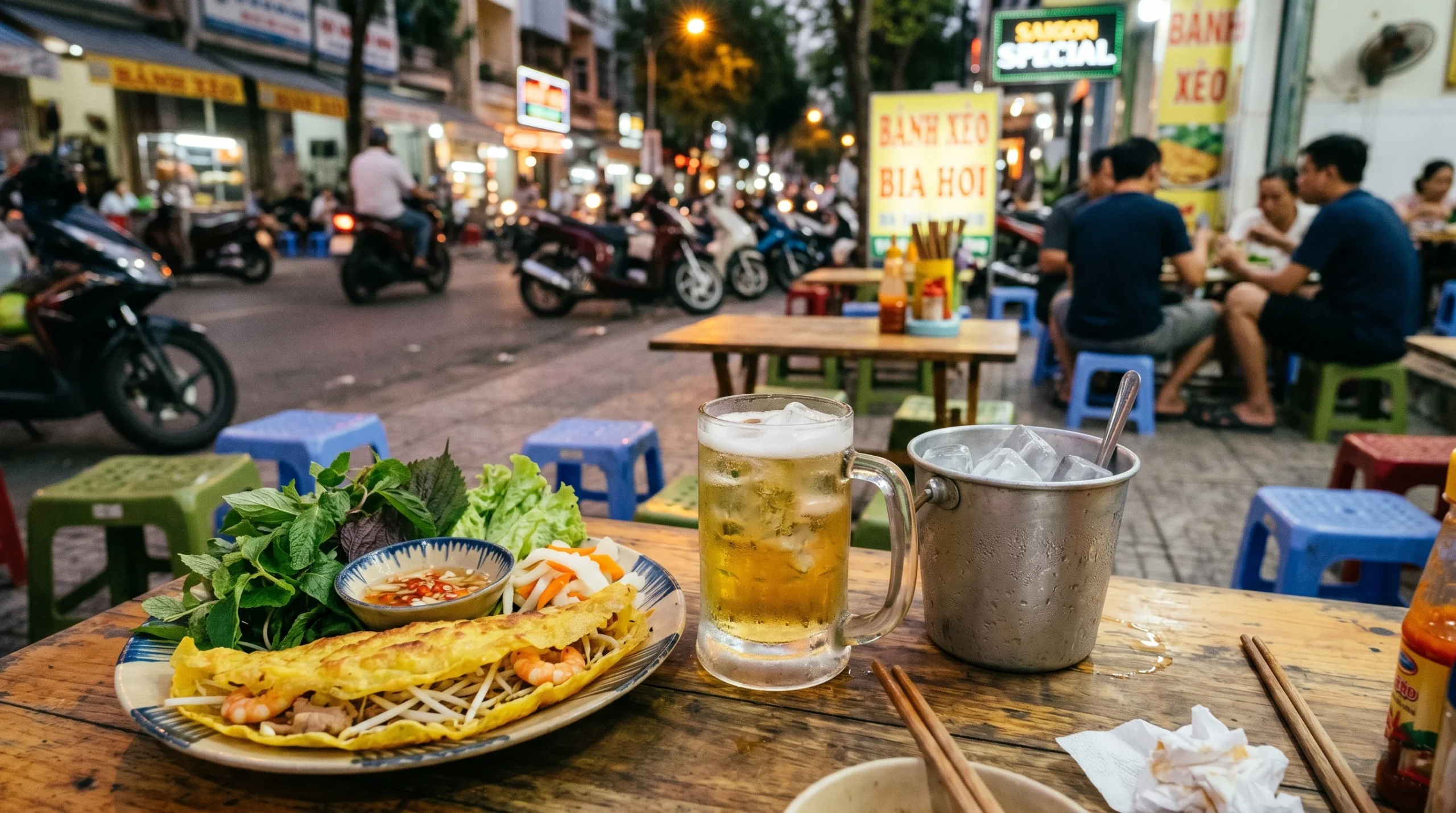
Light beer is Best category pair with Vietnamese cuisine — because it doesn't overpower Vietnamese spices, and is suitable for the hot and humid climate:
- Pho + Pilsner (Pilsner Urquell or Bitburger) — Hops Saaz/German resonate with cinnamon and star anise, the body is light and doesn't overpower the broth.
- Bun cha + Helles (Augustiner Hell) — Soft malt paired with grilled pork and herbs.
- Grilled seafood + Kölsch — Kölsch's sleek body is a refreshing change of pace between dishes featuring scallops, squid, and shrimp.
- Bread + Cream Ale or Blonde Ale — Light beer, accessible, pairs well with street food sandwiches.
- Spring rolls + Czech Pilsner — Pilsner is clean and crisp, not overpowering the shrimp and raw vegetables.
- Broken rice with grilled pork chop + Saigon Special — Saigon Classic Combo. Light beer that doesn't try to compete with the grilled ribs — just accompaniment.
An Important Fact
After reading about Pilsner Urquell, Augustiner Hell, Gaffel Kölsch — you might think, "“Saigon Beer is terrible compared to these beers.“"This is a wrong conclusion.".
Beer served specific context. Pilsner Urquell is best enjoyed in Prague with gulash. Augustiner Hell is best enjoyed in a Munich biergarten with pretzel. Gaffel Kölsch is best enjoyed in Cologne, a traditional establishment.
Saigon Beer is best enjoyed in Saigon with banh xeo (Vietnamese savory pancake) and friends.. Beer that fits the context — not necessarily "good" beer in the absolute sense.
A beer connoisseur isn't just someone who drinks expensive premium beer. A beer connoisseur is someone who... Understand when to drink what.. Pilsner Urquell has room. Saigon Beer has room. Both are good light beers — in the right context.
Summary — When Simplicity is Ultimate
After nearly 6,000 words about light beer, there's one core message that deserves to be celebrated: Simplicity doesn't mean mediocrity. Sometimes, the pinnacle of art lies in the subtlety of simplicity.
In previous parent posts, we talked about "robust" beers (Imperial Stout), "complex" beers (Trappist), and "extreme" beers (barrel-aged beers). This post is about... opposite — the "least impressive" beer, but also requires the highest level of technical skill..
Four Lessons from Light Beer
1. Pilsner taught about discipline. There's no room for error. Every element must be perfectly balanced. A good Brewer Pilsner must control temperature, hop timing, water chemistry, diacetyl rest—every detail. This is it. advanced brewing techniques, not highly creative.
2. Helles taught about humility. Bavarian beer doesn't try to be "wow". It just tries. harmonious and reliable. Each sip is like the previous one, each glass is like the previous one. This is the style of consistency and craftsmanship Tradition — never a surprise, never a disappointment.
3. Kölsch taught about balance. Not an ale, not a lager — but the best of both. Cologne brewers chose not to follow the Pilsner trend but to develop their own hybrid solution. This is a lesson in... No need to choose a side. — Sometimes the answer lies somewhere in between.
4. Saigon Beer teaches about context. "Good beer" doesn't exist in an abstract space. "Good beer" is beer. suitable for the specific context. Saigon beer in Saigon with friends in the 35°C climate might be "better" than Pilsner Urquell in the same context. This is a lesson about... relativity in appreciation.
Why is light beer important?
Light beer accounts for over 80% of global beer consumption. This is not a small number. This is Beer style defines the beer experience for most people..
A person in Vietnam drinks a bottle of Heineken after work. A person in Germany drinks a maß Augustiner Hell at the biergarten. A person in America drinks Bud Light at a baseball game. A person in the Czech Republic drinks Pilsner Urquell with gulash. They're all drinking. light beer — but each person in their own context.
This is the beer style global solidarity. Not as robust as Stout. Not as complex as Lambic. Not as exclusive as Trappist. Just beer — simple, accessible, available when needed.
A Philosophical Question
After reading about Pilsner Urquell and Augustiner Hell and Gaffel Kölsch, you might be wondering: “"Why don't I see Vietnamese commercial beer being as good as this?"”
The straightforward answer: Commercial beer in Vietnam is not yet optimized for beer connoisseurs.. They are optimized for the mass market — accessible, refreshing, non-fatigue-free, suitable for hot climates and the 100% culture.
This No problem. Each country has its own beer history. The Czech Republic took 180 years to perfect Pilsner. Germany took over 130 years to perfect Helles. Vietnam only developed a modern beer industry during the French colonial period — just 100 years. We are at the beginning of a journey.
In the future, Vietnam may develop a signature light beer style—combining traditional lager with Vietnamese spices and ingredients. It could be a tropical Pilsner with Vietnamese rice malt. It could be a Helles with glutinous rice. It could be an entirely new style.
This is a testing ground where Vietnamese craft breweries can explore. Light beer isn't completely "solved" — there's still room for local creativity.
Final words
Next time you pour yourself a Pilsner, a Helles, or simply a bottle of Saigon Special on a hot afternoon — take a moment to remember:
You're holding a style of beer that brewers spend their entire lives perfecting the technique for.
You are holding the legacy of an 1842 revolution in a small Bohemian town.
You are holding Art in Simplicity — the most underrated, yet most deserving of praise, style of beer.
Light beer doesn't try to impress. It just tries to please you. And sometimes, that's the hardest thing to do.