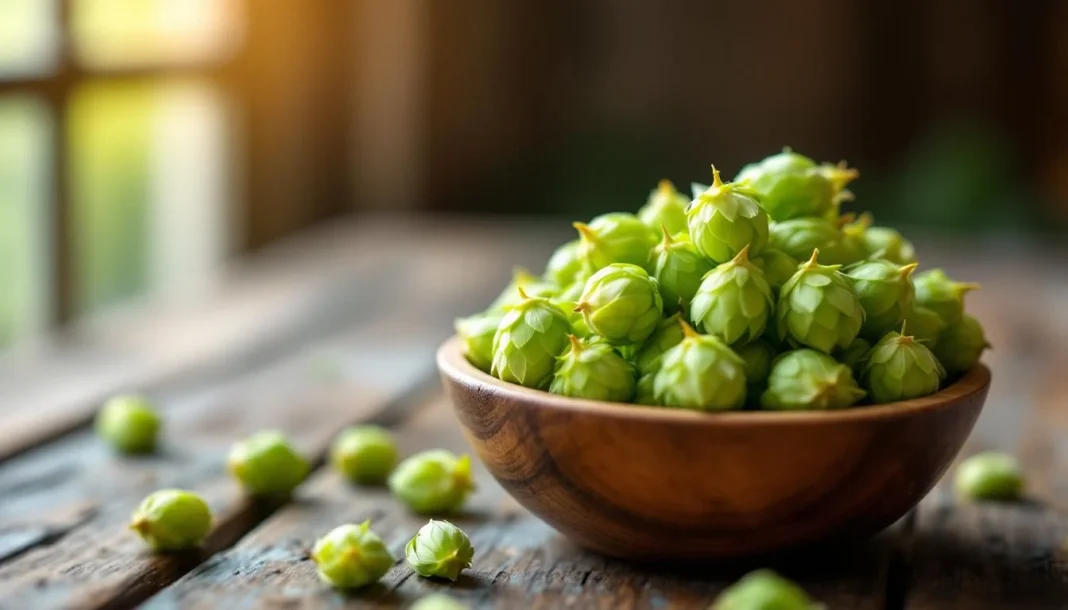
In 2004, an American brewer received his first sample of hop from New Zealand. He opened the bag, took a sniff, and stood still. It wasn't hop. It smelled like white wine—Sauvignon Blanc from the Marlborough Valley. He thought he'd gotten the wrong product. But no. This was Nelson Sauvin, the hop that was about to change the way the world thought about beer.
We live in an age where hop is no longer just bitter beer. Hop tells a story. And Nelson Sauvin tells a completely different story—the story of an isolated island at the far southern hemisphere, where nature creates flavors not found anywhere else on Earth.
Origin and history
Nelson Sauvin was born at the Plant & Food Research Institute of New Zealand, in a breeding program that lasted over a decade. In 2000, this hop variety was officially registered with the code “Hort4337”. The name Nelson Sauvin comes later — “Nelson” from the growing region, “Sauvin” from Sauvignon Blanc, the grape variety whose aroma it is reminiscent of.
Nelson Sauvin's pedigree is complex. On one side is the traditional European hop variety, on the other is the native New Zealand wild hop. This combination creates a progenitor containing unique thiol compounds—the same compounds that give Sauvignon Blanc its distinctive flavor. No one predicted this. It was a serendipitous discovery, but it changed everything.
The Nelson region lies in the far north of New Zealand's South Island, boasting a mild maritime climate. Long summers, abundant sunshine, and moderate rainfall. The soil is rich in minerals from ancient volcanic activity. These conditions are impossible to replicate elsewhere. Hop Sauvin grown in other regions still yields a harvest, but loses its aromatic complexity. The terroir here dictates everything.
In its early years, Nelson Sauvin faced commercial difficulties. Many traditional breweries rejected it—they argued that the wine flavor didn't belong in beer. But the rising craft beer wave in America and Europe saw an opportunity. Experimental, independent, and daring brewers embraced Nelson Sauvin as a new tool to break the old rules.
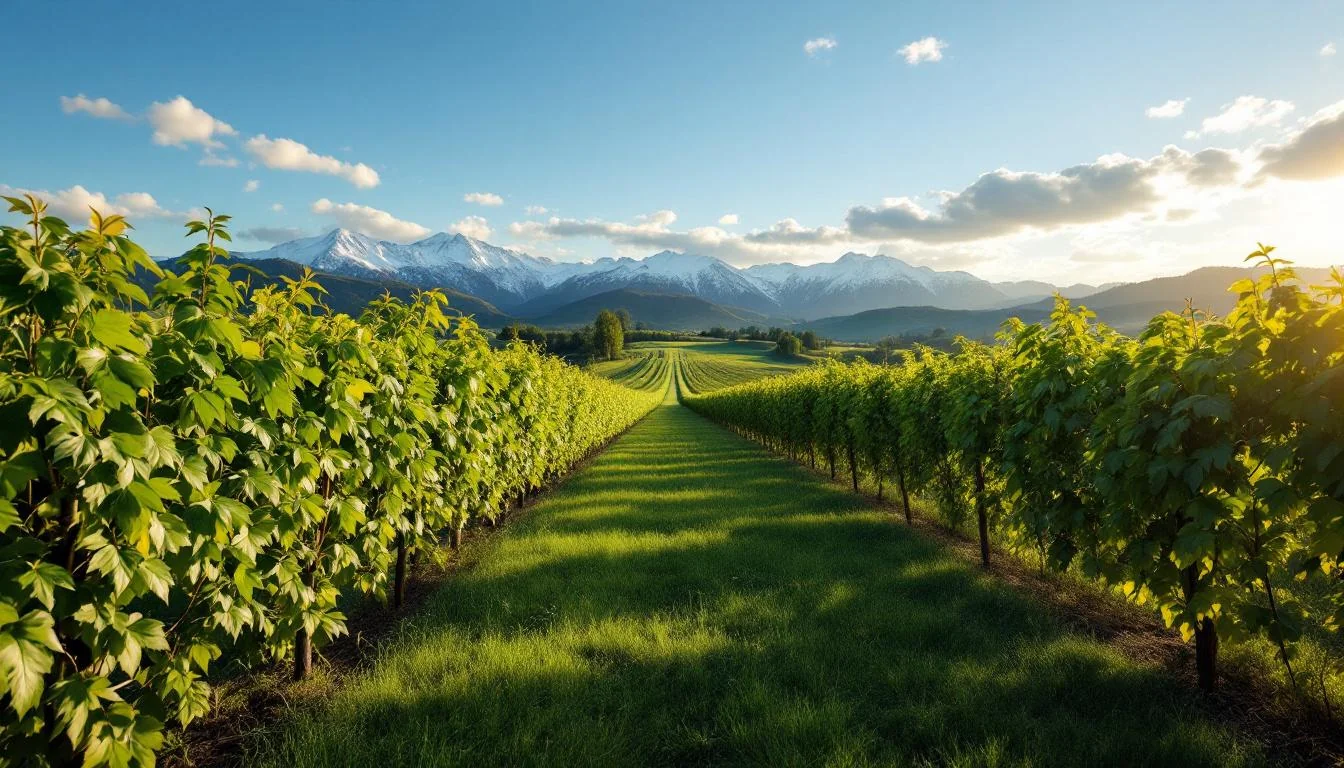
By 2010, demand far exceeded supply. New Zealand had only a few hundred hectares of hop plantations, and not all of it was dedicated to Nelson Sauvin. Prices skyrocketed. Long-term contracts were signed years in advance. Nelson Sauvin became one of the world's rarest and most expensive hop varieties — not because of marketing, but because it was simply impossible to produce enough.
Technical specifications
Nelson Sauvin has alpha acid levels ranging from 12% to 14%, placing it in the dual-purpose hop group — strong enough to be bitter, complex enough to be aromatic. Beta acid ranges from 6% to 8%, resulting in a softer bitterness compared to other American hop varieties with similar alpha levels.
What makes the difference lies in the composition of the essential oil. The total oil content is approximately 1.01 TP3T to 1.21 TP3T — not unusually high, but the structure of the essential oil is very special. Humulene is present in low proportions, while thiol and terpene compounds such as geraniol and linalool predominate. It is this imbalance that creates the characteristic wine aroma.
The harvest season in Nelson takes place in March — autumn in the Southern Hemisphere. Timing is crucial: harvesting too early lacks complexity, while harvesting too late results in a loss of freshness. Farms here harvest using machines but conduct manual quality checks, ensuring each batch meets stringent export standards.
Aroma and flavor
Opening a bag of Nelson Sauvin, the first thing that hits your sense of smell is the aroma of ripe white grapes. Not table grapes, not red wine grapes. This is the scent of Sauvignon Blanc—fresh, crisp, slightly tart. Behind that is a layer of gooseberry, a sweet and sour berry not commonly found in Vietnam but prevalent in temperate regions.
When used in beer, the aroma develops further depth. Dry-hopping with Nelson Sauvin yields notes of white grapefruit, lemon, and sometimes ripe passion fruit. There's a subtle herbal note—not pine like American hop, but closer to fresh grape leaves, lemongrass, or basil.
Nelson Sauvin's bitterness is distinct from other hop varieties. It's not harsh or lingering like Simcoe or Columbus. Instead, the bitterness comes and goes quickly, leaving a refreshing aftertaste, like having just eaten a piece of green fruit. Some brewers describe it as "crisp bitterness"—a crisp, sharp bitterness.
The most unique thing is the almost “vinous” sensation—it's wine-like. When you drink a heavy, dry-hopped IPA with Nelson Sauvin, your brain gets confused for a split second. Is it beer or wine? The line blurs. That's the appeal, and also why some people don't like it—they want beer to be beer.
The beer style uses Nelson Sauvin.
The New Zealand Pilsner style is made to celebrate Nelson Sauvin. It features a light, clear malt base that doesn't interfere with the hop notes. The bitterness is moderate, ranging from 30-40 IBU. A gentle dry-hopping allows the white grape aromas to rise as soon as the bottle is opened. This is how to drink Nelson Sauvin in its purest form—like listening to an unorchestrated acoustic piece.
IPA And its variations are Nelson Sauvin's biggest playground. American IPAs using Sauvin in dry-hop produce complex tropical flavors, distinct from traditional American hop varieties. Many brewers blend Nelson Sauvin with Citra or Mosaic—combinations that create unforgettable layers of aroma, from grape to mango to passion fruit.
Hazy IPAs and New England IPAs also favor Nelson Sauvin, though caution is needed with the dosage. The wine-like aromas can overpower other hop varieties if used excessively. Experienced brewers often use Sauvin as an "accent"—a highlight in a composition, not the main melody.
Saison and Farmhouse Ale is an unexpected yet logical combination. The Belgian yeast base produces fruity esters, which, combined with the grape notes of Nelson Sauvin, result in a beer of extraordinary depth. Several breweries Belgian beer Modernists have begun experimenting with this New Zealand hop variety.
Comparison with other hop varieties in the same group
Motueka, another New Zealand hop variety, is often confused with Nelson Sauvin. But Motueka leans more towards citrus notes—lemon, lime, sometimes lemon zest. There are no wine notes. Motueka is easier to wear, less “quirky,” and suitable for those who want a New Zealand flavor but don't want to be too different.
Riwaka is Nelson Sauvin's closest sibling in terms of complexity. Riwaka boasts intense passion fruit notes, grapefruit, and a hint of pine. If Nelson Sauvin is Sauvignon Blanc, then Riwaka is like a tropical fruit cocktail. Both are expensive, rare, and highly sought after by craft brewers.
Compared to Hallertau Blanc—a German hop variety bred to mimic the aroma of wine—Nelson Sauvin retains its "original" status. Hallertau Blanc has grape aromas but is lighter and more easily integrated into traditional German styles. Nelson Sauvin is more robust, requiring brewers to design recipes around it, not the other way around.
How to recognize when enjoying it
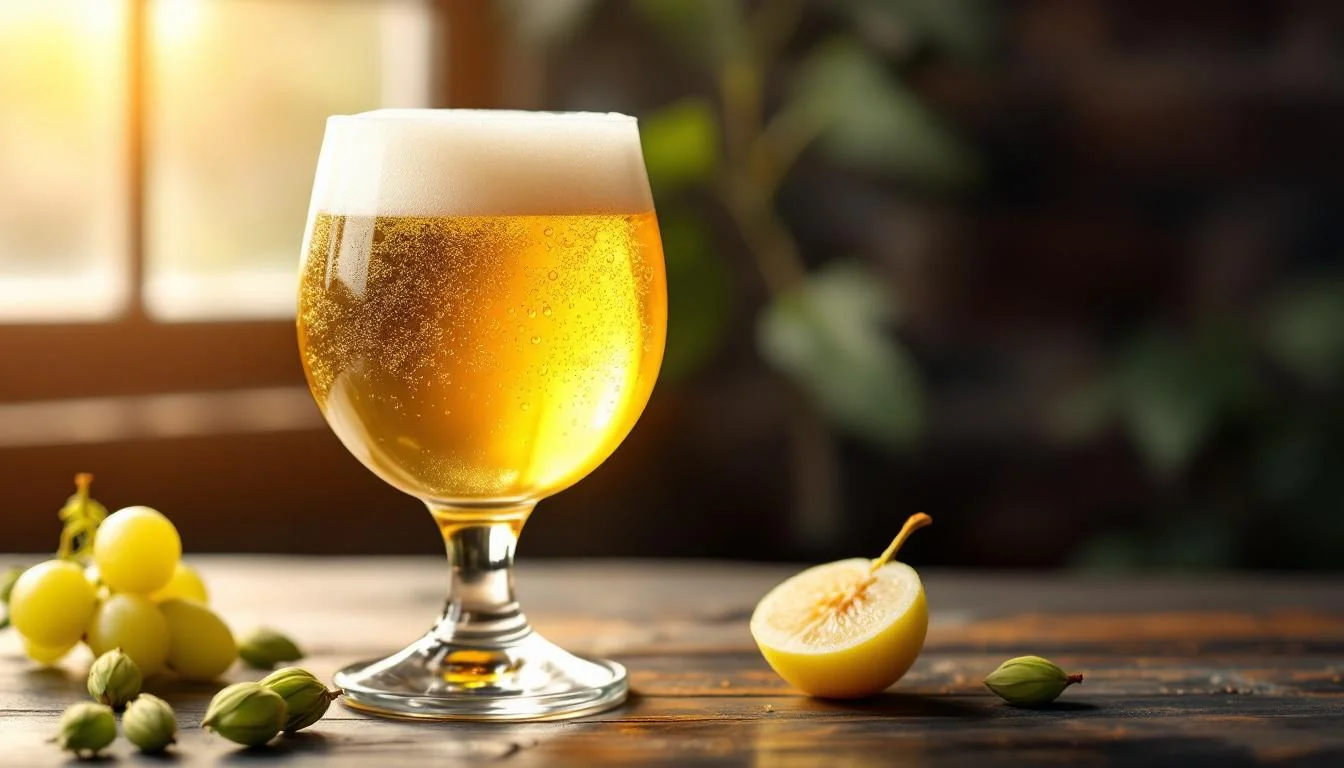
When handling an IPA made with Nelson Sauvin, start with your nose. Bring the glass up and take a gentle sniff. If you detect the aroma of white grapes—not red grapes, not raisins—that's the first sign. This might be accompanied by gooseberry, a slightly sour scent like unripe fruit.
With the first sip, let the beer spread across your tongue. The bitterness of Nelson Sauvin comes from the middle of the tongue, not from the sides like many American hops. It's sharp but not lingering. After swallowing, the aftertaste is slightly "dry"—dry, like having just drunk a sip of dry white wine.
Allow the beer to warm up a few degrees after about ten minutes. The aroma will change. Tropical fruit notes become more prominent — passion fruit, lychee, sometimes cantaloupe. This is when Nelson Sauvin shows its true depth, far exceeding the initial impression.
A bottle of Nelson Sauvin beer isn't meant to be drunk quickly. This is the kind of hop for slow afternoons, when we have time to listen to what a plant from the ends of the earth wants to tell us. Each sip is a reminder: beer can go further than we ever imagined — if we stop and truly savor it.