
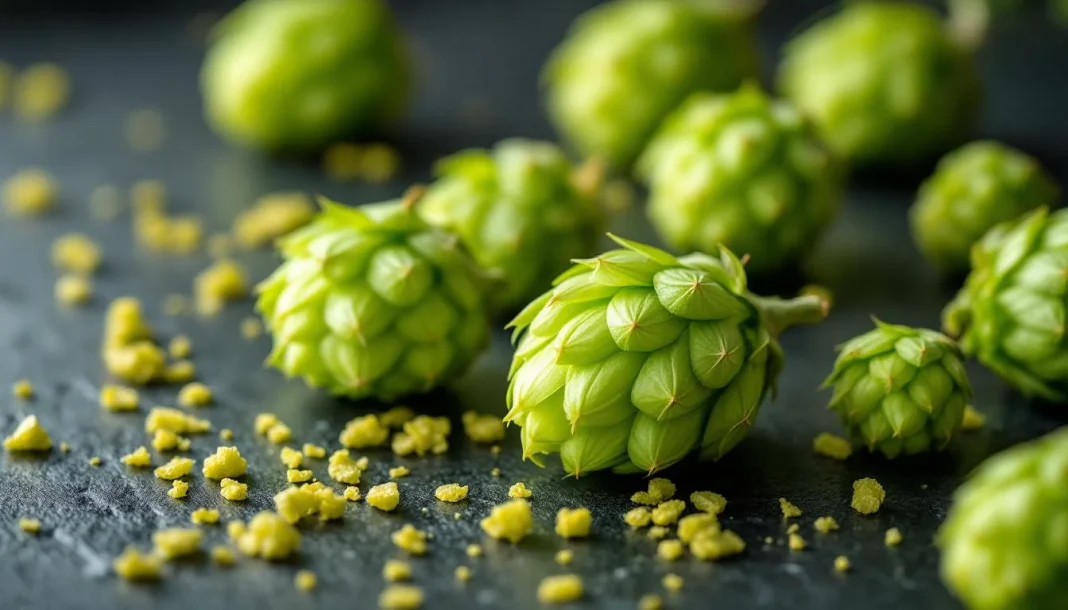
There are afternoons in Nelson when the sun slants across the Richmond Range, and people harvest clusters of hops still wet with dew. Their hands are stained with yellow sap. The scent of fresh lemon fills the air. This is Motueka — the hop variety born in the land known as New Zealand's "sun capital.".
We often mention Nelson Sauvin when talking about New Zealand hops. But Motueka, its sibling from the same region, tells a different story. Not as flamboyant as sauvignon blanc. Not overwhelming from the first sip. Motueka chooses a gentler way of speaking—with very real lemon notes, a hint of basil, and tropical fruit flavors that only emerge when you slow down and listen.
This hop variety doesn't try to be a star. It does its job well: bringing freshness to the beer without overpowering everything else. Perhaps that's why brewers from America to Japan turn to Motueka when they want a beer that's deep yet easy to drink.
Origin and history
Motueka was developed by the New Zealand Hort Research Institute (now Plant & Food Research) in Riwaka, a small town at the entrance to Abel Tasman National Park. New Zealand's hop breeding program began in the 1970s, when scientists realized that the unique climate conditions of the Nelson region could produce hop varieties with flavors unlike anywhere else.
This hop variety was officially released in 1997, bearing the code B Saaz during the testing phase. The name Motueka is derived from the river of the same name that flows through the Tasman region—a river that the Māori call “the end of the valley.” This is also how New Zealanders name many of their hop varieties: associating them with the place, the river, or the mountain where they originate.
Genetically, Motueka is the result of a cross between a Czech Saaz hop variety and native New Zealand varieties. The Saaz bloodline explains Motueka's "noble" character—its ability to deliver a soft bitterness and delicate aroma rather than the aggressiveness of many American hop varieties. But Nelson soil has added tropical notes that the original Saaz never possessed.
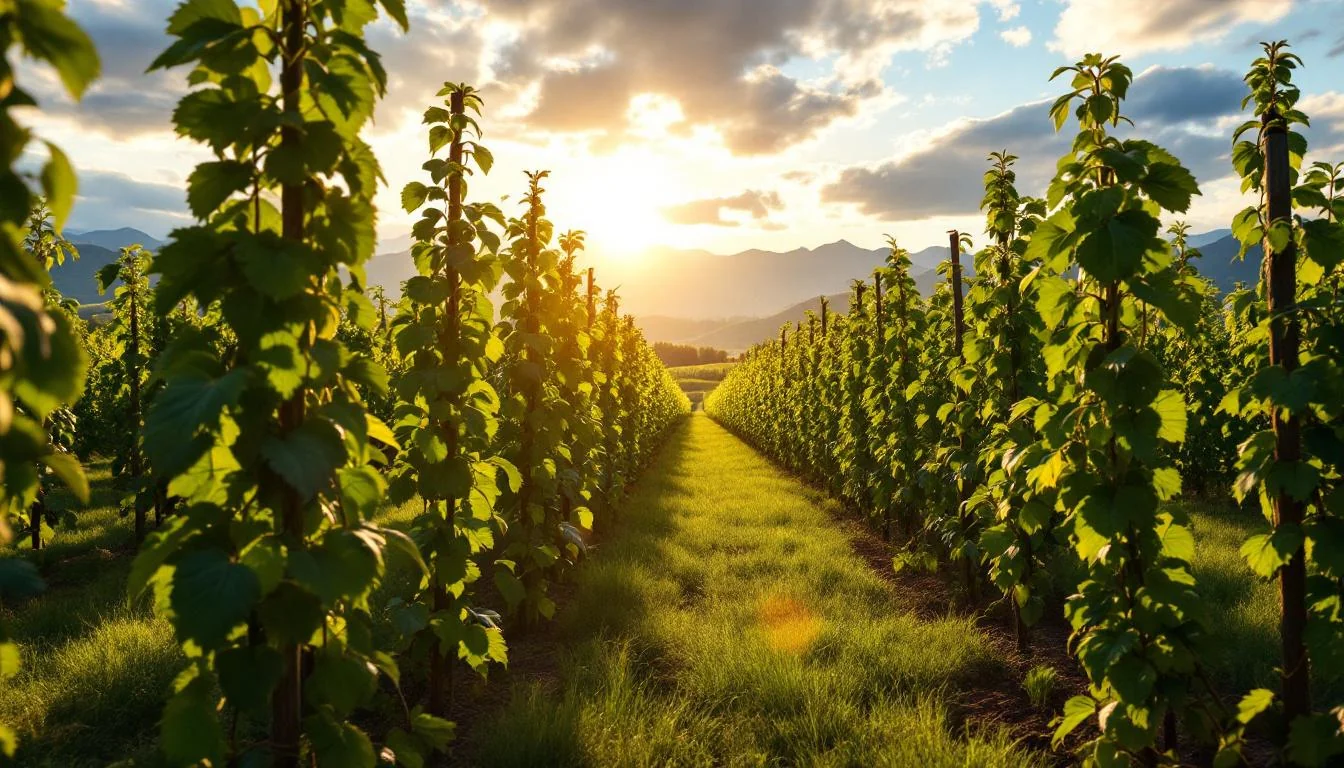
The Nelson region is located at the northern tip of New Zealand's South Island, bordered by the Richmond Range and the Kahurangi Mountains. This topography creates a unique microclimate: the sunniest in New Zealand (averaging 2,400 hours of sunshine per year), moderate rainfall, and winds from the Cook Strait carrying sea salt. The soil here is a mixture of river alluvium and weathered granite—rich in minerals but well-drained.
The hop growing area in Nelson accounts for over 951 TP3T of New Zealand's hop production. Hop farms are concentrated around the Motueka and Riwaka valleys, where 5-6 meter high hop trellises stretch along Highway 60. The harvest season runs from mid-February to the end of March — when the Southern Hemisphere is in the late summer.
Over the past two decades, Motueka has carved out its own niche in the global craft beer community. Not as viral as Nelson Sauvin, not as controversial as Riwaka, Motueka is the "workhorse" hop—quietly, reliably, and consistently delivering results.
Technical specifications
Motueka belongs to the group of hops with a low to medium alpha acid content, ranging from 6.5% to 7.5%. This places Motueka in a similar position to traditional European noble hop varieties, suitable for both bitterness and flavoring. Beta acid is in the range of 5.0% to 5.5%, resulting in an alpha/beta ratio close to 1:1 — a characteristic often found in hop varieties highly valued for their aromatic qualities.
The total oil content of Motueka is approximately 0.8 to 1.0 ml/100g, not very high compared to modern American hop varieties, but sufficient to create a distinct aroma when dry-hopping. In the oil composition, myrcene accounts for about 471 TP3T, humulene about 81 TP3T, and caryophyllene about 51 TP3T. The high proportion of myrcene explains the characteristic fruity and herbal aroma of this hop variety.
In terms of shelf life, Motueka retains approximately 50-55% alpha acid after 6 months of storage at room temperature—average compared to other hop varieties. This means that cold and airtight storage is necessary to maintain aromatic quality. The harvest season in Nelson runs from February to March, and fresh Motueka hop is often sought after by New Zealand and Australian breweries for fresh hop brewing batches.
Aroma and flavor
The first and most distinct note of Motueka is lemon. Not the tart, sour lime, but Meyer lemon—sweeter, more aromatic, with a thick peel rich in essential oils. When you crush a Motueka hop cone between your fingers, that scent immediately pops up.
Behind the lemon notes lies the scent of fresh basil—not the strong Italian basil, but a milder, slightly sweet Thai basil. This is the note that makes Motueka special among citrus hop varieties. Many other hops offer notes of orange, grapefruit, or lime, but very few combine citrus with fresh herbs in such a harmonious way.
In the middle notes, Motueka offers tropical fruit aromas—primarily passion fruit and a hint of ripe mango. These notes aren't as intense as Nelson Sauvin or Galaxy, but they're enough to provide depth and complexity. Some brewers have even detected white pear and green apple notes when using Motueka in the late hopping stage.
In terms of flavor, Motueka offers a soft, non-sharp bitterness. The bitterness dissipates quickly, leaving a clean aftertaste with a hint of fruity sweetness. This is why Motueka is favored in session beers—light, easy-to-drink beers that don't require intense concentration from the drinker.
When dry-hopping, Motueka performs best at low fermentation temperatures. Lemon and basil notes are more prominent. At higher temperatures, tropical notes become dominant. This is a characteristic that experienced brewers often utilize to adjust the flavor profile of their batch of beer.
The Motueka style of beer
Motueka shines in beer styles that need freshness but don't want to be overwhelmed by hops.
Pilsner and New Zealand-style Lager
The Saaz bloodline in Motueka makes it a natural choice for the species. Pilsner-style light beer. New Zealand breweries like Emerson's and Panhead have used Motueka to create locally-refined versions of Pilsner—retaining the crispness and drinkability of traditional Pilsner, but adding the characteristic lemon and tropical fruit notes of the Nelson region. With its moderate alpha acidity, Motueka allows brewers to achieve a bitterness of 25-35 IBU without worrying about excessive bitterness.
Session IPA and American Pale Ale
In line IPA, Motueka is often found in Session IPA recipes—IPAs with a low alcohol content (3.5-4.5% ABV) but still retaining their hoppy character. Motueka's fresh lemon notes are refreshing, while its soft bitterness doesn't tire the palate after a few glasses. Many brewers pair Motueka with Citra or Mosaic to create more complex flavors while maintaining balance.
Belgian Wit and Wheat Beer
Motueka's basil and citrus characteristics make it an interesting choice for wheat beer Belgian style. Instead of adding coriander peel as traditionally done, some brewers use Motueka in the late hopping stage to create a layer of natural citrus and herbal flavors. The result is New World-style Wit versions — familiar but with a fresh twist.
Season
In Belgian beer In the Saison line, Motueka complements the yeast-derived ester notes (often peach and pear) with fresh citrus and herbal undertones. This combination creates complex, multi-layered Saison fragrances, perfect for warm weather.
Compare to hops in the same group
In the New Zealand hop family, Motueka is often compared to his two brothers: Nelson Sauvin and Riwaka.
Motueka and Nelson Sauvin
Nelson Sauvin is famous for its sauvignon blanc notes—gooseberry, white currant, and a hint of sulfur. It's a divisive hop variety: lovers adore it, haters can't stand it. Motueka is much milder. Motueka's citrus notes are more approachable, less controversial, and easier to combine with other hops. In terms of alpha acidity, Nelson Sauvin has a higher level (12-131 TP3T) than Motueka (6.5-7.51 TP3T), meaning Nelson Sauvin is more effective at creating bitterness but is also more prone to overwhelming.
Motueka and Riwaka
Riwaka (formerly D Saaz) shares the same Saaz origins as Motueka but boasts a more intense flavor profile—passion fruit, grapefruit, and a hint of "dank" (pine resin). Riwaka is often described as "Nelson Sauvin lite" in terms of intensity. Motueka is even milder than Riwaka, making it more suitable for beers that require subtlety rather than ostentation.
Motueka and traditional Saaz
Compared to the Czech Saaz—a hop ancestor—Motueka retains the noble character: a soft bitterness and subtle herbal notes. But Motueka adds a layer of citrus and tropical fruit that Saaz lacks. If Saaz is a Viennese classical symphony, Motueka is a jazz improvisation on the same melody.
How to recognize when enjoying it
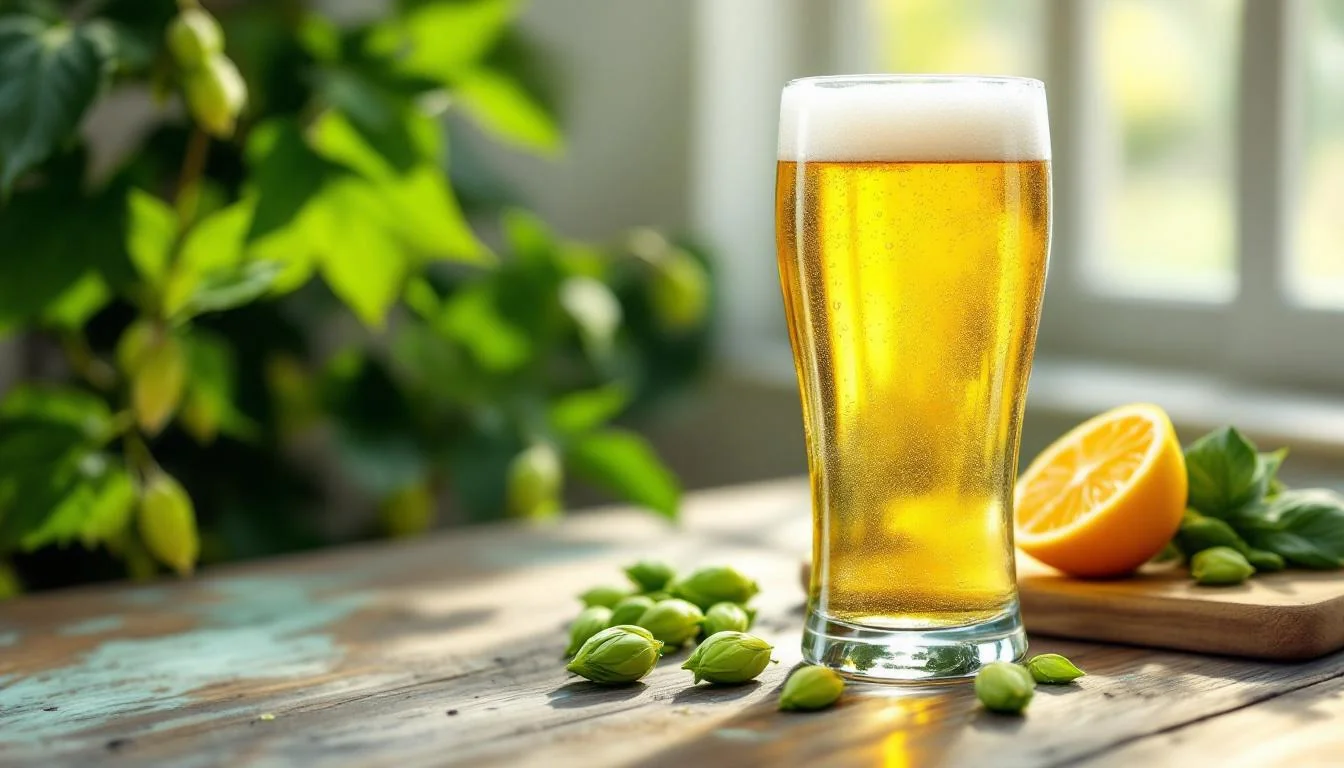
When handling a glass of Motueka beer, start with your nose before your mouth. Bring the glass close and take a gentle sniff. If you detect the scent of lemon—not lime, not lime, but lemon—that's the first sign. Then, look for hints of basil or fresh herbs hidden beneath the citrus notes.
With the first sip, pay attention to the bitterness. Motueka doesn't produce the sharp bitterness on the tip of the tongue like Centennial or Columbus. Motueka's bitterness is softer, rounder, appearing in the middle of the tongue and dissipating quickly. If you're drinking a moderately bitter Pilsner or Pale Ale and feel a "clean" after each sip—it's highly likely that hop contains Motueka.
The aftertaste is where Motueka leaves the deepest impression. About 10-15 seconds after swallowing, if you can still feel a slight lemony taste and a hint of fruity sweetness in your throat — that's the signature of this hop variety. It doesn't linger to the point of being unpleasant, but long enough to make you want another sip.
There are types of hop that demand immediate attention. Motueka is not one of them. It rewards those who know how to slow down, how to listen to what is more subtle than the noise.