
In the autumn of 1978, at a small brewery on the outskirts of Munich, the old brewer was inspecting a batch of Helles that had just finished fermenting. He tasted it and nodded. The bitterness wasn't harsh, nor did it overpower the malt. The aroma was fleeting—a hint of flowers, a hint of spice—then vanished as if it had never existed. It was the first time the brewery had used a new hop variety, recently officially announced by the Hüll Hop Research Institute. They called it Perle.
Forty years later, Perle is still there—in crisp Pilsners, in summer Kölsch batches, in millions of liters of beer exported worldwide. Unobtrusive. Undemanding attention. Simply doing its job quietly: delivering a balanced bitterness and subtle aroma that no one complains about, yet few remember its name.
Perhaps that's the destiny of hop varieties like Perle. They weren't born to be stars. They were born to be background, to set the rhythm, to let everything else—malt, yeast, water—shine. But without them, everything would fall apart.
Origin and history
Perle originated from a systematic breeding program in Hüll, a small town in the heart of Bavaria's Hallertau region. This is where the German Hop Research Institute — Hopfenforschungszentrum — is located, responsible for developing and preserving hop varieties for the German brewing industry since 1926.
The story begins in the 1960s. The German hop industry faced numerous challenges: pests and diseases, low yields, and increasing demand from breweries for more stable hop varieties. Northern Brewer—a British hop variety bred in 1934—proven good disease resistance, but its flavor was too strong, too “wild” for traditional German palates.
Researchers at Hüll decided to cross Northern Brewer with a native German hop variety, attempting to retain the resilience of the British parent while taming the flavor to Bavarian style. The work spanned over a decade. Hundreds of hybrid lines were tested, evaluated, and discarded.
In 1978, hybrid line number 108/67/1 was selected and officially named: Perle. The name means "pearl" in German—a humble but accurate choice. Perle doesn't sparkle like a diamond. It shines softly, discreetly, its value only appreciated by those with discerning eyes.
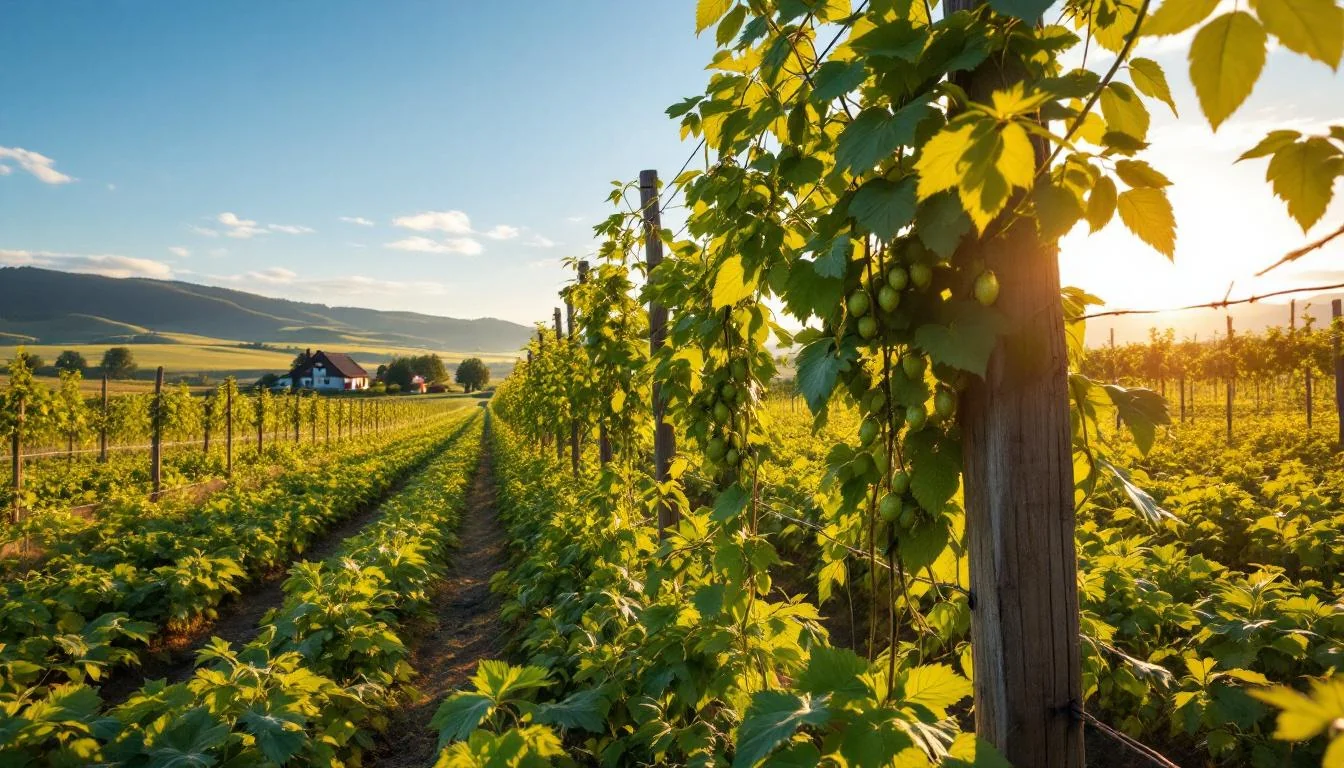
The Hallertau region, where Perle originated and remains the primary source, spans approximately 178 km² in central Bavaria. It is the world's largest hop-growing region, accounting for around 301 TP3T of global hop production. The gently sloping terrain, sandy clay soil, and moderate rainfall all create an ideal environment for hop cultivation.
Upon its release, Perle was quickly embraced by Bavarian farmers. It yielded higher than traditional varieties, was resistant to Verticillium fungus and downy mildew, and most importantly, it conformed to the Reinheitsgebot—the German beer purity law—not only legally but also spiritually: a clean, unadulterated, and uncomplicated flavor.
By the 1990s, Perle had spread beyond Germany's borders. American farmers began cultivating it in the Pacific Northwest, particularly in Oregon and Washington. Perle adapted well to the Bavarian-like climate in these regions, although the flavor was slightly different—the floral notes were a bit more prominent, the herbal notes less pronounced.
Technical specifications
Perle belongs to the dual-purpose hop group — it can be used for both bittering and aroma. The alpha acid content ranges from 6% to 9.5%, depending on the growing region and harvesting conditions. This level is high enough to create an effective bitterness, but not so strong as to be difficult to control.
Beta acids range from 4% to 5%, creating a balanced alpha/beta ratio. This is important for beer aging—beta acids oxidize more slowly than alpha acids, helping to maintain consistent bitterness over time.
The total oil content ranges from 0.7 to 1.3 ml/100g, of which myrcene accounts for approximately 25-35%, humulene approximately 28-33%, and farnesene is very low, below 1%. The moderate proportion of myrcene explains why Perle has a much more delicate aroma than many modern American hop varieties, which can contain over 50% of myrcene.
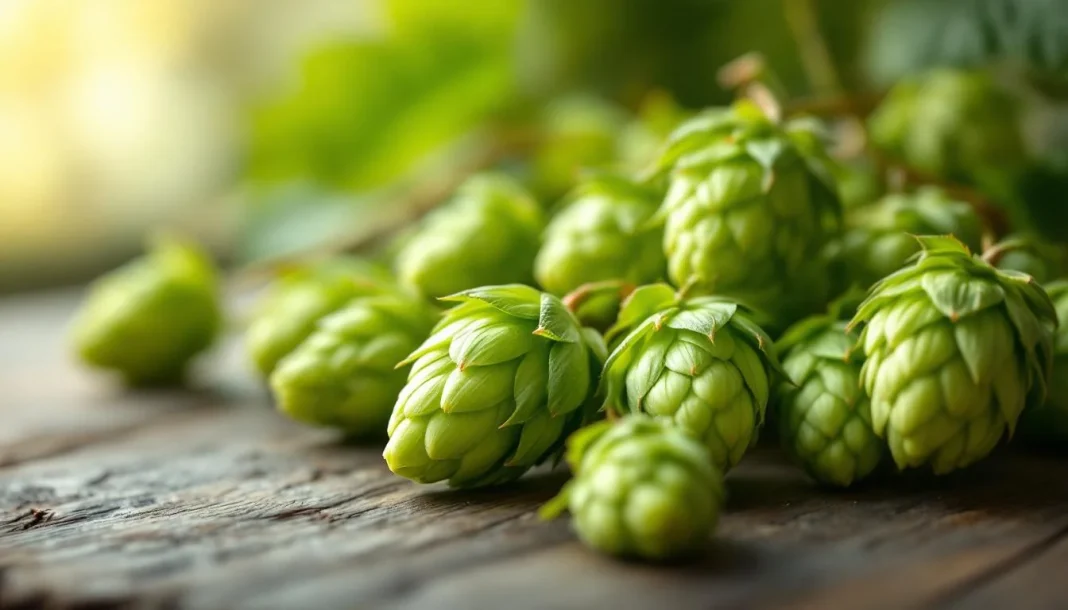
The harvest season in Hallertau typically falls between late August and mid-September. Perle ripens about a week later than Hallertauer Mittelfrueh, allowing farmers to schedule their harvests accordingly. Hop cones are medium-sized, compact in shape, and yellowish-green when ripe.
Aroma and flavor
Open a freshly sealed package of Perle pellets and take a deep breath. The first thing that hits your nose is the smell of grass—not freshly cut grass, but sun-dried, warm, and clean grass. Behind that is a hint of flowers—small white flowers, perhaps daisies or elderflowers, not overpowering but distinct.
Wait a few more seconds, and the second layer of scent emerges. A hint of light spice—mint, perhaps thyme or oregano, but not spicy. Then comes an almost metallic, bright note, like when you smell an old silver coin. That's characteristic of the inherited Northern Brewer lineage.
When boiled in water, Perle releases additional subtle fruity notes—a hint of unripe pear, a touch of green apple. But don't expect a tropical fruit bombshell like newer American hop varieties. Perle tells its story in whispers, not shouts.
In finished beers, especially when used as bitter hops, Perle's bitterness is clean and concise. It arrives quickly, doesn't linger, and doesn't leave a metallic or spicy aftertaste like some high-alpha varieties. The word "smooth" is often used to describe this bitterness. It doesn't compete for attention with the malt or yeast.
If Perle is used for dry hopping or late addition, the herbal aromas will be more prominent. Some people recognize the scent often found in vermouth—a combination of dried herbs and a clean bitterness. That's why Perle is sometimes used in aperitif beers.
Beer style using Perle
German Pilsner is Perle's main stage. Style light beer This requires a distinct but not overpowering bitterness, and a subtle but not overly complex hop aroma. Perle fulfills both. Many German breweries, particularly in the Franconia region, use Perle in combination with Hallertauer Mittelfrueh or Tettnang — Perle for bitterness, like noble hop for aroma.
Kölsch, Cologne's signature beer style, often incorporates Perle in its recipe. Kölsch requires a delicate balance between light malt and hop—neither side should be overdone. The clean bitterness of Perle allows the subtle fruity notes from the ale yeast to emerge without being masked.
Some wheat beer American styles also use Perle. Traditional Bavarian Weizen is usually less hop-heavy, but American Wheat versions need a touch of bitterness for balance. Perle, with its light herbal notes, harmonizes with the banana and clove esters from the yeast without clashing.
In the craft beer scene, Perle is less frequently mentioned for lacking "character" by modern standards. However, some experienced brewmasters still use it as a base bitter hop for their craft beers. IPA — Perle provides a clean bitterness base, then aromatic hop varieties like Citra or Mosaic are added later to create flavor. The result is a deep bitterness without any "contamination.".
Compare to hops in the same group
Compared to Northern Brewer—its direct parent—Perle is considerably softer. Northern Brewer has a sharp, bitter taste, sometimes described as “rustic” or “woody,” with distinct pine and mint notes. Perle retains some of that character but has been tamed, like a city dweller learning to speak softly after years of living in the countryside.
Hallertauer Mittelfrueh, Germany's most famous noble hop variety, has a more complex aroma than Perle—multiple layers of floral and spicy notes layered upon each other. However, Mittelfrueh has lower alpha acids (3-5.5%) and is more difficult to cultivate, being more susceptible to disease. Perle is the practical solution: nearly as delicate, but more robust and reliable.
Tettnang, another noble hop from the Bodensee region, has an aroma profile closer to Perle than Mittelfrueh. Both have light herbal and floral notes. However, Tettnang leans more towards aroma, while Perle balances bitterness and aroma. Many recipes use both: Perle at the top, Tettnang at the bottom.
How to recognize when enjoying it
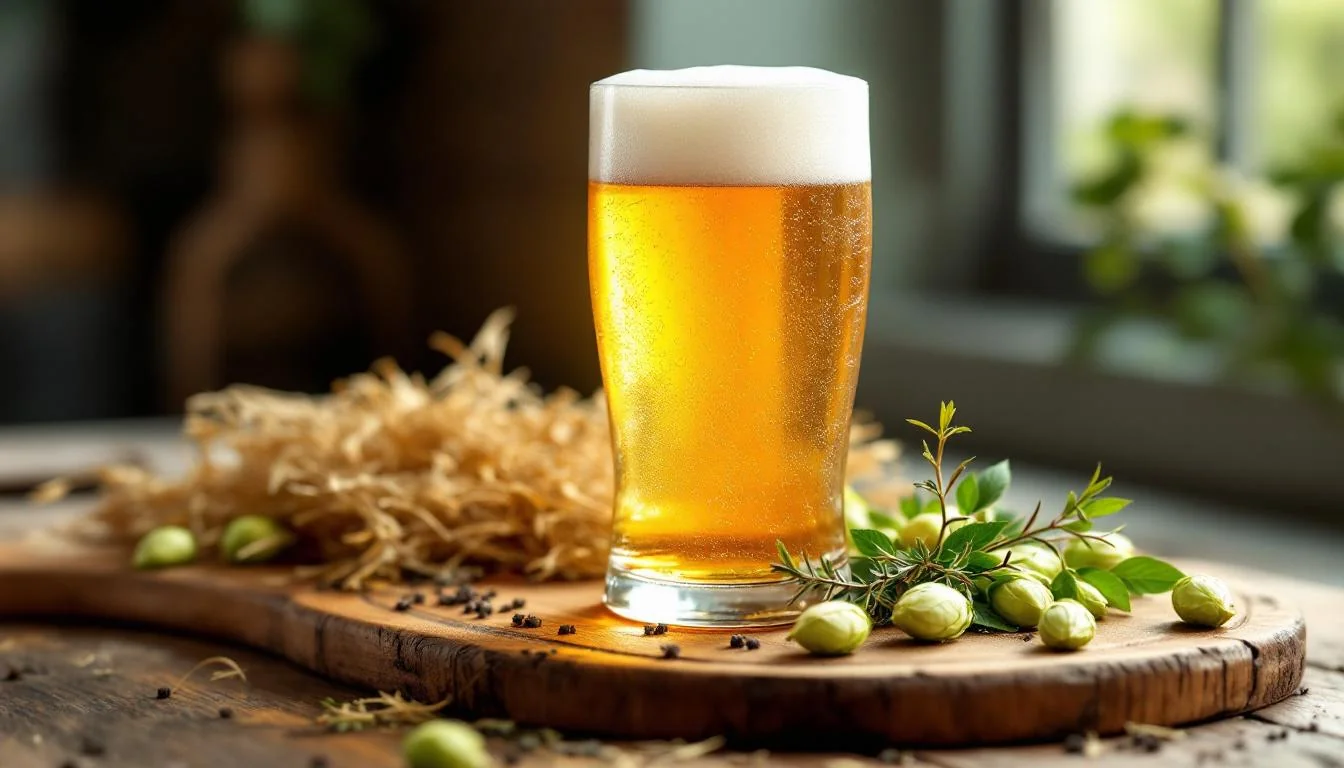
When you pick up a glass of German Pilsner or Kölsch that you suspect contains Perle, start with your nose. Take a light sniff above the foam. If you detect the smell of dried grass—not fresh grass, not flowers—that could be the first sign. A hint of herbs like hay or thyme lurking behind it will further solidify the suspicion.
With the first sip, pay attention to the bitterness. Perle's bitterness appears in the middle of the tongue, not at the tip like some high-alpha varieties. It doesn't linger all the way down the throat. Instead, it recedes quickly, leaving a clean, dry sensation—like when you drink lightly sparkling mineral water.
The aftertaste is where Perle reveals its quiet nature. No fruity aftertaste. No metallic notes. Just a slight bitterness and a hint of herbs—then it vanishes, inviting the next sip.
Next time you have a glass of Pilsner in the late afternoon, don't swallow it too quickly. Let the beer linger on your tongue for a second. Look for that tranquility—the bitterness doesn't demand attention, the aroma doesn't try to impress. That could be Perle, the pearl of Bavaria, quietly fulfilling its purpose after more than forty years.