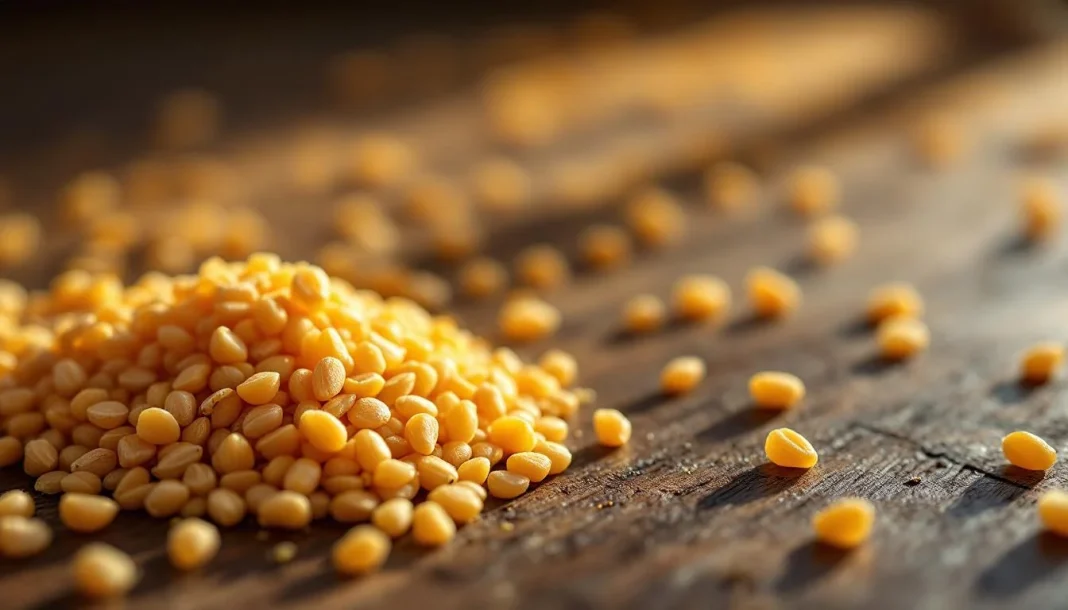
Some malts are made to be the base. Vienna Malt is not one of them.
It's a base malt, yes. But it doesn't stand still. Since the 19th century in Austria, this malt has defined a style of beer for itself — and the name Vienna Lager still resonates today. Warm amber hue, subtle toasted bread aromas, a light sweetness reminiscent of wild honey. It all begins with barley grains kiln-dried at a higher-than-normal temperature — just enough to be aromatic, not enough to burn.
Origin and history
In 1841, Vienna was the heart of the Austro-Hungarian Empire. And Anton Dreher was facing a decision that would change the history of European beer.
Dreher was no ordinary man. He inherited the Schwechat brewery from his father, but instead of continuing down the old path, he chose to learn. His travels to England and Bavaria in the 1830s opened up a new world for him—the world of lager, of bottom-fermentation, of patience. He brought back to Vienna not only knowledge, but also valuable cold-fermented yeast strains.
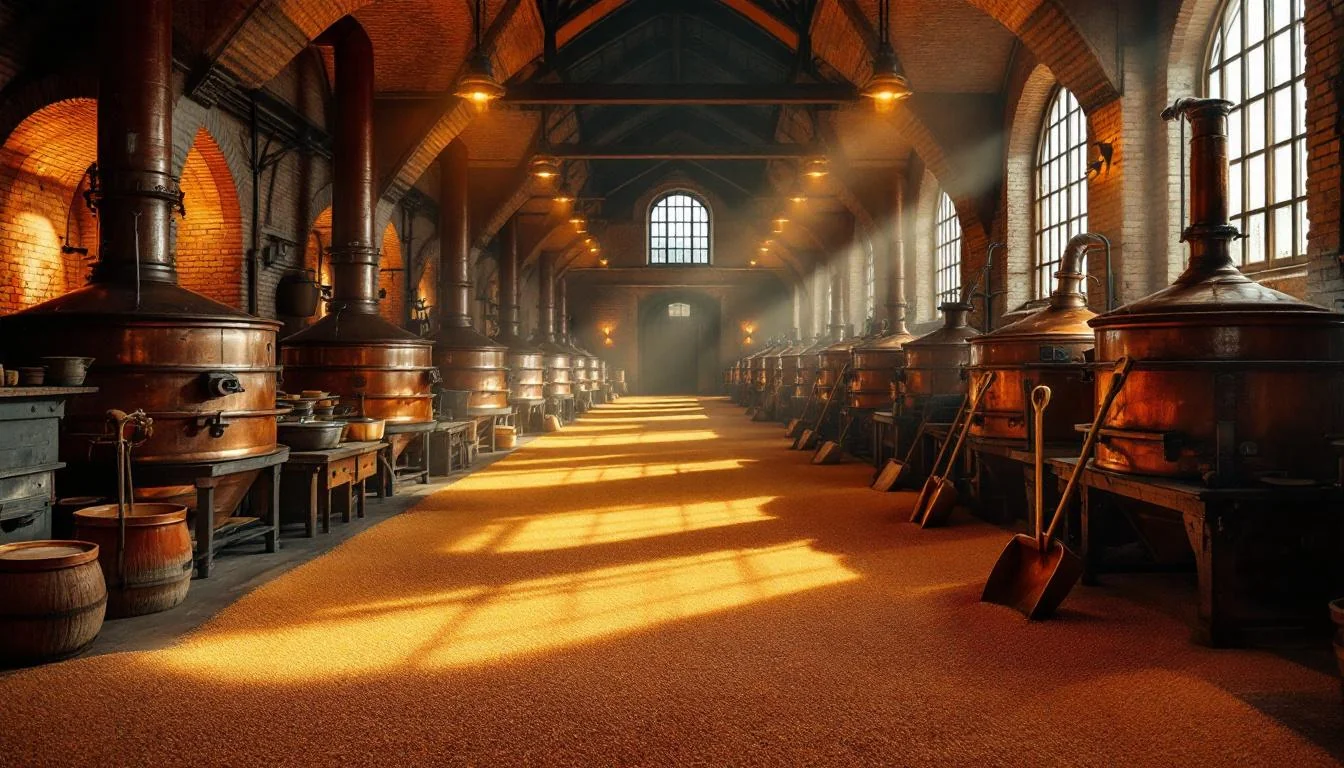
But the malt drying technology was the real turning point. Before that, most continental European malt was dried directly over fire—smoke, pungent smell, dark brown color. Dreher gained access to indirect drying techniques from England, where coke had replaced wood since the beginning of the century. He improved upon this, adjusting the kilnning temperature to be higher than Pilsner malt but lower than Munich malt—around 90-100°C.
The result is Vienna Malt. An unprecedented amber color. A more complex aroma than English light malt. And it retains enough enzymes to naturally break down the starch.
In October 1841, Dreher launched Vienna Lager at the Schwechat distillery. That same year, a few hundred kilometers north of Vienna, Josef Groll introduced Pilsner in Plzeň. Two beers, two malts, two different destinies. Pilsner would dominate the world. Vienna Lager would almost disappear from its homeland.
Not because it's bad. But because history spares no one. Two world wars devastated Central Europe. The Austro-Hungarian Empire collapsed. The Schwechat brewery changed hands many times. Vienna Malt was still produced, but the style of beer bearing the city's name gradually faded into obscurity — until Mexican brewers, descendants of 19th-century Austro-German immigrants, kept the flame burning for hundreds of years.
Production process
Vienna Malt begins like any other malt — from high-quality, double-row barley grains.
Soak in water. Germinate. Up to this point, nothing is different. The barley seeds remain in the germination chamber for about 4-5 days, rootlets emerge, and enzymes are activated. Humidity is maintained at 44-46 LTP3T.
The difference lies in the kiln drying. While Pilsner malt is dried at a low temperature (around 80-85°C) to preserve its pale color and maximum enzyme content, Vienna malt is subjected to higher temperatures—90-100°C in the final stage. The drying time is longer. The Maillard reaction begins to occur more vigorously.
The Maillard reaction—the interaction between amino acids and reducing sugars at high temperatures—produces melanoidins. These are the source of the amber color, the toasted bread aroma, and the complex sweetness. But the temperature is not high enough to completely destroy the enzyme. Vienna Malt retains a significant amount of diastatic power—enough to function as a true base malt.
After kiln-drying, the grains are derooted, cleaned, and rested for several weeks before packaging. The final moisture content is below 4%. The finished malt is hard, crisp, and emits a pleasant aroma when broken in half.
Technical specifications
Vienna Malt lies in the middle ground — light enough to be a base, dark enough to be distinctive.
In terms of color, Vienna Malt ranges from 6-9 EBC, equivalent to approximately 3-4 degrees Lovibond. This is the most characteristic color range for this malt — sufficient to produce a beer with a distinct amber hue when used as a sole malt base, but still not reaching the brown range of Munich malt. Some producers, such as Weyermann, offer Vienna malt at 5.1-6.0 EBC, while Briess offers a 5.5-7.9 EBC version.
The extractability of Vienna Malt is in the range of 80-821 TP3T (fine grind, dry basis), slightly lower than standard Pilsner malt (82-841 TP3T). This makes perfect sense — some of the starch has been converted into melanoidins during the kilning process. For a practicing brewer, this means that approximately 2-31 TP3T more malt mass is needed to achieve the same original specific gravity.
Diastatic power—the ability to convert starch—is the most important factor for a malt base. Vienna Malt maintains around 50-60 Lintner (or 130-160 WK in the European system). This is sufficient to completely convert its own starch and support a small amount of enzyme-free adjunct. However, if the recipe requires a high adjunct ratio (above 20%), Pilsner malt or exogenous enzymes should be added.
The protein content is typically 10-11.51 TP3T, sufficient to create the body and maintain the foam without causing excessive cloudiness. High modification—Kolbach index around 38-451 TP3T—allows for single-infusion mash cooking without requiring separate protein breaks.
Flavor and color
Holding a glass of pure Vienna Malt beer, the first thing that catches the eye is its color.
Not the straw gold of Pilsner. Not the bronze brown of Munich. It's amber gold—the color of honey when the afternoon sun shines through, the color of autumn leaves changing color. This hue comes from melanoidins, compounds produced in the Maillard reaction. They not only create color but also carry their own story of aroma and flavor.
The aroma of Vienna Malt is that of toasted bread. Not burnt bread, not a crispy crust — but the warm, freshly baked interior of bread. There's a hint of wild honey sweetness. A touch of almond, biscuit, and roasted grain notes. All blended together in a gentle, understated whole.
The sweetness of Vienna Malt is so subtle that many people don't realize it's there—until they try a glass of pure Pilsner malt right afterward. The difference is clear: Vienna offers depth, roundness, a light, underlying sweetness. It's not as harshly sweet as Crystal Malt beer. Not caramel-sweet. Just a warmth on the tongue.
The finish of Vienna Malt beers is often drier than one might expect. Melanoidins aren't sugars—they don't ferment, but they don't leave a sweet aftertaste either. Instead, the finish is slightly biscuit-like, a little toasty, and has the clean feel characteristic of high-quality lagers.
The beer's body—the sensation on the palate—is medium-light to medium. Not as thin as commercially produced Pilsner, not as full-bodied as Doppelbock. It's enough for the drinker to feel the beer flowing through their mouth, but not enough to become heavy after a few glasses.
Typical beer style
Vienna Lager — of course — is the style most closely associated with this malt.
Ironically, Vienna Lager is nearly extinct in Vienna itself. It wasn't until Mexico, where 19th-century Austro-German immigrants brought the recipe and traditions, that the style was preserved. Negra Modelo, Dos Equis Amber—names familiar to beer drinkers worldwide—are descendants of the original Vienna Lager. They feature an amber color, a gentle malt flavor, and a clean, dry finish. Vienna Malt can make up 80-100% of the grist in these recipes. To learn more about the world... light beer and lager, Vienna Lager is the perfect starting point.
Märzen and Oktoberfest—two traditional German beer styles—also rely on Vienna Malt as a key ingredient. Classic recipes often combine Vienna and Munich malt in varying proportions, resulting in deep copper to amber colors and more complex malt aromas. These beers, brewed in March (März) and aged until autumn—when Oktoberfest begins—have become iconic of German beer culture.
In the contemporary craft beer world, Vienna Malt is appearing in unexpected places. Many IPA and bitter beer Using Vienna as a base malt instead of standard Pale malt adds depth to the malt backbone without losing hop characteristics. The proportion of Vienna in the 10-30% grist is enough to make a difference.
Düsseldorf Altbier, American-style Amber Lager, even some Scottish Ales — all can benefit from Vienna Malt. It's a truly versatile malt: light enough not to overpower, yet distinctive enough to leave a lasting impression. For those interested... strong beer Malts like Doppelbock or Eisbock will also feature Vienna as a secondary component, adding complexity to the Munich malt base.
Comparison with malts in the same group
Vienna Malt stands between its two siblings — Pilsner Malt and Munich Malt — as a natural bridge.
Pilsner Malt, the lightest of the three, is dried at the lowest temperature (80-85°C). Color 2-4 EBC. It has virtually no characteristic malt aroma—only a clean grain flavor, the perfect base for hops or yeast to shine through. It has the highest distatic power (usually above 100 Lintner). If Pilsner Malt is a blank sheet of paper, Vienna Malt is the first sketch.
Munich Malt, the darkest of the three, tolerates higher kilning temperatures (100-110°C). Color 15-25 EBC. The bread aroma is more intense, closer to the crust than the interior. The sweetness is more pronounced, with a slight caramel undertone. Diastatic power is significantly lower (around 30-40 Lintner) — still sufficient for self-conversion but caution is needed when using adjuncts. Munich Malt is indicated by an exclamation mark; Vienna Malt by a comma.
English Pale Malt—its counterpart from across the strait—shares a similar color spectrum to Vienna (5-8 EBC). However, its flavor profile differs: English Pale Malt has a more pronounced biscuit flavor, sometimes slightly nutty, and less toasty than Vienna. It's more suited to ale than lager. Enzyme content is also slightly lower than Vienna due to the traditional English kilning process.
Some brewers, such as Briess (USA) or Simpsons (UK), offer “Light Munich” or “Maris Otter Vienna”—hybrid products that lie on the boundary between categories. Brewers should carefully read the spec sheet, not just rely on the name.
How to recognize when enjoying it
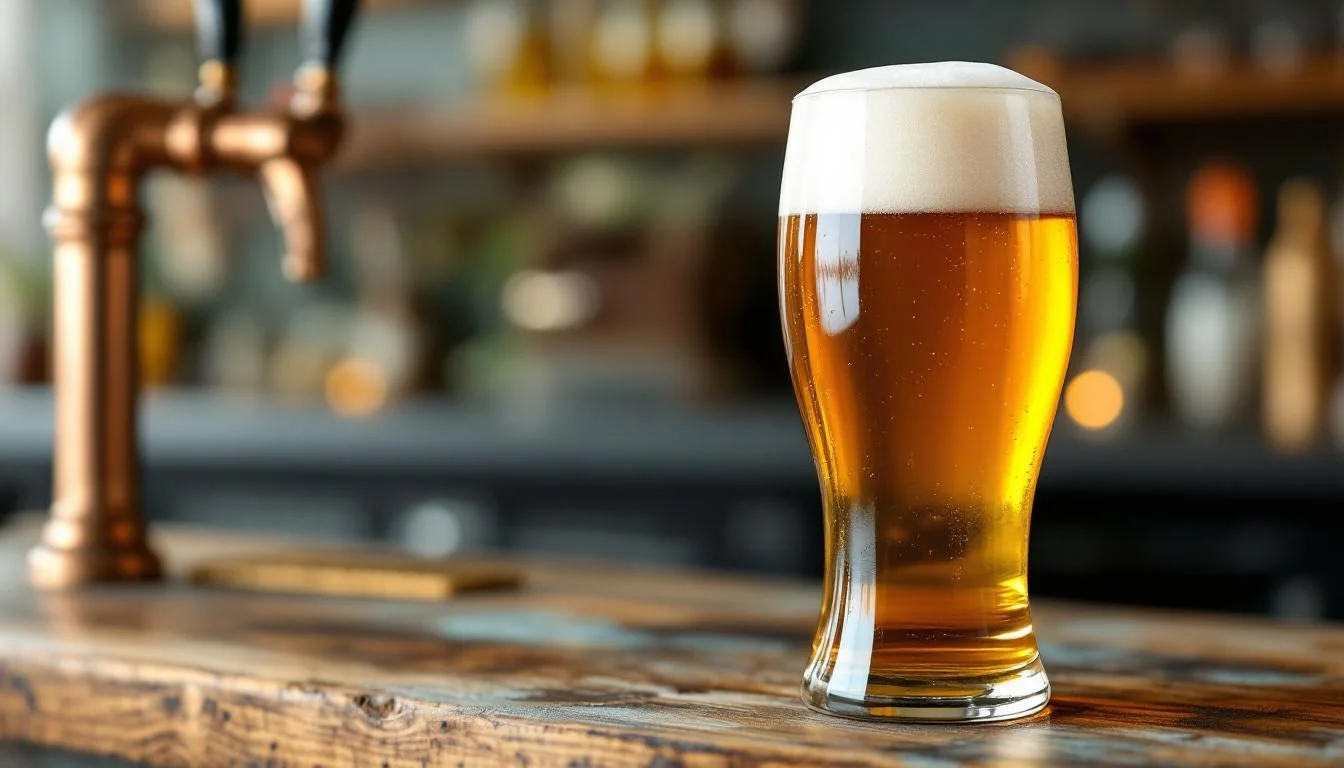
Pour the beer into a glass. Look at the color first — if it's a warm amber yellow, not too pale like Pilsner, not too brown like Dunkel, chances are Vienna Malt is in the recipe.
Bring the glass to your nose. Take a gentle sniff. Vienna Malt leaves behind the aroma of toasted bread—not the crispy, burnt crust, but the warm, moist interior. There's a hint of honeyed sweetness, with a touch of almond. If you can sense these layers of aroma beneath the hops or yeast esters, Vienna is quietly working.
Take a sip. Let the beer flow slowly across your tongue. The sweetness of Vienna Malt is never harsh—it's gentle, rounded, like the accompaniment to a symphony. The finish is often drier than one might expect, with a biscuit-like aftertaste lingering for a few seconds after swallowing.
The beer's body—the sensation on the mouth—is medium-light. Not thin, not thick. Enough to let you know you're drinking a quality beer, but not enough to stop you from having a second or third glass.
Try this comparison: drink a Vienna Lager, then a Pilsner from the same brand if possible. The difference in malt depth will be immediately apparent. Vienna Malt offers what is called the “malt backbone”—the backbone of malt flavor—albeit in a milder intensity.
And if you're lucky enough to come across a bottle of Negra Modelo or a batch of properly brewed, handcrafted Vienna Lager, sip it slowly. That toasted bread aroma has survived two world wars, crossed oceans, and even the oblivion of its own homeland. One hundred and eighty years—long enough to become history, short enough to remain here.