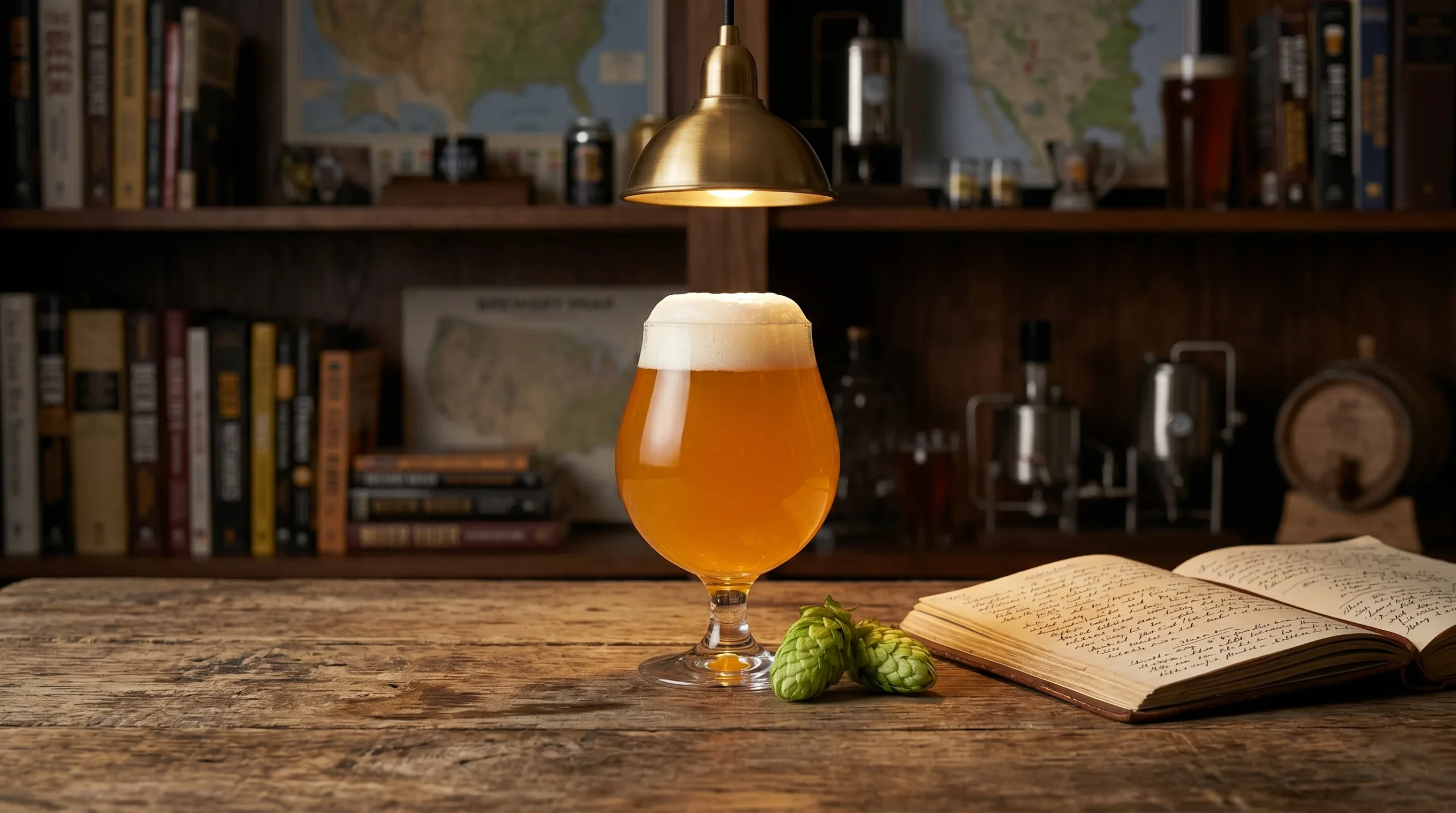
In the Vietnamese craft beer wave of the past ten years, one word has been repeated so often that it has become almost synonymous with "bitter beer" — IPA.
“"Give me an IPA" has almost become the default way people ask for a beer with a distinctly bitter taste. As if IPA is the entire world of bitter beer. As if there's nothing else.
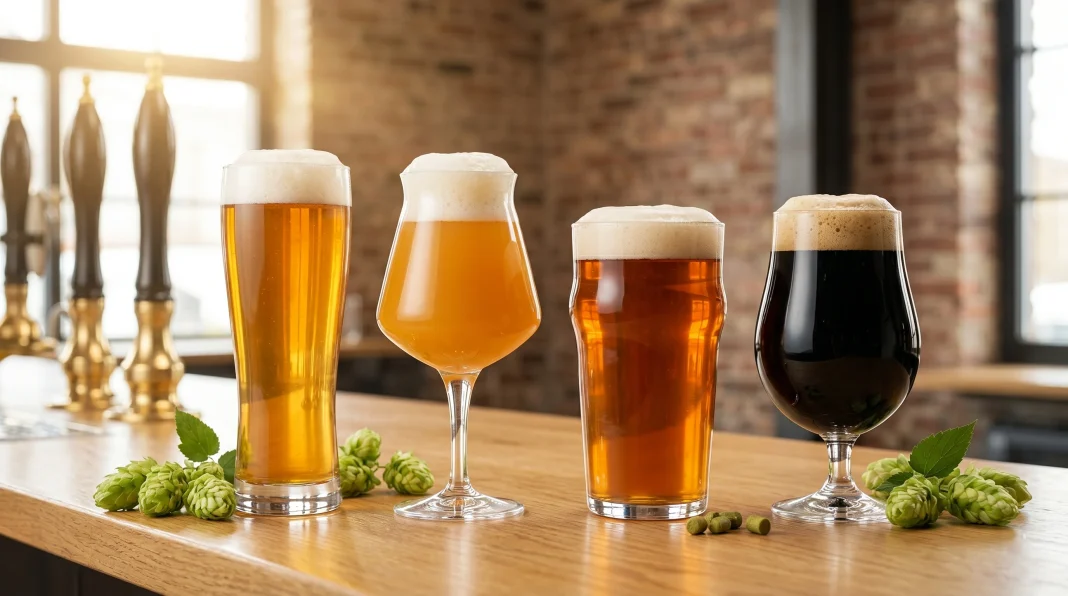
But IPA—even the most dominant style—is only one part of the picture. Behind that three-word name lie 14 distinct sub-styles, ranging from citrusy American IPA to smooth, orange-juice Hazy IPA, from powerful Imperial IPA to warm, traditional English Bitter.
And that's just IPA. Besides that, there's the whole Pale Ales family, including English Bitter and Extra Special Bitter — lesser-known siblings that defined the "bitter taste" in the beer world hundreds of years before modern IPAs came along.
This article is for those who already love IPAs and want to explore further — or for those who have never tried bitter beer and want to understand why the saying "the more bitter, the better" might be true.
What is Bitter Beer?
In Vietnamese, "bitter beer" is a common term for beers with a distinctly bitter taste — primarily from hops.
Unlike dark beer (slightly bitter from roasted malt), bitter beer has a bitter character that comes from... hops — These small blue flowers are added during the brewing process. Hops don't just provide bitterness. They also contribute aroma — ranging from citrus, pine, and rose to tropical fruit and resin.
In the specialized world of beer, "bitter beer" encompasses two main groups:
1. India Pale Ales (IPAs) — With 14 sub-styles, a wide range of bitterness from moderate to extreme, this is the most dominant group in modern craft beer.
2. Pale & Blonde Ales — including both light, less bitter beers (Blonde Ale) and traditionally bitter beers (English Bitter, ESB).
The difference between these two groups isn't just bitterness. It's a difference in... brewing philosophy — IPAs celebrate hops as the central element, while Pale Ales strike a more classic balance between hops and malt.
Why does bitter beer taste bitter?
Short answer: because of the rules.
But behind it lies a story of chemistry and history spanning thousands of years.
Hops (scientific name: Humulus lupulusCannabis (Cannabaceae) is a climbing plant belonging to the cannabis family, cultivated for its female flowers—which contain compounds called cannabis compounds. alpha acids. When boiled in brewing water, alpha acids isomerize into iso-alpha acids, which creates the characteristic bitterness of beer.
The longer the beer is brewed, the more alpha acids are extracted, making the beer more bitter. This is why brewers can precisely control bitterness through brewing time and the amount of hops added.
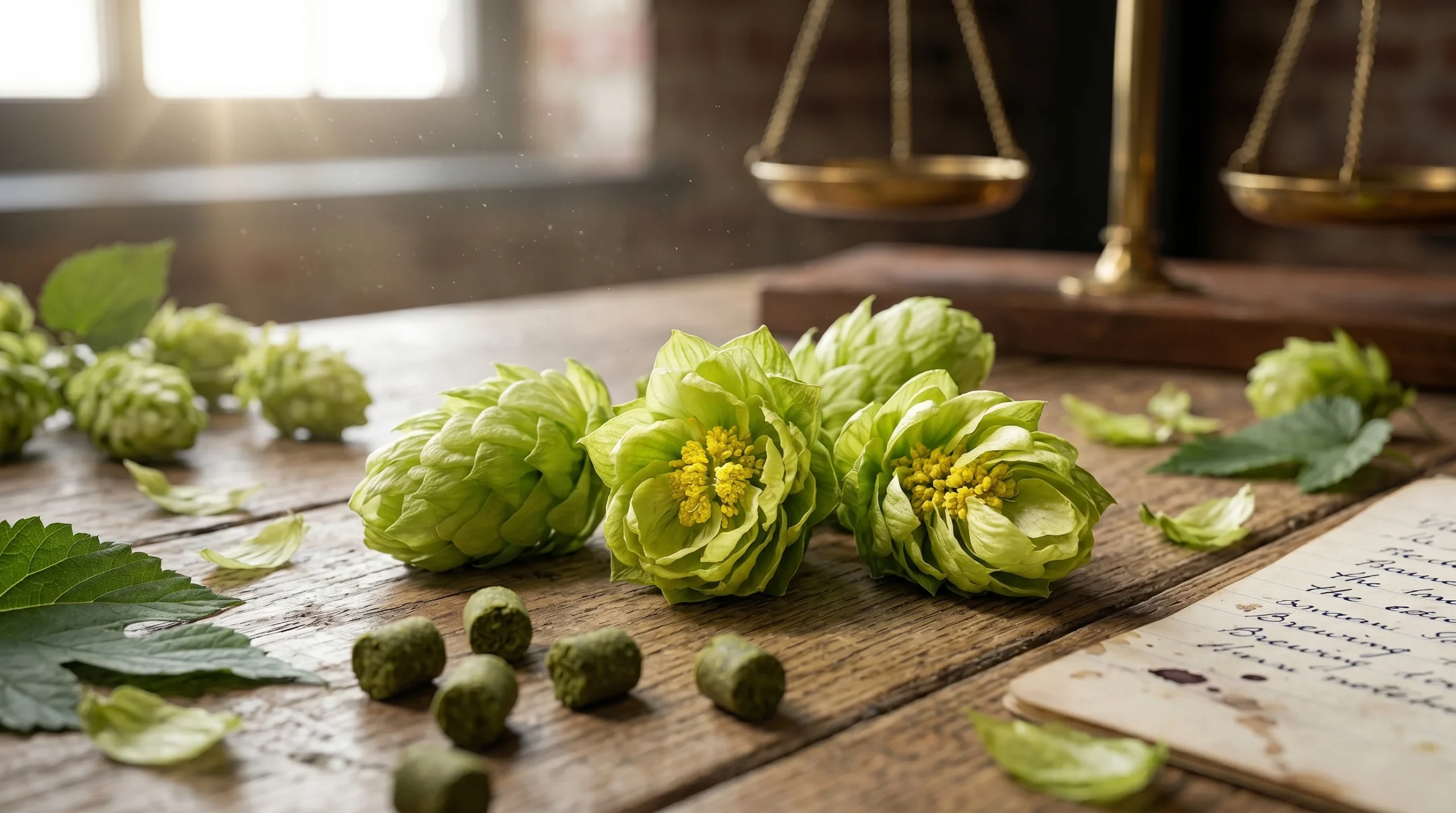
But hops aren't just for bitterness. Depending on the season, they can be added to:
- Hops give a bitter taste. (Bittering hops) — add early, simmer for 60-90 minutes, extract maximum alpha acids.
- Hops for incense (Flavor hops) — add in between, 15-30 minutes, to retain some of the essential oil's aroma.
- Hops for aroma (Aroma hops) — add at the end, 0-5 minutes, or dry-hopping (add after cooking) to maximize aroma.
This is why some IPAs have strong citrus aromas (American hops like Citra, Mosaic), others have pine and floral notes (English hops like Fuggles, East Kent Goldings), and still others have tropical fruit flavors (New Zealand hops like Nelson Sauvin, Motueka).
India Pale Ales — The Heart of Bitter Beer
If bitter beer has a "capital," it's India Pale Ales. With 14 distinct sub-styles, IPAs are the largest, most diverse group, and the one that has redefined modern craft beer.
This is the style that elevated hops from a "side dish" to the "main star." It's the style that has inspired thousands of independent breweries worldwide. It's the style that, today, comes to mind first when people think of "craft beer.".
History & Origins
IPAs originated in England in the late 18th century, during the British-Indian colonial period. The problem: beer often couldn't withstand the 4-6 month sea voyage from London to Calcutta — the heat and rocking would cause it to spoil before arrival.
The solution comes from brewer George Hodgson in Bow, London: brewing beer with more hops than usual (hops have natural antiseptic properties) and Higher ABV (Alcohol also preserves it). The result is a beer that can withstand long journeys — and incidentally, it was found to taste even better after months of aging in wooden barrels on board.
“"India Pale Ale" — the Pale Ale beer going to India — was born from that.
For nearly two centuries, IPAs were just a small, regional British style. Then, in the 1980s and 90s, the American craft beer movement revived IPAs and transformed them into something entirely different—with strong American hops (Cascade, Centennial, Citra, Mosaic) instead of the gentle British hops. And from there, IPAs conquered the world.
Common Characteristics of IPAs
- Color: Pale yellow to deep amber (some variations may be opaque like Hazy IPA or black like Black IPA)
- Body: Light to medium
- Main flavor: Citrus, pine, tropical fruits, flowers, resin — all from hops
- Suitable for: Those who appreciate a distinctly bitter taste and complex aromas.
Popular IPA Styles
American IPA — A style that defines modern craft beer. Distinctly bitter, with citrus and pine notes from American hops, medium body. This is a classic starting point for anyone wanting to explore the world of IPAs.
English IPA — A traditional English IPA. Smoother hops (Fuggles, East Kent Goldings), more pronounced malt, and more balanced than an American IPA. A classic, authentic blend.
Hazy IPA (New England IPA) — A youthful style, originating in Vermont (USA) around 2010. Cloudy like orange juice, less bitter, with a rich tropical fruit aroma. Smooth, easy to drink, and currently a global trend.
Hazy Imperial IPA — A stronger version of the Hazy IPA. Still cloudy, still smooth, but with a higher ABV (8-10 %) and a more intense hop flavor. Feels like drinking an alcoholic fruit juice.
Imperial IPA (Double IPA / DIPA) — The “larger” version of the American IPA. High ABV (8-10 %), intensely bitter, with a strong hop aroma. One glass is enough for an evening.
Black IPA — An unusual combination: dark like a Stout (from roasted malt) but with the bitterness and hop notes of an IPA. A style that breaks the rules, for those who like to experience two worlds at once.
Belgian IPA — Belgian-style IPA, using Belgian yeast characteristic of fruit and spice flavors. American hops meet Belgian yeast — the result is a unique style, both familiar and novel.
Brut IPA — A new style, introduced around 2017 in California. Extremely dry (like champagne), almost no sweetness, distinct hops. Suitable for those who don't like any sweetness in beer.
Cold IPA — An even newer style (around 2020). Brewed with lager yeast but hops like an IPA — the result is a clean, dry beer with prominent hops without the esters from ale yeast.
Milkshake IPA — Hazy IPA contains added lactose (milk sugar) and sometimes vanilla or blended fruit. Sweet and smooth like a milkshake, it's suitable for those who don't like bitterness but still want the flavor of hops.
IPAs in Vietnam
Of all craft beer styles, IPAs are the most enthusiastically embraced by Vietnamese breweries. Most local breweries have at least one IPA on their menu, and many have built their reputation on their IPAs.
Pasteur Street Brewing's Jasmine IPA is a prime example — an IPA incorporating Vietnamese jasmine, a tribute to local culture. Heart of Darkness, Te Brewery, and many other breweries have also experimented with Vietnamese hops and local ingredients.
If you're just starting to explore IPAs, an American IPA or a Hazy IPA from a Vietnamese brewery is a good starting point. Once you're comfortable with the bitterness, try an Imperial IPA — and you'll understand why a powerful IPA can be an emotional experience, not just a drink.
Pale Ales — Classical Siblings of the IPA
Before IPA took over modern craft beer, there was a family that had defined the "bitter taste" in the beer world for two hundred years — Pale Ales.
Pale Ales are the father of the IPA. Without Pale Ales, there would be no IPA. But in the shadow of its more famous sibling, Pale Ales are sometimes forgotten — even though this group defined how hops are used in modern beer.
If IPAs are the loud voice of hops, Pale Ales are a balanced conversation between hops and malt. Moderately bitter, with clear but not overpowering hop notes — this style is perfect for those who want to explore bitter beer but aren't ready for the intensity of modern IPAs.
History & Origins
Pale Ales originated in England in the early 18th century, when the technique of drying malt with coke (heated coal) allowed for the production of lighter-colored malt compared to traditional methods. Before that, most beers in England were dark in color because the malt was dried using wood.
“Pale ale became a revolution. For the first time, people could appreciate the clarity and beautiful copper color of beer. By the mid-18th century, Burton-upon-Trent (England) had become the capital of pale ales—the water there had a high sulfate content, which made the hop flavors more pronounced.
English Bitter — the pub-ready version of Pale Ale with a low ABV — has been the favorite drink of the British working class for generations. A glass of Bitter after work, under the warm lights of a pub — it's an irreplaceable part of British culture.
Common Characteristics of Pale Ales
- Color: Deep golden to pale amber (paler than traditional IPA)
- Body: Light to medium
- Main flavor: A balance between hops (orange, floral) and malt (light caramel, biscuit, toasted bread).
- Suitable for: For those new to bitter beer, who want a distinct but not overly strong hop flavor.
Pale Ale Styles Have a Bitter Taste
Pale Ale — A traditional English Pale Ale. A distinct malt with caramel and biscuit notes, and gentle English hops (Fuggles, East Kent Goldings) for a subtle bitterness and floral aroma. This is the original style from which all other Pale Ales develop.
English Bitter — Pub version of Pale Ale. Low ABV (3-4.5%), moderately bitter, served cellar temperature (12-14°C) via traditional hand pump. This is a classic British "session" drink — you can drink many glasses without getting drunk or feeling satiated.
Extra Special / Strong Bitter (ESB) — A "stronger" version of English Bitter. Higher ABV (5-6%), bolder malt, stronger hops, but still maintaining the characteristic balance of traditional English. Powerful yet elegant.
American Pale Ale — The American version of English Pale Ale. American hops are stronger (Cascade, Centennial) with more pronounced citrus and pine notes. This style paved the way for the American craft beer revolution in the 1980s and 90s, before American IPAs took over.
Hazy Pale Ale — A opaque version of American Pale Ale, inspired by Hazy IPA. It has a smoother body, more pronounced tropical fruit notes, and is less bitter than the clear version. It has a youthful, currently popular style.
Pale Ales in Vietnam
Compared to IPAs, Pale Ales are less common on Vietnamese craft beer menus. Most local breweries focus on IPAs—a style with a high hop volume, making them easier to market to newcomers to craft beer.
But English Bitter and ESB are a missed opportunity. With low ABV and balanced character, they are a perfect fit for Vietnam's long-drinking culture — a glass of Bitter with a plate of grilled spring rolls, and you can drink 3-4 glasses and still stay sober.
If you're transitioning from commercial beer to craft beer—and find IPAs too bitter, too strong—Pale Ales are the perfect starting point. Begin with an English Pale Ale to appreciate its classic balance, then try an American Pale Ale to experience the difference when American hops come into play.
How to Enjoy Bitter Beer
Bitter beer demands a different approach than dark beer. While dark beer invites slowness and contemplation, bitter beer invites freshness and energy. Both are beautiful—just in two different ways.
This section focuses on the key aspects of enjoying bitter beer. For a deeper understanding of beer appreciation in general—serving temperature, glass type, pouring technique, tasting process, and food pairing principles—we have a comprehensive guide at [link]. How to Enjoy Beer.
3 Distinctive Features of Drinking Bitter Beer
1. Drink it fresh, as soon as possible.
Hops are the most sensitive ingredient in beer. Hop flavors begin to fade shortly after bottling — especially with Hazy IPAs and hop-forward styles. An American IPA drunk within a month of production will have a vibrant citrus aroma. The same glass after six months — most of the flavor is gone, leaving only a dry bitterness.
Rule: Always check the production date when buying IPA. The fresher, the better. If you see an IPA that's 6 months old or older, skip it.
2. Moderate temperature
Unlike dark beer, which needs to be warmer, bitter beer is best served at a temperature of 6-10°C. Too cold will numb the taste buds and mask the delicate hop aromas. Too warm will make the bitterness harsh and unpleasant.
- Session IPA, Pale Ales: 6-8°C
- American IPA, Hazy IPA: 7-9°C
- Imperial IPA, ESB: 8-10°C
Take the bottle out of the refrigerator 5 minutes before drinking — enough time for the flavors to unfold while it's still cool.
3. Observe the aroma before drinking.
Hop aroma is one of the most delightful experiences in the world of beer. Before drinking, spend 15-20 seconds smelling it:
- Citrus fruits, grapefruit (from American hops such as Citra, Centennial)
- Pine resin (from Cascade, Chinook)
- Tropical fruits — mango, pineapple, lychee (from Mosaic, Galaxy)
- Flowers, grass, soil (from English hops like Fuggles, Goldings)
- Pine needle and white grape notes (from New Zealand hops such as Nelson Sauvin).
Each type of hop has its own unique character. Learning to identify hop flavors will change the way you drink beer forever.
How to Enjoy Bitter Beer
Bitter beer demands a different approach than dark beer. While dark beer invites slowness and contemplation, bitter beer invites freshness and energy. Both are beautiful—just in two different ways.
This section focuses on the key aspects of enjoying bitter beer. For a deeper understanding of beer appreciation in general—serving temperature, glass type, pouring technique, tasting process, and food pairing principles—we have a comprehensive guide at [link]. How to Enjoy Beer.
3 Distinctive Features of Drinking Bitter Beer
1. Drink it fresh, as soon as possible.
Hops are the most sensitive ingredient in beer. Hop flavors begin to fade shortly after bottling — especially with Hazy IPAs and hop-forward styles. An American IPA drunk within a month of production will have a vibrant citrus aroma. The same glass after six months — most of the flavor is gone, leaving only a dry bitterness.
Rule: Always check the production date when buying IPA. The fresher, the better. If you see an IPA that's 6 months old or older, skip it.
2. Moderate temperature
Unlike dark beer, which needs to be warmer, bitter beer is best served at a temperature of 6-10°C. Too cold will numb the taste buds and mask the delicate hop aromas. Too warm will make the bitterness harsh and unpleasant.
- Pale Ales, English Bitter: 6-8°C
- American IPA, Hazy IPA: 7-9°C
- Imperial IPA, Hazy Imperial IPA: 8-10°C
Take the bottle out of the refrigerator 5 minutes before drinking — enough time for the flavors to unfold while it's still cool.
3. Observe the aroma before drinking.
Hop aroma is one of the most delightful experiences in the world of beer. Before drinking, spend 15-20 seconds smelling it:
- Citrus fruits, grapefruit (from American hops such as Citra, Centennial)
- Pine resin (from Cascade, Chinook)
- Tropical fruits — mango, pineapple, lychee (from Mosaic, Galaxy)
- Flowers, grass, soil (from English hops like Fuggles, Goldings)
- Pine needle and white grape notes (from New Zealand hops such as Nelson Sauvin).
Each type of hop has its own unique character. Learning to identify hop flavors will change the way you drink beer forever.
Pair Bitter Beer with Vietnamese Dishes
Bitter beer pairs well with Vietnamese cuisine, a vast and promising area. Unlike dark beer (which pairs well with rich, slow-cooked dishes), bitter beer pairs well with... fried dishes, spicy dishes, dishes with lots of oil and grease. —because hops have excellent "palate-cleansing" properties.
Here are some couples worth trying.
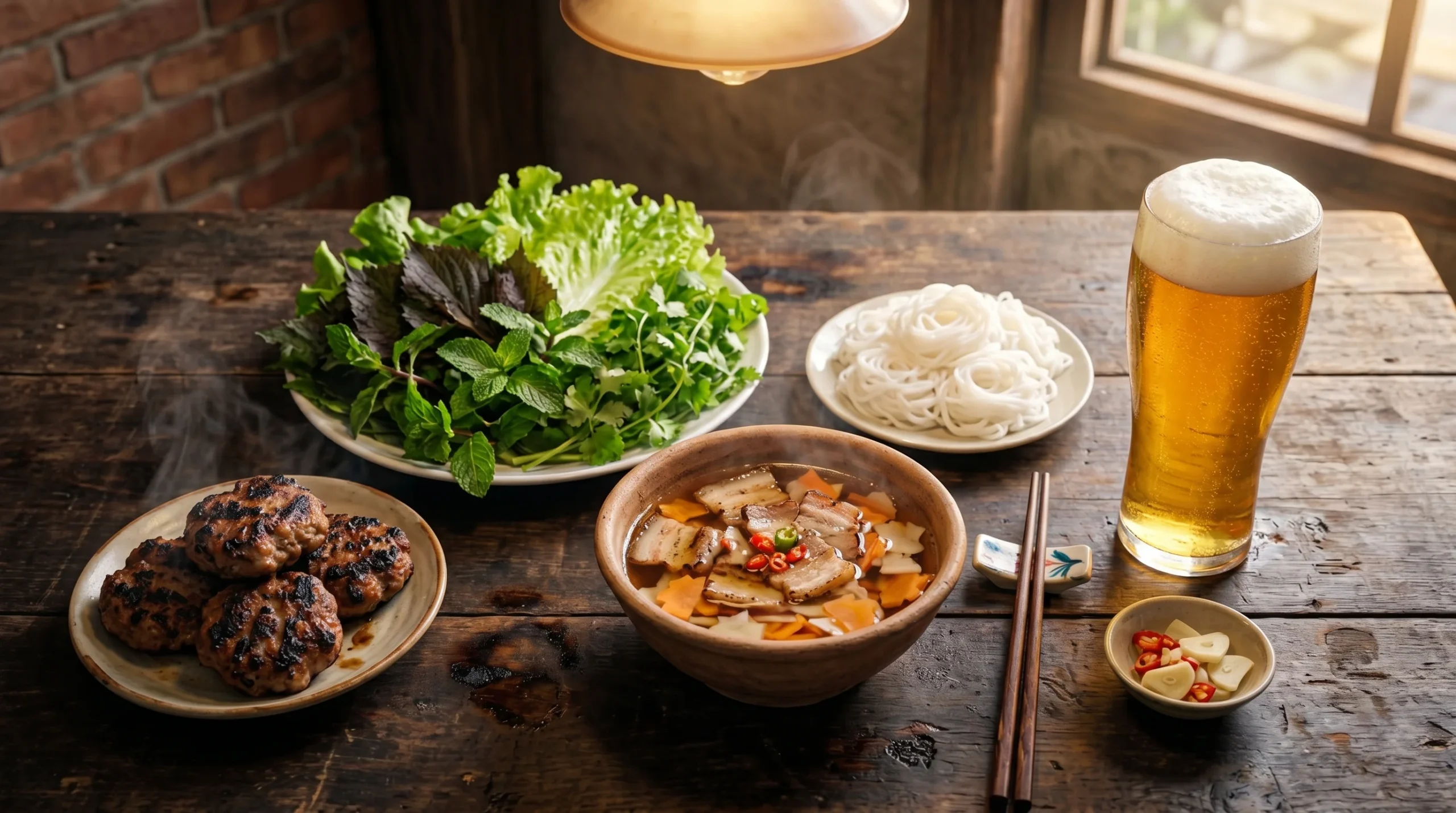
Bun Cha + American IPA
This might be the perfect pairing between bitter beer and Vietnamese food. Hanoi's bun cha has three contrasting components—fatty grilled pork, a sweet and sour dipping sauce, and fresh, crisp vegetables. The American IPA, with its citrus notes and distinct bitterness, bridges the gap between the three.
The citrus hops enhance the sweet and sour flavor of the dipping sauce. The bitterness cleanses the palate between the succulent grilled meats. The light body doesn't overpower the freshness of the raw vegetables. A perfectly balanced combination.
Select: American IPA or Hazy IPA.
Fried Chicken Wings + Imperial IPA
Deep-fried, greasy foods paired with a powerful Imperial IPA — this is a classic American pairing, and it works wonderfully with Vietnamese fried chicken wings.
The intense bitterness of the Imperial IPA cuts through the oiliness decisively. Citrus hops add dimension to the chicken wings. The high ABV matches the intensity of the richly flavored fried dish.
Especially with spicy seasoned chicken wings (fish sauce, garlic chili, hot sauce), Imperial IPA is one of the safest choices — its bitterness and high alcohol content help to mellow the spiciness.
Select: Imperial IPA or Hazy Imperial IPA.
Vietnamese Pancake + Hazy IPA
Vietnamese savory pancakes (Bánh xèo) have a complex blend of flavors — crispy batter, shrimp and pork, bean sprouts and onions, fresh vegetables wrapped in cabbage leaves, and a sweet and sour fish sauce. Hazy IPA, with its smooth tropical fruit notes, pairs perfectly with this entire spectrum of flavors without overpowering any of the ingredients.
The smooth body of Hazy IPA complements the pancake batter. The mango and pineapple notes enhance the freshness of the fresh vegetables. The moderate bitterness balances the sweetness of the fish sauce.
Select: Hazy IPA or Milkshake IPA (if the Vietnamese pancake has many sweet toppings).
Chicken Pho + English Pale Ale
Chicken pho is lighter than beef pho, with a delicate aroma from herbs and ginger. English Pale Ale, with its low ABV and mild hops, pairs well without overpowering the subtle broth.
This is also an ideal pairing for the morning — English Pale Ale has a moderate ABV, enough for a hop experience without getting drunk too quickly. A civilized "craft beer breakfast" combo.
Select: English Pale Ale or English Bitter.
Spicy Grilled Dishes (Spicy Ribs, Grilled Chicken with Mac Mat Leaves) + American IPA
Spicy grilled dishes are among the most difficult Vietnamese dishes to pair with beer. If it's too spicy, a light lager won't be able to handle it, while a dark beer will overpower the flavors. American IPA is the perfect balance.
The distinct bitterness of the American IPA effectively softens the spiciness. Pine and citrus notes from Cascade/Centennial complement the roasting spices (mac mat leaves, mac khen, ginger). The ABV is moderate, providing a warming sensation without being overly heavy.
Select: American IPA or English IPA.
Spring rolls, steamed rice rolls + Belgian IPA
A light and refreshing steamed dish paired with Belgian IPA — an unusual yet sophisticated combination. Belgian yeast adds subtle fruit and spice notes, pairing well with fresh vegetables and sweet and sour fish sauce. Hops provide a moderate bitterness that doesn't overpower the delicate flavors of the steamed dish.
This combo is for those who are already familiar with craft beer and want to try a different pairing.
Select: Belgian IPA or Belgian Pale Ale.
Grilled Seafood (Shrimp, Squid, Fish) + Brut IPA
Brut IPA is extremely dry, almost like champagne — an elegant choice for grilled seafood. The high dryness doesn't overpower the natural sweetness of the seafood, the distinct hops enhance the sea notes, and the finish is clean without a heavy aftertaste.
Especially with grilled shrimp with chili and salt or grilled squid with satay sauce — Brut IPA is one of the most sophisticated pairings.
Select: Brut IPA.
Strong Cheese, Tapas, Dry Goods + English Bitter
English Bitter, with its distinct malt and balanced hops, is the ideal companion to hard cheeses (cheddar, parmesan), dry goods (sausages, ham), and tapas. The caramel malt of Bitter enhances the umami flavor of the cheese, while the moderate bitterness cleans the palate between bites.
This is also the perfect pairing for relaxing evenings — a moderately bitter ABV, sipped slowly over a set of tapas is a whole other experience in itself.
Select: English Bitter or English Pale Ale.
Bun Bo Hue (Hue-style beef noodle soup) + Black IPA
Bun bo Hue is high-intensity — spicy, salty, rich in umami from shrimp paste, and beef-forward. The Black IPA is a unique choice: the bitterness and hop aroma of the IPA pair with the spicy, malted flavor of the Black IPA, enhancing the rich meaty and spiced taste.
This is an unconventional yet perfectly harmonious combination for those who love both dark and bitter beer.
Select: Black IPA.
Don't Be Afraid to Experiment
Pairing bitter beer with Vietnamese food is still in its early stages of discovery. You might find a fantastic pairing that no one has thought of yet — spring rolls + Hazy Pale Ale? Grilled pork chop with rice + American Pale Ale? Grilled pork banh mi + English IPA?
The only rule: hops + oil + strong spices = usually works. The rest — experiment, and let your taste buds decide.
Where to begin if you're new to bitter beer?
Bitter beer can be a barrier for newcomers. Unlike dark beer (where the misconception is "too strong"), bitter beer has a more direct misconception — "too bitter." A glass of Imperial IPA 70+ IBU can be a shock for someone unfamiliar with it — the intense bitterness feels like drinking medicine.
This is why the order of discovery is important. If you follow the right path, you'll find the bitterness gradually becomes an enjoyable—even desirable—part. If you follow the wrong order, you might conclude "I don't like IPAs" and miss out on a whole world of possibilities.
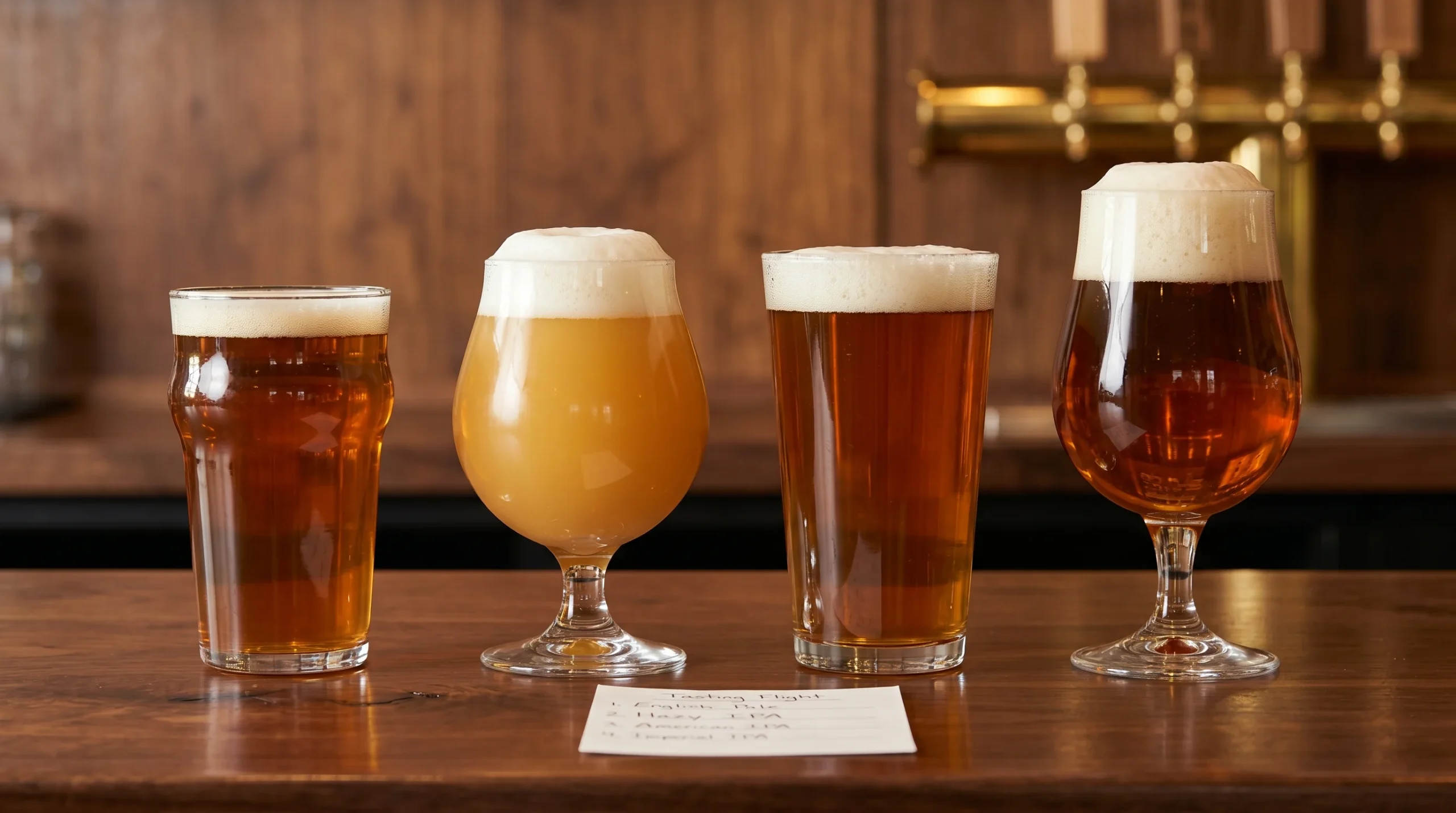
A 4-Step Pathway for Beginners
Step 1: Start light with Pale Ales
Start with Pale Ale or American Pale Ale. These beers have distinct hops but are still balanced with malt — a moderate bitterness, subtle citrus or floral notes. You'll become familiar with the "hoppy" character without being overwhelmed by intensity.
The feeling after the first glass: "Wow, bitterness can be this pleasant."“
Step 2: Step into the world of easy-drinking IPAs
Once you're familiar with Pale Ales, move on to Hazy IPA or Milkshake IPA. These IPAs have a smooth, orange-juice-like body, are less bitter than traditional IPAs, and have distinct tropical fruit flavors.
This is also when you begin to sense the difference between the hop varieties — Citra for mango, Mosaic for lychee, Galaxy for pineapple. A world of flavors from tiny flowers.
Step 3: Explore American IPA
Now you are ready for American IPA — A style that defines modern craft beer. Distinctive yet balanced bitterness, citrus and pine notes from American hops, and a full, medium body.
At this stage, try more experimental styles: English IPA (soft English hops, classic balance), Belgian IPA (Belgian yeast creates a unique fruity flavor), Cold IPA (Yeast lager for clean, dry body).
Start by pairing with food. Each pairing is a lesson on how hops interact with food.
Step 4: Challenge yourself with the Imperial Palace.
Once you have a solid foundation, it's time to try it out. Imperial IPA and Hazy Imperial IPA. This is the pinnacle of the bitter beer world — intensely bitter, high ABV, and an overwhelmingly strong hop aroma.
An Imperial IPA isn't meant to be drunk quickly. It's meant to be savored—slowly, perhaps for 30-45 minutes, so that each sip is a dialogue with the hops.
Private Black IPA and Brut IPA These are two experimental styles worth exploring once you've mastered the basics — one combines stout with hops, the other is extremely dry like champagne.
Avoid 3 Common Mistakes
1. Start with Imperial IPA or Hazy Imperial IPA
This is the most common mistake. Imperial IPAs and Hazy Imperial IPAs are the "ultimate" style of bitter beer—not the starting point. The intense bitterness and strong hops can leave a lasting negative impression on first-time drinkers. If you don't like your first IPA, don't conclude "I don't like bitter beer." Go back to Pale Ale or Hazy IPA.
2. Drink old IPA
Hops fade quickly. A 6-month-old American IPA is no longer an American IPA — just a bitter, flavorless beer. Always check the production date before buying. If you see an IPA that's 4 months or older and you're a beginner, skip it — you won't get the real experience of this style.
3. Evaluation using IBU
Many people new to craft beer are obsessed with the IBU (International Bitterness Units) rating — thinking that a high IBU equals a “better” or “higher-class” beer. This is a harmful misconception.
A 40 IBU Hazy IPA might have a less noticeable bitterness than a 30 IBU Pilsner — due to differences in malt content, sweetness, and body. IBU is just a measurement, not an experience. Judge beer by taste, not by numbers.
Final Tip: Give Hops Time
Bitterness is a "learned" taste—not natural. Children dislike bitterness because it's a biological marker of potentially toxic foods. To appreciate bitterness, the taste buds need time to adapt.
If you find IPAs "hard to drink" the first time—that's normal. Try again after a few weeks. Start mild and gradually increase the intensity. Drink it with food to soften the bitterness.
After 3-6 months of persistent exploration, you'll discover something surprising — the bitterness is no longer a barrier but becomes an enjoyable part of it. You'll start craving hops. You'll be able to distinguish Citra from Mosaic, Cascade from Centennial.
That's when you truly enter the world of bitter beer.
In Summary — Bitter Beer Is More Than Just an IPA
When we begin this article, we ask a simple question: "Is bitter beer just an IPA?"“
Hopefully, the answer is clear by now.
Bitter beer isn't just an IPA. It's... 15 styles Ranges from low-ABV English Bitter that can be enjoyed all evening, to powerful Hazy Imperial IPA where just one glass is enough for a whole night. From classic, balanced English Pale Ale, to modern, champagne-like dry Brut IPA.
In there:
- India Pale Ales The capital city — 10 diverse styles, from traditional English to revolutionary American, defining modern craft beer.
- Pale Ales As the ancestor — 5 styles with a bitter taste, balanced between hops and malt, a soft starting point for beginners.
Each style tells a story. Each hop is a character. Each cup is a dialogue between bitterness and the taste buds learning to appreciate it.
A Thought
In Vietnamese beer-drinking culture, bitterness is often considered a drawback. Vietnamese people love sweetness, umami, and saltiness—bitterness stands alone and is rarely appreciated.
But once you've gone through all the styles in this article, you'll realize the opposite — bitterness is perhaps one of the most challenging tastes. most complex and diverse in the world of beer.
Not because it's intense. Not because it's "hard to drink." But because it's the only flavor that demands a certain level of taste. learn. Patience is key. Time is required. And once you've learned—the reward is a whole world of flavors from those tiny hop flowers.
The more bitter, the better — this isn't a paradox. It's the result of a journey.
Remember: bitterness is not meant to be endured. Bitterness is meant to be understood.