One question that comes up frequently during first tastings with craft beer newcomers is:
“"Dark beer — is Guinness right?"”
Short answer: not exactly.
The long answer: dark beer isn't just one type of beer. It's a whole world—with at least 28 different styles, from the dry, tea-like Schwarzbier from Germany to the rich, dark chocolate-like Imperial Stout from the USA.
Guinness is just a starting point. One of many.
What is Dark Beer?
In Vietnamese, "bia đen" is a common term for all types of beer ranging in color from dark brown to jet black.
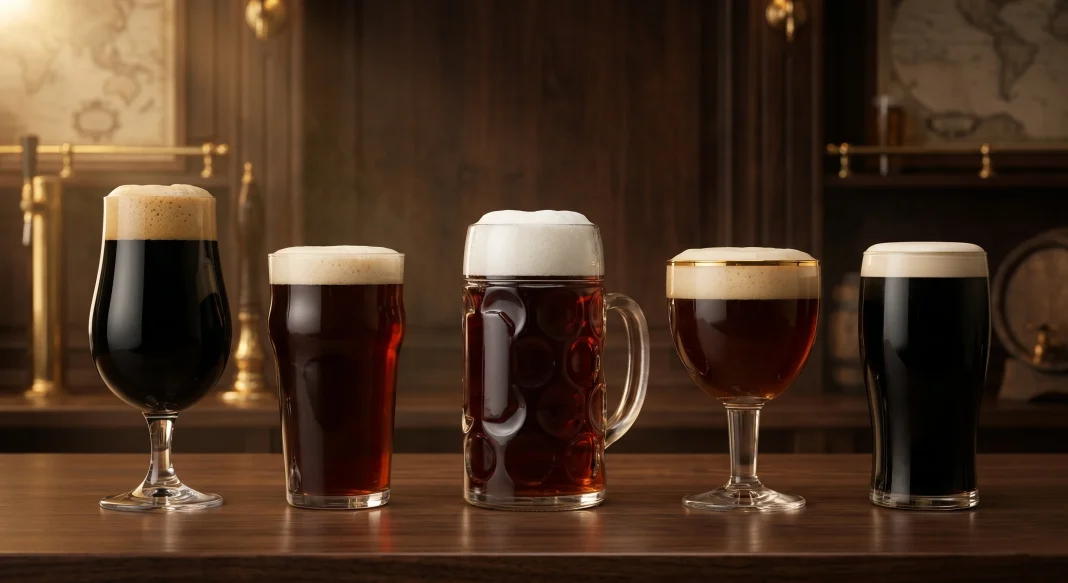
But in the specialized world of beer, there isn't one style called "dark beer." What we call "dark beer" actually comprises five major groups:
- Stouts — Bold, coffee-flavored, roasted. This is the Guinness group it belongs to.
- Porters — A sibling of Stout, slightly lighter, with a stronger chocolate flavor.
- Dark Lagers — Dark beer, but brewed like a lager (cold fermentation, long brewing period). Dry, clean, low body.
- Dark Ales — A broad group, including Belgian Dark Ale, English Dark Mild, Scottish Ale…
- Brown Ales — Not exactly black, but rather dark brown. It's somewhere between light and dark beer.
Each group has its own history. Each group uses different ingredients. Each group serves a different occasion.
Understanding the difference between them is one of the first steps in moving from "drinking beer" to "enjoying beer".
Why is dark beer black?
A common question is: is dark beer colored with caramel, food coloring, or some other additive?
The short answer is: no. Dark beer is dark for one simple reason — Malt is roasted.
But behind that simple answer lies a whole world of chemistry and art that brewers have perfected over the centuries.
What is Malt?
Before discussing color, it's necessary to understand malt.
Malt is barley grain that has undergone a "malting" process—consisting of three steps:
- Soak in water — Soak barley grains in water for 1-2 days to activate the enzymes.
- Germination — The seeds are spread evenly and kept moist to germinate in 4-6 days. During this stage, enzymes develop rapidly, preparing to convert starch into sugar.
- Kilning — Once the sprouts reach the desired stage of development, the seeds are dried to stop the process. This is the step that determines the color.
Drying at low temperatures (50-80°C): malt retains its pale yellow color → familiar lager and golden beers.
Drying at higher temperatures (80-120°C): malt turns light brown → Amber Ale, Pale Ale.
Drying at very high temperatures (180-230°C, almost like roasting): malt turns dark brown to black → dark beer.
Malt Roasting Levels
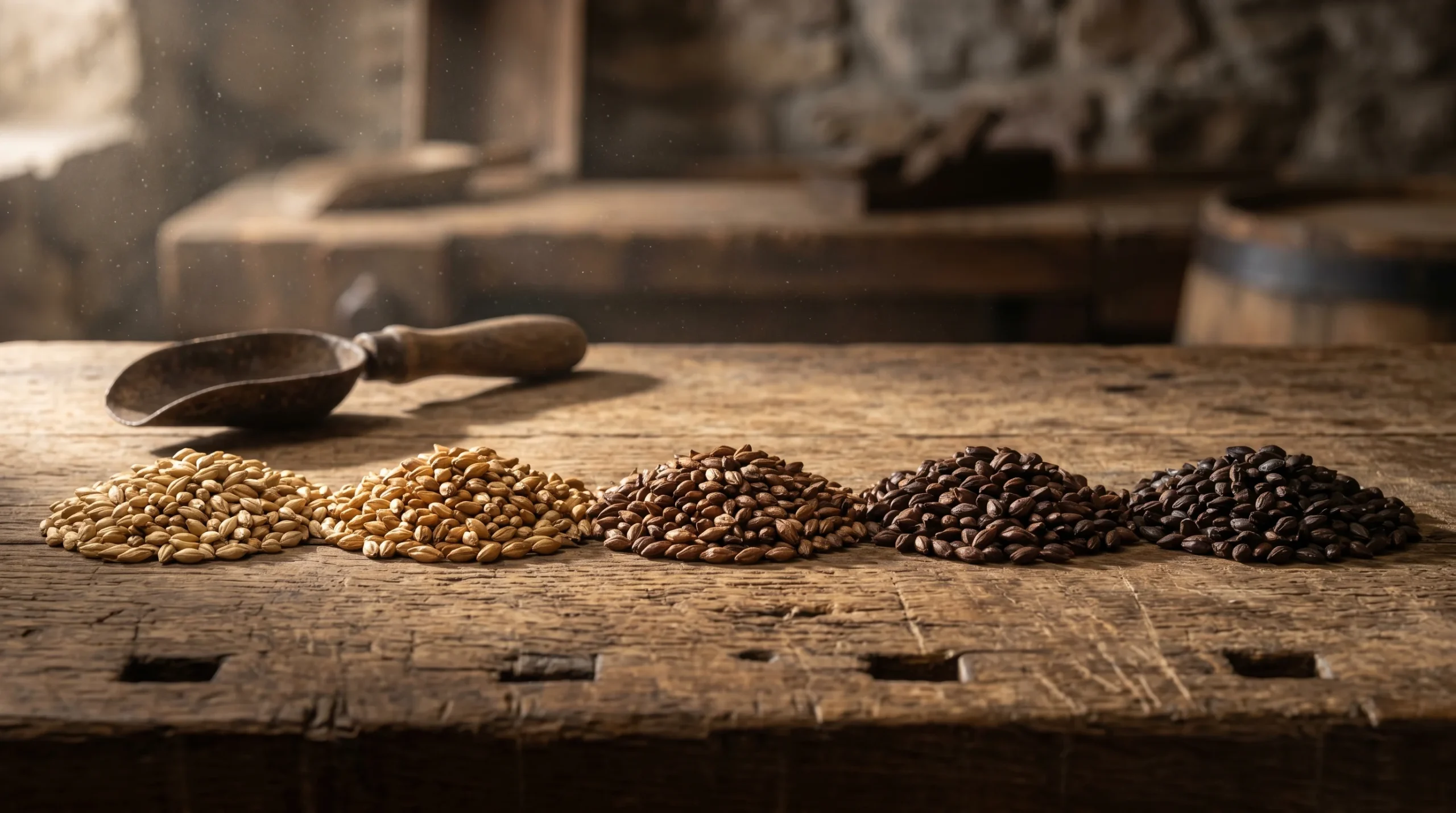
In brewing, malt is classified using a “lovibond” (a unit of color measurement). The higher the lovibond, the darker the malt:
- Pale Malt (2-4°L) — Pale yellow, suitable for lager and IPA
- Crystal Malt (10-120°L) — Golden brown to dark brown, for caramel and body
- Chocolate Malt (350-450°L) — Dark brown, giving a distinctive chocolate aroma.
- Roasted Barley (300-500°L) — Unmalted barley grains, roasted directly. Offers a dark coffee aroma and a mild bitterness — this malt gives Stout its character.
- Black Patent Malt (500-600°L) — Pure black, use small quantities for a characteristic black color.
Each malt contributes a distinct flavor profile. When crafting a stout, brewers may combine 5-7 different malts—each playing a role in the final taste.
The Chemistry of Brown and Black
At the molecular level, the color of roasted malt comes from two main chemical reactions:
Maillard reaction — When sugars and amino acids meet at high temperatures, they create hundreds of new compounds. This is the reaction that produces the aroma of toasted bread, grilled meat, and roasted coffee. The same reaction that browns the crust of bread also darkens malt.
Caramelization Sugar, when heated to a certain temperature, caramelizes, creating a golden-brown color and a complex sweet flavor. This reaction occurs simultaneously with the Maillard reaction during the kilning process.
The longer the roasting time and the higher the temperature, the stronger the two reactions become—and the malt darkens. At a certain point, the sugars begin to break down, the malt turns bitter, and a burnt aroma develops. That's when the brewer must exercise tight control—because overdoing it will ruin the entire batch of beer.
Why Does Dark Beer Have Such Diverse Flavors?
Here's something few dark beer drinkers realize: the complex flavor of dark beer doesn't come from "additives." It all comes from the malt.
- Coffee aroma — From Dark Roasted Barley
- Chocolate flavor — From Chocolate Malt
- Caramel and toffee flavor — From Crystal Malt
- Toasted bread aroma — From Munich/Vienna Malt
- Incense smoke — From smoked malt
- Slightly bitter taste — From over-roasted malt (different from the bitterness of hops)
When brewers design an Imperial Stout, they select 5-6 malts in precise proportions to create a flavor symphony. This is why brewing is called an "art"—it requires both scientific knowledge and a refined sense of taste.
A Common Misconception
Many Vietnamese people think "dark beer = strong beer = high alcohol content". This is a big misconception.
The color of beer unrelated based on ABV (alcohol content).
Proof:
- Guinness Draught (Irish Dry Stout) — Deep black, but only 4.21 TP3T ABV — lower than both Tiger (51 TP3T) or Heineken (51 TP3T).
- Schwarzbier — Deep black, only 4.4-5.4% ABV — comparable to regular lager beer.
- Imperial IPA — It's orange-yellow, but can go up to 10% ABV — much darker than Guinness.
Alcohol comes from fermented sugars, not from malt color. A brewery can brew either an ABV 3% dark beer (English Dark Mild) or an ABV 12% golden beer (Triple IPA). These two are independent of each other.
Once you understand this, a world of "all-day drinkable" dark beer opens up — and you no longer fear dark beer as much as many people do.
Stouts — The Heart of Dark Beer
If stout beer has one largest “territory,” it’s Stouts. With 10 different styles, from the dry Irish Dry Stout to the alcoholic American Imperial Stout 14%, this group covers an incredibly wide range of flavors.
Stout is more than just a beer. It's a philosophy—where malt is celebrated, where hops play a supporting role, where richness is elevated to an art form.
History & Origins
Stout emerged in 18th-century England, initially known as "Stout Porter"—a stronger version of Porter. At the time, "stout" in English meant "strong, full-bodied," unrelated to the color.
Over time, the word "Porter" faded away, leaving only "Stout". And one of the people who made Stout legendary was Arthur Guinness — who opened a brewery in Dublin in 1759 with a 9,000-year lease.
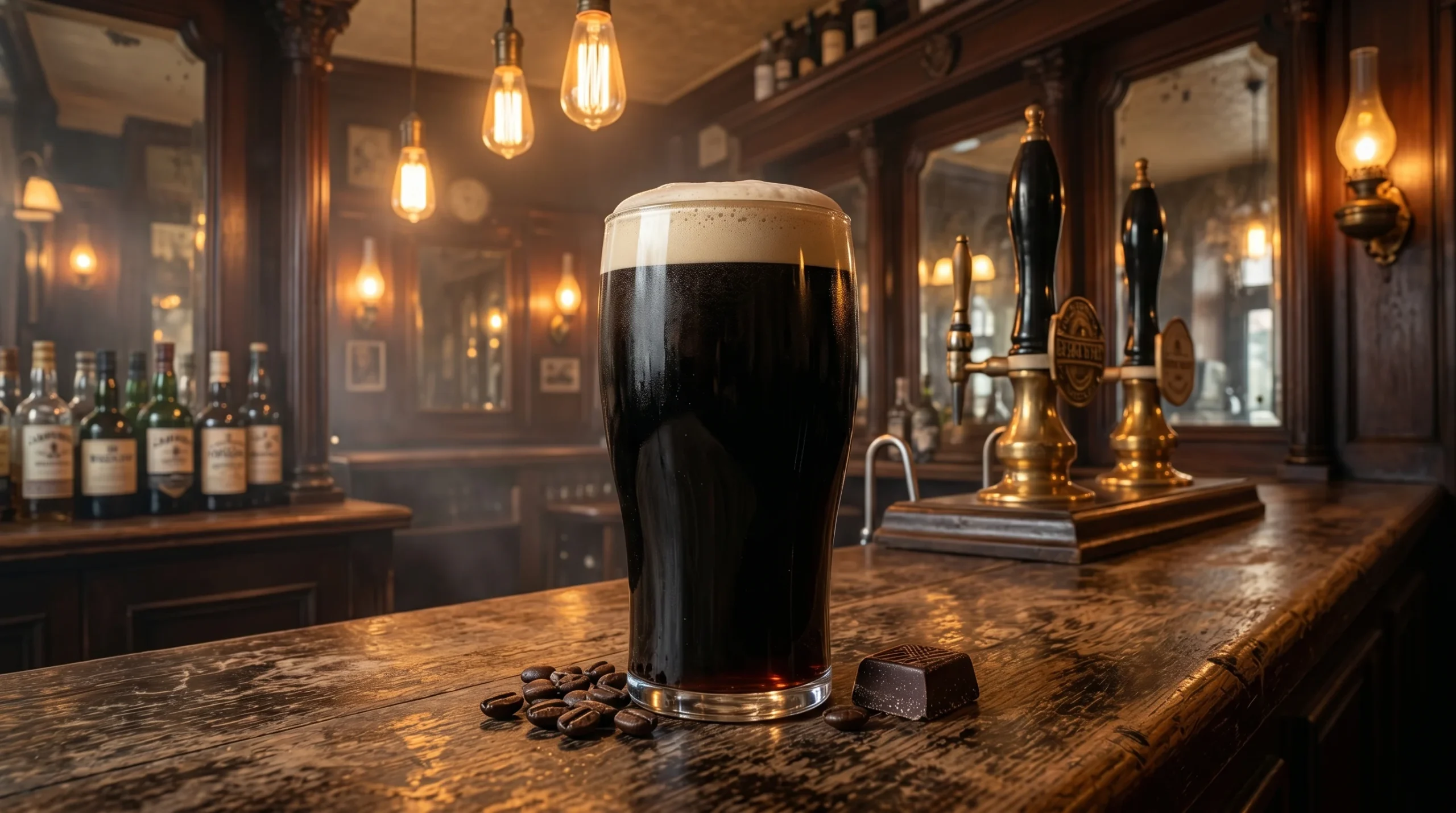
Common Characteristics of Stouts
- Color: Pitch black, impenetrable to light.
- Body: Medium to Full
- Main flavor: Roasted coffee, dark chocolate, caramel, sometimes vanilla, dark fruit, alcohol.
- Suitable for: For those who appreciate a rich, malt-forward flavor.
Popular Stout Styles
Irish Dry Stout
Dry stout, low ABV, easy to drink. This is the Guinness group it belongs to. Suitable for beginners with stout.
American Stout
The American version is more bitter and has stronger hops than the English version. It has a more intense coffee flavor.
English Stout
Traditional English Stout — balanced, not too bitter, malt forward.
Oatmeal Stout
With added oats, it leaves your body feeling silky smooth. One of the easiest options to drink.
Sweet / Milk Stout
It contains lactose (milk sugar) that doesn't ferment, giving it a mild sweetness. It's perfect for those who don't like bitterness.
Foreign / Export Stout
The export version is stronger to withstand sea transport. It has a rich fruity flavor and roasted malt notes.
American Imperial Stout
A more potent version of Stout. Bold, high in alcohol, with complex aromas — dark chocolate, strong coffee, dark fruit.
Russian Imperial Stout
Interesting history — originally brewed for 18th-century Russian royalty, high ABV to prevent freezing during transport. Similar to American Imperial Stout but in the English tradition.
Modern style stouts often include ingredients like vanilla, cocoa, marshmallow, and hazelnuts. They're often served as a dessert drink.
Imperial Pastry Stout
A more potent version of Pastry Stout. Extremely complex, every sip is an experience.
Stouts in Vietnam
In the wave of Vietnamese craft beer, Stout was one of the earliest styles embraced by local breweries. Pasteur Street Brewing's Cyclo Stout is a prime example — an Imperial Stout with Vietnamese coffee notes, a tribute to local culture.
If you're new to stout, an Oatmeal Stout or Sweet Stout from a Vietnamese brewery is a great starting point. Once you're more experienced, try an Imperial Stout—and you'll understand why this group is called the "heart" of stout.
Porters — Stout's Brothers
Porter is the ancestor of Stout. Before Stout, there was Porter. And today, more than three centuries later, Porter still stands there—not overshadowed by its bolder sibling, but holding its own unique place in the world of dark beer.
If Stout is a deep, resonant voice, Porter is a whispered story. Lighter, but no less complex.
History & Origins
Porter beer originated in London in the early 18th century, around 1722. The name comes from the porters who worked in London's markets and ports – their primary customers. It was one of the first beer styles to be produced industrially on a large scale.
Porter dominated the British market for almost a century, before being gradually overshadowed by Stout (a stronger version of Porter). By the mid-20th century, Porter had almost disappeared from Britain.
The American craft beer movement of the 1980s and 90s revived Porter — and today it is one of the favorite styles among independent breweries worldwide.
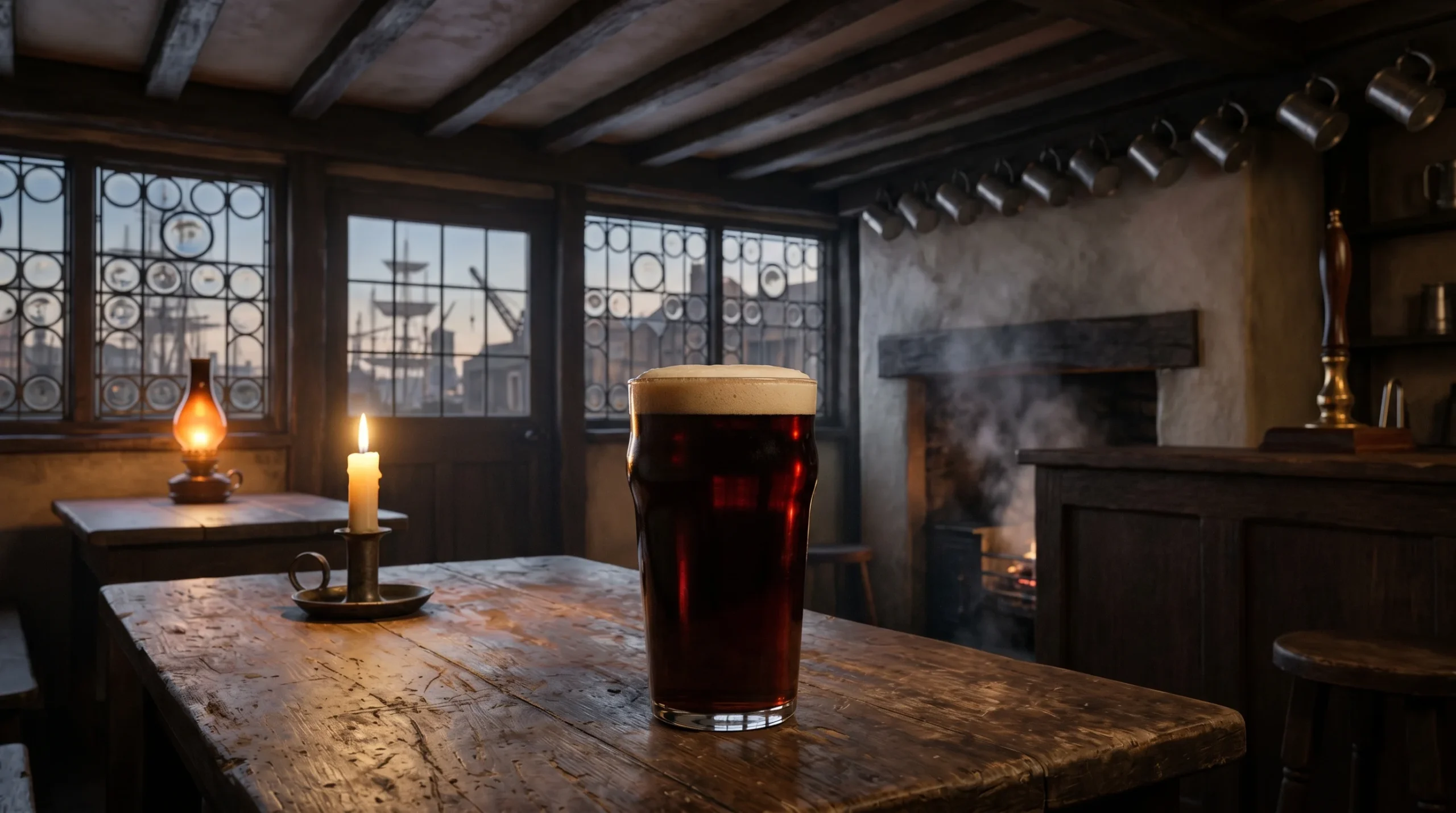
Common Characteristics of Porters
- Color: Dark brown to black (slightly lighter than Stout)
- Body: Medium
- Main flavor: Chocolate, caramel, toffee, less coffee than Stout
- Suitable for: Someone who wants dark beer but not too strong.
Popular Porter Styles
English Porter
Traditional English porter — chocolate, caramel, balanced, and easy to drink. This is the "original" porter from which all other styles have developed.
American Porter
The American version — hops are stronger than the English version, with citrus or pine notes from American hops. Strong, modern.
Robust Porter
A more "intense" version of Porter. The roasted malt flavor is more pronounced, sometimes closer to Stout in feel.
Imperial Porter
A stronger version. Stronger in alcohol content but still retains the Porter character — distinct chocolate and caramel notes, without the burnt coffee flavor of the Imperial Stout.
Baltic Porter
Porter is a strong lager-style (cold-fermented) wine. Smooth, clean, and mellow — high alcohol content without burning the throat. Originating from the Baltic region (Poland, Estonia, Finland).
Smoked Porter
Porter adds smoked malt to its recipe. The smoky woody flavor is distinct, reminiscent of grilled meats and bacon. A unique style for those who enjoy a different experience.
Porters in Vietnam
Porter is less common than Stout in Vietnam, but is gradually being added to menus by local breweries. Heart of Darkness in Ho Chi Minh City once had some impressive American-style Porter — with strong hops and chocolate notes.
If you enjoyed Stout and want to explore further, Porter is the natural next step. Start with English Porter to understand the "original porter," then try American Porter to feel the difference when American hops come into play.
Baltic Porter, in particular, is a hidden gem that few people know about. If you have the chance to try it, don't miss out.
Dark Lagers — Mild German Dark Beer
Most people new to dark beer think that it's always strong, sweet, and high in alcohol. Dark Lagers prove otherwise.
These are dark beers brewed using the lager method — fermented at low temperatures and aged for a long time. The result is a deep, dark beer that is light, clean, and easy to drink — closer to Pilsner than Guinness.
If Stout is a cozy dinner by the fireplace, Dark Lager is a glass of dark beer on a summer day at an outdoor table. Both are black, but they evoke completely different moods.
History & Origins
Dark lagers developed in Germany and Central Europe from the 16th century, before Pilsner (1842) was invented. At that time, all beers in Bavaria were dark in color — because the malt roasting technique was not yet precise enough to produce light malt.
While Stout/Porter developed in England is known for its rich, full-bodied character, Dark Lagers in Germany take a different approach—maintaining their dark color but remaining light, clean, and not overly sweet. This is the fundamental difference between traditional ale (England) and lager (Germany/Czech Republic).
Schwarzbier — the darkest beer in this group — has been brewed in Thuringia (Germany) since at least 1543. Records suggest that both Goethe and Bismarck were fans of this beer.
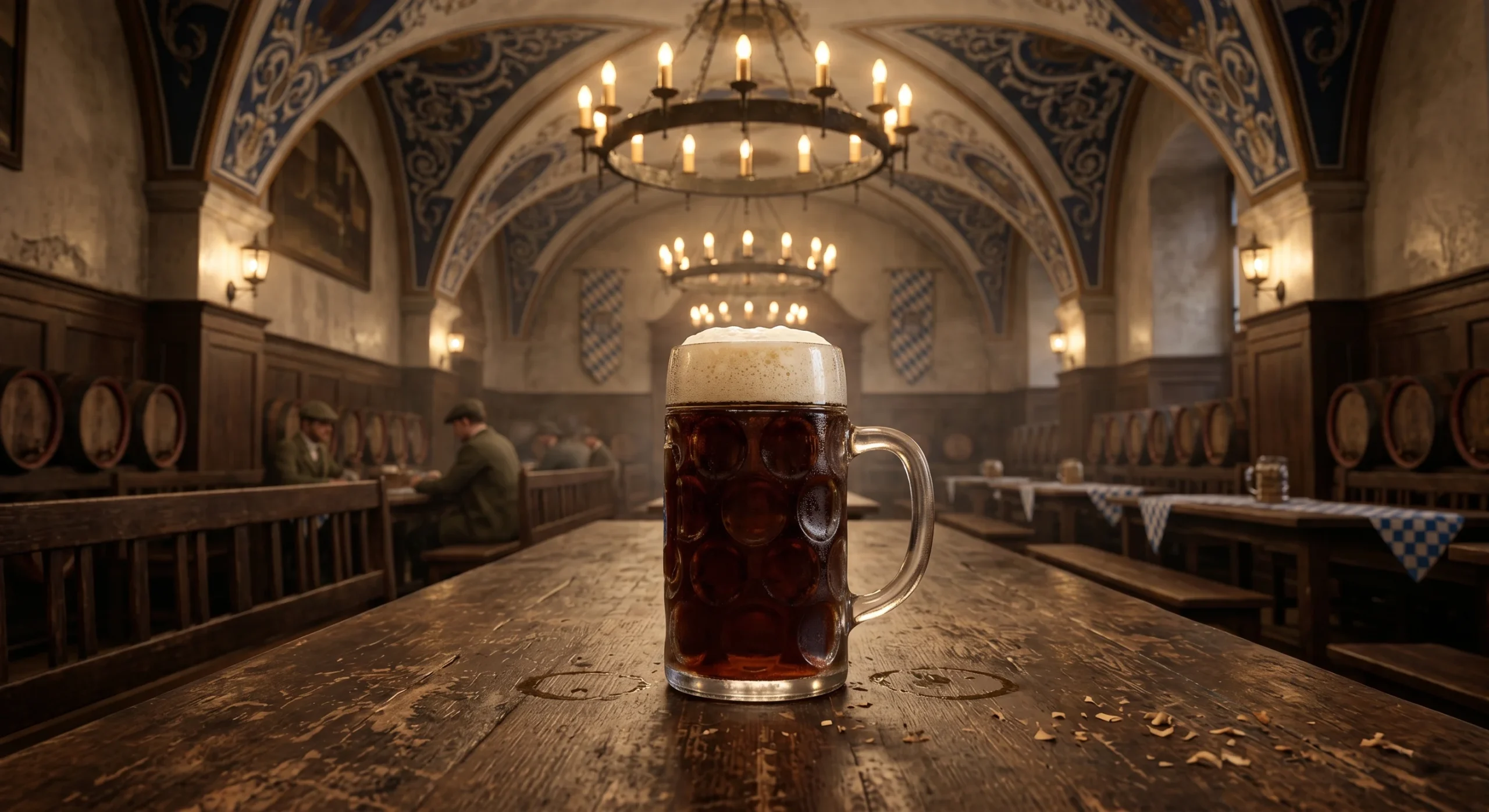
Common Characteristics of Dark Lagers
- Color: Dark brown to jet black (especially Schwarzbier)
- Body: Light to medium (much lighter than Stout)
- Main flavor: Toasted bread, light caramel, matte chocolate, dry finish.
- Suitable for: People who like dark beer but don't like it too strong.
Popular Dark Lager Styles
Munich Dunkel
Munich-style dark beer — reddish-brown color, subtle roasted malt, caramel, and toasted bread notes. Perfectly balanced. This has been the Bavarian "everyday" beer for centuries.
Schwarzbier
“"Schwarz" in German means "black." True to its name, it's a deep black beer with a light body, a dry finish, and no burnt coffee notes like a Stout. One of the easiest dark beers for beginners to drink.
Czech Dark Lager
The Czech version of lager. It has a slight sweetness from the malt, sometimes with notes of dried fruit. It's smoother and a bit more complex than Munich Dunkel.
European Dark Lager
This broad group includes dark lager beers from across Europe, excluding Germany and the Czech Republic. Characteristics: easy to drink, not overly complex, often with a subtle caramel flavor.
Rotbier
“"Rotbier" means "red beer"—a beautiful reddish-brown color. This is an old style from Nuremberg (Germany), almost disappeared but recently revived. It has a distinct malt flavor, light hops, and caramel notes.
Dark Lagers in Vietnam
Dark Lagers remain a relatively undiscovered territory in Vietnam. Most local breweries focus on IPAs and Stout, with few making Schwarzbier or Munich Dunkel.
This is an opportunity for both drinkers and brewers. With Vietnam's year-round hot climate, Dark Lager — especially Schwarzbier — is a great choice: it still has the depth of a dark beer, but isn't as heavy as a Stout on a hot Saigon afternoon.
If you've ever thought, "I don't like dark beer because it's too strong," try a cold Schwarzbier. You might just change your mind about the whole world of dark beer.
Dark Ales — Diverse from Belgium to Scotland
Among the various dark beer groups, Dark Ales are the most difficult to define. There isn't a single "central" country like Germany with Dark Lagers, nor a unifying narrative like England with Stouts and Porters.
Dark ales are a collection of warm-fermented dark beers (ales) from various traditions—Belgium, England, Scotland—each with its own unique character. This is the least explored land of the dark beer world, and also the place that holds the most interesting secrets.
History & Origins
Each substyle within this group has its own history:
- Belgian Dark Ale Born in Belgian monasteries, it is the monks' "everyday" beer — not as strong as Tripel or Quad, but complex in flavor.
- English Dark Mild Ale It was the beer of the working class in 19th and 20th centuries England — low ABV so workers could drink all day without getting drunk.
- Scottish Ale Developed in the cold climate of Scotland, where hops are difficult to grow, brewers rely more on malt.
- Winter Warmer It's the typical English winter style — a strong, spiced beer, to be drunk by the fireplace.
It is this diversity that makes Dark Ales so interesting — you can find a smooth, all-day ABV 3% dark ale, or a cinnamon and clove-infused dark ale perfect for Christmas Eve.
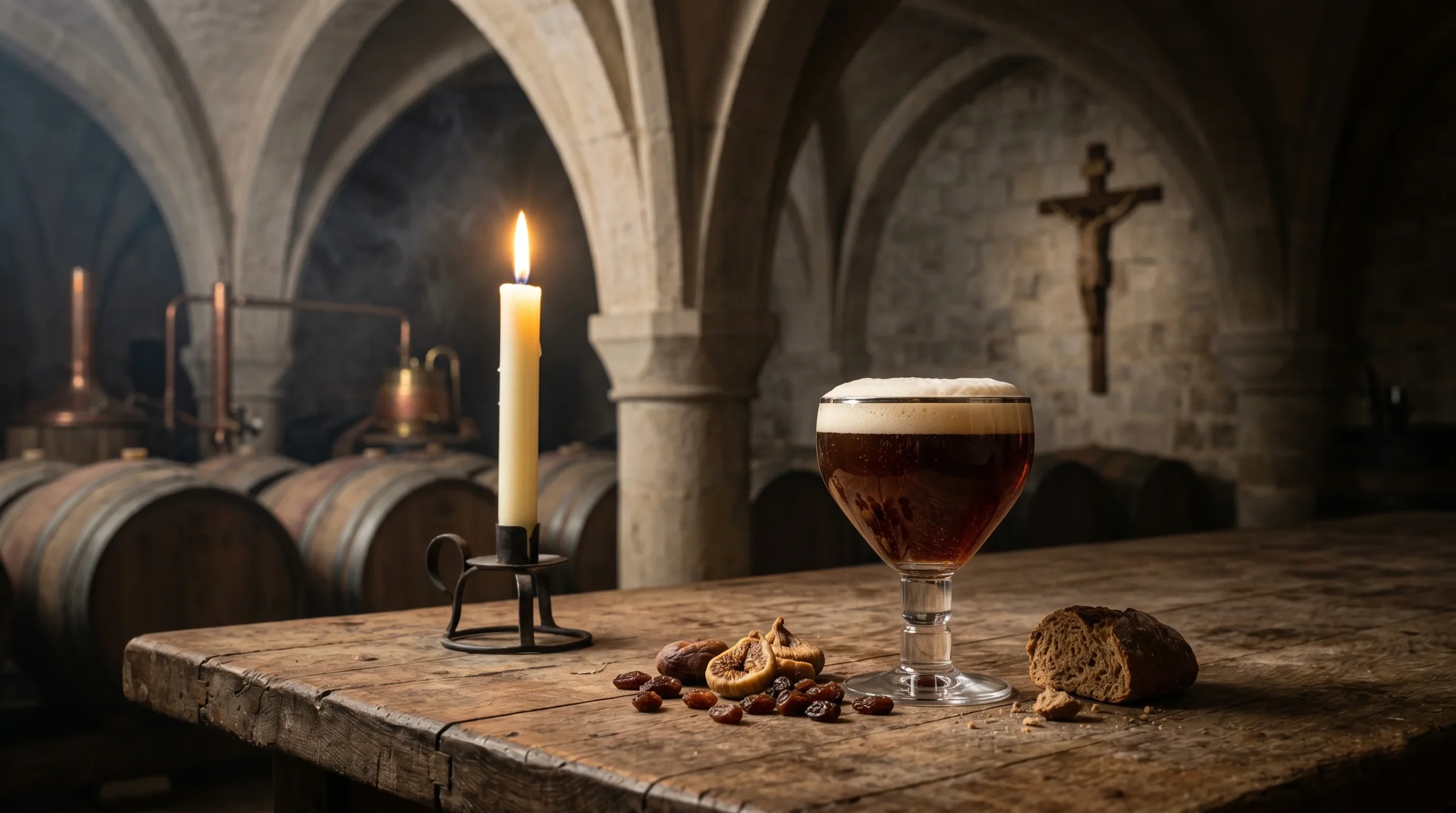
Common Characteristics of Dark Ales
- Color: Dark brown to black
- Body: Light to medium-full (variable)
- Main flavor: Variety — caramel, chocolate, dried fruit, spices, roasted malt
- Suitable for: An adventurous person who wants to break away from the mainstream Stout/Porter culture.
Popular Dark Ale Styles
Belgian Dark Ale
Belgian-style dark beer — malt-forward, with aromas of dried fruit (raisins, prunes), a hint of caramel, and a touch of spice from the characteristic Belgian yeast. Complex but not heavy.
English Dark Mild Ale
A forgotten gem. With an ABV of only 3-3.8%, it's full of flavor — caramel, light chocolate, soft roasted malt. This is the ideal "session" beer — you can drink many glasses without getting drunk.
Scottish Ale
Scottish-style beer — malt-heavy, low in hops, sometimes with a slight smoky flavor. Available in three strength levels: Light (60/-), Heavy (70/-), and Export (80/-). Warm, comforting, and suitable for cold climates.
Winter Warmer
British winter beer. Bold, spiced (cinnamon, cloves, nutmeg), with dried fruit notes, and a warm alcoholic taste. This style is typically brewed seasonally, typically released in November-December each year.
Dark Ales in Vietnam
Dark Ales are almost non-existent in the Vietnamese craft beer market. Belgian Dark Ale can be found in a few Belgian bottle shops, but English Dark Mild, Scottish Ale, and Winter Warmer are extremely rare.
This is a missed opportunity. English Dark Mild — with an ABV of just 3% — would be a perfect fit for Vietnam's long-drinking beer culture. A glass of Mild with a plate of grilled spring rolls, and you can drink 3-4 glasses without getting drunk — it's a combination waiting to be discovered.
If you ever get the chance to travel abroad, especially to England or Belgium, don't miss this group. This is the least known part of the world of stout beer — and often the most interesting for someone who has already explored the major styles.
Brown Ales — Transition Zone
Brown Ales poses an interesting question: are they really "dark beer"?
The answer lies in the gray area. Brown Ales are dark brown—darker than Amber Ale but lighter than Porter. Hold a glass of Brown Ale up to the light, and you can still see through it. But in Vietnamese beer culture, most people still classify Brown Ales as "dark beer"—because of its dark color, its roasted malt aroma, and the overall feel when holding the glass.
This is a transitional zone — and also a gentle starting point for those who want to enter the world of dark beer but aren't ready for strong Stout.
History & Origins
Brown ales appeared in England very early on — from the 17th century, when "brown beer" was a general term for all brown beers, before a clear distinction was made between Porter, Mild, and Brown Ale.
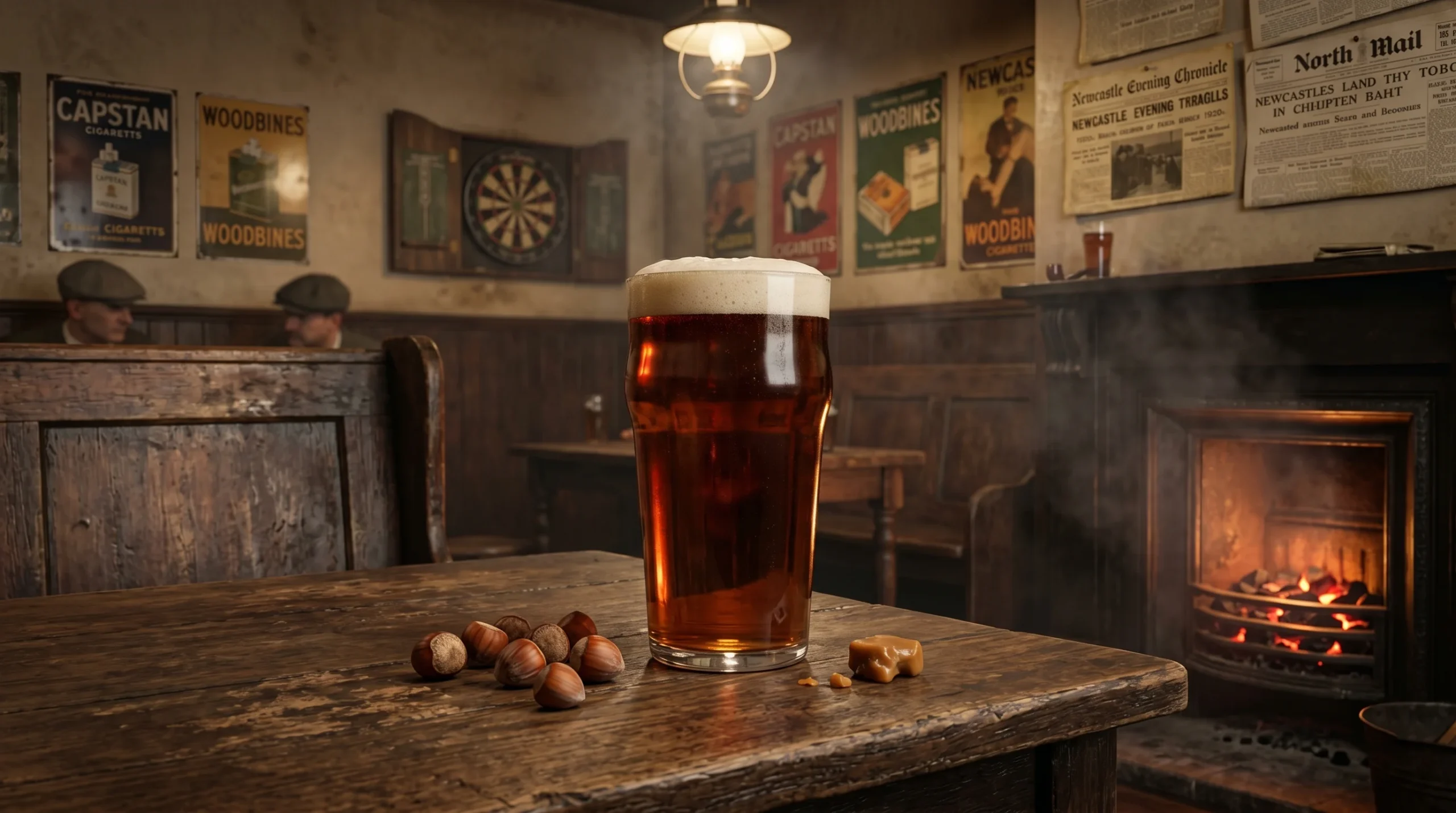
By the 20th century, Brown Ale had gradually taken shape as a distinct style. Newcastle Brown Ale (1927) is one of the most famous Brown Ale brands in the world, defining "English Brown" for generations of beer drinkers.
The American craft beer movement of the 1980s and 90s subsequently gave rise to American Brown Ale — a more hop-forward, stronger version of its British counterpart.
Altbier—the "classic" beer of Düsseldorf, Germany—has a completely different history. "Alt" in German means "old," referring to the old (warm) fermentation method before lager (cold) took over Germany.
Common Characteristics of Brown Ales
- Color: Dark brown, translucent (unlike the jet-black Stout beer)
- Body: Medium
- Main flavor: Chestnuts, caramel, light chocolate, toasted bread
- Suitable for: For those new to dark beer, who enjoy malt flavors but don't want something too strong.
Popular Brown Ale Styles
English Brown Ale
Traditional English brown ale — caramel, hazelnut, a hint of chocolate. Balanced, easy to drink, with few hops. This is the “original” style from which other versions have evolved.
American Brown Ale
The American version — stronger hops, with citrus or pine notes from American hops. It retains the malt-forward character of Brown Ale but with added American craft influences.
Altbier
A "classic" Düsseldorf beer. Warm-fermented like an ale but cold-brewed like a lager — the result is a smooth, clean beer with a slight bitterness and a light roasted malt flavor. Not exactly a Brown Ale, but it's categorized in this group due to its color and shared character.
Brown Ales in Vietnam
Brown Ale is one of the most suitable styles for Vietnamese people who are just starting to drink craft beer. Here's why:
- Not too bitter (unlike IPA)
- Not too strong (unlike Stout)
- Not too surprising (unlike Sour, Saison)
- It has a gentle, approachable malt flavor.
Some Vietnamese breweries have experimented with American Brown Ale — especially those influenced by the American craft beer movement. However, this style remains less common compared to IPAs or Stout on the menus of Vietnamese craft beer bars.
If you're transitioning from commercial beers (Saigon, Tiger, Heineken) to craft beer — and want to try dark beer but aren't ready for Stout — Brown Ale is the perfect choice. Start with English Brown to experience its lightness, then try American Brown to feel the difference when American hops come into play.
How to Enjoy Dark Beer
Dark beer isn't the kind you gulp down in one go. It's a world worth slowing down, observing, and savoring. The same glass of dark beer can offer a completely different experience when drunk properly compared to drinking it hastily.
This section focuses on the key aspects of enjoying dark beer. For a deeper understanding of beer enjoyment in general—serving temperature, glass type, pouring technique, tasting process, and food pairing principles—we have a comprehensive guide at [link]. How to Enjoy Beer.
3 Distinctive Features of Drinking Dark Beer
1. Don't drink it too cold.
Unlike ice-cold light beers, dark beers require a higher temperature to release their flavors. Too cold will numb the taste buds and mask the complex aromas of the roasted malt.
- Dark Lagers: 4-7°C
- Stouts, Porters typically: 8-12°C
- Imperial Stouts, Pastry Stouts: 12-16°C
The rule is simple: the darker the beer, the higher the temperature.
2. Let the beer "breathe".“
Take the beer out of the refrigerator 5-10 minutes before drinking. An Imperial Stout will "unveil" many new layers of flavor as it warms up — dark chocolate, dark fruit, coffee, warm alcohol. Don't rush. The first glass is an experience, the last glass is another.
3. Observe the color and the foam layer.
Before drinking, take 10 seconds to observe the glass of beer. Dark beers come in many different shades — from the reddish-brown of Munich Dunkel, to the deep brown of Porter, to the opaque black of Imperial Stout.
The foam tells a story too: the creamy brown foam of a Stout is different from the light white foam of a Schwarzbier. Each characteristic is a clue to the malt used.
Pair Dark Beer with Vietnamese Dishes
Dark beer pairings with Vietnamese food are a little-discovered area. Most people think dark beer "doesn't go well" with Vietnamese cuisine—because it's too strong, too bitter. But the opposite is actually true. There are many beautiful pairings waiting to be discovered, and some of them might surprise you.
Beef Pho + Stout
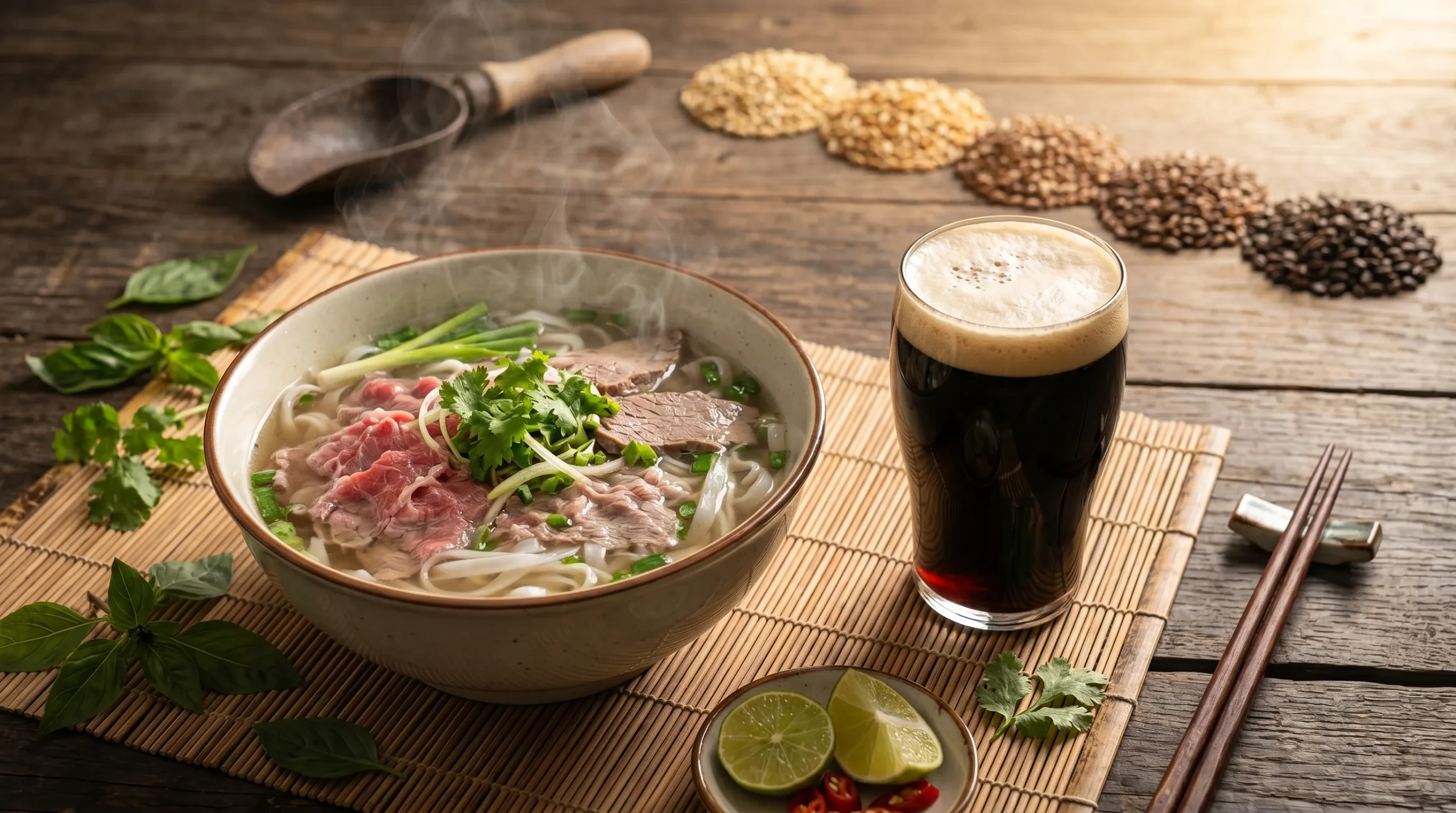
This might be the perfect pairing between dark beer and Vietnamese food. The rich, roasted flavor of the Stout meets the savory broth of beef pho — both possessing "depth." The Stout doesn't compete with pho, but complements it.
The cinnamon and star anise aromas in the pho broth complement the chocolate and caramel notes of the stout, creating a warm and comforting experience. This is also the ideal combination for a leisurely morning.
Select: Oatmeal Stout or Sweet/Milk Stout. Avoid Imperial Stout (too strong for breakfast).
Bun Bo Hue + Porter
The spiciness and umami of Hue-style beef noodle soup meet the chocolate and caramel of Porter — creating an unexpected balance. Porter helps to temper the spiciness while enhancing the lemongrass and shrimp paste flavors.
Especially with Hue-style beef noodle soup which has a lot of fat, a porter with a medium body helps to cleanse the palate between slices of pork, preventing the meal from becoming too heavy.
Select: English Porter is for beginners, American Porter is for those who prefer stronger hops.
Pate Sandwich + Brown Ale
Rich, creamy pâté paired with brown ale featuring chestnut and caramel notes — familiar yet not boring. This is the perfect casual pairing for a weekend breakfast.
Brown Ale has a moderate ABV (4-61% ABV), so it won't make you sleepy at lunchtime. The light roasted malt flavor enhances the pâté taste, while the carbonation helps cleanse the palate with each bite.
Select: English Brown Ale.
Grilled Dishes (Ribs, Pork Belly, Meatballs) + Smoked Porter or Schwarzbier
Vietnamese grilled dishes—especially charcoal-grilled ones—have a natural smoky flavor. This is where Smoked Porter comes in handy: the woody smoky notes of the beer resonate with the charcoal aroma of the meat, creating a complex smoky symphony.
If Smoked Porter is too intense, the cool Schwarzbier is a safe choice. The light body of the Schwarzbier helps cleanse the palate between the fatty cuts of meat, while the mild roasted malt notes still pair well with the smoky flavor.
Select: Smoked Porter for those who like bold colors, Schwarzbier for those who prefer a softer look.
Grilled Seafood + Dark Lager
This is an interesting "rule-breaking" pairing. Many people think dark beer doesn't go well with seafood — wrong. Dark Lager (especially Munich Dunkel, Schwarzbier) is an exception.
The light body and roasted malt notes don't overpower the seafood, but rather enhance the oceanic flavors. Especially with grilled shrimp or grilled fish with sauce, a dark lager beer is a surprisingly good choice.
Select: Munich Dunkel for grilled prawns, Schwarzbier for grilled fish.
Hot Pot + Belgian Dark Ale
Hot pot is a "multi-dimensional" dish — it has broth, vegetables, meat, seafood, and spices. Belgian Dark Ale, with its dried fruit and malt-forward complex, pairs well with many of the ingredients in a hot pot.
Especially with spicy and sour Thai hot pot, Belgian Dark Ale can "hold its own" against the strong flavor of tom yum while still maintaining its own character.
Select: Belgian Dark Ale or Winter Warmer.
Desserts (Three-Color Dessert, Red Bean Dessert, Banana Dessert) + Sweet Stout
Sweet, mildly dark beer paired with sweet tea is a combination that might seem unusual — but it's incredibly harmonious. The lactose in Sweet Stout enhances the sweetness of the tea, while its light body doesn't overwhelm you after a meal.
In particular, red bean dessert + sweet stout is a "vintage" combo — reminiscent of the tradition of eating red beans with dark beer in Northeast Asia (China, Japan).
Select: Sweet/Milk Stout.
Grilled Rice Paper + Imperial Stout
A glass of Imperial Stout 10-12% ABV with a toasted pastry or cheese bread could be the ideal dessert pair for a weekend night. The dark chocolate flavor of the Imperial Stout + creamy cheese = unexpected luxury.
This is also an interesting "Western meets Vietnamese" pairing — Imperial Stout is a modern American style, while grilled rice paper is a Da Lat street food. Different cultures, but the same mood: relaxing on the weekend.
Select: American Imperial Stout or Pastry Stout.
Iced Milk Coffee + Coffee Stout
This is an interesting "double caffeine" combination, but not for quenching thirst. Coffee Stout (usually Imperial Stout with added coffee beans during brewing) meets Vietnamese iced milk coffee — both celebrate the roasted flavor.
Recommended for long weekend mornings, when you want a richer, more intense flavor experience than regular coffee.
Select: Imperial Stout has a coffee element, or you can pair a regular Imperial Stout with iced milk coffee.
Tropical Fruits + Pastry Stout
Modern pastry stouts often feature secondary fruit flavors—vanilla, coconut, chocolate. Pairing them with Vietnamese tropical fruits creates a unique "tropical dessert" sensation.
Ripe mango + coconut stout, pineapple + vanilla stout, lychee + imperial stout — each pairing is a worthwhile experiment.
Select: Pastry Stout, Coffee Stout, or any stout with flavor adjuncts.
Don't Be Afraid to Experiment
Pairing dark beer with Vietnamese food remains an unexplored territory. You might discover a fantastic pairing that no one has thought of yet — roast duck + Russian Imperial Stout? Vietnamese savory pancake + Schwarzbier? Hanoi vermicelli with grilled pork + Brown Ale?
That's the joy of enjoying beer. Each pairing is a hypothesis. Each sip is an answer.
And sometimes, the answer will surprise you.
Where to Start If You're New to Dark Beer?
Dark beer can be daunting for newcomers. A glass of Imperial Stout 12% ABV can be an unpleasant experience for someone unfamiliar with it — too strong, too bitter, too alcoholic. And one such shock might cause that person to avoid dark beer for life.
This is why the order of exploration is important. Follow the right path, and you'll find that dark beer is a vast and beautiful world. Follow the wrong order, and you might miss it all completely.
A 4-Step Pathway for Beginners
Step 1: Start light with Dark Lager
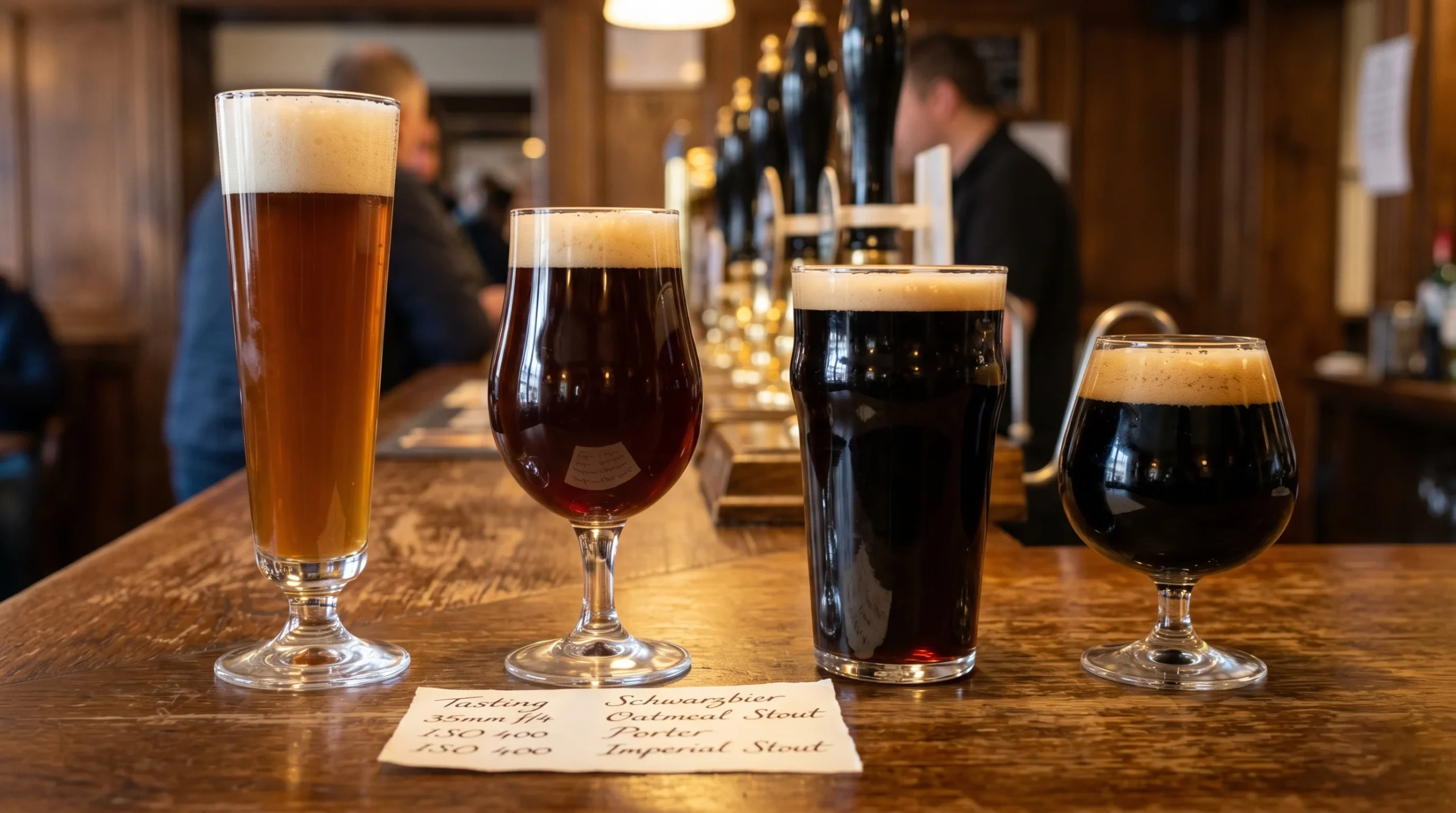
Start with Schwarzbier or Munich Dunkel. These are dark beers with a light body, moderate ABV (4-5%), and a dry finish. You'll get used to the color and roasted malt aroma without being overwhelmed.
My feeling after the first glass: "Wow, dark beer is drinkable."“
Step 2: Step into the world of easy-drinking Stout
Once you're used to Dark Lager, move on to... Oatmeal Stout or Sweet/Milk Stout. These stouts have a silky smooth body and a subtly sweet flavor—not bitter, not harsh.
This is also when you begin to feel the difference between roasted malt and caramel, between chocolate and coffee.
Step 3: Explore diversity
Now you are ready for Porter, Brown Ale, and Irish Dry Stout (Guinness). Each gives you a different perspective on dark beer — Porter is light and chocolate-forward, Brown Ale has a nutty flavor, Dry Stout is dry and slightly bitter.
At this stage, begin pairing with food. Each pairing is a lesson in how beer interacts with food.
Step 4: Challenge yourself with the Imperial Palace.
Once you have the foundation, it's time to experiment. Russian Imperial Stout or American Imperial Stout. This is the pinnacle of the dark beer world — ABV 8-12%, complex aroma, full-bodied, warm alcohol on the throat.
An Imperial Stout isn't meant to be drunk. It's meant to be savored—slowly, perhaps for 30-45 minutes, perhaps over an evening.
Avoid 3 Common Mistakes
1. Start with Guinness because of its "fame".“
Guinness isn't the "easiest" stout. It has the characteristic dry bitterness of Irish dry stout—not everyone will like it the first time. If you don't like Guinness, don't conclude "I don't like stout." Try Schwarzbier or Sweet Stout first.
2. Drink ice-cold dark beer.
If dark beer is too cold, it will numb your taste buds and mask all the flavors. That's why many people drink Guinness straight from the freezer and say, "It has no taste." Let the beer warm up a bit before drinking it.
3. Drink quickly, tilt your head back and gulp it down in one go.
Dark beer isn't meant to quench thirst. The proper way to drink it is slowly—observe, smell, sip small amounts, allowing the beer to tantalize your taste buds. A good glass of dark beer can take 20-30 minutes to enjoy.
Final Advice: Don't Rush
Discovering stout isn't a competition. You don't need to be an "expert" at Imperial Stout to be considered a true stout drinker. Some people who've been drinking stout for 10 years still prefer Oatmeal Stout—and that's perfectly fine.
Take it slow. Each glass tells a story. Each style is a corner of the world.
In Summary — Dark Beer Is a World
To begin this article, we ask a simple question: "Is dark beer Guinness?"“
Hopefully, the answer is clear by now.
Dark beer is not a type of beer. It is 28 styles Ranging from the dry German Schwarzbier to the robust American Imperial Pastry Stout. From the English Dark Mild ABV 3% that can be drunk all day, to the Russian Imperial Stout 12% where just one glass is enough for an entire evening.
In there:
- Stouts It is the heart — rich, diverse, from traditional to modern.
- Porters As an ancestor — lighter, chocolateier, yet still holding its own
- Dark Lagers It was a surprise — a dark beer, yet easy to drink, perfectly suited to the Vietnamese climate.
- Dark Ales It's a less-explored region — diverse from Belgium to Scotland, full of hidden gems.
- Brown Ales It's a transitional zone — a gentle starting point for beginners.
Each group is a culture. Each style is a story. Each glass is a door.
A Thought
In Vietnamese beer-drinking culture, "dark beer" is often considered "difficult." Difficult to drink, difficult to understand, difficult to pair. But once you've gone through all the groups in this article, you'll realize the opposite — dark beer might just be the style. most emotional in the world of beer.
It's not because of its intensity. It's not because of its bitterness. It's because of its diversity. Because each style tells its own story. Because each cup is a conversation between properly roasted malt and a drinker patient enough to listen.
Remember: dark beer isn't for getting drunk. Dark beer is for understanding.