
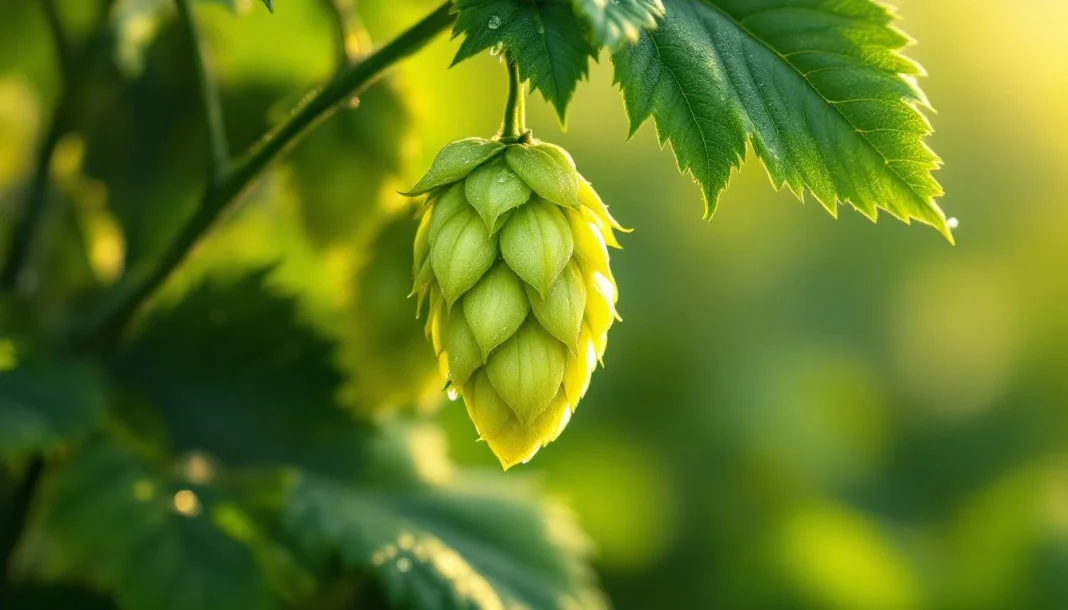
In 2012, a small Portland brewer received a test hop sample codenamed HBC 369. He dry-hoped a small batch of Pale Ale, just to see. When he opened the fermenter, he stood still for a moment. Not because the aroma was too strong—but because it was too complex. Mango. Blueberry. Then pine. Then rain-soaked earth. Then orange again. He didn't know if he was smelling a hop or an entire tropical garden.
That hop variety was later named Mosaic. The name wasn't accidental — it's a mosaic, where each small piece has its own color, but when viewed from the side, we see a complete whole. Mosaic changed the way brewers thought about single-origin hops — that a single variety could provide the depth that previously required blending three or four different types.
Today, we're talking about Mosaic not because it's popular — that much is obvious. We're talking about it because there's something behind its popularity, stories about breeding, about the soil, about how a hop variety born at the right time can reshape an entire movement.
Origin and history
Mosaic was born from a breeding program by the Hop Breeding Company (HBC)—a joint venture between John I. Haas, Inc. and Yakima Chief Ranches. This was no coincidence. John I. Haas is one of America's oldest hop suppliers, operating since 1914. Yakima Chief is a collection of family farms that have grown hop for generations in the Yakima Valley. When the two sides came together, they didn't just combine resources—they combined over a century of accumulated knowledge.
The breeding program began in the mid-2000s. The goal was clear: to create new hop varieties with unique aromatic characteristics to meet the growing demands of the craft beer movement. Simcoe—a previously successful hop variety—was chosen as the mother plant. This was a calculated decision. Simcoe possessed characteristic pine and earthy notes, high alpha acidity, and, more importantly, it had proven its adaptability to the growing conditions in Yakima.
Mosaic's parent strain is an experimental hybrid codenamed Nugget-derived, meaning it originates from Nugget—a classic American bittering hop variety developed in the 1970s. This combination produces a offspring that possesses both the strength of traditional bittering and the sophistication of modern aromas.
The selection process spanned many years. Hundreds of seedlings were planted, evaluated, and eliminated. HBC 369 — Mosaic's internal code — emerged as a particularly promising candidate around 2008. But from identifying its potential to commercialization was a long road. The hop variety needed to be tested on a larger scale, its disease resistance tested, its yield evaluated, and most importantly — tested in real-world brewing.
Mosaic was officially introduced to the market in 2012. The timing couldn't have been better. The American craft beer movement was booming, with brewmasters constantly searching for new ingredients to create unique beers. Mosaic perfectly met that need—a hop variety that could stand alone while still offering incredible complexity.
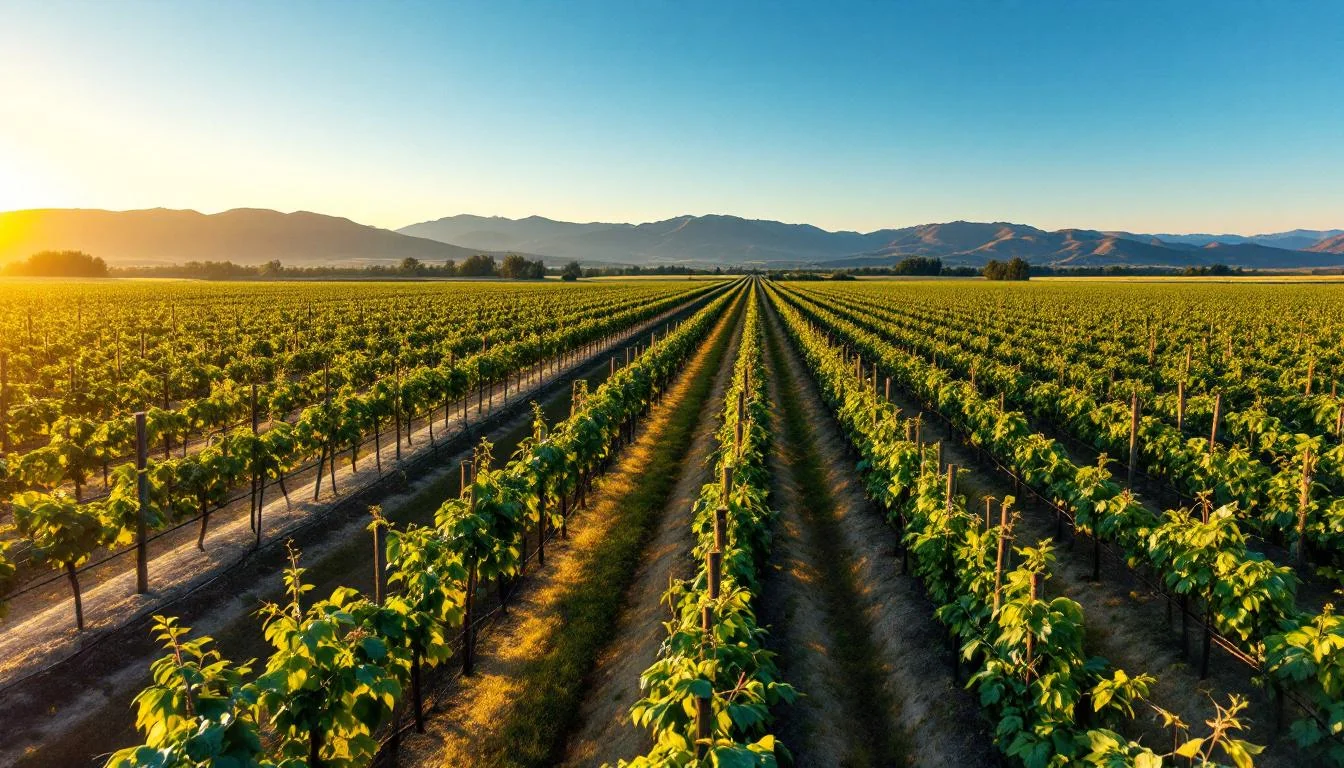
The Yakima Valley, where Mosaic originated and remains the primary hop-growing region, is located in central Washington state. It is the largest hop-growing area in the United States, accounting for approximately 751 tonnes of national production. The semi-arid climate, with hot summers, long days, and cool nights, provides ideal conditions for hops to develop their aromatic essential oils. The elevation of 300-600 meters above sea level, combined with irrigation from the Yakima River, creates a unique terroir that cannot be fully replicated anywhere else.
Technical specifications
Mosaic belongs to the dual-purpose hop group, meaning it can be used for both bittering and flavoring purposes. The alpha acid content ranges from 11.5% to 13.5%, high enough to bitter hop but not so strong as to overpower the aroma when used later in the season. The beta acid content is between 3.2% and 3.9%, creating a soft, non-harsh bitterness.
What sets Mosaic apart is its oil content. The total oil content ranges from 1.0 to 1.5 ml/100g—a high figure compared to many commercial hop varieties. Myrcene is present in a significant proportion, ranging from 471 TP3T to 531 TP3T of the total oil. Myrcene is the component that creates the characteristic tropical aroma. In addition, humulene and caryophyllene—two components commonly found in European hops—are also present, creating subtle woody and spicy notes.
The mosaic hop harvest season in Yakima typically falls between late August and early September. This is when the lupulin glands—small glands containing essential oils and bitter acids—reach optimal maturity. Harvesting too early prevents the aroma from fully developing. Harvesting too late causes the essential oils to oxidize and lose their freshness. Timing is an art that Yakima hop growers have honed over generations.
Aroma and flavor
Upon first smelling Mosaic, we understand why it's called that. There isn't a single dominant scent. Instead, layers of fragrance stack up, changing with each breath.
The top notes are tropical fruits. Ripe mango is the most recognizable note — not the sour green mango, but a sweet, slightly musky, golden ripe mango. Next comes papaya, a hint of guava, and white peach. Those with sensitive noses will also catch passion fruit — a characteristic sweet and sour scent lurking in the background.
The second layer is berry. Blueberry is Mosaic's signature note—a rarity among other hop varieties. Not everyone will notice it, but once you do, it becomes so distinct that it's hard to forget. Alongside the blueberry are hints of strawberry and raspberry, creating a complex berry depth.
The third layer is herbs and earth. Here, we see the imprint of Simcoe — the mother. Light pine, post-rain earth, a hint of moss. These notes don't overpower the fruit but create a foundation, keeping the overall scent from being too sweet or one-dimensional.
On the palate, Mosaic delivers a taste of ripe fruit—not as tart as some citrus-forward hops. The bitterness is soft and rounded, with a long finish carrying a tropical aftertaste. Some describe the aftertaste as like sucking on a fruit candy—lightly sweet, aromatic, and leaving you wanting another sip.
What's special is that Mosaic's flavor profile changes depending on how it's used. Dry-hop will yield more fresh fruit. Whirlpool hop at low temperatures will retain more subtle notes. First-wort hop will emphasize soft bitterness and base notes. This is the brewmaster's playground — one hop variety, many interpretations.
The beer style uses mosaic.
Mosaic finds its natural home in the world. IPA and other bitter beers. The American IPA single-hop Mosaic has become a classic of modern craft beer. With its sufficiently high alpha acid content to create bitterness and its complex aromatic profile, Mosaic can carry the entire bill hop without any support.
New England IPA (NEIPA) is the style where Mosaic truly shines. The hazy, soft mouthfeel of the NEIPA allows Mosaic's fruity notes to burst forth without being hampered by harsh bitterness. When paired with Citra or Galaxy in a NEIPA, Mosaic acts as a mediator—connecting the other hops into a unified picture.
American-style Pale Ale is also a popular choice. With a lower alcohol content than an IPA, Pale Ale allows Mosaic to express more subtle aspects—berry, herbs, earth—that might be overshadowed in a stronger beer. This is a way for drinkers to become acquainted with Mosaic in its purest form.
Recently, mosaic has started appearing in more unexpected styles. Some brewers use it in wheat beer The American style utilizes the fruity characteristics to complement the soft wheat flavor. Others experiment in... sour beer Light, where the acidity of the beer highlights the berry notes of the hop. There are even modern lagers that are dry-hop with Mosaic — a seemingly unusual combination, but surprisingly harmonious.
Compare to hops in the same group
Simcoe—the mother of Mosaic—is the first natural point of comparison. Both have pine and earthy notes, but Simcoe leans more towards resinous and dank, while Mosaic carries more tropical fruit. If Simcoe is a pine forest in the morning, Mosaic is a tropical garden at midday. Many brewers combine the two to achieve both the depth of Simcoe and the vibrancy of Mosaic.
Citra is a contemporary sibling. Both emerged during the boom of American craft beer and are beloved for their fruity aromas. But while Citra leans towards citrus—orange, lemon, grapefruit—Mosaic is more stone fruit and berry. Citra is like a joyful shout, Mosaic like a multi-instrumental piece of music. When combined, they complement each other perfectly, creating IPAs of incredible depth.
Galaxy from Australia is another interesting comparison. Both have strong tropical notes and can stand alone as single-hop. But Galaxy leans more directly towards passionfruit and peach, while Mosaic has additional earthy undertones that Galaxy lacks. Galaxy is like a tropical smoothie, Mosaic is like a complex cocktail with multiple layers of flavor.
How to recognize when enjoying it
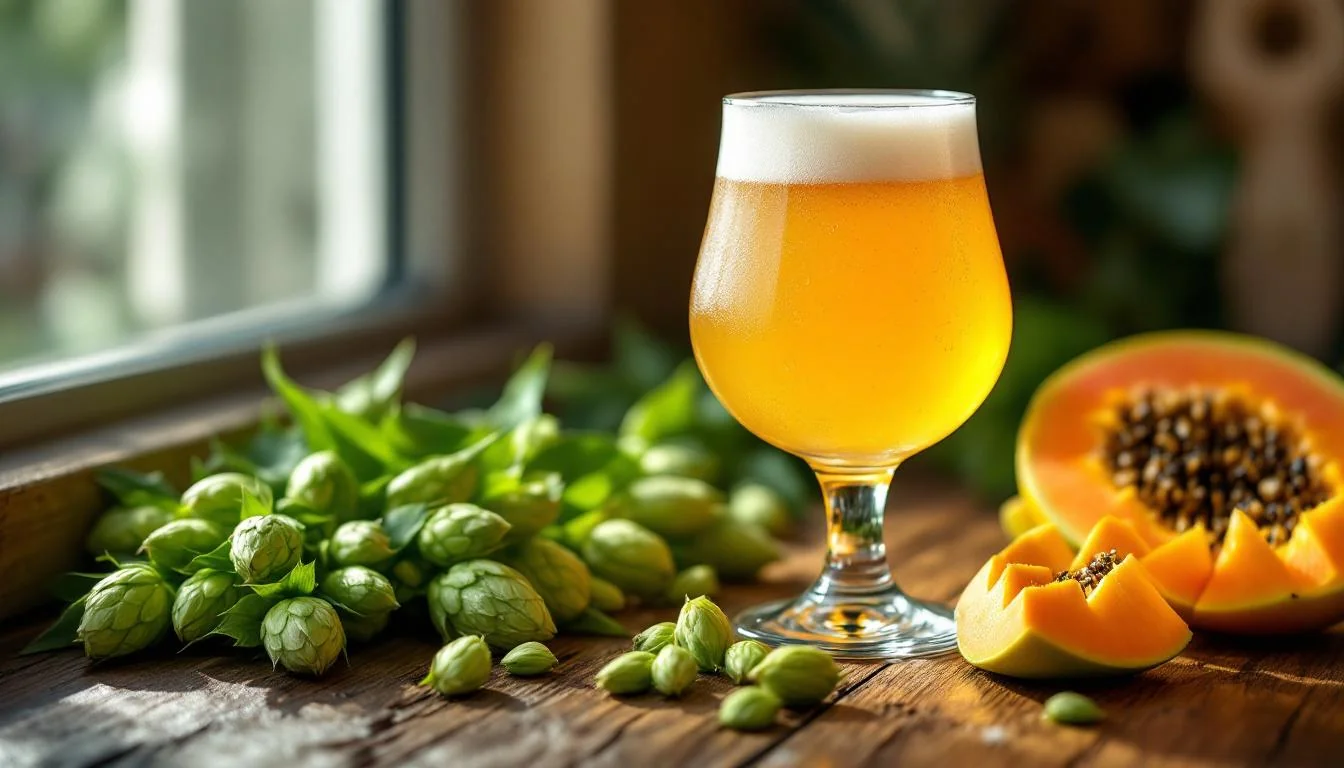
When holding a dry-hop IPA with Mosaic, begin by bringing the glass to your nose before drinking. Gently swirl the glass to release the aroma. The first breath will bring tropical fruits—mango, papaya. The second breath, once your nose has adjusted, will begin to detect the characteristic berry—blueberry—hidden beneath.
With the first sip, notice the bitterness. Mosaic offers a soft, not harsh, bitterness that doesn't linger too long on the back of the tongue. The fruity notes follow immediately—not sour like citrus hop, but subtly sweet like ripe fruit. Swallowing leaves a slightly earthy aftertaste—a hint of pine, damp earth—a hallmark of Simcoe bloodline.
To fully appreciate it, drink slowly. Let the beer warm up in the glass. Higher temperatures will release subtle notes that are hidden by cold beer. An IPA Mosaic at 4°C will be different from the same one at 10°C — both are worth experiencing.
Mosaic doesn't demand analysis. It simply invites us to pause, smell, taste, and let the layers of aroma tell their own story. Sometimes, the best thing we can do with a good beer is to not rush.