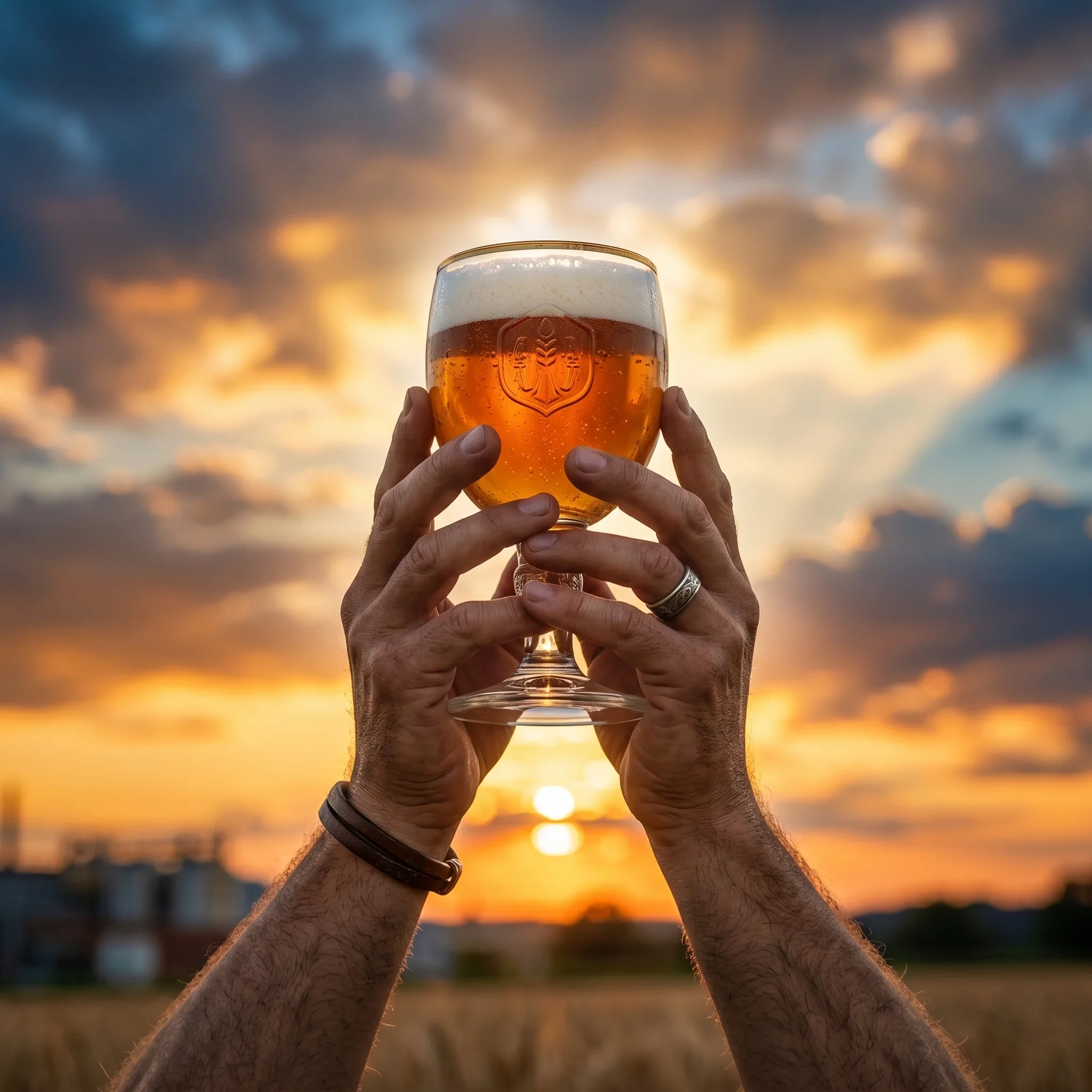

Some things become great not because of their ostentation, but because of their ultimate purity. Pilsner Malt is one of them.
Born in Bohemia in the mid-19th century, this base malt completely changed the way the world viewed beer. Before it, European beers were largely cloudy, dark, and heavily smoky. Pilsner Malt brought something unprecedented—crystal clear, a shimmering straw-yellow color, and an astonishingly delicate flavor. We still live in the legacy of that revolution.
Origin and history
The story begins in Plzeň, a small town in Bohemia—now the Czech Republic. In 1842, the Měšťanský pivovar (Brewery of the Burghers) brewery hired Josef Groll, a Bavarian brewmaster, to create a new beer. Groll brought with him Bavarian cold brewing techniques, but he encountered something his homeland lacked—Moravian barley and the unique soft water of the Plzeň region.
Moravian barley at the time had a low protein content and thin husk, and when dried at low temperatures, it produced an unusually pale malt. Combined with bottom-fermenting lager yeast and soft, almost mineral-free water, Groll created Pilsner Urquell—the first clear, golden beer in history.
The timing couldn't have been perfect. In the mid-19th century, the glassmaking industry boomed, and clear beer glasses replaced opaque ceramic cups. People saw the color of beer for the first time. And Pilsner Urquell, with its brilliant golden hue, became a phenomenon.
From Bohemia, the technique of producing Pilsner Malt spread to Germany, particularly to Franconia and Bavaria. German malt producers such as Weyermann (founded in 1879 in Bamberg) and Bestmalz continued to refine the process, making German Pilsner Malt the industry standard.
Today, when discussing Pilsner Malt, two main types are commonly distinguished: Bohemian (Czech) and German. Both are pale in color, but there are subtle differences in flavor—signs of terroir and distinct production traditions.
Production process
Pilsner Malt requires patience and strict control at every stage of production.
The raw material is high-quality two-row barley, usually Moravian or modern hybrid varieties derived from it. The grain must have a protein content of 9.5% to 11.5% — sufficient to provide enzymes but not so high as to cloud the beer.
The soaking process lasts 40-48 hours, raising the seed moisture content from approximately 121 TP3T to 43-461 TP3T. This is followed by germination for 4-5 days at a controlled temperature of 14-18°C. This is when amylase and protease enzymes are activated, preparing the seeds for subsequent starch conversion.
The most significant difference lies in the kiln drying process. Pilsner malt is kiln-dried at low temperatures—starting at 50-60°C and ending at no more than 80-85°C. This process is long and gentle, preserving as many enzymes as possible and avoiding the Maillard reaction that causes color.
The result is pale straw-yellow malt grains, rich in enzymes, with a delicate aroma of fresh flour and honey.

Technical specifications
Pilsner Malt belongs to the base malt group, capable of complete self-conversion and providing the majority of the fermentable sugars in beer formulations.
In terms of color, this is one of the lightest malts. German Pilsner Malt typically ranges from 2.5 to 4 EBC, equivalent to 1.4-1.8 Lovibond. Bohemian Pilsner Malt can be slightly darker, reaching 3-4.5 EBC. Compared to English Pale Ale Malt (5-7 EBC), Pilsner Malt is noticeably lighter.
The extractability ranges from 80-82% by dry weight, among the highest for malts. This means the starch-to-sugar conversion efficiency is very good.
Protein content is typically in the range of 10-111 TP3T, sufficient to provide potent diastatic enzymes (usually above 250 Windisch-Kolbach units) but not so high as to cause clarity issues. The Kolbach index (ratio of soluble protein to total protein) ranges from 38-421 TP3T, indicating good variability during germination.
With this characteristic, Pilsner Malt can account for 100% grist in a formula without needing to add other malts to support its metabolism.
Flavor and color
Pilsner Malt didn't shout. It whispered.
The characteristic aroma is that of fresh flour, freshly baked white bread, and a hint of honey. There's no caramel. No biscuit notes. No roasted undertones. Just the purity of grains in their most original form.
In the finished beer, Pilsner Malt provides a light, delicate sweetness base with a dry and clean finish. This serves as a blank canvas for the other ingredients—hops, yeast, and water—to play their roles.
In terms of color, beer made entirely from Pilsner Malt has a straw yellow to golden yellow color, usually in the range of 4-8 EBC depending on the brewing process. This is the classic color of Pilsner, Helles, and many light lager varieties.
There's a subtle difference between the two. German Pilsner Malt typically offers a cleaner, almost neutral grain flavor. Bohemian Pilsner Malt can be a bit warmer, with light notes of honey and biscuit—a legacy of traditional Moravian barley.
A notable point is DMS (dimethyl sulfide) — a compound with a boiled corn smell. Pilsner malt has higher levels of DMS precursors than malts dried at high temperatures. To avoid this odor in beer, the boiling process needs to last at least 60-90 minutes with the lid open, allowing the DMS to evaporate.
Typical beer style
Pilsner Malt is the backbone of countless beer styles, especially in the family. light lager.
German Pils — The style is derived from this malt. The beer has a bright straw yellow color, a thin body, and high bitterness from German hops such as Hallertauer or Tettnanger. Pilsner Malt accounts for 100% grist, allowing the clean bitterness and herbal hop aromas to shine through.
Czech Premium Pale Lager (Bohemian Pilsner) — A beer originating from Plzeň. Slightly bolder than German Pilsner, with a more pronounced malt flavor, balanced with Saaz hops. Traditional Bohemian Pilsner Malt creates characteristic notes of honey and bread.
Munich Helles — A "cousin" of Pilsner, born in Munich in 1894. Helles also uses Pilsner Malt as its base but emphasizes the malt flavor more than the bitterness. The result is a golden, subtly sweet, and incredibly easy-to-drink beer.
Belgian Blonde and Belgian Tripel — You might not expect it, but many lines Belgian beer Pilsner Malt is also used as the base. In Tripel, Pilsner Malt is combined with candied sugar to create a light-bodied beer with a high alcohol content and a characteristic dry finish.
In addition, Pilsner Malt is also found in many recipes. IPA In modern times, brewers need a neutral malt base so that the hops can truly shine.
Comparison with malts in the same group
Within the family of light-colored malts, Pilsner Malt has a few notable "siblings".
Pale Ale Malt (English) — dried at a higher temperature (around 90-95°C), resulting in a darker color (5-7 EBC) and a milder biscuit aroma. It has fewer enzymes than Pilsner Malt. This forms the basis for English ales.
Vienna Malt — Dried at a slightly higher temperature than Pilsner (85-90°C), color 6-9 EBC. Has a more pronounced toasted bread and honey flavor, but still has enough enzymes for self-transformation. Used in Vienna Lager and Märzen.
Munich Malt — Dried at an even higher temperature (100-105°C), color 15-25 EBC. Rich malt flavor, notes of rye bread and a hint of light caramel. Lower enzyme content, often requires pairing with Pilsner or Pale Malt.
If ranked on a scale from lightest to darkest: Pilsner → Pale Ale → Vienna → Munich. Each step up represents a higher degree of drying, more Maillard reactions, fewer enzymes, and a more complex flavor profile.
Pilsner Malt stands at the starting point — the purest, mildest, and most versatile.

How to recognize when enjoying it
To truly appreciate Pilsner Malt, start with a standard Pilsner — either Czech or German will do.
First, let's look at the color. Hold the glass up to the light. Pilsner Malt produces a clear, straw-yellow color, without a hint of cloudiness, shimmering like diluted honey. This is a legacy of low drying temperatures — no melanoidins, no caramelization, just the natural pigments of the grain.
Bring the glass to your nose. The Pilsner Malt aroma is very subtle — fresh flour, a hint of honey, perhaps a distant suggestion of hay. If you smell baked goods or caramel, that's from a different malt or the brewing process.
Take a sip. Let the beer run across your tongue. The Pilsner Malt provides a clean, sweet base with almost no aftertaste. It's a blank canvas, allowing the hop bitterness and lager yeast crispness to take their place.
The finish should be dry and clean. There should be no lingering sweetness. There should be no "heavy" feeling on the palate. These are signs of properly used Pilsner malt — fully metabolized, thoroughly fermented.
Next time you pick up a glass of Pilsner, pause for a moment. Behind that crystal-clear glass lies nearly two hundred years of history—from Josef Groll in Plzeň, through the Moravian barley fields, to the malt mills of Bamberg. All of this, to create something seemingly simple, almost invisible. But sometimes, greatness lies precisely in what we don't see.