
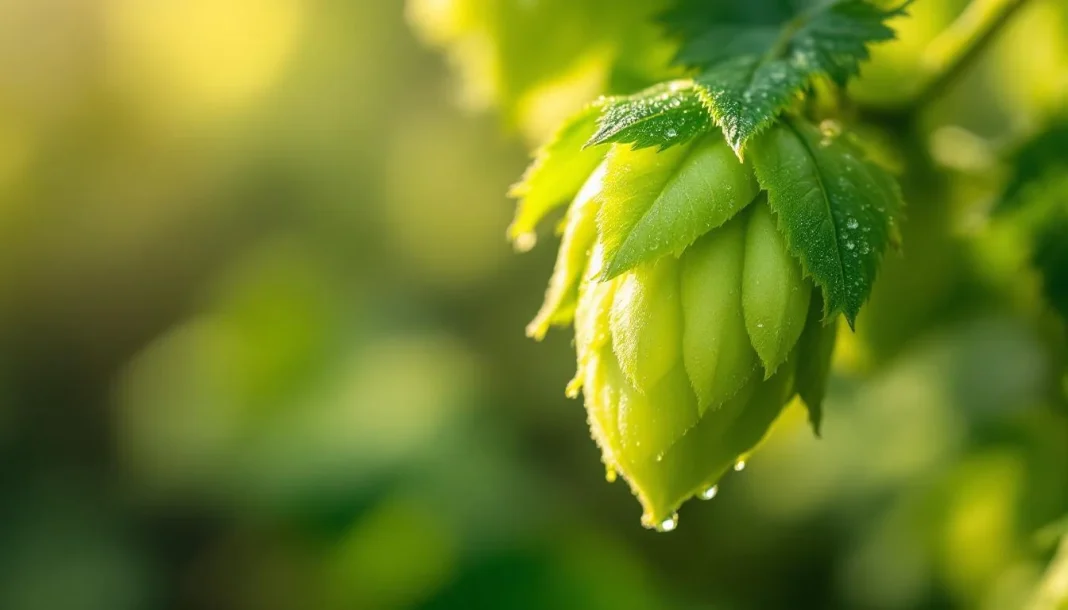
In 1842, in the small town of Plzeň in Bohemia, a Bavarian brewer named Josef Groll did something unprecedented. He combined pale malt, the local soft water, and a hop variety grown not far away—in the area surrounding the town of Žatec. The result was a golden, clear beer with an elegant bitterness and delicate herbal aroma. Pilsner Urquell was born, and with it, the world came to know Saaz.
But the story of Saaz doesn't begin in 1842. It began centuries earlier, when Bohemian farmers realized that their land—with its mild continental climate, mineral-rich red soil, and the winding Ohře River—could produce a hop variety unlike any other.
Origin and history
Saaz is named after the German town of Žatec, located in northwestern Bohemia, now part of the Czech Republic. It is one of the oldest hop varieties in the world still cultivated — belonging to the "noble hops" group along with Hallertau, Tettnang, and the German Spalt.
Historical records show that hops were cultivated in the Žatec region as early as 1004, when the King of Bohemia issued the first regulations concerning the cultivation and trade of hops. By the 13th century, the region had become the most important hop production center in Central Europe. In 1348, King Charles IV of Bohemia—who later became Holy Roman Emperor—issued a decree prohibiting the export of Saaz hops from the kingdom, punishable by death.
That decree was no accident. The Bohemians understood that Saaz was not just a crop—it was a national treasure. Just as Pinot Noir only truly exists in Burgundy, Saaz only reaches its peak when grown on Bohemian soil.
The traditional Saaz hop growing region is located along the Ohře River valley, in an area known as the “Žatec hop region”—a protected geographical area. The soil here is a red permian soil, rich in iron and trace minerals. The temperate continental climate with cold winters and moderately warm summers provides ideal conditions for the hop plants to grow slowly, accumulating essential oils gradually.
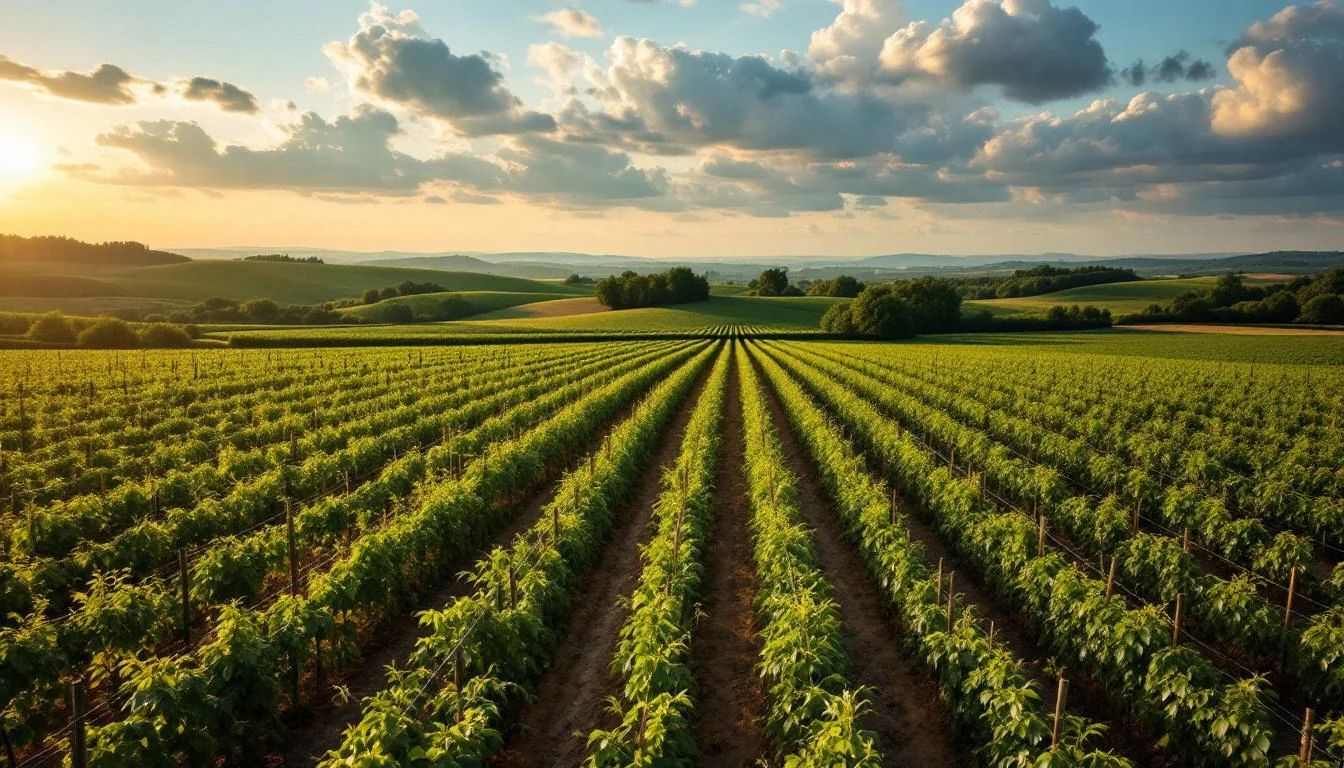
Saaz belongs to the landrace group — meaning it wasn't bred in a laboratory, but evolved naturally through centuries of cultivation and selection by local farmers. This gives Saaz high genetic purity, but also means lower yields compared to modern varieties.
Today, around 5,000 hectares of land in the Žatec region are still dedicated to Saaz cultivation. In 2022, the European Commission officially recognized “Žatecký chmel” (Žatec hops) as a protected geographical indication – equivalent to Champagne or Parmigiano-Reggiano cheese.
Technical specifications
Saaz is a hop variety with low alpha acid content—typically ranging from 2.51 TP3T to 4.51 TP3T, with an average of around 3.51 TP3T. Beta acid is in the range of 31 TP3T to 4.51 TP3T. These are modest figures compared to modern varieties like Citra or Simcoe, but this is what gives Saaz its unique character—a hop that doesn't "attack" the drinker with bitterness, but rather whispers.
The total essential oil content of Saaz ranges from 0.41 TP3T to 0.81 TP3T — significantly lower than many other varieties, yet the essential oil composition is extremely balanced and complex. Farnesene — a characteristic essential oil of the noble hops group — accounts for approximately 121 TP3T to 181 TP3T of the total essential oil, higher than most other varieties. This is the component that gives Saaz its distinctive herbal aroma.
The cohumulone content in Saaz's alpha acid is quite low—around 23% to 26%. This is important: low cohumulone means a soft, rounded, and less harsh bitterness. The Saaz harvest season typically falls in late August to early September, when the first chilly autumn nights begin to arrive in Bohemia.
Aroma and flavor
Describing the aroma of Saaz is not easy. It's a subtle hop flavor, not loud or self-promoting. You have to listen carefully.
When you gently squeeze a fresh Saaz flower bud, the first scent that emerges is herbal—but not Mediterranean herbs like basil or oregano. These are Central European herbs: hay, wild daisies, a hint of something akin to pale green tea. Words like “herbal” and “grassy” are often used to describe it, but those words don’t quite capture its essence.
The second layer of scent is floral—subtle, almost imperceptible. White flowers. Small flowers. Not the intense scent of roses or jasmine, but rather wildflowers, summer blossoms from someone's memory.
And the final, most characteristic layer of Saaz, is a subtle spiciness — it's called "spicy," but not the spiciness of chili or ginger. It's the spiciness of white pepper, of distant cloves, of something reminiscent of wood and moss. Some recognize a note similar to bitter orange, but very faint — like the scent of oranges in a room where the oranges have long since been put away.
In terms of taste, Saaz offers a soft bitterness—not sharp, not lingering or unpleasant. The bitterness serves as a gentle reminder that this is beer, not water. The finish is clean, dry, with a hint of minerality like limestone.
Beer style using Saaz
Saaz and Pilsner They are an inseparable pair. Czech Pilsner—or Bohemian Pilsner—is defined by three things: Moravian malt, soft water, and Saaz hops. Without Saaz, Czech Pilsner simply doesn't exist.
In Czech Pilsner, saaz is used for both bittering and aroma. The traditional technique, called "triple decoction mashing," involves adding saaz in several stages—usually three: at the beginning of the cooking process, in the middle, and finally for aroma. Pilsner Urquell, Budějovický Budvar, and Staropramen all rely on saaz as their soul.
Besides Czech Pilsner, Saaz is also a traditional choice for German Pilsner — although Germans often use their own noble hops such as Hallertau and Tettnang. Munich Helles — a light, airy lager — also frequently uses Saaz in its flavor profile.
Some manufacturers Belgian beer Traditionally, Saaz is also used, particularly in Belgian Blonde Ale and Belgian Witbier. The delicate herbal notes of Saaz complement spices like orange peel and coriander seeds commonly used in Witbier.
Interestingly, some modern craft beer producers have experimented with Saaz in their product lines. IPA — not to create the primary bitterness, but to add a layer of complexity, reminiscent of European tradition amidst the tropical aromas of American and Australian hop varieties.
Compare to hops in the same group
Saaz belongs to the "noble hops" group — four noble hop varieties from continental Europe. The other three — Hallertau Mittelfrüh, Tettnang, and Spalt — all originate from Germany. Each has its own distinct personality, although they share some common characteristics: low alpha acidity, herbal aromas, and a soft bitterness.
Compared to Hallertau Mittelfrüh—perhaps its closest counterpart—Saaz has a more pronounced herbal aroma and a stronger spicy note. Hallertau leans more towards floral and earthy notes. If Saaz is like sun-dried grass, Hallertau is like fresh morning grass.
Tettnang—grown in the Lake Constance region, on the German-Austrian-Swiss border—has a stronger floral scent than Saaz, with subtle citrus notes. Tettnang is "brighter," while Saaz is "deeper." Spalt, from Franconia, lies somewhere between these two—herbal like Saaz, but with added woody and earthy undertones.
It's important to remember: even though they are grown elsewhere (and Saaz has been grown in the USA, New Zealand, Belgium, etc.), hops from these regions will not be exactly the same as Saaz Bohemia. Terroir is just as important to hops as it is to grapes.

How to recognize when enjoying it
When holding a glass of Czech Pilsner—or any beer that uses Saaz—start by bringing the glass to your nose before drinking. Saaz doesn't scream in your face like Citra or Mosaic. You have to find it.
The initial aroma is usually dry herbs — like opening an old book in a room with linen curtains. Then, gently swirl the glass, letting the beer warm up a bit. Floral notes will emerge — as light as a butterfly's wings.
When drinking, the bitterness of Saaz comes and goes slowly. There's nothing abrupt about it. Mid-tongue, you can feel a slight dryness—like sparkling mineral water. The aftertaste is clean, with a lingering herbal undertone just long enough to make you want another sip.
Saaz isn't a hop to be analyzed. It's a hop to be savored—like one savors a late afternoon in a small European town, when the sun has set and the air begins to cool. Drink slowly. Bohemia has been waiting for you for over seven hundred years. It's not in a hurry.