
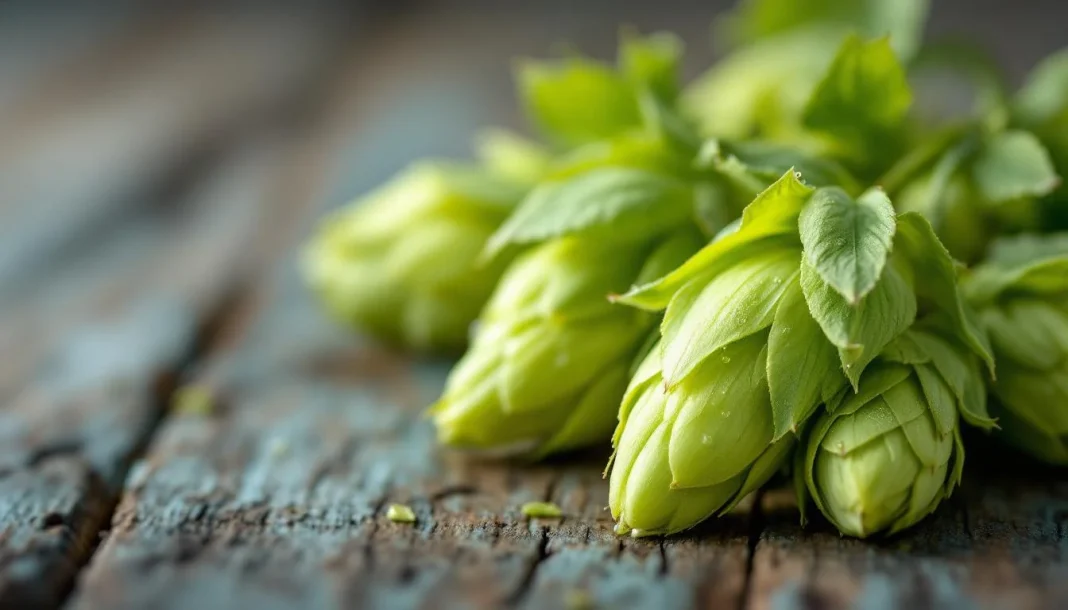
In 1790, a farmer named John Golding in the village of Malling, Kent, noticed something different about some of the hop plants in his garden. These plants not only produced a good yield but also emitted a delicate, refined aroma—quite unlike the rougher hop varieties of the time. He began cultivating them. And then, over two centuries later, the Golding name became synonymous with English hops.
We're talking about East Kent Goldings — not just any Goldings, but hops grown exclusively in East Kent, where the land, climate, and the hands of generations of farmers have created an unreplicable terroir. This isn't hops to impress. This is hops to contemplate.
In the modern craft beer world, teeming with American hop varieties boasting explosive tropical flavors, East Kent Goldings stands out as a true English gentleman—quiet, refined, yet leaving a lasting impression. It reminds us that sometimes, restraint is the ultimate art form.
Origin and history
The story of East Kent Goldings begins in the late 18th century, against the backdrop of a revolution in the British brewing industry. Prior to that, the English primarily used gruit—a mixture of herbs—to give beer its bitterness. Hops, though introduced from Flanders in the 15th century, remained a controversial ingredient.
John Golding, a farmer in Malling in the Mid-Kent region, is credited with being the first to select and breed the hop system that would later bear his name. He did this sometime between 1780 and 1790. However, it's important to distinguish: Goldings is a general term for a group of hop varieties derived from John Golding's work. East Kent Goldings, more specifically, refers to Goldings grown in four particular counties of East Kent: Canterbury, Faversham, Ashford, and Sandwich.
This distinction is not purely geographical. East Kent has a rare natural advantage: mineral-rich alluvial soil from the Great Stour and Little Stour rivers, moderate rainfall of around 600-700mm per year, and gentle breezes from the English Channel that help regulate temperature. Hop growers here believe it is this terroir that makes the difference — Goldings grown elsewhere, even of the same variety, will not have the same aromatic depth as those from East Kent.

By the 19th century, East Kent Goldings had become the gold standard for British breweries. Major breweries such as Bass, Whitbread, and Worthington explicitly stipulated in their contracts that they would only purchase hops from East Kent. In 1903, a formal certification system was established: only Goldings hops grown in designated East Kent areas were allowed to bear the “East Kent Goldings” label with the EKG stamp.
However, two world wars and the decline of the British brewing industry caused a dramatic decrease in the area planted with East Kent Goldings. From thousands of hectares at the beginning of the 20th century, by the 1990s only a few hundred hectares remained. Today, East Kent Goldings is one of the rarest and most expensive hop varieties in the world — not for marketing, but because it is genuinely difficult to cultivate, has low yields, and cannot be replicated outside its native habitat.
Technical specifications
East Kent Goldings belongs to the low alpha acid hop group, ranging from 4.51 TP3T to 6.51 TP3T, averaging around 51 TP3T. This is modest compared to modern hop varieties like Citra or Simcoe, which can reach 12-141 TP3T. The beta acid of East Kent Goldings is in the range of 21 TP3T to 3.51 TP3T, creating a balanced alpha/beta ratio—an important characteristic for producing a soft, non-harsh bitterness.
The total essential oil content in East Kent Goldings ranges from approximately 0.41 TP3T to 11 TP3T, with humulene being the main component, accounting for 35-451 TP3T of the total essential oil. Humulene is the compound that creates the characteristic aroma of English hops—herbal, woody, and slightly spicy. Farnesene, another characteristic component of the Goldings range, accounts for approximately 4-51 TP3T, contributing to the subtle floral and fruity notes.
The East Kent Goldings harvest typically takes place from early to mid-September, a little later than many other hop varieties. Goldings plants are characterized by their slow growth, slender vines, and susceptibility to pests and diseases—particularly verticillium wilt, a soil fungus that has devastated many Kent hop gardens. These factors contribute to East Kent Goldings' rarity.
Aroma and flavor
If I had to use one word to describe the aroma of East Kent Goldings, it would be "elegance." It's not the kind of strong, beer-like scent that assaults the nose. It's subtly approachable, like a whisper.
The top notes are floral—not vibrant tropical flowers, but English wildflowers. A hint of lavender, along with a touch of wild daisies and geranium. Some describe it as the scent of an English garden in the late afternoon, when the sun has softened and the air is beginning to cool.
The middle notes bring earth and honey. This is the most distinctive characteristic of East Kent Goldings — a damp, earthy scent, like the smell after an early autumn rain, mixed with a light, sweet acacia honey aroma. Some people also detect the scent of Earl Grey tea — not surprising, since the bergamot oil in Earl Grey has a similar molecular structure to some of the compounds in Goldings essential oils.
The base is herbs and spices—thyme, a hint of marjoram, and a touch of white pepper warmth. There's no aggression of American hops with their pungent pine and tart grapefruit notes. East Kent Goldings is like a warm cup of herbal tea—gentle yet complex.
When tasted, the bitterness of East Kent Goldings is soft and round. It doesn't "stab" the tongue but "spreads" across the palate. The finish is long with a hint of sweetness, leaving a clean sensation. This is a hop designed by nature and time to drink slowly, to contemplate.
The beer style used is East Kent Goldings.
East Kent Goldings is the heart of English IPA Traditional — not the modern West Coast IPA or New England IPA, but the original version from the 19th century when beer was brewed to cross the seas to India. In classic recipes, East Kent Goldings is used in all three stages: bitterness, aroma, and dry hop. It creates a subtle bitterness that doesn't overpower the malt character, and leaves a distinctive dry floral aroma.
English Bitter and Best Bitter
This is perhaps East Kent Goldings' true home turf. Traditional Bitter beers from Kent pub breweries almost always come in EKGs. Its delicate floral notes pair perfectly with Maris Otter malt to create a session beer—enough to drink all afternoon without tiring the palate. It has a moderate bitterness, a clean finish, and always a hint of characteristic damp earth.
Pale Ale
English Pale Ale differs from American Pale Ale in that it doesn't chase the intensity of hops. East Kent Goldings helps define that distinction. In a standard bottle of English Pale Ale, you'll find a more subtle aroma rather than an explosion, a more harmonious bitterness rather than a confrontation with the malt. That's the British brewing philosophy: balance is key.
Porter Traditional Stout
Few would have guessed that East Kent Goldings is also a historical choice for London's Porters and Stouts. Its earthy and herbal notes complement the roasted dark malt—not overpowering, but supporting. Classic Robust Porters or Dry Irish Stouts often include hops in their EKG (Engineer's Name) composition, albeit only for a mild bitterness.
Comparison with other hop varieties in the same group
Fuggle
Fuggle is often mentioned alongside East Kent Goldings in English beer recipes. Both are traditional English hops, but there are distinct differences. Fuggle has a heavier, rougher earthy and woody flavor—like the smell of a damp forest after rain. East Kent Goldings is more delicate, with more floral and honey notes. Many traditional recipes combine both: Fuggle as the earthy base, Goldings adding floral depth.
Styrian Goldings
Despite bearing the name Goldings, Styrian Goldings from Slovenia is actually a Fuggle strain brought to Styria for cultivation. It has a more pronounced herbal flavor, with notes of mint and green tea that East Kent Goldings lacks. Styrian Goldings is commonly used in Belgian beers and some European lagers, while East Kent Goldings is associated with English ales.
Progress and Target
Progress was developed as an alternative to Fuggle with better disease resistance. Target is a high-yielding strain with higher alpha acidity. Both are attempts at modernization, but neither can replicate the complexity and finesse of East Kent Goldings. They can technically replace EKG in a recipe, but a connoisseur will recognize the difference.
How to recognize when enjoying it
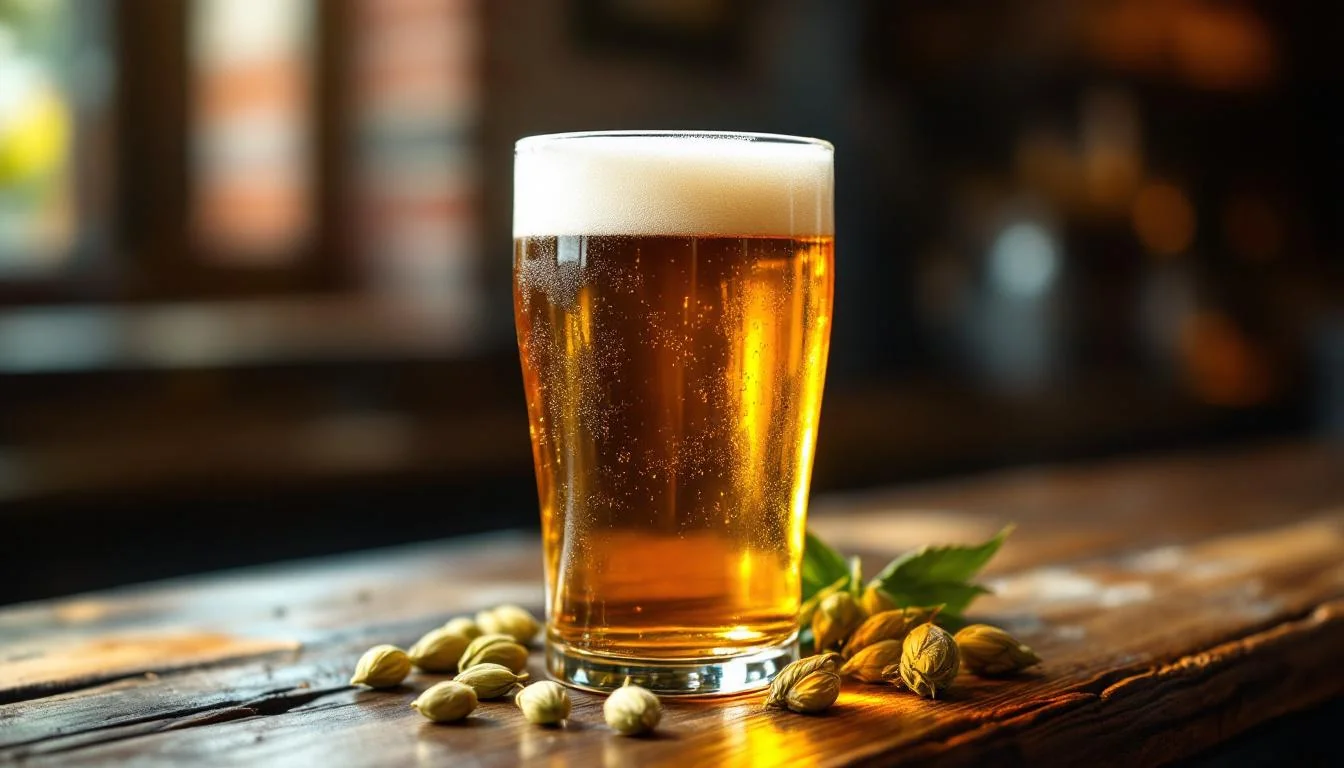
When holding an English Bitter or English IPA made with East Kent Goldings, begin by bringing the glass to your nose before drinking. Gently swirl it to release the aroma. The first thing to look for is floral notes—not as vibrant as tropical flowers, but as delicate as wildflowers. A hint of honey is also a good sign.
With the first sip, let the beer spread across your tongue. The bitterness of East Kent Goldings doesn't come immediately — it slowly emerges in the middle of the palate, soft and rounded. There's no sharpness or harshness. If you sense a hint of damp earth, a hint of dried herbs — that's the signature of EKG.
The aftertaste is where East Kent Goldings truly shines. After swallowing, wait a few seconds. A subtle bitterness lingers, not clinging but not disappearing immediately either. There might be a hint of sweetness from the honey, a touch of dryness from the tea. The final sensation is clean, inviting the next sip.
East Kent Goldings isn't meant to be drunk hastily. It's been crafted by time, by the land, by generations of patient farmers. And it deserves to be savored with the same patience. Slow down. Let the beer tell its story.