
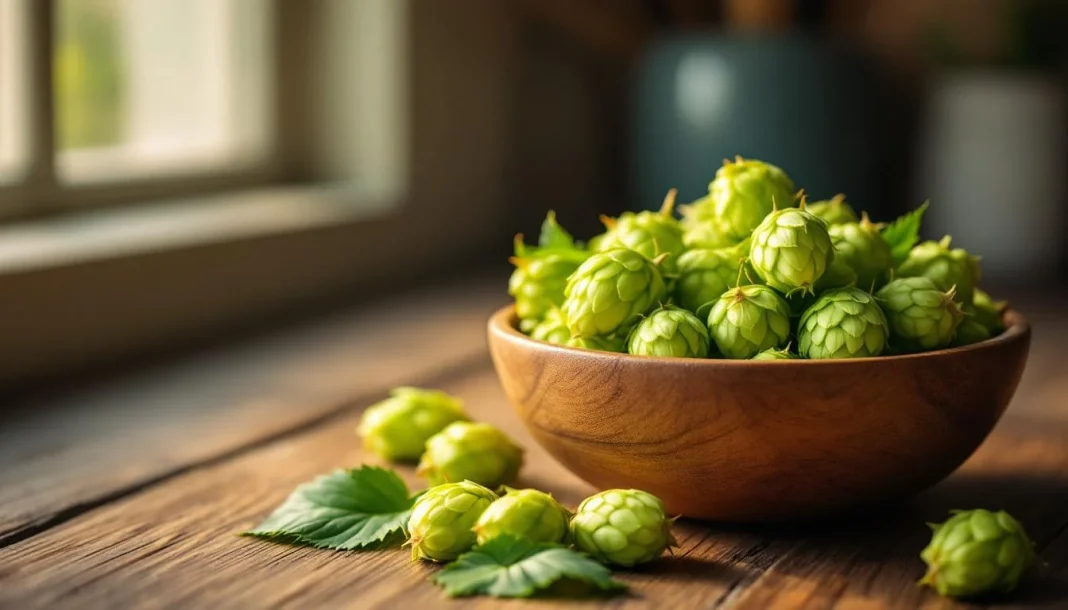
In 1949, a farmer in Kent stood amidst a dying hop field. Downy mildew had swept across the English countryside, wiping out almost entire Fuggle plantations in a few short seasons. He looked at the withered vines, thinking of his father, his grandfather—three generations connected to this hop variety. Fuggle was more than just a crop. It was history.
Seventy-five years later, Fuggle is still there. Much less than before. But still. And every time we raise a glass of English Bitter, Extra Special Bitter, or traditional Porter, the flavor of this hop variety lingers in every sip—subtle, humble, yet indispensable.
Origin and history
Fuggle was founded in 1861 in Horsmonden, a small village in Kent, in southeastern England. It was discovered by Richard Fuggle, a local farmer. The story goes that he stumbled upon a wild hop plant growing in his garden—perhaps a natural hybridization of native English hop varieties of the time. He propagated it, experimented with growing it, and recognized its potential.
In 1875, Fuggle was officially commercialized. It spread throughout Kent and traditional hop-growing regions of England such as Herefordshire and Worcestershire. By the end of the 19th century, Fuggle accounted for nearly 781 tons of total hop cultivation in England. An astonishing figure for a plant discovered by chance in a home garden.
Fuggle's success stems from its balance. It's not too bitter, not too aromatic. It's just right—just right to serve as a foundation for English Ale, just right for brewmasters to build more complex recipes without fear of being overwhelmed. Fuggle is the perfect accompaniment, never demanding to be the star.
But nature has its own ways. Between the 1920s and 1940s, downy mildew (Verticillium wilt) attacked English hop orchards. Fuggle, with its sensitive root system, suffered the most. Yields plummeted. Many farmers switched to more disease-resistant varieties like Goldings or new hybrids.

Today, Fuggle occupies only about 9-10 tons of hop plantations in England. But its legacy extends far beyond that. Fuggle is the parent of a host of famous hop varieties: Willamette (USA), Styrian Goldings (Slovenia), and many others. When you drink a craft beer made with Willamette, you are drinking a direct descendant of Richard Fuggle and the wild hop plant of 1861.
Kent remains Fuggle's home. The fields of Paddock Wood, Maidstone, and East Peckham continue to grow this hop variety—not for its high yield, but for its tradition. Because some things cannot be measured by quantity.
Technical specifications
Fuggle belongs to the hop group with low alpha acid content, ranging from 4% to 5.5%. Beta acid content is comparable, around 2% to 3%. This means Fuggle is not a hop intended for strong bitterness. It's a hop that provides aroma, base, and depth.
The essential oil content in Fuggle is moderate, ranging from approximately 0.71 TP3T to 1.21 TP3T by dry weight. The main components of the essential oil are humulene (25-30 TP3T), myrcene (approximately 25-30 TP3T), and farnesene (4-5 TP3T). The high proportion of humulene explains Fuggle's characteristic herbal, woody aroma—a stark contrast to the myrcene-rich American hop varieties with their citrus notes.
The Fuggle harvest season in England typically falls in early September, when autumn begins. Fuggle is considered a medium-late-maturing hop variety, requiring approximately 200-210 days from planting to harvest. Kent's mild climate—summers that aren't too hot, consistent rainfall—is well-suited to this hop variety's growing requirements.
One key technical characteristic: Fuggle has poor storage capacity. After 6 months of storage at room temperature, Fuggle loses approximately 60-70% of its alpha acid content. This requires breweries to use fresh Fuggle or carefully freeze it — part of the reason many breweries are switching to modern hop varieties with better storage capabilities.
Aroma and flavor
Smelling a handful of fresh Fuggle, we can sense the damp earth after a rain. That's the first characteristic—earthy, as if standing in a forest on an early autumn morning. Not the smell of dry, barren earth. But the smell of living earth, earth that nourishes plants.
Next comes the woody note. Not the strong oak of whisky. But a soft wood, like willow branches, like hazelnut trunks. A little warm, a little old-fashioned. If English Ale were a house, Fuggle would be the dark brown wooden beams on the ceiling.
The third layer of scent is herbal. Not distinctly rosemary or thyme. Rather, it's an ambiguous blend—a hint of mild mint, a touch of dried flowers, something reminiscent of a wilted bouquet of lavender in a living room. The herbal scent of Fuggle evokes English gardens, where plants grow haphazardly and indiscriminately.
When used in beer, Fuggle delivers a mild, round, non-harsh bitterness. It's the kind of bitterness that makes you want to keep drinking, not the kind that makes you grimace. The finish of Fuggle is short to medium, ending with a slight dryness—like the feeling after drinking a cup of unsweetened black tea.
Fuggle, in particular, has a scent that British brewmasters call "grassy"—not freshly cut grass. Rather, it's dried grass, or more precisely, grass sun-dried until it turns yellow. It's the smell of fading summer, of the Kent fields at the end of August.
Beer style using Fuggle
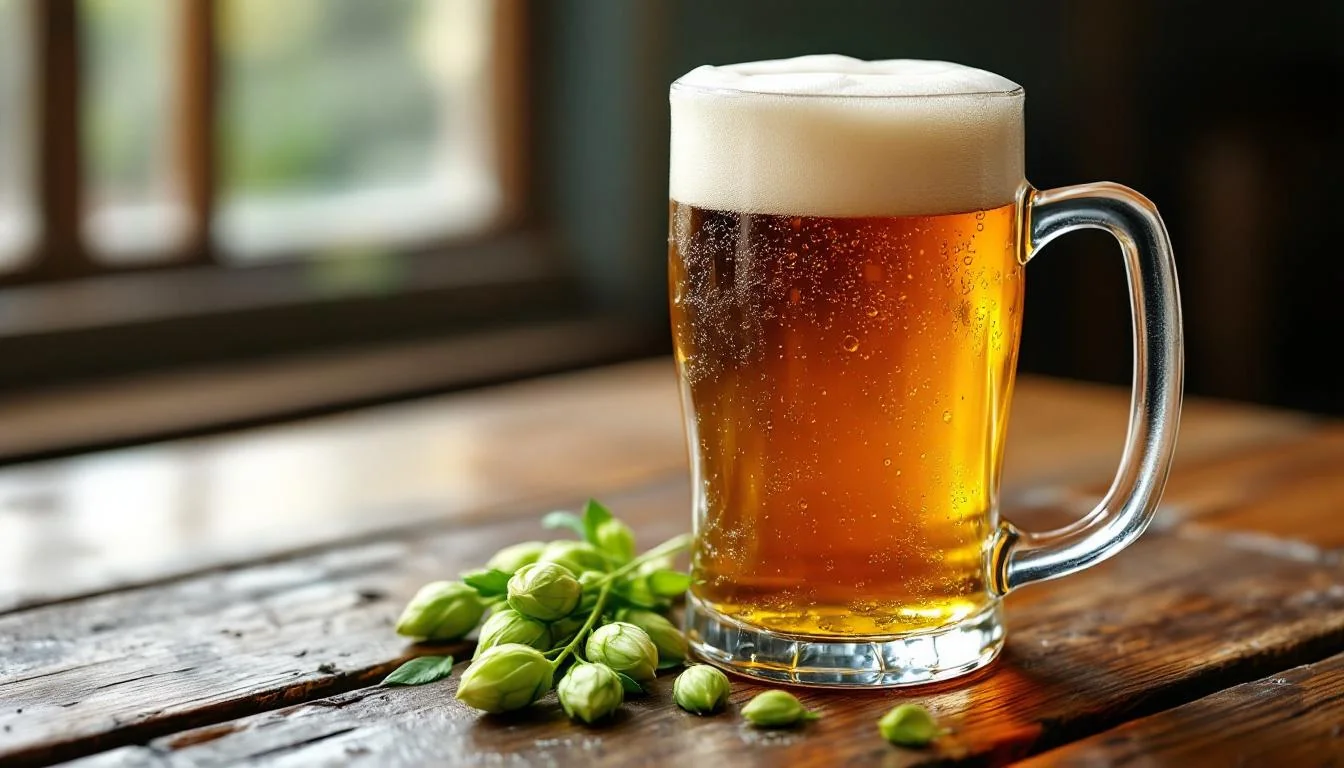
Fuggle is the soul of English Bitter. When we talk about bitter beer world, It's impossible not to mention the role of this hop variety. English Bitter—with its amber color, moderate alcohol content (3.5-4.5% ABV), and balanced bitterness—builds on a Fuggle foundation. Its earthy and herbal notes blend with a light caramel malt, creating the perfect session drink for long evenings in the pub.
Extra Special Bitter (ESB) is an upgraded version. It has a higher alcohol content (4.8-5.8% ABV), a bolder malt, and uses more Fuggle—both during the boiling and dry hopping phases. The result is a beer with more depth, a more pronounced hop flavor, but still retaining the traditional British balance.
In dark beer world, Fuggle appears in English Porter and Stout. Its earthy notes complement the chocolate and coffee flavors from the roasted malt, creating a complex yet harmonious whole. Many brewmasters consider Fuggle a better choice than other aromatic hops for Porter because it doesn't compete with the malt notes—it only serves as a background.
English Mild Ale — a style of beer that is gradually being forgotten — also relies on Fuggle. With its low alcohol content (3-3.81 oz ABV) and gentle flavor, Mild Ale needs a hop that doesn't overpower it. Fuggle fulfills that role perfectly: present but not overwhelming, like a friend who knows how to listen.
Today, some craft breweries in the US and Europe use Fuggle in traditional English IPA recipes — not the modern West Coast IPA with its explosive citrus notes, but the 19th-century-style English IPA where bitter hop and herbs are central.
Compare to hops in the same group
East Kent Goldings is Fuggle's closest sibling in the English hop family. Both carry herbal and earthy notes, but Goldings has added floral and honey undertones that Fuggle lacks. Goldings is more refined, more "aristocratic"—while Fuggle is more rustic, closer to the earth. If Goldings is a cup of Earl Grey tea in the living room, Fuggle is a cup of black tea in a pub.
Willamette, an American hop variety bred from Fuggle in 1976, retains many of its parent characteristics but has a lighter floral and fruity aroma. Willamette has a slightly higher alpha acid profile (4-6%) and better storage. Many American breweries use Willamette when they want an “English style” but with a more consistent supply.
Styrian Goldings (or Savinjski Golding) from Slovenia is actually a descendant of Fuggle, not Goldings as the name suggests. It was brought from England to Slovenia in the early 20th century and developed into a distinct variety. Styrian Goldings has a lighter earthy flavor than Fuggle, but with added spicy notes characteristic of the growing region. It is a popular choice for European breweries looking to replace English Fuggle.
How to recognize when enjoying it
When raising a glass of English Bitter or ESB, begin by sniffing from a distance. Fuggle's scent isn't explosive like Cascade or Citra. It's subtle, gentle—a fleeting hint of damp earth, then fading away.
Bring the glass closer. Now we can sense the woody and herbal notes—like standing in a haystack. Not harsh. Not sharp. Just a warm, familiar base note.
With the first sip, notice the bitterness. Fuggle doesn't assault the tongue. It spreads slowly, from the center outwards. The bitterness is rounded, without sharp edges—quite different from the resinous bitterness of American hops.
The aftertaste is where Fuggle truly shines. After swallowing, wait a few seconds. A light, dry taste emerges, followed by a herbal aftertaste. It doesn't last too long—just enough to be remembered, then fades away, inviting the next sip.
Fuggle teaches us about patience. It's not the kind of hop that makes an immediate impression. But drink slowly, pay attention, and gradually you'll understand why the British have stuck with this hop for almost 150 years. Some things don't need to be loud to be remembered.