
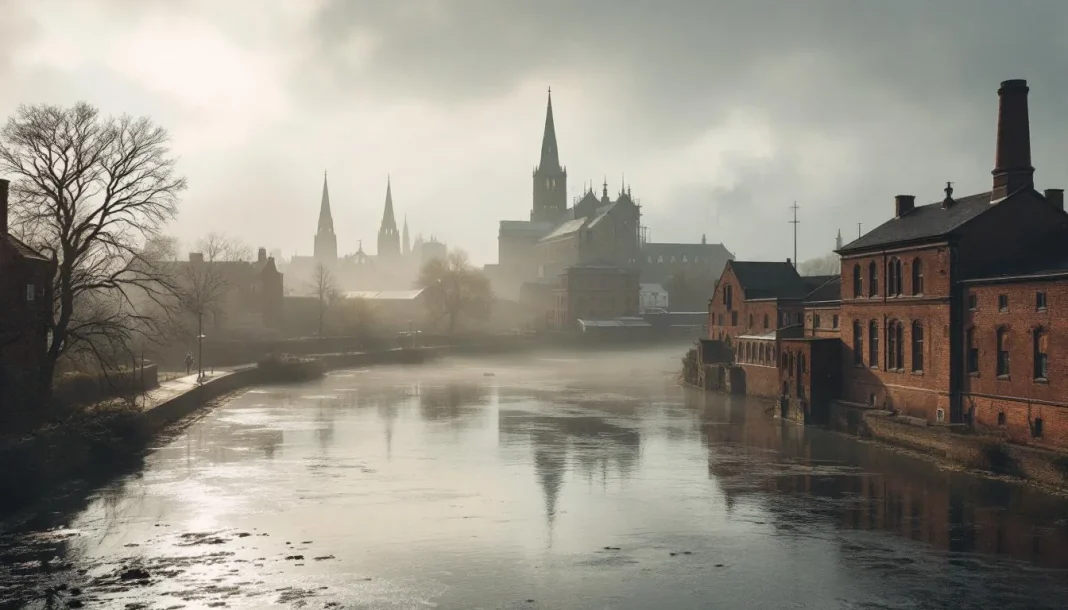
If there's one stream that ever revolutionized the global beer industry, it has to be Burton-on-Trent. This small town on the River Trent in Staffordshire, England, became the Pale Ale capital of the world during the 19th century — not by luck, but thanks to a layer of gypsum rock deep beneath the ground.
We often talk about terroir in wine—the combination of soil, climate, and people that creates an unreplicable character. With beer, water is the terroir. And Burton-on-Trent is the perfect example of that. The term “Burtonisation”—the adjustment of water to mimic Burton characteristics—has become an integral part of every modern brewer’s vocabulary.
Geographical and historical region
Burton-on-Trent is located in central England, in Staffordshire, about 40 km northeast of Birmingham. The town is built on a wide valley where the River Trent flows through unique geological formations—gypsum and voilite from the Triassic period, approximately 250 million years old.
Burton's brewing history dates back to the 11th century, when monks at Burton Abbey realized that the local well water produced an unusually clear and crisp ale. But it wasn't until the 18th century that Burton truly rose to become a world beer center.
The turning point came from trade with the Baltic region. Russian merchants were particularly fond of Burton Ale—a strong, sweet, high-alcohol beer. When Napoleon blockaded Baltic trade in 1806, Burton breweries were forced to find new markets. They turned to India—a British colony hungry for beer.
In 1822, Samuel Allsopp experimented with brewing beer using Hodgson's India Ale recipe from London, but with Burton water. The results exceeded all expectations. Burton's sulfate-rich water made the hops sharper and cleaner. Burton Pale Ale quickly captured the export market, then dominated the British domestic market.
By 1888, Burton had over 30 large breweries, producing a quarter of Britain's total beer output. Bass, Allsopp, Marston's, Worthington—legendary names all called Burton home. This small city, with a population of less than 50,000, shaped the beer tastes of an entire global empire.
Mineral profile
Burton-on-Trent water is renowned for its extremely high mineral content, particularly sulfate. It is one of the hardest water sources used in traditional brewing.
The calcium content in Burton water ranges from 268 to 295 mg/L — a significantly higher level than most other brewing regions. Calcium supports enzyme activity during the mashing process, helping proteins to precipitate better and producing clearer beer.
Sulfate is the main star, with concentrations ranging from 638 to 725 mg/L — 10-15 times higher than many other brewing water sources. Sulfate interacts with hops to create the dry, sharp, and decisive bitterness — the unmistakable characteristic of English Pale Ale.
Magnesium is present at 24-40 mg/L, acting as a cofactor for enzymes and supporting yeast health. Chloride is only around 25-36 mg/L — significantly lower than sulfate, resulting in a sulfate:chloride ratio heavily skewed toward hop-forward.
Bicarbonate levels are moderate, around 200-260 mg/L. With light-colored beers like Pale Ale, Burton brewers often treat the water to reduce bicarbonate, avoiding excessive pH increase in the mash.
Affects the taste of beer.
Burton water's unusually high sulfate:chloride ratio creates a very distinctive sensory effect. We call it the "Burton snatch"—a subtle sulfur note, sometimes described as a faint smell of burnt matches or a very light boiled egg. It may not sound appealing, but in the right amount, it adds depth and complexity to the beer.
High sulfate levels fundamentally alter how we perceive hops. The bitterness becomes sharp, dry, and clean-finished instead of lingering. This is why English IPAs and Pale Ales have a distinct bitterness compared to American or German beers — not just because of the hop variety, but also because of the water.
High calcium content supports healthy fermentation. Yeast flocculates better, settling to the bottom quickly and thoroughly. Traditional Burton beer is famously clear even without filtering — partly due to its water properties.
Water hardness also affects malt extraction. Burton beers typically have a medium-light body, allowing the hops to shine without being overwhelmed by the malt. This balance leans toward the hops—a characteristic that later became the gold standard for the global Pale Ale movement.
However, Burton water isn't suitable for every style of beer. Dark, malt-forward beers like Stout or Porter will struggle—high sulfates create an unpleasant bitter taste from the roasted malt. This is why Dublin, with its high bicarbonate and low sulfate content, is the home of Stout.
The beer style was created.
Burton-on-Trent is the birthplace of some of the most important beer styles in history, especially the lines... English IPA and Pale Ale.
Burton Pale Ale is the original style, originating in the 1820s. The beer has a bright amber color — “pale” compared to the Porter and Brown Ale popular at the time. It features prominent English hop aromas such as Fuggle and Golding, a sharp and dry bitterness, and a clean finish.
English IPA evolved from Burton Pale Ale, with a higher hop content and stronger alcohol level to withstand the long journey to India. Burton water is ideal for this style — the sulfates highlight the hop without creating harsh bitterness.
Burton Ale is an older, sweeter, and bolder style of Pale Ale, once exported to Russia and the Baltic region. Although less common today, it is still revived by some breweries as part of their heritage.
Strong Ale and Barleywine The English style is also associated with Burton. Breweries like Bass produce high-alcohol beers for long-term aging, taking advantage of the natural preservative properties of hops and alcohol.
Even as the craft beer movement boomed with American IPAs and hop-forward variations, the foundations still stemmed from Burton. Modern West Coast IPAs utilize Burtonization—adjusting the water to mimic Burton's sulfate:chloride ratio, albeit with completely different hops and malt.
Legendary brewery from this region.
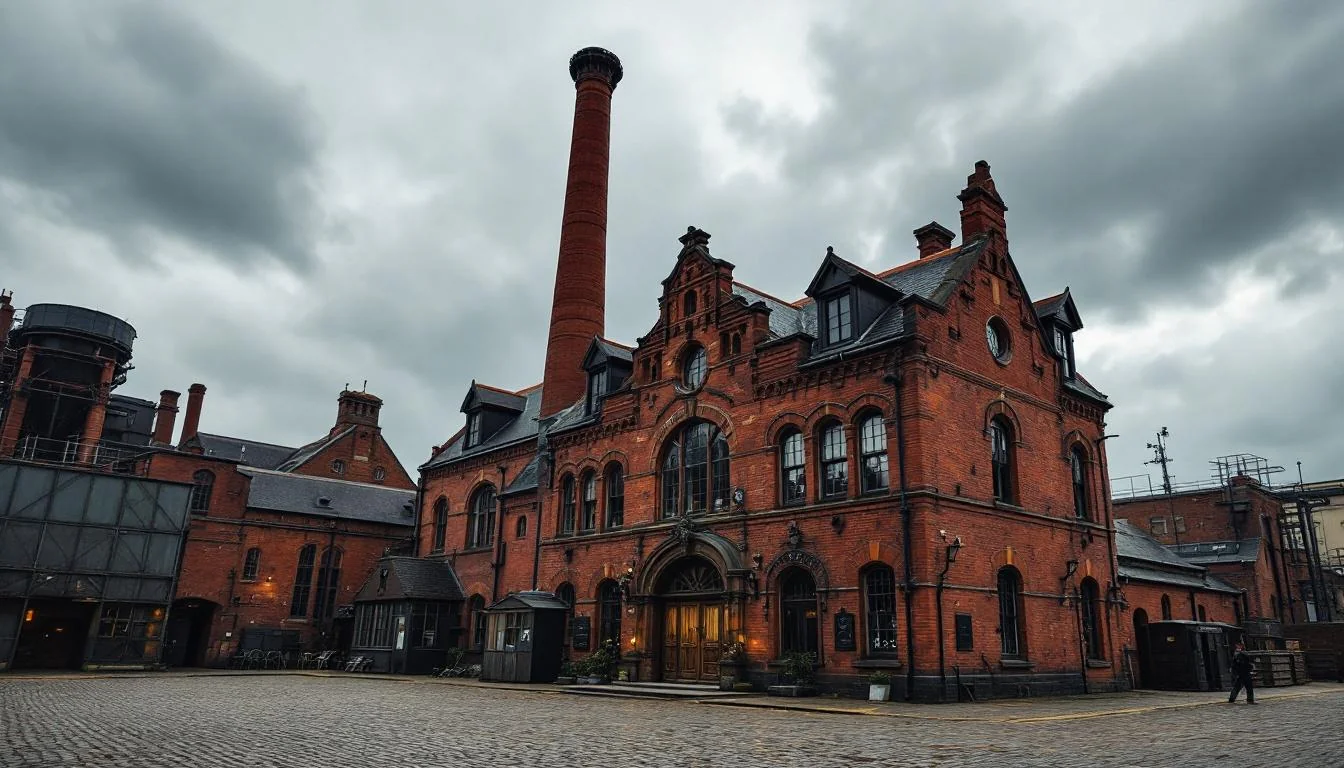
Bass Brewery, founded in 1777, is perhaps the name most closely associated with Burton. Bass's red triangle logo was the first registered trademark in British history (1876). Bass Pale Ale was once the world's best-selling beer, exported to every corner of the British Empire.
Marston's, founded in 1834, is renowned for its Burton Union system—a unique fermentation method using linked oak barrels. It is the last brewery still maintaining the traditional Burton Union system, producing Pedigree Bitter with an unreplicable flavor.
Allsopp's Brewery was once a formidable rival to Bass in the 19th century, pioneering the export of India Pale Ale. Although it no longer exists independently, Allsopp's legacy is still mentioned in every beer history book.
Worthington, now owned by Molson Coors, continues to produce White Shield—one of the oldest surviving English IPAs. White Shield is bottle-fermented, allowing it to age and develop its flavor over time.
Lessons for the modern craft brewer
The term "Burtonization" has become standard in craft brewing today. Any brewer wanting to make hop-forward beer needs to understand and be able to adjust the water in a Burton-like manner.
First lesson: the sulfate:chloride ratio determines the hop-malt balance. Increasing sulfate accentuates the hop; increasing chloride softens the malt. Burton, with a ratio of approximately 20:1, leans entirely towards hop. Craft brewers can adjust it to their liking—it doesn't have to be an exact copy.
Lesson two: Water is a raw material, not a prerequisite. Modern technology allows us to start with RO (reverse osmosis) water and build mineral profiles as we wish. But understanding "why" Burton works helps us make informed decisions instead of simply copying the formula.
The final lesson: the terroir in beer is real, but it can be recreated. Unlike wine, where terroir is tied to a specific land, beer terroir comes from understanding. A brewer in Vietnam can absolutely brew "Burton-style" beer if they master the principles of water.
Burton-on-Trent reminds us that beer is more than just a recipe and technique. It's a story about place, about the 250-million-year-old geological layers that shape the world's taste. Water is the terroir of beer — and terroir always begins with curiosity and humility before nature.