

There's something peculiar about Dublin. The city isn't known for its crystal-clear water or pristine springs. But it is from these "fussy" waters that one of the world's greatest beer styles was born — Dry Irish Stout.
Dublin's water is a testament to the terroir philosophy in beer: there is no such thing as good or bad water, only the right water. Dublin brewers don't try to change their water. They listen to it, understand it, and create the perfect beer style for its unique mineral profile.
Geographical and historical region
Dublin is situated on the banks of the River Liffey, which flows east from the Wicklow Mountains before emptying into the Irish Sea. The name Dublin comes from the Gaelic word “Dubh Linn”—black lake. This name foreshadowed the color of the beer that would make the city famous worldwide.
Dublin's water comes primarily from two sources: the River Liffey and the Poulaphouca Reservoir, nestled deep within the Wicklow Range. The water flows through ancient vite rock formations, absorbing minerals in a unique way. Unlike the sulfate-rich Burton-on-Trent water, Dublin's has a more neutral mineral profile—but with one key characteristic: a high bicarbonate content.
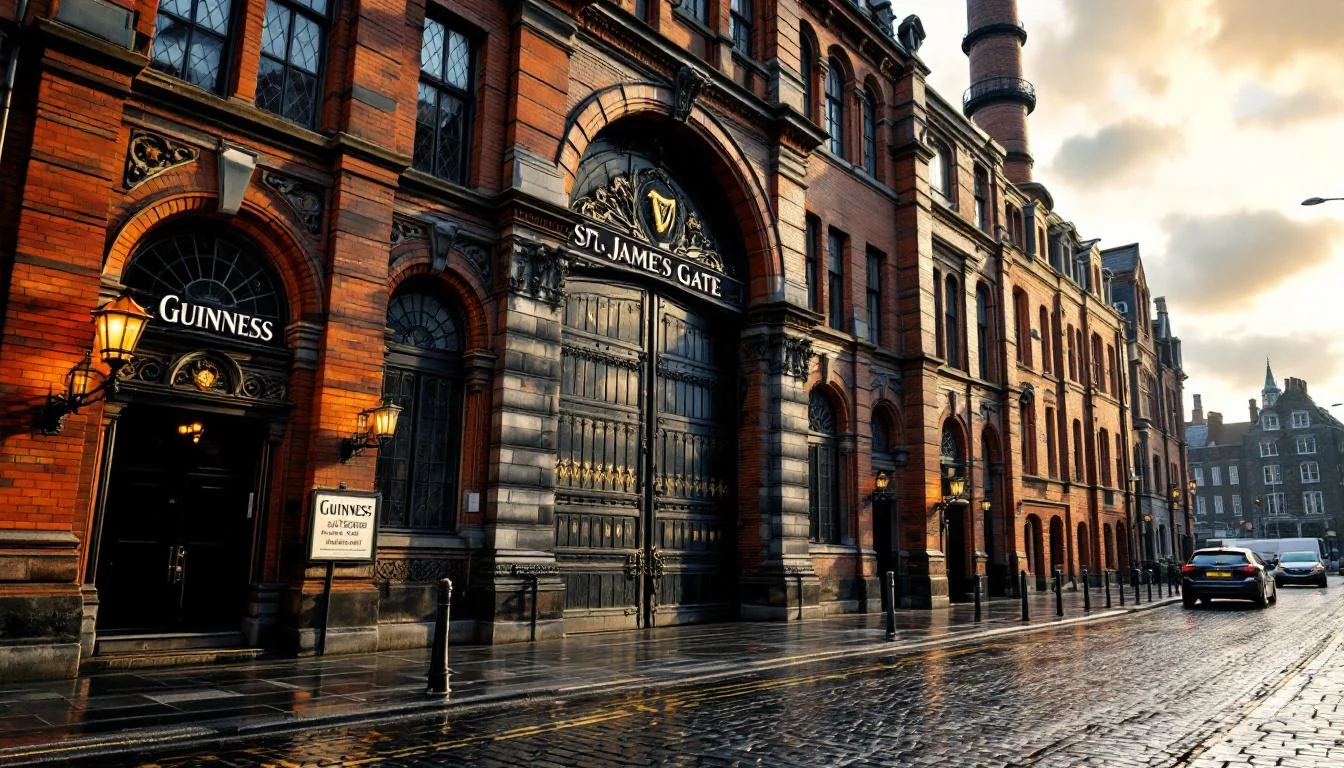
The history of brewing in Dublin dates back to the Middle Ages. Monasteries were among the first breweries. By the 18th century, Dublin had over 50 operating breweries. But the real turning point came in 1759, when Arthur Guinness signed a 9,000-year lease on the St. James's Gate brewery for £45 a year.
That decision not only changed the fate of one family, it reshaped the world's beer map.
Arthur Guinness initially brewed ale in the traditional style. But he soon recognized the potential of porter—a popular dark beer style from London. He didn't simply copy it. He adapted porter to Dublin's water, creating a drier, more bitter, sharper version. Dry Irish Stout was born from that clever adaptation.
Throughout the 19th century, Dublin became one of the largest beer centers in the British Empire. Guinness rose to become the world's largest brewery in 1886. They exported stout to every corner of the empire — from India to Africa, from the Caribbean to Australia.
Mineral profile
Dublin's water has a distinctive mineral profile, quite different from other famous beer regions.
Calcium levels in Dublin water range from approximately 120-130 mg/L — average compared to Burton but sufficient to support healthy saccharification and fermentation. Magnesium is low, around 4-5 mg/L, acting as a cofactor for enzymes but not significantly affecting flavor.
Sulfate is the most noticeable difference. At only around 50-55 mg/L, Dublin beer has significantly lower sulfate levels than Burton-on-Trent. This means Dublin beer doesn't have the sharp dryness of Burton's IPAs. Instead, it has a softer, more rounded flavor.
Chloride levels are around 19 mg/L—just enough to enhance the fullness on the palate without making the beer overly sweet. The sulfate/chloride ratio of nearly 3:1 creates a balance leaning slightly towards a dry finish.
Bicarbonate is a key element, present in high concentrations of around 300-320 mg/L. This is a defining characteristic of Dublin beer style. High bicarbonate can be problematic for pale beers as it increases mash pH and coarse tannin extraction. However, with dark-roasted malts—rich in acid—high bicarbonate is an advantage. It neutralizes the acid from the dark malt, creating an ideal mash pH without intervention.
Affects the taste of beer.
Dublin's water sources influence the beer in subtle but decisive ways.
High bicarbonate levels require the use of dark-roasted malt. This isn't an aesthetic choice—it's fundamental chemistry. Roasted malt contains melanoidin acids, acetic acid, and other acidic compounds formed during the Maillard reaction. These acids neutralize bicarbonate, bringing the mash's pH to the ideal range of 5.2-5.4. The result: efficient enzyme activity, good sugar extraction, and no tannin bitterness.
Low sulfate means the hops aren't "amplified" as they are in Burton. Dublin beer doesn't have that sharp, tongue-cutting bitterness. Instead, the bitterness blends into the body, creating the balanced bitter-sweet sensation characteristic of Irish stout.
Moderate chloride levels contribute to the creamy mouthfeel—a hallmark of Dry Irish Stout. Not as full-bodied as Scottish ale, not as dry as... Pale Ale. This delicate balance is the signature of Dublin.
The calcium content is high enough to ensure healthy fermentation. Brewers' yeast needs calcium for its cell membranes and intracellular enzymes. At 120-130 mg/L, Dublin water provides sufficient calcium without causing an unpleasant mineral taste.
One less-discussed effect: high bicarbonate levels also influence the fermentation process. It allows the yeast to produce fewer esters, resulting in a cleaner fermentation profile. Dry Irish Stout therefore has distinct malt and hop flavors, not masked by fruit esters.
The combination of these elements creates a style of beer that cannot be perfectly replicated anywhere else. You can brew stout anywhere, but accurately recreating the character of Dublin stout requires adjusting the water to this specific mineral profile.
The beer style was created.
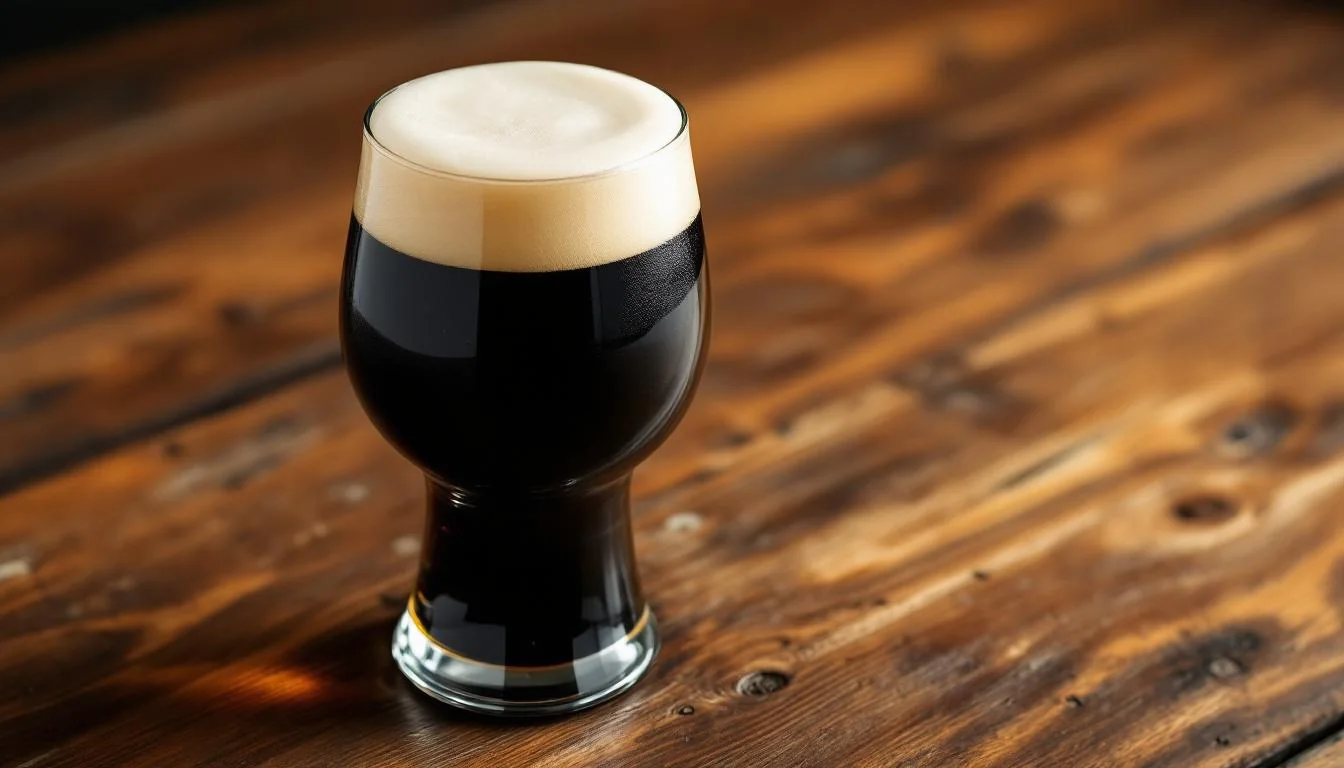
Dry Irish Stout This is Dublin's iconic beer style. It's charcoal black, with a thick, creamy white head, a light to medium body, and a creamy mouthfeel. The characteristic flavors are roasted coffee, bitter chocolate, and a hint of burnt roasted barley. The finish is dry, clean, with moderate bitterness.
It's worth noting that Dry Irish Stout has a fairly low ABV — typically just 4-4.5%. It's the beer of the day, the beer of the factory workers, the beer of the quick lunch. Dublin's water allows for a dark, flavorful beer that is still light and easy to drink.
Irish Red Ale This is the second style associated with Dublin. It has an amber to copper red color, a medium body, and subtle caramel and toffee aromas. Irish Red Ale represents another aspect of Dublin – using less malt, the higher bicarbonate content creates a slightly sweeter, more rounded flavor.
The Foreign Extra Stout is the export version of Guinness, stronger (7-8% ABV), bolder, and designed to withstand long sea voyages. This style arose from practical need but became a category in itself, particularly popular in Africa and the Caribbean.
Porter Ireland has close ties with stout. In fact, "stout porter" originally just meant a stronger porter. Over time, Irish stout developed its own characteristics — drier, using roasted barley instead of just brown malt, and having a sharper roast profile than English porter.
Dublin water is also suitable for brewing other styles of stout beer such as Schwarzbier good Baltic Porter. Any style that uses a significant amount of roasted malt will benefit from the high bicarbonate content of this water source.
Legendary brewery from this region.
Guinness is a name that cannot be overlooked. St. James's Gate Brewery has been operating continuously since 1759, making it one of the oldest continuously operating breweries in the world. Guinness Draught, Guinness Extra Stout, and Guinness Foreign Extra Stout are its three main products, each serving a different market and purpose.
But Dublin isn't just about Guinness. Beamish and Murphy's—though based in Cork—have been competing with Guinness for centuries, creating versions of stout with distinctive characteristics. This rivalry has driven all three brands to constantly innovate.
During the craft beer era, Dublin witnessed a resurgence of small breweries. Porterhouse Brewing Company, founded in 1996, was one of the pioneers. They brewed many different styles, but stout remained the backbone — Plain Porter, Oyster Stout, and XXXX Stout.
Rascals Brewing, Whiplash Beer, and Hope Beer are newer names, bringing modern craft beer energy to Dublin's traditional beer culture. They experiment with various styles, but their roots remain in the city's water and brewing heritage.
Lessons for the modern craft brewer
Dublin teaches us an important lesson: don't fight your water source, work with it.
If your water source has high bicarbonate content, don't rush to acidify or dilute it. Consider brewing stout, porter, or other dark beer styles instead. Let the natural chemistry work for you.
Modern craft brewers can adjust the water to any profile. Add gypsum to increase sulfate, add calcium chloride to increase chloride, use lactic acid to lower pH. But before making any changes, understand your water source. It may already be suited to a style you haven't tried yet.
The sulfate/chloride ratio is a useful tool for adjusting the perception of hops and malt. But Dublin reminds us that bicarbonate—often seen as the “bad guy”—plays a crucial role in the right blend of ingredients.
Ultimately, Dublin is a testament to the power of patience and observation. Arthur Guinness didn't invent stout overnight. He observed, adapted, and refined it over decades. The terroir of beer is not just minerals—it's knowledge accumulated over generations.
Every drop of water carries millions of years of geological history. Every glass of beer is a dialogue between the brewer and the land. Dublin understood this long before we had pH meters or spectrometers. And perhaps that is the most profound lesson.