

There are yeast strains that exist for hundreds of years without anyone giving them a name. They live in monasteries, in family breweries, in the sediment at the bottom of oak barrels. Then one day, someone takes a closer look. And the name emerges.
WLP300 is one such yeast strain. Not an invention. A discovery. A belated recognition of something that has quietly shaped the most distinctive flavor of German wheat beer for centuries.
Origin and history
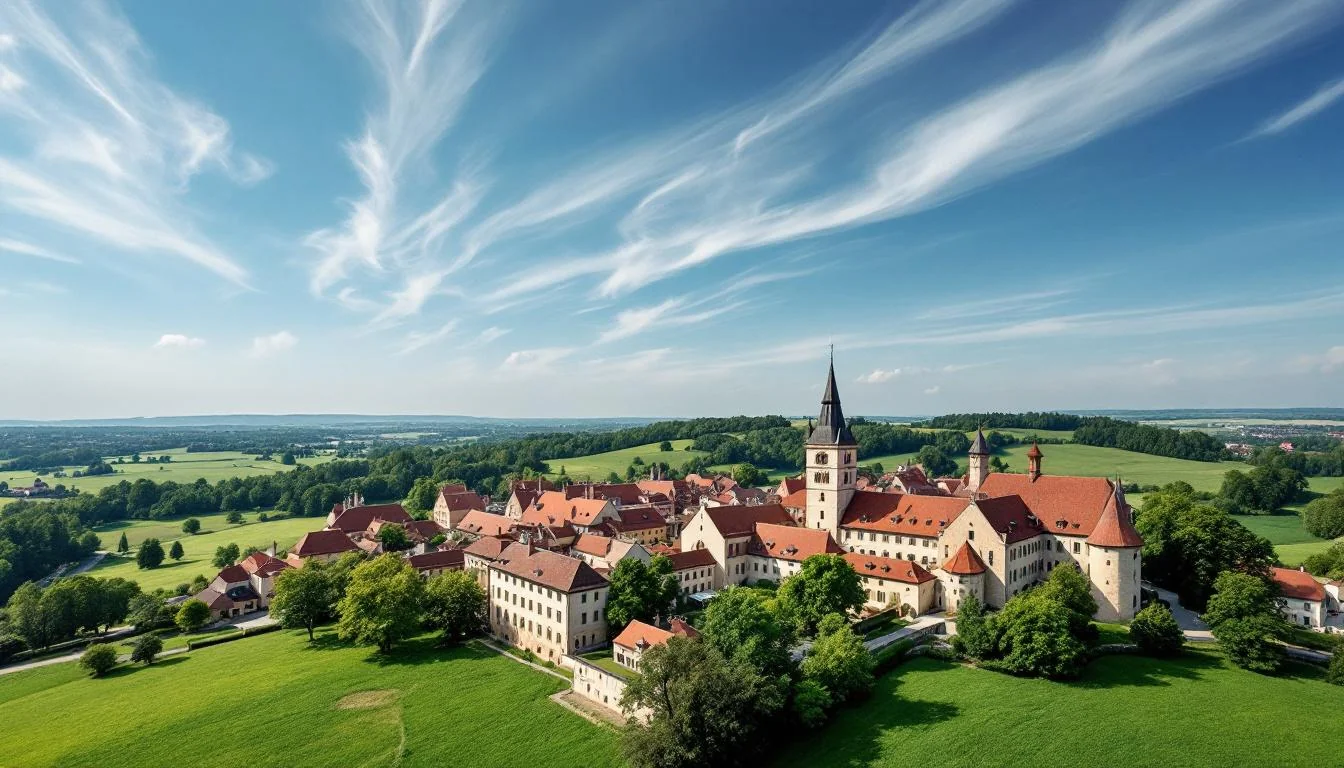
The story of WLP300 is inseparable from Weihenstephan — a Benedictine monastery located on the Nährberg hill, about 30 km north of Munich. It is recognized as the world's oldest continuously operating brewery, with an official brewing license dating back to 1040.
But the yeast in Weihenstephan has a much longer history. Monks have been brewing beer since the 8th century, and the yeast strain they used has been passed down from generation to generation. No one knows its exact origin. It could have come from fruit peels. It could have come from the Bavarian air. It could have come from an old wooden barrel.
By the 19th century, when Louis Pasteur demonstrated the role of microorganisms in fermentation, scientists began to systematically isolate and study brewer's yeast. The Weihenstephan Brewery Research Institute—now part of the Technical University of Munich—became a leading center for brewer's yeast research in Europe.
The yeast strain that produces the characteristic Bavarian Hefeweizen is isolated and stored here. It bears the institute's internal code and has been used by generations of students and researchers in experiments and production.
In 1995, White Labs—a yeast laboratory in San Diego, California—began commercializing traditional European yeast strains. Founder Chris White sourced the strain from Weihenstephan and named it WLP300. Since then, this strain has become popular among homebrewers and craft breweries worldwide.
It's worth noting: WLP300 is not a "version" or "copy." It is the original yeast strain from Weihenstephan, bred and distributed under strict quality control. Each WLP300 test tube contains the nearly thousand-year legacy of Bavarian brewing.
Biological characteristics
WLP300 belongs to the species Saccharomyces cerevisiae, WLP300, an ale yeast strain, has top-fermentation characteristics. Unlike lager yeast, which sinks to the bottom of the tank, WLP300 creates a thick film on the surface of the beer during fermentation—a feature that makes harvesting and reusing the yeast easier than in traditional methods.
The optimal fermentation temperature is between 18-24°C. This is a much wider range than lager yeast, but the specific temperature significantly affects the flavor profile. At lower temperatures (18-20°C), the yeast produces more esters, resulting in a more pronounced banana flavor. At higher temperatures (22-24°C), phenols predominate, bringing clove and a subtle spicy note.
The attenuation of WLP300 ranges from 72-76% — a medium level, retaining some residual sugar to create a light sweetness and a full-bodied finish. Low flocculation means the yeast remains suspended in the beer longer, creating the characteristic turbidity of Hefeweizen. This suspended yeast contributes to the beer's flavor and mouthfeel.
The alcohol tolerance threshold is approximately 10% ABV — sufficient for most traditional wheat beer styles, but not suitable for stronger beers.
Flavor and character
If I had to choose one word to describe WLP300, it would be "expressive." This yeast strain doesn't silently convert sugar into alcohol. It leaves a strong, almost overwhelming mark on every other ingredient in the beer recipe.
The aroma of ripe bananas — isoamyl acetate — is the first and most distinct note. Not green bananas or baked bananas. But ripe, juicy, sweet bananas, reminiscent of childhood banana candy. This ester forms when yeast metabolizes sugars in the absence of free amino acids, particularly noticeable at low fermentation temperatures.
Alongside the banana is clove—4-vinyl guaiacol, a characteristic phenol. It has a warm, slightly pungent, spicy aroma, like the spice in gingerbread or winter mulled wine. This phenol is more prevalent during high-temperature fermentation or when using a high proportion of wheat malt.
Beyond the two main notes, the WLP300 also produces secondary notes: light vanilla, orange peel, sea foam, and sometimes a rubbery smell when fermented too intensely. The balance between banana and clove—or what homebrewers call the “banana-clove balance”—depends on the temperature, pitching ratio, and initial dissolved oxygen levels.
One less-mentioned characteristic: WLP300 produces very little sulfur and no significant diacetyl. This results in a clean, off-flavor beer that can be drunk immediately after primary fermentation is complete without requiring a long conditioning period.
Typical beer style
WLP300 is the authentic yeast strain for Hefeweizen — style wheat beer A Bavarian tradition. According to the Reinheitsgebot (German Beer Purity Law 1516), expanded version, Hefeweizen contains a minimum of 50% wheat malt, usually 60-70%. The WLP300 yeast, combined with the wheat, creates an unmistakable flavor.
Hefeweizen
Original style. The beer is pale yellow to amber in color, with high turbidity due to yeast and wheat proteins. Alcohol content is typically 4.5-5.5% ABV (1TP 3T). There is no pronounced hop flavor — the entire character comes from the yeast and malt. Pouring the beer with the sediment at the bottom of the bottle is the traditional way to drink it.
Dunkelweizen
A darker version of Hefeweizen. Using Munich malt and roasted wheat malt, it creates a reddish-brown color and caramel, toasted bread aromas. The WLP300 still delivers banana-clove notes, but is complemented by more complex malt notes.
Weizenbock
Copy strong beer Made from German wheat, 6.5% ABV (1TP 3T). The fruity notes of the WLP300 are amplified — in addition to banana, there are plums, raisins, and sometimes even chocolate. The beer is usually aged cold for several weeks to allow the flavors to fully develop.
Kristallweizen
Hefeweizen is filtered. The characteristic turbidity is lost, but the flavor from the yeast remains. This style is less common but shows that the influence of the yeast is not just in the suspended sediment.
Geographic region and terroir
Bavaria is not just the birthplace of WLP300. It is the complete ecosystem that shaped this yeast strain.
The region is situated at an average altitude of 500 meters above sea level, with a continental climate characterized by cold winters and mild summers. Average summer temperatures range from 15-20°C—coinciding with the optimal fermentation range for Hefeweizen yeast. Before the advent of refrigeration systems, breweries could only produce ale under these conditions.

Water in Bavaria has medium hardness and is rich in minerals from the Alps. In particular, its low sulfate content and moderate chloride levels help to soften the beer's flavor, highlighting the malt rather than the hops—perfect for the Hefeweizen style, which doesn't require bitterness.
Bavarian wheat—especially the winter wheat variety—has a high protein content, creating a natural opacity and a thick, persistent foam. The combination of local wheat varieties, water sources, and indigenous yeast strains creates a unique terroir that is difficult to replicate elsewhere.
Today, WLP300 is used worldwide, from artisanal breweries in the US to homebrewers in Vietnam. The basic flavor remains the same, but subtle differences in water source, malt, and fermentation conditions create interesting variations. That's also part of the story — the yeast carries heritage, but also adapts to new lands.
How to recognize when enjoying it
When you hold a cup of Hefeweizen, don't drink it immediately. Bring it to your nose first.
The banana aroma will come first — sweet, ripe, and distinct. If the beer is brewed correctly with the WLP300, this scent is unmistakable. Take a deeper breath, and cloves appear in the second layer, mildly spicy and warm.
The first sip offers a soft mouthfeel due to the suspended wheat protein and yeast. A subtle sweetness from the malt, with no significant bitterness from the hops. High carbonation creates a refreshing, almost bubbly sensation on the tongue.
Upon swallowing, the banana-clove flavor returns in the aftertaste, lasting for a few seconds. Some bottles also have a slight yeasty taste—a bit like bread, a bit like earth—especially if you pour in the sediment at the bottom of the bottle.
Each glass of Hefeweizen is a dialogue with nearly a thousand years of brewing history. The WLP300 yeast is not just a fermentation tool. It is a storyteller, carrying the memories of the Weihenstephan Abbey, of the anonymous brewers, and of the Bavarian land through generations.
Slow down. Listen. Men are telling a story.