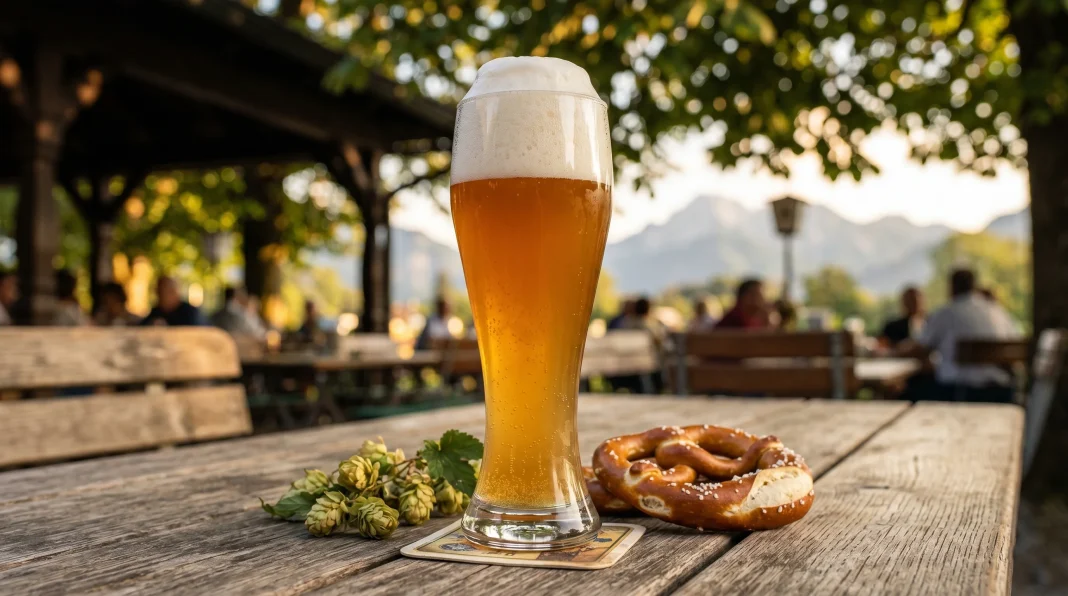
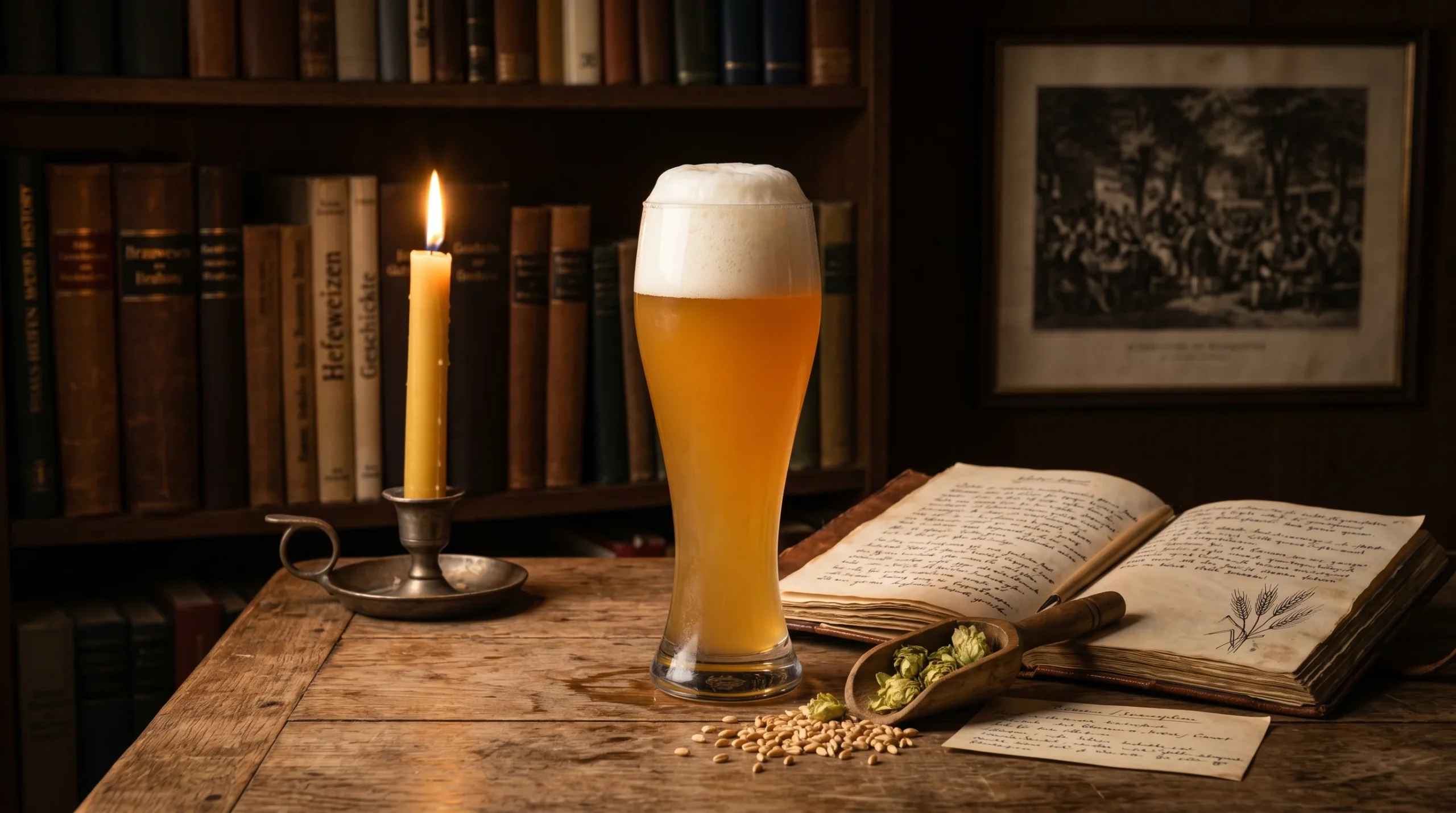
There was a glass of beer that, when poured, wasn't as clear as regular beers — it opaque Like morning dew. The foam is thick and creamy, reaching a thickness of 3-4 cm and lasting throughout the meal. When brought to the nose, it's not the familiar aroma of roasted malt — but something else. The aroma of ripe bananas combined with cloves., Sometimes it has a hint of bubblegum or vanilla. First sip: silky smooth, light flavor, sweet aftertaste, not a trace of bitterness.
This is Hefeweizen — A traditional wheat beer from Bavaria, southern Germany. And this is also the gold standard of wheat beer worldwide..
Why Start with Hefeweizen?
When talking about wheat beer, you can start from many points. You could begin with Belgian Witbier — a 600-year-old style revived by Pierre Celis (mentioned in the article). Belgian beerYou could start with American Wheat — a modern version of the American craft beer movement. Or you could start with rarer styles like Polish Grodziskie or German Lichtenhainer.
But if we had to choose just one starting point, it would have to be Hefeweizen. For three reasons:
First, Hefeweizen defined "wheat beer" in the global mind. When a non-brewer thinks of "wheat beer," the first image that usually comes to mind is a glass of Hefeweizen—cloudy yellow, with a thick head of foam and a banana aroma. This is the most common, easily recognizable style, and the entry point for most beer lovers when exploring wheat beer.
Secondly, Hefeweizen possesses incredible technical depth. Behind its simple appearance—a cloudy golden beer—lies one of the world's most complex brewing techniques. The banana and clove flavors don't come from actual bananas or cloves—they come from the special Hefeweizen yeast itself, through a series of tightly controlled biochemical reactions. A slight misstep in fermentation temperature, and the entire character is lost.
Third, Hefeweizen survived a ban. Here's a little-known detail: in 16th-century Bavaria, there was a regional ban on brewing wheat beer—only the royal family was allowed. While other wheat beer styles across Europe declined for economic or cultural reasons, Hefeweizen survived for centuries precisely because it was royal privilege. This story will be told in detail in Section 2.
This Article
This is an article about all styles of wheat beer — not just Hefeweizen. You will encounter:
- German School: Hefeweizen, Dunkelweizen (Strong Hefe), Kristallweizen (Filtered Hefe) — and Weizenbock (Strong version)
- Belgian SchoolWitbier — a unique Belgian spiced wheat beer
- Modern American SchoolAmerican Pale Wheat and American Dark Wheat — a reimagined version of brewer's craft.
- Rare styleGrodziskie (Poland, smoked) and Lichtenhainer (German, sour) — heritage that has almost vanished.
The final section is for Vietnamese people — what wheat beer is available in Vietnam, and how to pair it with Vietnamese dishes.
But before we delve into the details of each style, let's start with a basic question: What is wheat beer, and why does wheat produce a completely different type of beer?
What is Wheat Beer?
Technical definition: Wheat beer is beer that contains at least 30% of wheat in its malt composition. (The rest is usually barley). Some styles are more demanding — traditional Hefeweizen can have up to 50-70% wheat.
Why is the proportion of wheat so important? Because wheat changes beer in three fundamental ways:
1. Body and texture Wheat contains a lot of boat more than barley. This protein doesn't ferment completely, leaving a residue in the beer that gives it that taste. smooth as silk and thick body. With the same ABV, wheat beer feels "full-bodied" than lager or pale ale.
2. Foam — The same protein produces Thick, smooth foam that lasts a long time.. A properly poured Hefeweizen can retain its foam for 30-40 minutes while drinking. This is a telltale sign of wheat beer from the very first sip.
3. Turbidity — Wheat isn't filtered as well as barley. Plus, many wheat beers aren't filtered and still contain suspended yeast, resulting in a beer with an unusual appearance. natural opacity (cloudy). “Hefe” in “Hefeweizen” means “yeast” — wheat beer with yeast remaining in the bottle. This is not a technical error. This is honored character.
These three characteristics—smooth, thick foam, opaque—create a A completely different drinking experience.. Wheat beer doesn't try to be "full-bodied" like a stout, "bitter" like an IPA, or "clear" like a Pilsner. It celebrates its own unique aesthetic: Gentle, smooth, and profound in its simplicity..
That is the philosophy we will explore over the next 5,000 words.
History — When Wheat Beer Was Royal Privilege
The history of wheat beer is a strange one. While most beer styles are born from technique and luck, Hefeweizen originated from... politics and privilege.
This is the only style of beer in the world whose existence is protected by a law prohibits For nearly 300 years, to understand why Hefeweizen has such a distinctive character today, we must begin with a legal document issued in 1516 — the most famous document in the history of beer.
Reinheitsgebot 1516 — Law of Purity
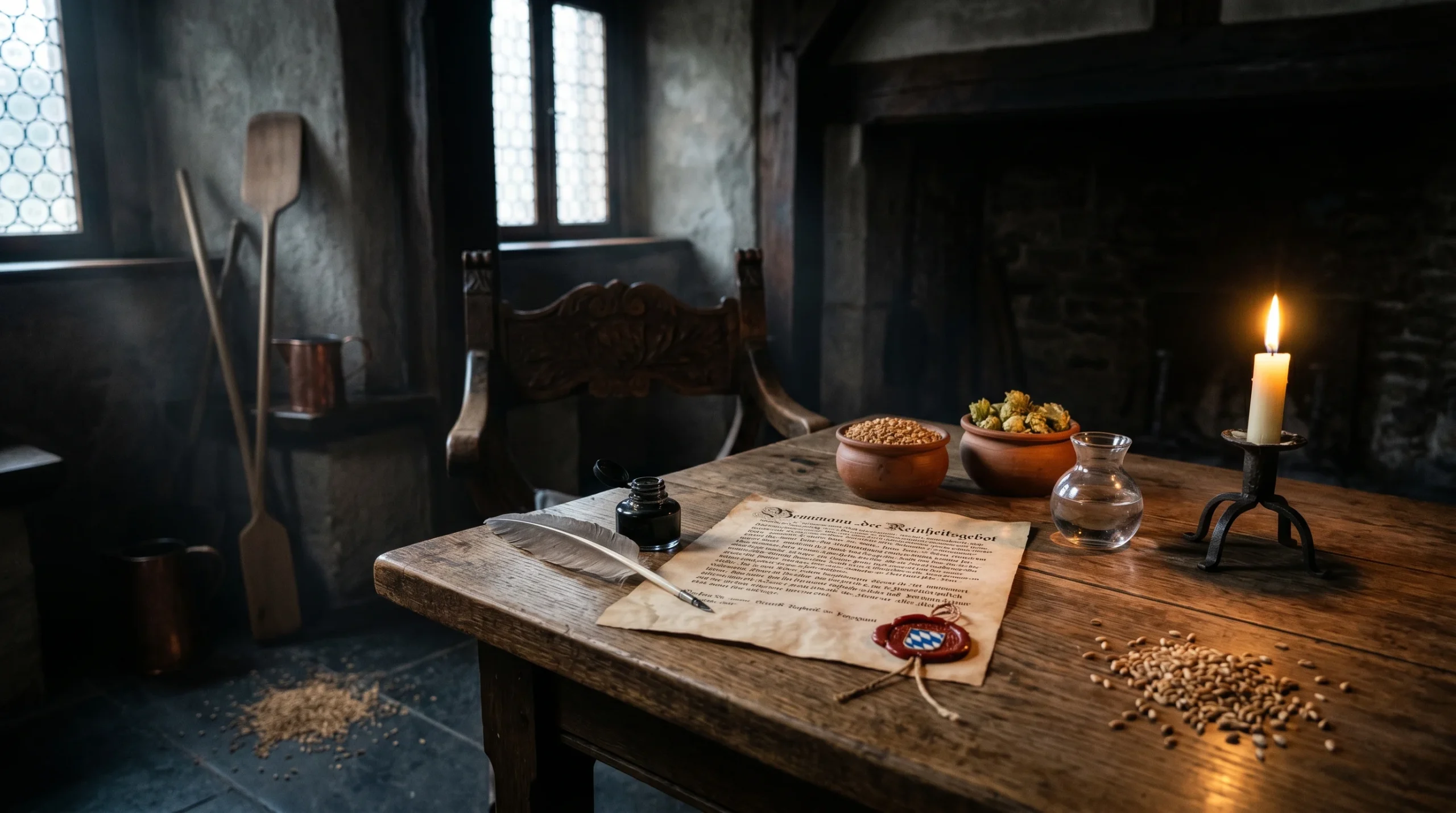
On April 23, 1516, in Ingolstadt (Bavaria), Duke Wilhelm IV signed a decree that went down in history: Return Policy — The Beer Purity Law. This document stipulates that beer in Bavaria can only be brewed from certain ingredients. three ingredientsIngredients: water, barley, and hops. Yeast was unknown at the time and was not listed — it was added later.
The important thing in this text is: Wheat is banned in beer brewing.. Why? Wheat is the main ingredient for making bread—a staple food for ordinary people. Bavaria didn't want brewers competing with bakers for wheat, as that would drive up bread prices and cause social unrest.
This is a sound economic decision. But it also means that wheat beer — a style that has existed in Bavaria for centuries — has suddenly become obsolete. illegal.
Degenberger Family — The Only Exception
There was one exception in Reinheitsgebot. A noble family in the Schwarzach region — Degenberger house — They had the right to brew wheat beer even before the law was enacted. Wilhelm IV could not revoke this right (because the Degenberger family had political power), so the exception was maintained.
For nearly a century afterward, The Degenberger family is the only family in Bavaria that brews wheat beer. legally. Wheat beer became a premium, rare, and expensive product — because its supply was monopolized.
In 1602, Hans Sigmund von Degenberg died without an heir. The right to brew wheat beer was implicitly granted to him. transferred to the Bavarian royal family. — the Wittelsbach family, who ruled Bavaria for nearly 800 years. Duke Maximilian I of Bavaria recognized the value of this privilege and made a decision. maintain royal exclusivity.
200 Years of Royal Privilege
For about 200 years (1602-1798), wheat beer in Bavaria was only brewed in traditional ovens. Royal Brewery — known as “Hofbräuhaus” (royal brewery). Each region has a royal brewery. The most famous brewery, Hofbräuhaus München, was founded in 1589 and is still in operation today — one of the oldest operating breweries in the world.
During this period, the Hefeweizen brewing technique was perfected. The special Hefeweizen yeast—the strain that produces banana and clove flavors—was developed and cultivated exclusively in royal breweries. This is why The classic Hefeweizen character has remained unchanged to this day.This is because the technique was developed in a tightly controlled environment, not "simplified" by commercial breweries to increase profits.
Revenue from royal wheat beer contributed significantly to the Bavarian treasury. At one point, wheat beer taxes accounted for 3-5% of the region's total budget. The Wittelsbach dynasty was in no hurry to change the law.
1798 — Expansion and Decline
In 1798, the Bavarian royal family faced serious financial difficulties (due to the Napoleonic Wars). To increase their income, they decided... selling wheat beer brewing rights for private breweries. For the first time in 200 years, wheat beer was brewed publicly outside of the royal court.
But the paradox is: as soon as wheat beer was "liberalized," it began to... recession. The reason is style. Lager Wheat beer was thriving in Bavaria — bright golden, refreshing, and easy to drink. When Pilsner was introduced in Bohemia in 1842, wheat beer lost even more market share. By the mid-19th century, many wheat beer breweries had to close down.
By the 1960s and 70s, wheat beer in Bavaria had become almost just a style of beer. region, tradition — depends on a few classic breweries that still retain the technique. The most important brewery is G. Schneider & Sohn — Founded in 1872 when Georg Schneider bought the rights to brew wheat beer from the royal family, and one of the only breweries to continue focusing on wheat beer through difficult decades.
Revive the 1980s and 90s
The resurgence of wheat beer began in the 1980s. As craft beer culture flourished in Germany, consumers returned to traditional styles — and Hefeweizen became an icon of this trend. “"Authentic Bavarian beer"”.
Three key breweries led the revival:
Weihenstephan — The brewery, formerly part of a monastery in Freising, is now the official brewery of the Technical University of Munich. They claim to be the world's oldest continuously operating brewery (from 1040 — nearly 1,000 years). Weihenstephaner Hefeweissbier is ranked by many beer judges as the most authentic Hefeweizen in the world.
G. Schneider & Sohn — A wheat beer brewery that has maintained its recipe since 1872, Schneider Weisse is one of the most revered wheat beer brands.
Paulaner — One of Munich's largest breweries has brought Hefeweizen to the global market through its international distribution network. Paulaner Hefe-Weißbier is perhaps the Hefeweizen most widely consumed by beer lovers worldwide.
By the beginning of the 21st century, Hefeweizen had become one of the most popular German styles in the world — a resurgence after nearly 200 years of decline. The Reinheitsgebot ban no longer applies to wheat beer (Germany amended its law to allow wheat beer in 1987), but The classic techniques remain unchanged. — largely thanks to the perseverance of a few traditional breweries throughout the difficult years.
This is an interesting lesson about heritage: A style can endure for hundreds of years not because of market demand, but because of those who refuse to abandon tradition..
The German School — Four Styles, One Philosophy
German wheat beer isn't a style — it's a family four styles Relatedly, each is a variation of the same basic philosophy. They share the same approach. Hefeweizen yeast is a distinctive type of yeast., Both have the same high wheat content (50-70%) and the same high-temperature fermentation technique to create esters. The difference is... color and intensity.
Hefeweizen — The Gold Standard
“Hefe” = yeast. “Weizen” = wheat. Wheat beer with yeast remaining in the bottle.. This is the classic style — and serves as the reference for all other wheat beer styles.
Feature:
- Color: pale yellow to yellowish, naturally opaque (suspended yeast)
- SmellStrongly ripened banana, distinct clove, hint of vanilla or bubblegum, sometimes citrus and clove.
- TasteSmooth as silk, with a sweet aftertaste and almost no bitterness.
- BodyMedium, feeling full thanks to wheat protein.
- FoamThick, smooth, and long-lasting — identifying characteristics
The secret of Hefeweizen lies in yeast and fermentation temperature. The Hefeweizen yeast strain (Saccharomyces cerevisiae weihenstephan W-68 and its variants) produces two important chemical compounds:
- Isoamyl acetate - smell ripe banana
- 4-vinyl guaiacol - smell clove (clove)
The ratio between these two compounds depends on the fermentation temperature. High temperatures (20-25°C) favor bananas. Low temperatures (16-18°C) favor cloves. Master brewer Hefeweizen must... extremely precise temperature control To achieve the characteristic "banana + clove" balance. This technique has been perfected over 400 years of brewing in Bavarian royal breweries.
Ideal pairings: weisswurst (Bavarian white sausage), pretzel, summer salad, grilled seafood. Hefeweizen is also one of the few wheat beer pairings that goes well with bananas or banana desserts —because the banana flavor in the beer complements the banana in the dish.
Dunkelweizen — Hefe Bold Version
“Dunkel” = dark. Dunkelweizen is Hefeweizen cooked with Munich malt and caramel malt alongside wheat — creating a darker brown color and a more complex malt character.
Characteristics: reddish-brown to dark brown, still opaque. Banana and clove notes are still present (due to the same yeast), but are enhanced by the aroma. toasted bread, caramel, hint of chocolate, and toffee. It has a richer flavor than Hefe, a fuller body, but still retains the characteristic smoothness of wheat.
This is an "evening" wheat beer — perfect for cold weather and hearty meals. Ideal pairings: stews, German sausages, schweinshaxe (German pork knuckle), aged cheeses, chocolate brownies.
Classic examples: Schneider Weisse Original (TAP 1), Erdinger Dunkel, Ayinger Ur-Weisse.
Kristallweizen — Filtered Hefe
“Kristall” = crystal. This is Hefeweizen. yeast has been filtered out. — the result is beer crystal clear, no longer cloudy or blurry.
Why Kristallweizen? History: Until the early 20th century, the cloudy appearance of Hefeweizen was considered "unprofessional" by many—especially when compared to the clear, vibrant Pilsner. Some breweries decided to filter yeast from Hefeweizen to create a "cleaner" version.
Kristallweizen still uses the same Hefeweizen yeast and fermentation technique — so the banana and clove flavors remain — but filtering out the yeast makes:
- Body is lighter than Hefe (has lost some protein).
- Lighter foam, doesn't last as long as Hefe
- The character is more refined and "cleaner".
Some Hefeweizen enthusiasts consider Kristallweizen to be "flattened Hefeweizen"—losing the characteristic character of the suspended yeast. Others prefer Kristallweizen because it's more accessible to beginners (without that "cloudy" feel). Both viewpoints are valid.
For example: Erdinger Kristall, Paulaner Kristallweissbier, Schneider Weisse TAP 2.
Weizenbock When Wheat Meets Bock
This is the style strongest of the German school. Weizenbock = Wheat + Bock — combining the wheat beer tradition with the bock tradition (German strong beer). The result: Wheat beer with high ABV. (usually 6.5-9%), typically a deep brown like Dunkel, with a very full body.
Flavor: all of Dunkel (banana, clove, caramel, toast) plus dried fruit (raisin, plum, fig) and warming alcohol. This is a wheat beer for winter — rich, warm, and complex.
Example of a style definition: Schneider Weisse Aventinus (TAP 6) — Weizenbock has been brewed continuously since 1907 and is considered by many beer judges to be... One of the best Weizenbock ever cooked.. Each bottle is a lesson in wheat beer brewing techniques combined with the art of bock.
Ideal pairing: winter stew, grilled German sausage, blue cheese, dark chocolate brownie.
General Philosophy
The four German styles—Hefeweizen, Dunkelweizen, Kristallweizen, Weizenbock—share a common theme. a philosophy: honoring yeast and wheat. Unlike the Belgian school (which will be discussed further) which often adds spices and character from outside, the German school believes that The yeast is rich enough to create all the necessary characters..
This is the philosophy that UNESCO would call “purist”—art in simplicity. Four styles, one yeast, thousands of years of tradition.
The Belgian School Witbier And the Philosophy of Spices
In the article Belgian beer, We have already told the story of Witbier — the 600-year-old style of Hoegaarden, which died out completely in 1957 and was revived by Pierre Celis, Witbier, a local milkman. In this article, we look at Witbier from a different perspective: its role in the global wheat beer family..
Why should Witbier be considered a distinct style—not just a "Belgian-style wheat beer"? For two fundamental reasons.
The Core Difference from German Wheat Beer
Witbier differed from the German school in three important points:
One, unmalted wheat. German wheat beer uses wheat. malted (soaked, sprouted, and dried — a process similar to barley malt). Witbier uses wheat. unmalted (Raw wheat, only finely ground). This difference creates a different texture — Witbier is smoother but lighter in protein, less frothy and thick than Hefeweizen.
Two, additional seasonings. The German school relies entirely on yeast to create its character. Witbier added. coriander and dried orange peel During the cooking process, these two spices create the characteristic flavor. Witbier flavor: Fresh citrus notes, subtly spicy coriander, and floral hints. — completely different from Hefe's "banana + clove".
Three, different yeast. Witbier uses Belgian melons (Hoegaarden strain or similar strains) — not German Hefeweizen yeast. Belgian yeast produces a lighter ester (without the strong banana flavor), focusing on citrus and spice esters. The body is therefore more delicate than Hefe.
Modern Wittier
After Pierre Celis revived Witbier in 1966 and created Hoegaarden, This style quickly spread globally. Today, Witbier could be considered the quintessential wheat beer. most cooked in the world — because it's simple, accessible, and suits international tastes.
Some of the best Wittier available today:
- Hoegaarden (Belgium) — Pierre Celis' original Witbier. The world's most popular. Perfect for those new to exploring this style.
- Blanche of Bruxelles (Belgium) — Another Belgian Witbier classic, with a slightly more citrusy character than Hoegaarden.
- Allagash White (USA) — The classic American version, ranked alongside the original Hoegaarden by many beer judges.
- Hitachino Nest White Ale (Japan) — A refined Japanese-style wittbier with added nutmeg and orange juice.
Pierre Celis Story — A Lesson About Heritage
There's a detail about Pierre Celis worth mentioning. After selling Hoegaarden to Interbrew (later AB InBev) in 1985 for financial reasons, Celis realized that the large corporation had simplify the original formula To optimize costs, Witbier Hoegaarden is no longer the Witbier he once was; he has revived him.
In 1992, at the age of 67, Pierre Celis moved to the United States and opened a new brewery in Austin, Texas, to Cook Witbier according to the original recipe. which he developed from the 1960s. This is “Celis White”—a Witbier that was considered the benchmark of style for many years.
Pierre Celis passed away in 2011, but his story continues: A non-professional brewer saved a 600-year-old style from extinction — not just once, but twice.. The first time was when it was revived in 1966. The second time was when it was recreated in Texas because they couldn't accept seeing the style distorted.
This is a lesson the entire wheat beer world should learn: Heritage doesn't protect itself. It needs people who are willing to protect it.
Modern Style and Rare Style
By the beginning of the 21st century, wheat beer was no longer solely a German and Belgian heritage. The American craft beer movement reinvented the style in its own way, and beer historians revived several classic wheat beer styles that were once thought to be lost.
American Wheat — An Innovative American Version
When American craft beer boomed in the 1980s and 90s, American brewers approached wheat beer from a very different angle than the German school. They kept high wheat content (also 30-50%), but:
- Use yeast massage (American ale yeast — Saccharomyces cerevisiae strain from California) instead of German Hefeweizen yeast. Result: No banana or clove flavor..
- Use American hops (Cascade, Citra, Mosaic) instead of German hops. Result: Citrus and floral flavors come from hops, not yeast..
- Cleaner body, without complex yeast characteristics.
This is American Pale Wheat Beer — A broad style of American craft beer. Characteristics: light cloudy yellow (due to wheat), citrus and floral aromas from American hops, medium-light body, moderate bitterness. This is an “accessible” wheat beer — it doesn't have the complex yeast character of Hefe, making it easy to drink for beginners.
A classic example: Bell's Oberon Ale (Michigan), Goose Island 312 Urban Wheat Ale (Chicago), Three Floyds Gumballhead (Indiana).
Bolder version — American Dark Wheat Beer — Combining wheat with roasted malt (Munich, chocolate malt) creates a dark brown beer. This is a more niche style, less common than American Pale Wheat. Characteristics: dark brown, light roasted malt aroma with American hops, medium-full body.
Rare Style: Grodziskie — Polish Smoked Beer
This is the least known, but significant, style of wheat beer.
Grodziskie (sometimes called Grätzer in German) is a classic wheat beer style from Grodzisk Wielkopolski (Poland), brewed since the 14th century. Its unique characteristics include: 100% Smoked Wheat on Oak (smoked wheat malt) — produces wheat beer with The smoky aroma is distinct., It's similar to German Rauchbier but much lighter.
Grodziskie classic features:
- light yellow
- The oaky smoky notes are distinct — not overwhelming, but a gentle, smoky character.
- Low ABV (2.5-3.5%) — session beer can be drunk all day.
- European Noble Hops (Hallertau, Saaz)
- A thick, white, characteristic foam.
This style nearly became extinct after World War II. The last Grodziskie brewery in Poland closed in 1993. For almost 20 years, Grodziskie existed only in history books and a few experimental breweries.
The revival began in the 2010s, with Polish craft breweries and some American breweries (especially Hill Farmstead (in Vermont) began researching classic recipes and remaking them. By 2015, the brewery Brown w Grodzisku Re-established at its original location — officially reviving the style after more than 20 years of absence.
Grodziskie is a style today. Niche but respected — representing how modern craft beer has the potential to “revive” styles that were thought to be lost.
Rare Style: Lighthouse — German Sour Beer
Second rarest style: Lighthouse — Wheat beer from the Lichtenhain region (Thuringia, Germany). This is wheat beer. Lightly smoked + slightly sour — combining the character of Grodziskie with the tradition of Berliner Weisse (German sour wheat beer, as mentioned in the article). Sour Beer).
Feature:
- light yellow
- The mild sourness comes from Lactobacillus (similar to Berliner Weisse but milder).
- A subtle smoky aroma from smoked malt.
- Low ABV (3-4%)
- Body light, refreshed
Lichtenhainer nearly disappeared completely in the 20th century. The last Lichtenhainer brewery closed in the 1980s. The style was only revived between 2010 and 2015 by craft brewers in Germany and the United States.
Both Grodziskie and Lichtenhainer are “"Heritage revived"” — This proves that beer styles can die and be reborn, as long as there are brewers patient enough to study the classic recipe and brew it correctly.
Modern Philosophy
The modern school of wheat beer—American Wheat, Grodziskie revival, Lichtenhainer revival, and other craft experiments—represents a different philosophy from the classics:
- Classical school (Germany and Belgium): “Honor tradition. Preserve the techniques. Do not change.”
- Modernist school"Tradition is a starting point, not an end point. It can be reinterpreted, combined, and what has been lost can be revived."“
Both philosophies have value. Classical preserves heritage. Modern pushes style further. 21st-century wheat beer is beautiful because it embodies both.
Wheat Beer in Vietnam — An Approach Journey
Of all the beer styles in the world, wheat beer is perhaps the most... most accessible For Vietnamese people. The reason is simple: wheat beer has a smooth character, a medium body, is not too bitter (no strong hops), not too strong (most have an ABV of 4.5-5.5%, %), and is suitable for Vietnam's hot weather.
Today, finding wheat beer in Vietnam isn't difficult — especially Hoegaarden and some German Hefeweizen. But the journey from entry-level to deep dive requires a specific roadmap.
Top Wheat Beers Worth Trying in Vietnam
Entry-level (easy to find, common):
1. Hoegaarden (Witbier, (Belgium) — The most popular wheat beer in Vietnam. Available in every supermarket and craft beer bar. A pale orange-gold color, with coriander and orange notes, extremely easy to drink. This is the perfect entry-point for those new to wheat beer.
2. Erdinger Weissbier (Hefeweizen, (Germany) — Hefeweizen is the most popular in Vietnam. Opaque gold, banana and clove scent, smooth body. This is the standard Hefeweizen that most Vietnamese people will encounter first.
3. Paulaner Hefe-Weißbier (Hefeweizen, (Germany) — A slightly lighter version of Erdinger, with a distinctly banana character. Available at import supermarkets and German restaurants in Ho Chi Minh City and Hanoi.
Intermediate level (needs to be found in specialized bottle shops):
4. Weihenstephaner Hefeweissbier (Hefeweizen, (Germany) — Ranked by many beer judges as the best Hefeweizen in the world. From the world's oldest brewery (1040). Worth the effort to find.
5. Schneider Weisse Original (TAP 7) (Hefeweizen, (Germany) — Brewery specializing in wheat beer since 1872. Stronger character than Weihenstephaner, with a distinct banana flavor.
6. Blanche de Bruxelles (Witbier, (Belgium) — A witbier alternative for those already familiar with hoegaarden. It has a stronger citrus character and a different balance.
Advanced (for deep exploration):
7. Schneider Weisse Aventinus (TAP 6) (Weizenbock, (Germany) — Weizenbock, brewed since 1907, is a classic. ABV 8.2%. Must be drunk slowly.
8. Schneider Weisse Original Dunkel (TAP 1) (Dunkelweizen, (Germany) — A classic Dunkelweizen. Dark brown, with notes of banana, caramel, and toast.
9. Allagash White (Witbier, (USA) — Harder to find in Vietnam, but worth the investment if you come across it. Some craft bottle shops import them in small batches.
Pair Wheat Beer with Vietnamese Dishes
Wheat beer is particularly suitable for tropical climate and Asian cuisine. Here are some combos you should try:
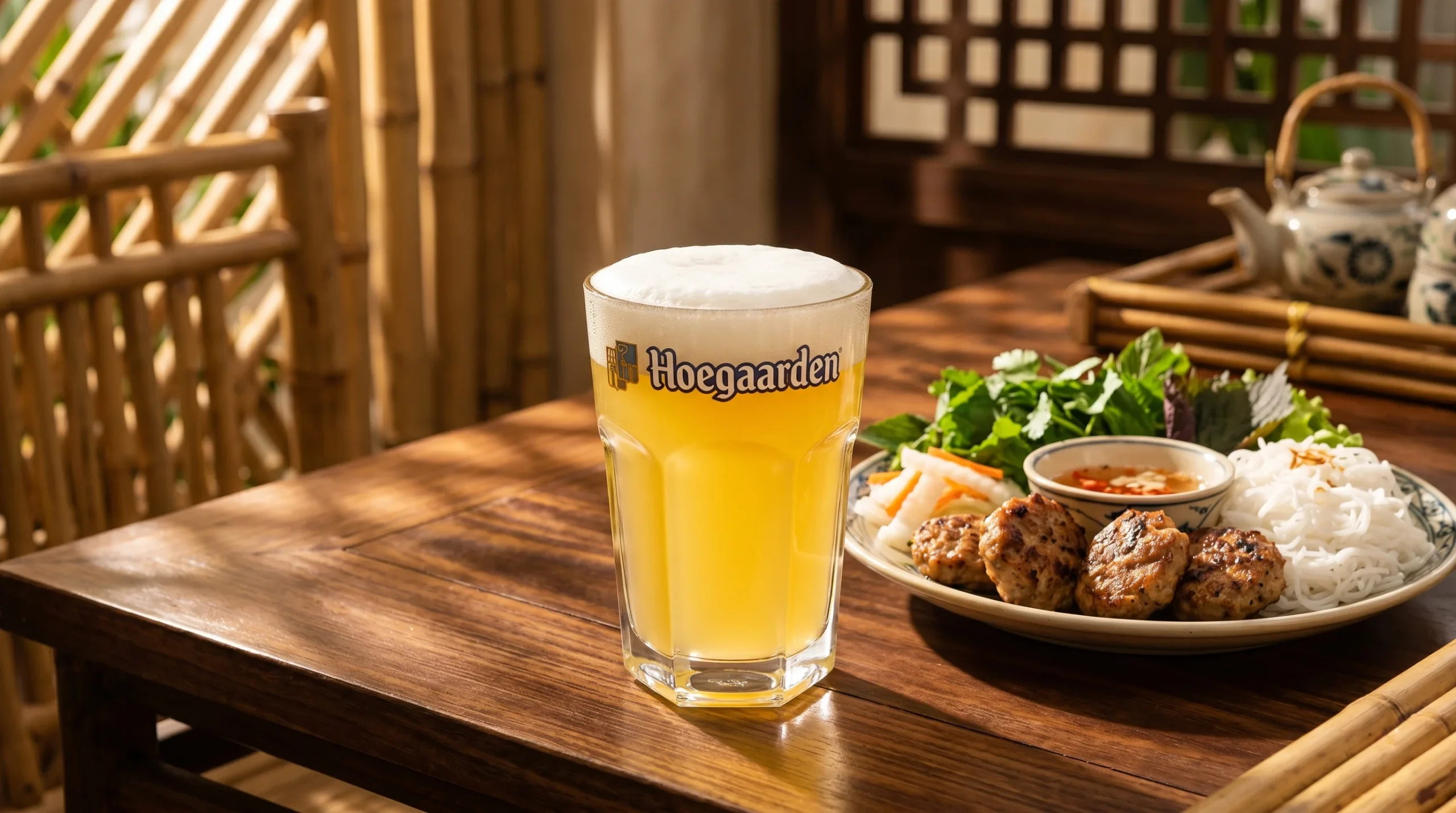
- Bun cha (Vietnamese noodle dish) + Witbier (Hoegaarden) — Coriander and orange peel in beer harmonize with herbs and a sweet and sour dipping sauce. A classic combination. As mentioned in the article. Belgian beer.
- Chicken Pho + Hefeweizen (Erdinger, Paulaner) — The smooth body of Hefe matches the light broth of chicken pho, without overpowering the spices.
- Spring rolls + Witbier — The citrus beer refreshes the palate between rolls, without overpowering the taste of the shrimp and fresh vegetables.
- Steamed fish with ginger + Hefeweizen — The banana and clove notes of Hefe resonate with ginger, and the smooth body matches the fishy undertones.
- Vietnamese savory pancake (Bánh xèo) + American Pale Wheat — American citrus hops cut through the fat in the pancake, while wheat mellows the flavor of the spices.
- Sushi/Sashimi + Witbier — The subtle citrus notes of Witbier complement the ginger and wasabi, without overpowering the fresh fish flavor.
- Bun bo Hue (Hue-style beef noodle soup) + Dunkelweizen — Dunkelweizen has a strong enough character to stand up to the flavors of Hue. A surprise pairing worth trying.
3-Month Discovery Route
For those who have never drunk wheat beer other than Hoegaarden, here's the itinerary:
January: Witbier vs Hefeweizen — Drink Hoegaarden and Erdinger Weissbier side by side. Compare the characteristics — Witbier (citrus + coriander) vs Hefeweizen (banana + cloves). This is the most important discovery.
February: Delving deeper into the German school of thought — Try Weihenstephaner Hefeweissbier (standard) and Schneider Weisse Dunkel (Dunkelweizen). Feel the difference between Hefe yellow and Dunkel brown.
March: Get Weizenbock and American Wheat — Schneider AventinusWeizenbock) for high intensity. If found, try one American Pale Wheat (Bell's Oberon or Allagash White) to get a feel for the modern style.
After 3 months, you will Clearly distinguish the four core styles of wheat beer. — Witbier, Hefeweizen, Dunkelweizen, Weizenbock. This is a solid foundation for exploring wheat beer globally.
Vietnamese Wheat Beer — Is It Available or Not?
One important question: is wheat beer brewed in Vietnam?
Answer: Yes, but it's limited.. Some Vietnamese craft breweries have experimented with wheat beer in recent years — mostly American Pale Wheat (the simplest technique) and some Witbier-style versions. But Vietnamese wheat beer has yet to develop a distinct style. signature Notable examples include Vietnamese IPA and Vietnamese Stout.
This is also an exciting opportunity: Could Vietnam develop a version of wheat beer that reflects its local characteristics? It could be Witbier-style with Vietnamese herbs (mint, coriander) instead of Belgian coriander. It could be Hefeweizen-style with sticky rice instead of barley. It could be a completely new style — wheat beer with lime leaves, lemongrass, or ginger.
This is a testing ground where Vietnamese craft breweries can explore in the future. Wheat beer is soft, accessible, and easy to pair with spices—perfect for traditional Vietnamese cuisine.
In summary — The Philosophy of "Simple Yet Refined"“
After nearly 5,000 words about wheat beer, there's a question worth asking: Why does wheat beer deserve its own article?
Wheat beer lacks the intensity of a Stout. It doesn't have the dramatic bitterness of an IPA. It doesn't have the historical complexity of Lambic. It doesn't have the strong character of a Belgian Quadrupel. simpler most other beer styles.
But it is precisely that simplicity that is wheat beer's strength. This style expresses a The key philosophy in the art of brewing.: Not all great works of art have to be complex. Sometimes, excellence lies in subtlety and simplicity.
Lessons from Wheat Beer
In the past five sections, we've explored many stories, each with a lesson:
Hefeweizen teaches about technical discipline. Behind its simple appearance—a cloudy golden beer—lies one of the world's most complex fermentation techniques. The difference between good Hefeweizen and mediocre Hefeweizen lies in a few degrees Celsius of fermentation temperature, the specific yeast strain, and the timing of hop addition. A good Hefeweizen brewer is... scientist and artist at the same time.
Witbier teaches about heritage and perseverance. A 600-year-old style, completely dead, was revived by a non-professional milkman. When the original product was corrupted, he started again at age 67, in a different country. Pierre Celis is proof that... Heritage doesn't protect itself — it needs people willing to protect it, even if it means doing it over and over again..
Hefeweizen Bavaria teaches about the role of institutions. A particular style of beer can survive for 200 years not because of the market, but because of royal protection. When the royal family loses interest, the style declines. When the craft revival emerges, the style is reborn. Heritage depends on those who care for it—family, institutions, communities.
Grodziskie and Lichtenhainer teach about resurrection. Two styles that are completely dead — no brewery has brewed them in 20-30 years — can still be revived with historical research and the patience of a few modern craft brewers. No style truly "dies" as long as there are people who care about it.
Wheat Beer and the Questions for Vietnam
There's a question worth asking after reading this article: Could Vietnam have a wheat beer signature?
Vietnamese cuisine is rich in spices, aromas, and herbs. Vietnam's hot and humid climate is ideal for smooth, refreshing wheat beer. Vietnamese tradition also uses wheat (though not as much as rice) – in bread, steamed buns, and various traditional pastries.
The future may have a style. “"Vietnamese Wheat Ale"” — Wheat beer with basil, lime leaves, lemongrass, or other local spices. Suitable for the climate, suitable for the taste, suitable for the culinary heritage.
Pierre Celis proved that A non-professional brewer can create a new style. —It just takes passion and patience. Perhaps one day, a Vietnamese person will do the same — create a Vietnamese wheat beer style that is recognized worldwide.
Final words
Next time you pour yourself a glass of Hoegaarden or Erdinger Weissbier, take a moment to remember:
You are holding a beer style that once banned for nearly 300 years — and survived.
You are holding a style that once completely dead in Belgium in 1957 — and revived by a milkman.
You're holding a brewery-style trophy. the oldest in the world (Weihenstephan, 1040) is still cooking — a nearly millennium-long tradition.
You're holding a glass of beer that might look... simple —but behind it lies one of the world's most complex brewing techniques.
Wheat beer is proof that Simple doesn't mean mediocre.. Sometimes, the most exquisite flavors come from what seems the most humble.
Sip slowly. Savor it. Feel the silky texture of the wheat, the rich foam of the protein, the subtle banana or citrus notes of the yeast. This is it. Art in Simplicity — a philosophy worthy of praise.