
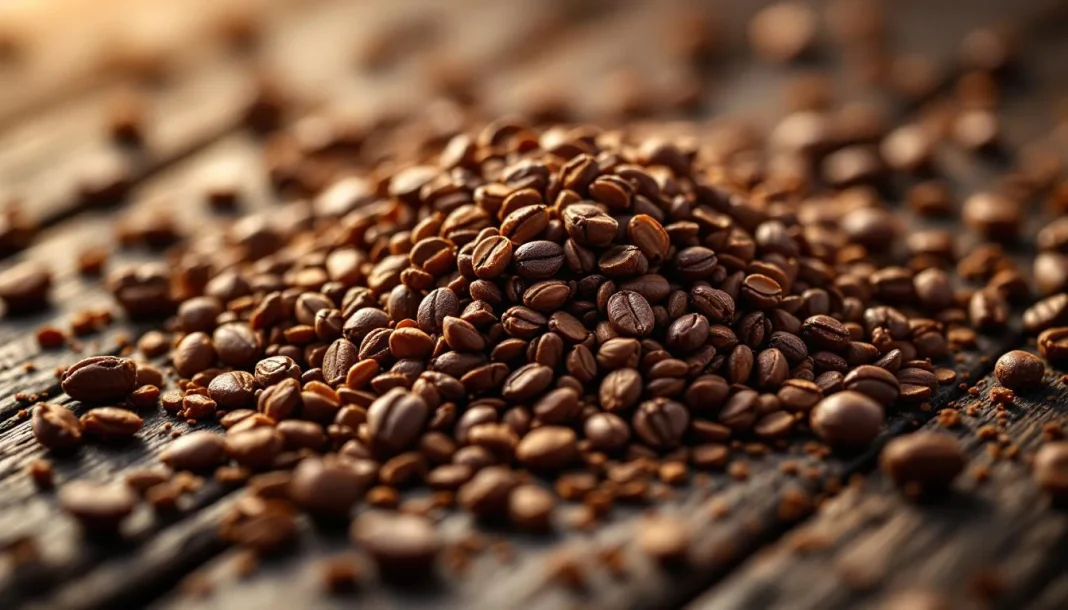
Some malts are made to be a base. Some malts are made to be a color. But Chocolate Malt—it's made to tell a story.
When you lift your stout glass and see its ruby-black hue under the light, when the subtle aroma of cocoa and roasted coffee wafts through your nostrils even before the beer touches your lips — that's Chocolate Malt speaking. Not shouting. Not ostentatious. Just deep whispers from a kiln more than two centuries ago.
Origin and history
Chocolate Malt originated in England in the early 19th century, during a period when the Industrial Revolution was reshaping all industries—including brewing.
Previously, traditional brown malt was roasted directly over wood or charcoal fires, resulting in a strong smoky flavor and uneven color. In 1817, Daniel Wheeler—an English engineer—received a patent for the drum roaster, the first drum-shaped rotary oven capable of precise temperature control. This invention not only created Black Patent Malt but also paved the way for a whole new range of roasted malt colors.
Chocolate Malt emerged as a milder variation. Instead of roasting to a completely burnt black, maltsters stopped earlier—at a point where the malt grains turned a deep chocolate brown. The name "chocolate" doesn't come from the cocoa flavor (though the taste is reminiscent), but from the color itself.
Burton-on-Trent and London were the first centers of roasted malt production. Malt mills there — such as Crisp Maltings (established 1870) and Thomas Fawcett & Sons (from 1809) — continue to produce Chocolate Malt using traditional recipes to this day.
19th-century English porters and stouts relied heavily on chocolate malt. This was the golden age for London breweries like Whitbread, Barclay Perkins, and Truman. They used chocolate malt to create the characteristic dark color without the burnt taste of black malt. The recipes of many Irish stouts from this period—even before roasted barley became popular—had chocolate malt as their backbone.
When the craft beer movement revived in the late 20th century, Chocolate Malt found its way back to the scene. American brewers rediscovered classic English porter and stout recipes, and Chocolate Malt was at the heart of that revival.
Production process
Chocolate Malt begins like all other malts — from barley grains that are soaked in water and germinated. The germination process activates enzymes, converting the starch in the grain into fermentable sugars.
After the sprouts reach the desired root and shoot length, the green malt is placed in a kiln to stop the sprouting process. With conventional malt, the temperature is kept low to preserve the enzymes. But with Chocolate Malt, the journey has only just begun.
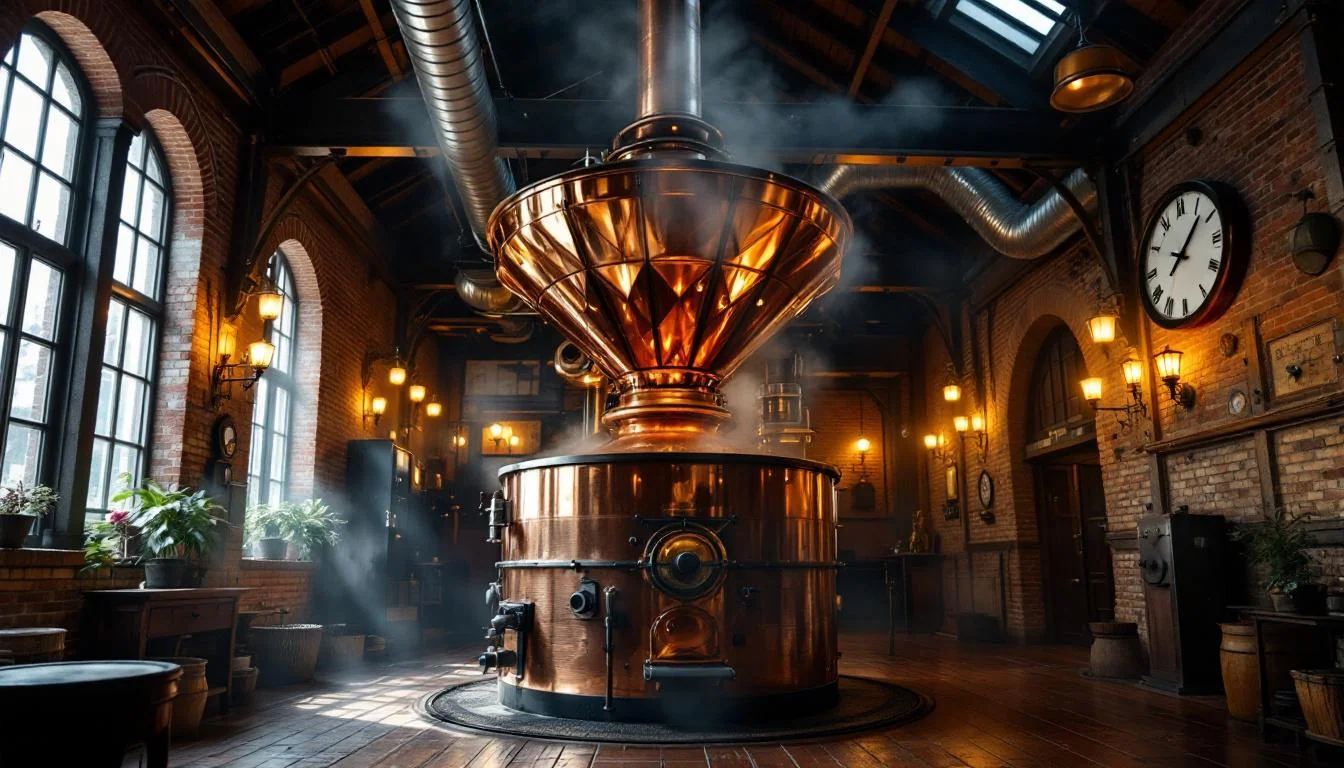
After kiln drying, the malt is transferred to a drum roaster. The temperature is gradually raised to 215–230°C over a period of 2–3 hours. This is the temperature range where the Maillard reaction is most intense—amino acids and sugars react with each other to create hundreds of new flavor compounds.
The right roasting point is crucial. Under-roasting will leave the malt lacking depth and retaining a sweet, corny flavor. Over-roasting will result in a burnt, bitter taste, like Black Malt. Experienced maltsters rely on the color, aroma, and sometimes even the sound of the malt grains in the oven to determine the precise roasting time.
After roasting, the malt is rapidly cooled with air or water to stop the thermal reaction. The final product is dark chocolate-brown malt kernels that are crisp, easily broken, and have a characteristic aroma of cocoa and mild coffee.
Technical specifications
Chocolate Malt belongs to the roasted malt group, with a color range from 800 to 1200 EBC, equivalent to approximately 300–450 Lovibond. This color range lies between Crystal Dark (around 300 EBC) and Black Malt (1300–1500 EBC). This difference is not just aesthetic—it defines the entire flavor profile that the malt delivers.
Chocolate Malt has a relatively low refractive index compared to base malts, typically around 65–70 µF (fine grind dry basis). This means that most of the starch in the grain has been destroyed or caramelized during the roasting process. We don't use Chocolate Malt to create leavening agents—we use it for color and flavor.
The protein content of Chocolate Malt is typically around 10–12%, but much of it is denatured by the high temperature. This has little effect on the turbidity or foam retention of the finished beer.
The moisture content after roasting is very low, usually below 3%, which helps malt last longer without mold or spoilage. However, the aroma will gradually diminish over time, so manufacturers recommend consuming it within 12 months of the roasting date.
An important characteristic: Chocolate Malt lacks active enzymes. The high-temperature roasting process completely destroys its diastatic enzyme system. Therefore, it cannot convert starch into sugar and must always be paired with an enzyme-rich base malt such as Pale Malt.
Flavor and color
Chocolate malt imparts a complex and sophisticated flavor profile to beer.
In terms of color, just 3–5% Chocolate Malt in the recipe is enough to create a deep brown to black color. When viewed through light, beers using Chocolate Malt often have a ruby or garnet rim—unlike the completely solid black color of Black Malt. This is one way to identify its presence.
The most distinctive aromas are cocoa and lightly roasted coffee. Not the sweetness of milk chocolate — but pure cocoa, slightly bitter, with an earthy undertone. The coffee here isn't strong espresso either, but more like cooled filter coffee, with a clean bitterness and a long aftertaste.
At low serving levels (2–4%), Chocolate Malt creates a gentle brown base with flavors like toasted bread, roasted chestnuts, or pie crust. This is a common level in English brown ale and mild ale recipes.
At medium intensity (5–8%), bitter and roasted notes begin to become more pronounced. Traditional English port is typically found in this range — deep enough to be characteristic, but not overwhelming.
At high levels (10–15%), Chocolate Malt becomes the main character. The bitterness from the roasting compound can rival the bitterness of the hops. Stouts using this ratio are often highly complex, with layers of flavor stacked upon each other.
One point to note: Chocolate Malt is not sweet. If you want a sweet chocolate flavor, the brewer needs to combine it with malt crystal or lactose. Chocolate Malt alone will lean towards being dry and bitter.
Chocolate Malt typically has a lingering aftertaste, with a subtle bitterness remaining on the back of the tongue. This is a characteristic many stout lovers appreciate — the feeling of the beer "staying" after swallowing.
Typical beer style
Porter and Stout Chocolate Malt is one of the two beer styles most closely associated with it. American Robust Porter typically uses 5–10 1TP 3T Chocolate Malt as its primary source of color and aroma. Traditional English Porter may use less, combining it with Brown Malt for added complexity. Sweet Stout and Oatmeal Stout particularly favor Chocolate Malt as it adds depth without creating a burnt taste.
Brown ale—both English brown ale and American brown ale—is the natural home of chocolate malt. Newcastle brown ale, one of the most famous brown ales, has a characteristic mild chocolate flavor derived from roasted malt. American versions often push the proportions higher, resulting in more pronounced cocoa and coffee notes than the original English version.
Schwarzbier — German dark beer belongs to the lager family. — Sometimes, Chocolate Malt is used in very low proportions (1–3%) to achieve a dark color while maintaining a light and clean body. This is a subtle approach, where Chocolate Malt plays the role of a makeup artist rather than the lead actor.
Some strong beer Flavors like Imperial Stout and Baltic Porter can contain up to 15% Chocolate Malt. At this ratio, combined with high alcohol content and long aging times, the flavors develop into complex layers—from dark chocolate to dried plums, from coffee to liqueur.
Milk Stout is a particularly interesting case. Lactose (a non-fermentable milk sugar) is added to balance the bitterness of Chocolate Malt, creating a beer with a sweet chocolate flavor without using real chocolate.
Comparison with malts in the same group
Within the English roasted malt family, Chocolate Malt sits at the heart of the range — darker than Brown Malt but lighter than Black Malt.
Brown Malt (150–250 EBC) has subtle biscuit, nutty, and toffee flavors. It lacks the depth and bitterness of Chocolate Malt, but compensates with a more natural sweetness. 18th-century porters relied heavily on Brown Malt before Chocolate Malt was introduced.
Black Patent Malt (1300–1500 EBC) is the maximum roast version. It has a harsh bitterness, a burnt aroma, and a completely black color. Just 1–2 tbsp is enough to achieve the desired color, but using more can easily create an unpleasant harsh taste. Traditional Irish stout, like Guinness, relies more on roasted barley and black malt than chocolate malt.
Pale Chocolate Malt (500–700 EBC) is a lighter variant, with more subtle cocoa and coffee notes and less bitterness. It's suitable for recipes that want depth without being too heavy — such as English Mild or Scottish Ale.
Roasted Barley (1100–1400 EBC) — although not malt (as it is made from unsprouted barley) — is often compared to Chocolate Malt. Roasted Barley gives espresso a stronger flavor and a drier bitterness. This is a characteristic feature of Dry Irish Stout.
Chocolate Malt lies in the most balanced area: bold enough to make an impression, yet soft enough not to overwhelm. This is why it appears in more recipes than any other roasted malt.

How to recognize when enjoying it
When holding your beer glass up to the light, look for the rim. Chocolate Malt beers often have a ruby or mahogany rim—a warm, luminous ring around the dark body of the beer. If the dark beer has no rim at all, Black Malt or Roasted Barley may be dominant.
Bring the glass to your nose before drinking. Chocolate Malt leaves a subtle cocoa and roasted coffee aroma—not as strong as espresso, but gentle like the scent of a morning filter coffee. If you smell burnt or smoky notes, that's a sign of Black Malt or Roasted Barley.
When beer touches your tongue, where do you feel the bitterness? Bitterness from hops is usually concentrated on both sides of the tongue. Bitterness from Chocolate Malt spreads more evenly, usually most noticeable at the back of the tongue and in the aftertaste.
Pay attention to the dryness of the beer after swallowing. Chocolate Malt has a slightly dry sensation, like drinking strong black tea. If the beer remains sweet after swallowing, the malt crystals or lactose may be balancing out the bitterness.
Try comparing two glasses of beer—an English porter and an Irish stout—side by side. An English porter with Chocolate Malt will be smoother and more rounded. An Irish stout with Roasted Barley will be drier and more bitter. That difference tells the story of two schools of thought, two philosophies about the beauty of the dark beer.
Next time you pick up a porter or stout, slow down. Somewhere in that deep brown, Chocolate Malt is still telling its story — about the kilns in England over two hundred years ago, about the maltsters monitoring the temperature minute by minute, about the journey from golden barley grains to rich chocolate. It's all in one sip.