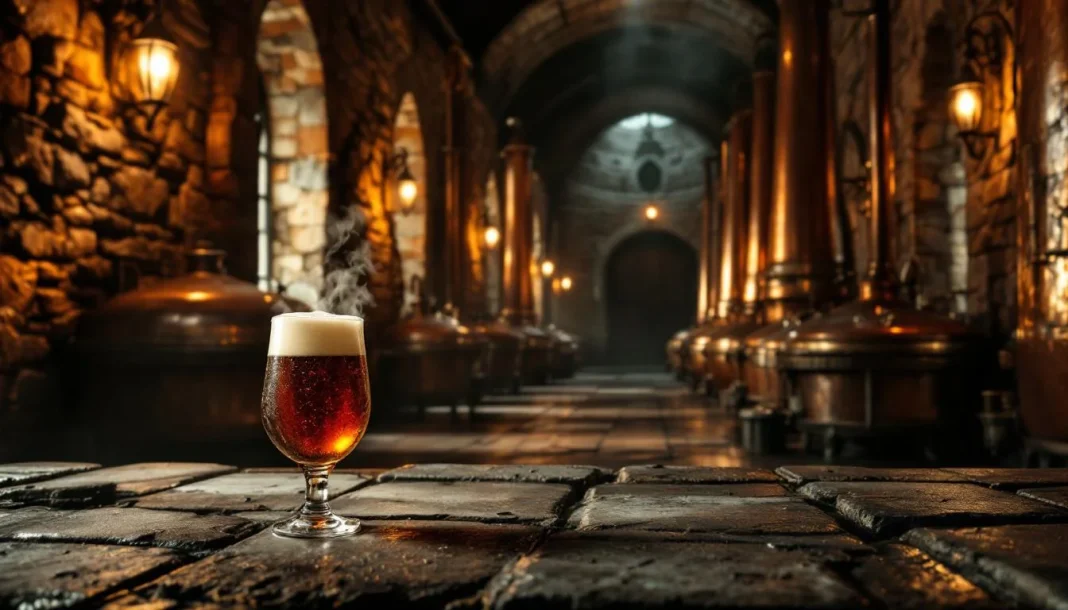
In the cool cellars of the Scourmont Abbey, the copper fermentation vats remain in place since the 19th century. The Trappist monks don't call yeast "ingredients." They call it "the soul of the beer." WLP500—a yeast strain isolated by White Labs from that very tradition—carries the legacy of Chimay to brewers around the world.
This isn't a story about a commercial product. This is a story about how a tiny single-celled organism has preserved the flavor of an entire religious order through generations.
Origin and history
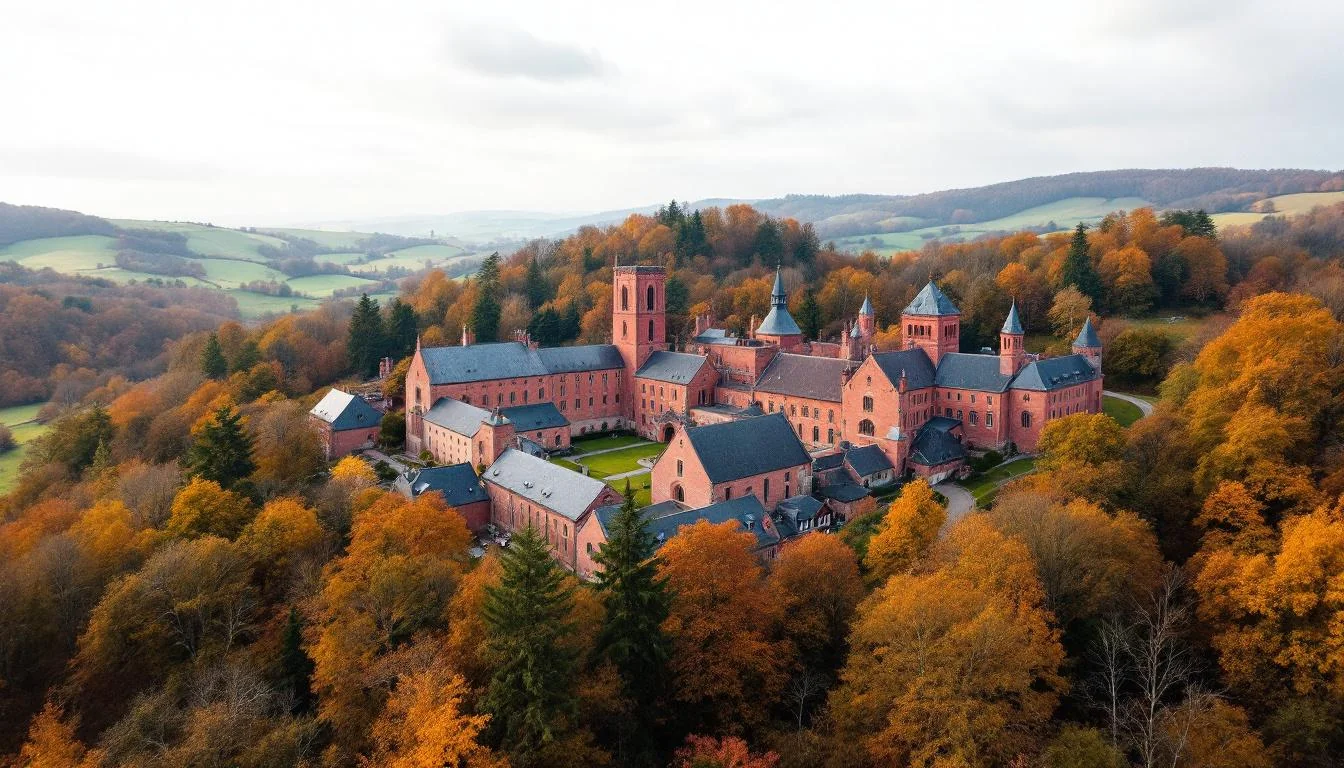
The Notre-Dame de Scourmont monastery is located in Chimay, a small town in southern Belgium, near the French border. In 1862, the Trappist monks began brewing beer there. Not for commercial purposes, but to support the monastery community and fund charitable activities. Chimay beer was born in that context—humble, practical, and rigorous.
The yeast strain used by the monastery has been passed down from generation to generation. No one knows exactly when it originated. Perhaps from the first barrels of beer. Perhaps from a native wild yeast strain that was domesticated over decades. What is certain is that it has shaped the "Chimay flavor" that one recognizes from the very first sip.
White Labs—a brewing laboratory in San Diego, California—isolated and cultured this yeast strain in the 1990s. They assigned it the code WLP500, calling it "Trappist Ale." Isolation was not simple. Belgian yeasts are known for their complexity, often containing many symbiotic sub-strains. White Labs had to isolate the main strain, ensuring stability for industrial propagation while preserving its original "character.".
From there, WLP500 became a bridge between Trappist tradition and the global homebrewing movement. Home brewers in the US, Australia, Vietnam — anyone — could touch Scourmont's 160-year heritage.
Biological characteristics
WLP500 belongs to the species Saccharomyces cerevisiae — Standard ale yeast. But "standard" is just a classification. Its characteristics are anything but ordinary.
The ideal fermentation temperature is between 18-24°C. At lower temperatures, the yeast produces a balanced beer with restrained esters. At higher temperatures, it fully releases its flavor—fruity aromas emerge, and phenols become more prominent. Many brewers choose to start at 18°C and gradually raise it to 22-23°C in the final days. This approach takes advantage of both extremes.
The attenuation ranges from 75-80 %. The WLP500 consumes sugar quite strongly, leaving a medium-bodied beer that is neither too thick nor too thin. It tolerates high alcohol content—up to 12-15 % ABV—which is essential for Tripel and Quadrupel lines.
Yeast tends to have medium to low flocculation. This means it remains suspended in the beer for a considerable amount of time, requiring settling or clarification techniques. Some brewers accept slight cloudiness as part of the style.
Flavor and character
When the WLP500 is working, it doesn't just create alcohol. It paints.
Ester is the first brushstroke. Ripe pear. Apricot. Red apple. Sometimes banana, but not in the sweet German style, but more subdued, like sun-dried banana. These compounds form most strongly at high temperatures, when the yeast is more "intense" during the fermentation process.
Phenol is the second brushstroke. It's subtle. A hint of clove. A touch of hard-to-describe spice—often described as "spicy," but not hot. It's a warm sensation, like cinnamon in tea. The phenol in WLP500 is far more nuanced than that of wild or farmhouse Belgian yeast strains. It suggests rather than imposes.
At the bottom, there's a hint of honey. Not overtly sweet. Just an aftertaste, like someone just brushed past with a jar of honey. As the beer ages—conditioning for a few months—the fruity notes soften, giving way to a more gentle depth.
WLP500 doesn't produce much off-flavor if handled correctly. However, if fermentation is too hot or nutrient-deficient, it can develop an unpleasant solvent-like flavor. Patience and temperature control are key.
Typical beer style
WLP500 is made for cooking. Belgian beer. More specifically, it is a Trappist yeast.
Belgian Dubbel
Dubbel is a natural playground for the WLP500. A reddish-brown beer, 6-7.5 oz (3 oz ABV), sweet malt with notes of dried plum, grape, and caramel. Yeast adds layers of ripe fruit—pear, apple—making Dubbel complex without being heavy. Chimay Rouge (Red) is a classic example.
Belgian Tripel
Tripel requires yeast that can tolerate high alcohol content and leave a moderate body. WLP500 meets both criteria. A pale golden beer, 7.5-9.5% ABV, drier than Dubbel, with spice and fruit notes leading the way. Chimay Cinq Cents (White) exemplifies this relationship.
Belgian Dark Strong Ale (Quadrupel)
This is a big challenge. 10-12% ABV, sometimes higher. Strong beer A robust yeast is needed. The WLP500 accomplishes this task, producing a rich dark beer with notes of molasses, plums, orange peel, and a warm, slightly alcoholic finish. Chimay Grande Réserve (Blue) is the pinnacle of this style.
Belgian Blonde Ale
Lighter, the 6-7% ABV, Belgian Blonde is an easy-drinking approach to Belgian tradition. The WLP500 delivers light fruit flavors, almost no phenols, and a refreshing yet deep beer.
Geographic region and terroir
Wallonia—the French-speaking region of southern Belgium—is home to the WLP500. It's a land of forests, meadows, and monasteries scattered across the hills. Scourmont isn't the only Trappist monastery here. Orval, Rochefort—other illustrious names—are also located in the area.
Wallonia has a cool, humid climate, ideal for slow fermentation. The monastery cellars maintain a stable temperature year-round, eliminating the need for modern air conditioning. The yeast has adapted to these conditions over the centuries.
The water at Chimay is soft and low in minerals. This affects how the yeast functions and the final flavor. Brewers elsewhere often have to adjust their water sources to replicate this profile.
The terroir of Belgian brewery is not just geography. It's culture. The patience of the monks. The philosophy of "beer feeds the community" rather than "beer generates profit." WLP500 carries that spirit, whether it's brewed in California or used in Saigon.
How to recognize when enjoying it
When you pick up a glass of beer brewed with the WLP500, start with the nose.
The aromas of ripe fruit—pear, apple, apricot—will come first. Not overpowering. Just a gentle invitation. Behind that, there might be a hint of clove, a touch of spice warmth. If the beer is well-conditioned, you'll encounter a subtle hint of honey, hazy like a memory.
When drinking, pay attention to the carbonation. Belgian beers are usually very fizzy, and the WLP500 is no exception. Tiny bubbles stimulate the tip of the tongue, carrying flavors that spread throughout the mouth. The body is just right—not too watery, not too thick—enough to keep you hooked.
The finish is slightly dry. The alcohol may feel warm in the throat if the ABV is high, but it's not harsh. This yeast knows how to hide the alcohol beneath layers of fruit and spice.
The hallmark of WLP500 is its balance. Not as phenolic as Saison glaze. Not as clean as American glaze. It's somewhere in between, like a hymn echoing in a monastery—dignified enough, warm enough, and always inviting you to return.
Drink slowly. Let the yeast tell its story.