
In the autumn of 1972, the Hallertau region was plunged into mourning. Verticillium wilt swept through the hop fields like an epidemic, devastating over 801 hectares of Mittelfrüh. Bavarian farmers watched as generations of hard work withered away in weeks. Many families abandoned the trade. Many alternative hop varieties were introduced. But Mittelfrüh did not disappear.
Forty years later, the remaining hop gardens are still cared for like treasures. Yields are only a fraction of what they were before the pandemic, but traditional lager producers still flock here. They know that no hop variety can completely replace the aroma that Mittelfrüh provides—an aroma that has shaped the concept of German beer in the minds of drinkers around the world.
We're talking about a hop variety that has existed for over a millennium, surviving wars, epidemics, and changing tastes. It's not just a brewing ingredient. It's a heritage.
Origin and history
Hallertau Mittelfrüh is not a product of a modern laboratory. It is a landrace—a native variety that has developed naturally over hundreds of years, adapting to local conditions. The name "Mittelfrüh" means "medium ripening" in German, describing the harvest time of this hop variety compared to others in the region.
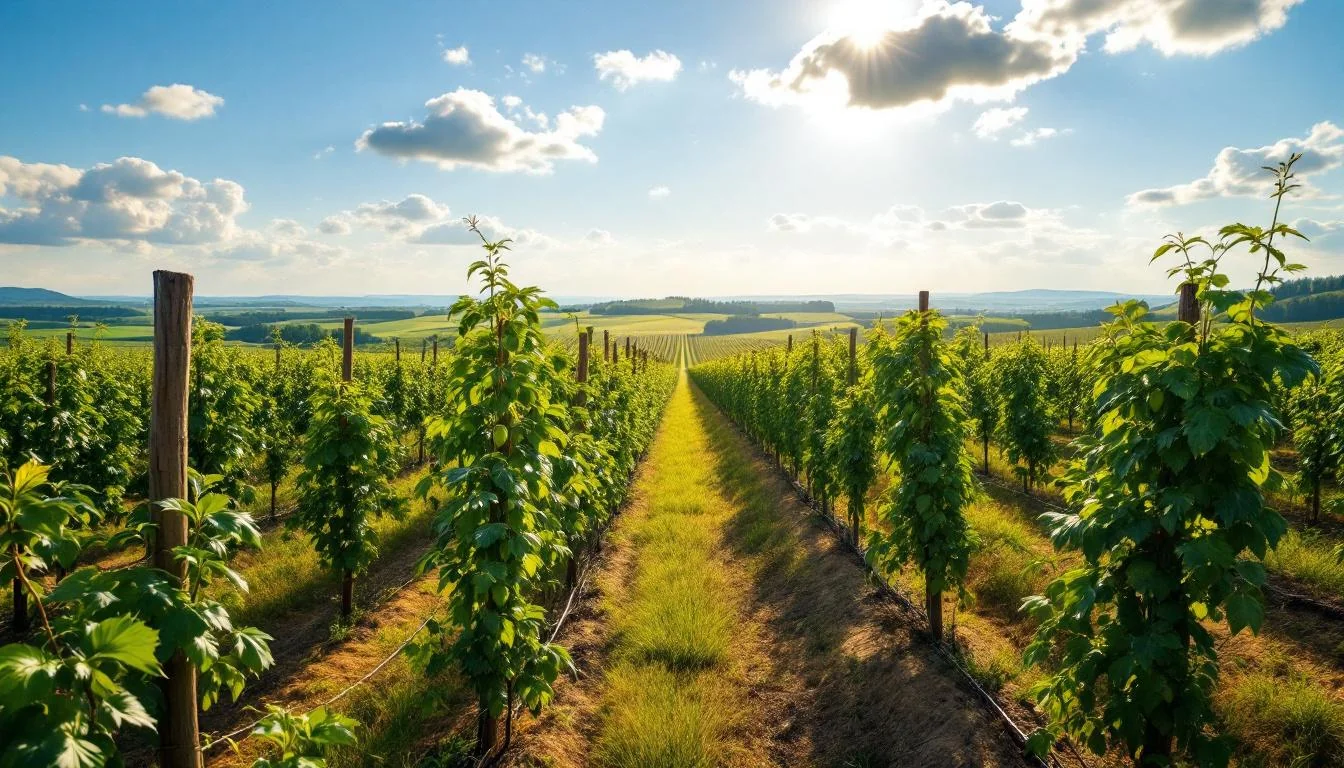
The Hallertau region is located in central Bavaria, between Munich and Regensburg. It is the world's largest hop-growing region, with a recorded history of hop cultivation dating back to 736. The Ilm, Paar, and Abens rivers provide water to the area, creating a unique microclimate with high humidity and mild temperatures.
Mittelfrüh has appeared in commercial literature since the 19th century, but its true origins date back much further. Botanists believe this hop variety was domesticated from wild hop growing along the riverbanks in the region, through a process of natural and artificial selection spanning many generations. There is no "human breeder" in the modern sense — Mittelfrüh is the product of the entire Bavarian farming community.
Mittelfrüh's golden age spanned from the late 19th to the mid-20th century. This was the period when German breweries conquered the global market with Pilsner, Helles, and Märzen. Mittelfrüh became the gold standard for aroma hops in lager production. Brewmasters from Bohemia to America sought out authentic Hallertau hops.
The verticillium wilt disaster of the 1970s and 1980s changed everything. This fungus attacks the vascular system of hop plants, causing them to die slowly, and there was no cure. The area planted with Mittelfrüh decreased from thousands of hectares to just a few hundred. German research institutes had to develop disease-resistant varieties such as Hallertauer Tradition, Hersbrucker, and Perle to replace them.
Today, Mittelfrüh accounts for only about 3-41% of Germany's total hop production. Its price is more than double that of its alternatives. But traditional brewers like Augustiner, Spaten, and many smaller breweries still persevere in using it. They believe—and many drinkers agree—that no hop variety can accurately replicate the taste of Mittelfrüh.
Technical specifications
Mittelfrüh belongs to the noble hop group — traditional European hop varieties valued for their delicate aromas rather than their strong bitterness. Alpha acid content ranges from 3% to 5.5%, significantly lower than modern hop varieties. Beta acid is at 3% to 5%, resulting in an alpha/beta ratio close to 1:1 — a typical characteristic of noble hop.
The total essential oil content in Mittelfrüh ranges from approximately 0.71 oz to 1.31 oz by dry weight. The essential oil composition includes about 40-50 oz humulene, 20-25 oz myrcene, and 10-15 oz caryophyllene. The high humulene content is key to the characteristic herbal aroma of this hop variety. Farnesene accounts for about 3-5 oz, lower than Saaz but still sufficient to contribute to the complexity of the aroma.
The Mittelfrüh harvest season in Hallertau typically runs from late August to mid-September. The timing of the harvest must be carefully calculated—too early means the fragrance hasn't fully developed, too late means some of the essential oils have evaporated. Experienced hop growers often rely on the aroma and color of the lupulin resin to determine the optimal harvest time, in addition to chemical analysis.
Aroma and flavor
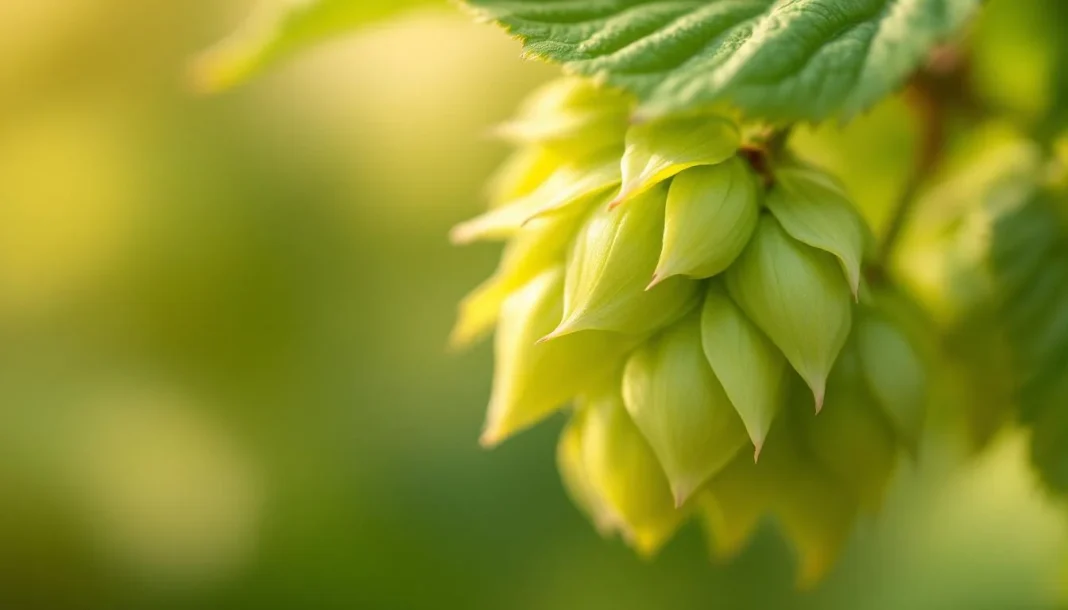
When you squeeze a pinch of fresh Mittelfrüh in your palm, the first thing that comes to mind is the scent of dried grass. Not the smell of freshly cut grass—but the scent of an autumn meadow, when the grass has turned yellow and begun to dry in the sun. This is followed by a light floral note, reminiscent of wildflowers and elderflower.
The second layer of fragrance is more subtle. A hint of spice—not the strong pepper, but a more refined spice, comparable to mild bay leaf or thyme. Some describe notes of green tea, or the smell of fresh leaves when you crush them in your hands.
In the finished beer, the Mittelfrüh aroma blends with the malt to create a balanced whole. You won't find the hop notes "jumping" out of the glass as with American hop varieties. Instead, the aroma is subtle and lingering—as you lift the glass, there's a hint of herbs. On the palate, a clean bitterness emerges and then fades, leaving a dry aftertaste with hints of grass and flowers.
The bitterness of Mittelfrüh is of a different quality compared to high-alpha hop. It's a "soft" bitterness—a term German brewmasters often use, "edel" (noble). The bitterness doesn't linger in the throat, nor does it create a stinging or astringent sensation. It comes and goes gracefully, paving the way for the next sip.
What makes Mittelfrüh special doesn't lie in any single note, but in how they all blend together. No note overwhelms another. No note is missing. This is the balance that modern breeders are still trying to recreate in new varieties.
The beer style uses Hallertau Mittelfrüh.
Munich Helles is the perfect stage for Mittelfrüh. Style light lager This beer was created in 1894 at the Spaten distillery, as Bavaria's answer to the success of Pilsner Bohemia. With a light malt profile and moderate bitterness (18-25 IBU), Helles allows the subtle herbal aromas of Mittelfrüh to fully express themselves. High-quality Helles beer made with Mittelfrüh will have a dry, clean aftertaste, with hints of grass and flowers on the exhale.
German Pilsner is the second most popular choice. Compared to Bohemian Pilsner using Saaz, the German version with Mittelfrüh tends to be slightly more bitter and drier on the finish. Breweries such as Bitburger, Warsteiner, and Krombacher traditionally use Mittelfrüh or Hallertau varieties to create the characteristic sharp bitterness. However, due to the high cost of Mittelfrüh, many large breweries have switched to alternative varieties such as Hallertauer Tradition.
Märzen and Oktoberfestbier are seasonal styles where Mittelfrüh truly shines. Here, hops don't play a dominant role—the caramel malt and bread are the stars. But Mittelfrüh provides a balanced foundation, preventing the beer from becoming overly sweet despite its robust malt profile. The clean bitterness and subtle herbal notes help to cleanse the palate between sips.
Doppelbock and its lines strong beer German beers also often use Mittelfrüh. In ABV 7-12%, these beers have a very high malt intensity. Mittelfrüh, with its low alpha acid and delicate aroma, is the perfect complement — bitter enough to balance, but not overpowering the beer's complex malt notes.
Comparison with other noble hops
Saaz is Mittelfrüh's closest sibling in terms of flavor profile. Both have high humulene content and characteristic herbal notes. However, Saaz leans more towards the spice side—it has a subtle peppery note that Mittelfrüh lacks. Saaz also has a higher farnesene content, resulting in a more pronounced floral aroma. When used in Pilsner, Saaz has a sharper feel, while Mittelfrüh has a rounder feel.
Tettnanger, originating from the Lake Bodensee region near the Swiss border, shares many characteristics with Mittelfrüh but tends to be more herbal and less floral. Some brewmasters describe Tettnanger as having a more ”green” note — closer to fresh leaves than dried grass. Tettnanger also has a higher proportion of myrcene, which can produce a slightly harsh bitterness if used improperly.
Spalter, from the Spalt region about 60km from Hallertau, is the variety with the closest profile to Mittelfrüh. Both have similar geographical origins and grow in similar climatic conditions. The main difference lies in the terroir — the Spalt soil produces aromas with more pronounced earthy notes, while Hallertau offers a cleaner aroma. In practice, many drinkers find it difficult to distinguish between the two when using them in the same recipe.
How to recognize when enjoying it
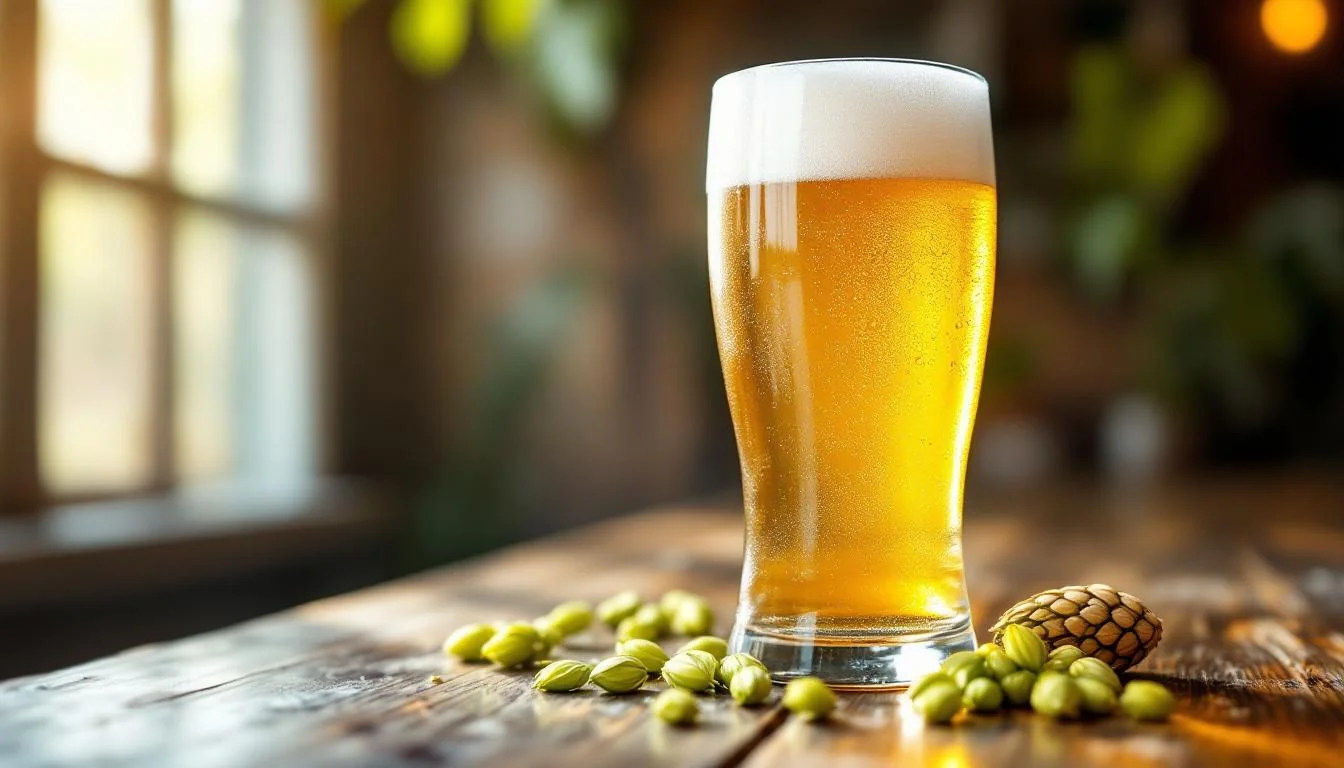
When drinking a Helles or Pilsner with authentic Mittelfrüh, start by smelling it. Raise the glass to your nose before drinking. If the hops are fresh and of good quality, you'll catch a subtle hint of hay, perhaps with a faint floral note. Don't look for lemon, grapefruit, or tropical notes — Mittelfrüh doesn't have those.
With the first sip, pay attention to how the bitterness develops. Mittelfrüh doesn't "hit" the roof of your mouth. The bitterness comes slowly and gently, then spreads evenly across your tongue. If you feel a "biting" bitterness or it's concentrated in your throat, it could be a different hop variety or the hop has lost its freshness.
The aftertaste is where Mittelfrüh leaves its clearest mark. After swallowing, wait a few seconds. A good Mittelfrüh beer will have a dry, clean aftertaste with a very subtle herbal undertone. No metallic taste. No stickiness or lingering sweetness. Your mouth will be ready for the next sip — that's the design purpose of these beers.
Mittelfrüh has existed for over a thousand years not because it is "the best"—but because it is suitable. Suitable for the Bavarian climate, for the local water sources, for the tastes of the farmers and artisans who have nurtured it for generations. Sometimes, the value of an ingredient lies not in what it shouts, but in what it whispers.