
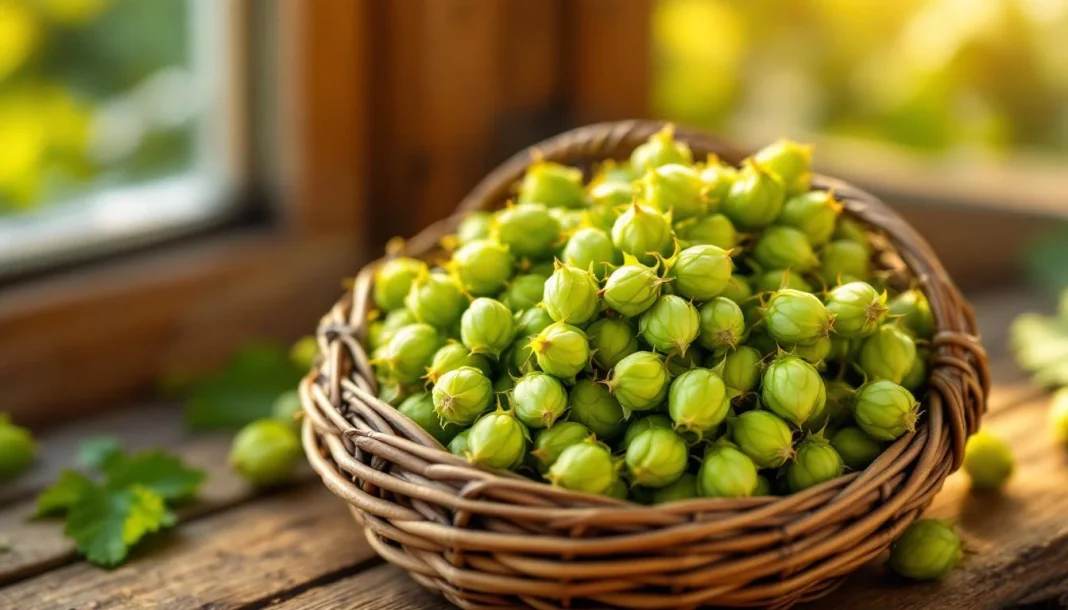
There is a town in Bavaria with only five thousand inhabitants, yet it boasts a history of hop cultivation longer than the lifespan of many countries. That town is called Spalt. And the hop variety bearing its name has quietly been a part of millions of liters of German beer for over seven centuries.
We often hear about Saaz from the Czech Republic and Hallertau from Germany as the "noble hops" shaping European beer. But Spalt, its less-discussed sibling, carries a story of its own—a story of resilience, of a small region that refuses to succumb to the modern hop craze.
Origin and history
In 1341, the first documented instance of hop cultivation in Spalt appeared. This was a time when Europe was still engulfed in the Black Death, beer didn't yet have the Reinheitsgebot law, and hop was still a foreign ingredient in many brewing regions. But the people of Spalt saw the value of these small blue flowers.
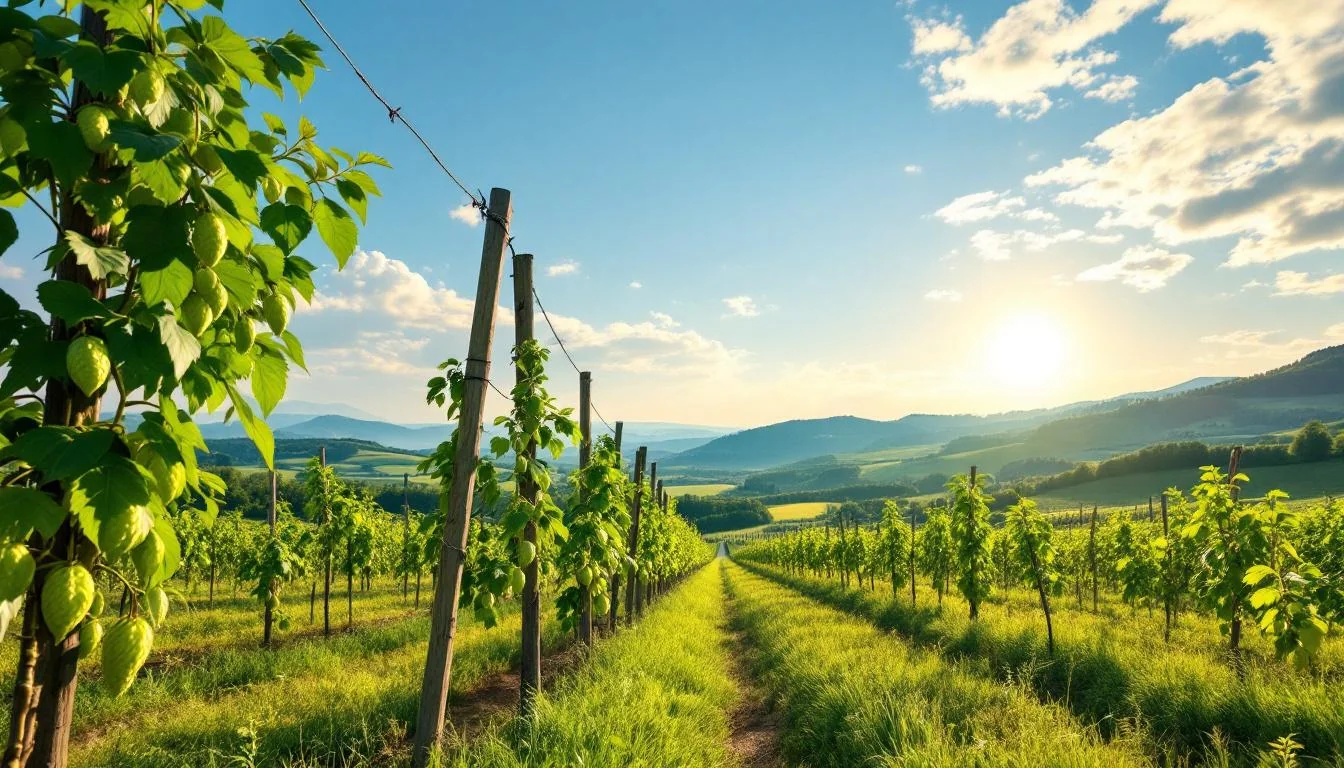
The town of Spalt is located in Franconia, northern Bavaria, about 50 km south of Nuremberg. The area has gently sloping hills, sandy soil, and a mild continental climate—ideal conditions for hop cultivation. In 1538, the Spalt town council officially issued regulations on hop quality, making it one of the first regions in the world to have standardized hop quality control.
By 1900, Spalt was Germany's third most important hop-growing region, after Hallertau and Tettnang. However, the 20th century brought many changes. Two world wars devastated agriculture. The influx of high-yielding hop varieties from America and Britain threatened traditional ones. Spalt's cultivated area gradually shrank.
Today, the hop growing region of Spalt covers only about 400 hectares—tiny compared to Hallertau's 17,000 hectares. But it is precisely this scarcity that creates its value. Spalt has been protected by a European Union geographical indication since 2012. Only hop grown within the administrative boundaries of the Spalter Hügelland region is allowed to bear the name Spalter.
The original Spalt (landrace) variety has existed for hundreds of years without artificial breeding. This is the result of natural selection and traditional farming practices passed down through generations of farmers. Some researchers believe Spalt is closely related genetically to the Czech Saaz, although no one can definitively determine its original origin.
Technical specifications
Spalt belongs to the aromatic hop group with low alpha acid content, ranging from 2.5% to 5.5%, averaging around 4%. Beta acid is in the range of 3% to 5%, creating an alpha/beta ratio close to 1:1 — characteristic of European noble hop varieties. The total essential oil content is from 0.5 to 0.9 ml/100g, relatively low compared to modern hop varieties.
Spalt's essential oil composition has a high proportion of humulene, accounting for 20% to 30% of the total oil. Myrcene is present at 20% to 35%, significantly lower than in American varieties. Farnesene is present at 10% to 15%, contributing to its delicate herbal characteristics. Caryophyllene accounts for approximately 8% to 12%.
The Spalt hop harvest season typically begins in late August and lasts until mid-September. Spalt hops have lower yields than modern commercial varieties, reaching only about 1,200 to 1,500 kg per hectare. This is the main reason why many farmers switched to higher-yielding varieties, leading to a decline in planted area in the latter half of the 20th century.
Aroma and flavor
Opening a bag of fresh Spalt harvested in autumn, the first thing you encounter is the scent of freshly cut hay. Not damp grass after a rain, but hay dried in the Bavarian afternoon sun—warm, gentle, and slightly sweet. Following that is a delicate herbal aroma: a hint of sage, a touch of thyme, fleeting like a breeze through a herb garden.
Upon closer inspection, Spalt reveals subtle peppery notes—not the strong black pepper, but closer to the delicate white pepper. Some detect hints of damp earth and distant pine forests. Those familiar with American hops will find Spalt surprisingly subdued—no bright citrus, no sharp pine resin, no tropical mango.
In beer, Spalt offers a soft, rounded bitterness. The bitterness isn't as harsh as that of high alpha malts, but rather spreads gently and fades away. The aftertaste leaves a warm, slightly spicy sensation, accompanied by a light dryness that encourages the next sip. This hop style is designed to complement the malt, not to dominate the scene.
Some brewers describe Spalt as having an “elegance”—an indescribable sophistication. It doesn't make a strong impression immediately, but the more you drink, the fuller it becomes, and the more you contemplate it, the more refined it appears.
The style of beer uses Spalt.
Spalt is the soul of traditional German lager. Munich Helles, Dortmunder Export, Märzen — these styles require a hop that doesn't overpower the malt but still creates balance. Spalt fulfills that requirement precisely.
In German Pilsner, Spalt is often paired with Hallertauer Mittelfrüh or Tettnanger. Classic recipes can use Spalt for both late-hopping and dry-hopping, to take advantage of its subtle herbal aroma. Some Franconian breweries still maintain the tradition of using 100% Spalt in their local Pilsner lines.
Festbier and Oktoberfest Märzen are other styles where Spalt truly shines. Its soft bitterness blends perfectly with the light caramelized Munich malt. The warm, spicy aftertaste is comforting on chilly autumn days—true to the original purpose of Bavarian beer festivals.
Bock and Doppelbock, although belonging to strong beer group, Spalt is also commonly used. Here, the hops don't need to be overly bitter, but rather elegant, allowing the complex malt notes to take center stage while still providing a clean, edgy finish.
Comparison with other noble hops
In the European noble hop quartet, Spalt is often placed alongside Saaz, Tettnanger, and Hallertauer Mittelfrüh. Each variety has its own distinct personality, although they share many common characteristics.
Compared to Saaz, Spalt has a more pronounced herbal aroma and less floral notes. Saaz offers a fresh, almost slightly "minty" feel. Spalt is warmer and deeper. In Pilsner, Saaz provides brightness, while Spalt offers depth.
Hallertauer Mittelfrüh is Spalt's closest sibling geographically and genetically. Both have notes of hay and herbs, but Mittelfrüh tends to be more floral and gentle. Spalt has more pronounced spicy notes and a slightly fuller bitterness.
Tettnanger, from the southwestern Lake Constance region, has a slightly different profile. It carries more licorice notes and sweeter spices. Tettnanger is "luxurious" in a bright way, while Spalt is "luxurious" in a more understated way.
How to recognize when enjoying it
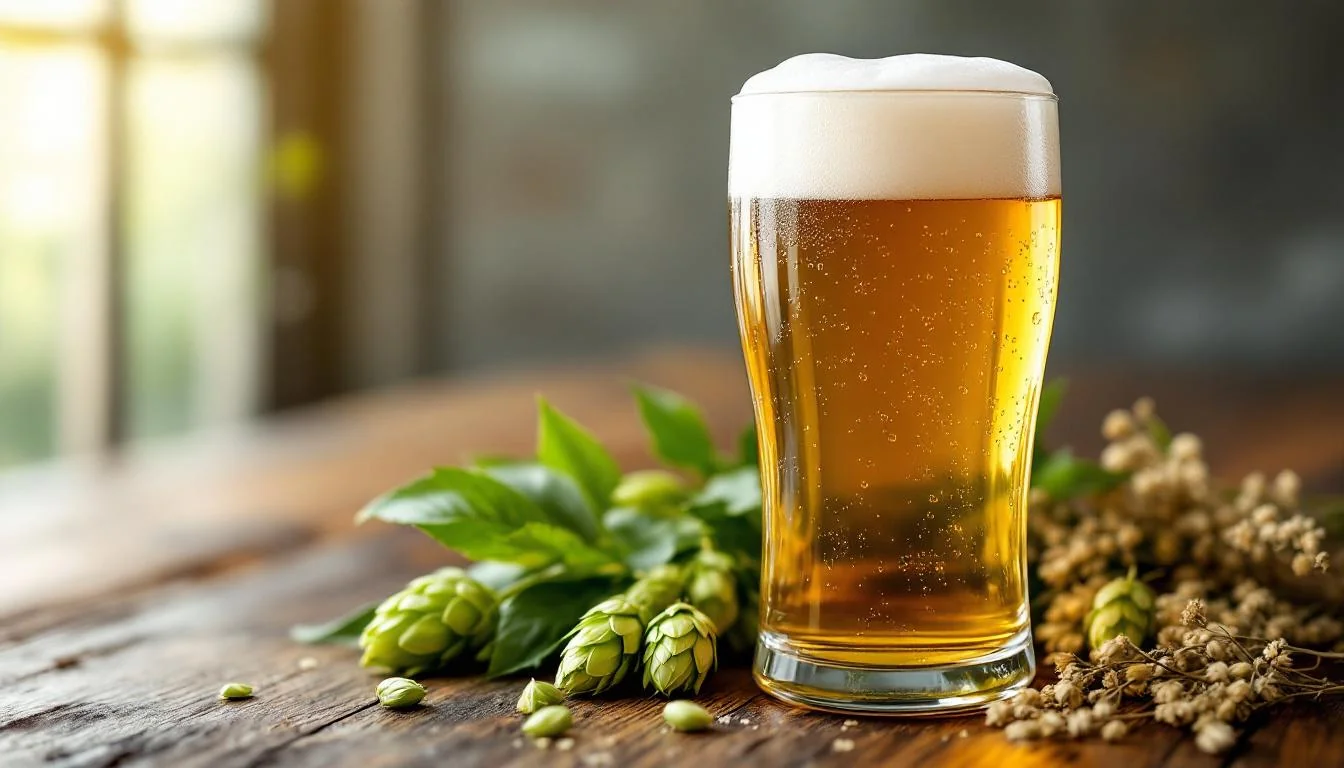
When drinking a German Pilsner or Helles made with Spalt, start with your nose. Raise the glass, take a light sniff—look for the scent of dried herbs, not fresh flowers. If it evokes a Mediterranean herb garden under the summer sun, that might be a sign of Spalt.
With the first sip, let the beer spread across your entire tongue. The bitterness of Spalt comes slowly, not attacking the tip of the tongue but gradually spreading towards the back. It's soft and rounded—quite different from the sharp bitterness of high alpha-acid hop varieties.
The aftertaste is where Spalt leaves its clearest mark. Look for a subtle, warm spiciness, as if with a hint of white pepper. The mouth is slightly dry, clean, inviting the next sip. There is no lingering fruity taste, no harsh bitterness.
Some small breweries in Bavaria still brew using traditional recipes with pure Spalt. If you have the chance, look for beers from the Franconia region — Nuremberg, Bamberg, Erlangen. There, Spalt remains the default choice, not a specialty.
Amidst a world of craft beers overflowing with explosive flavors, Spalt reminds us that there is another kind of beauty—the beauty of restraint, of tradition, of a small town that refuses to change simply because times change. And sometimes, a perfectly balanced glass of beer is worth more than all the noise.