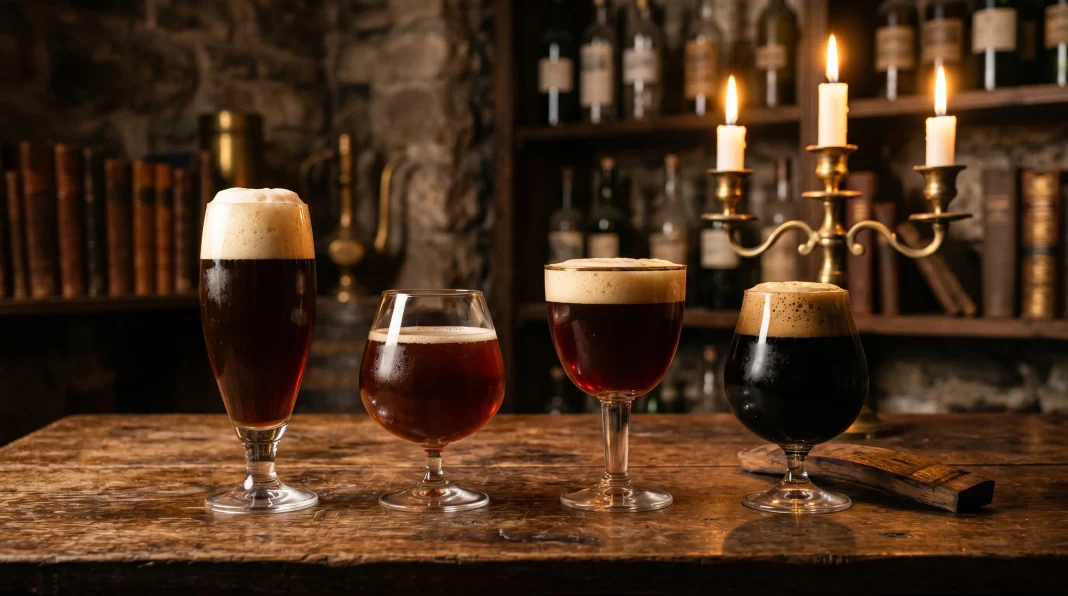
Most beers worldwide have an ABV (alcohol by volume) ranging from 4 to 61 oz. This is the "normal" range — beers that can be enjoyed in multiple glasses in a single session, don't cause rapid intoxication, and pair well with meals. Most classic Lagers, Pale Ales, Witbiers, and Stouts fall within this range.
But there is one other world of beer — where brewers intentionally push the ABV very high. Beer ABV 8%. 10%. 12%. Some beers even reach 14-17%, almost on par with wine. This is strong beer — not an accident, not a mistake, but a deliberate tradition It lasted for centuries.
The core question is: why do some brewers invest so much effort in brewing strong beer when 5% is clearly easier to drink and easier to sell?
The answer lies in philosophyStrong beer isn't for getting drunk. Strong beer is for... Enjoy slowly, to Discover the depth of flavor. which ABV beers typically cannot achieve. A bottle of Doppelbock with malt depth unmatched by any Helles. A Barleywine with complexity close to that of Port wine. An Eisbock so concentrated it becomes a liqueur. This is not a drink — this is artwork in a glass.
What is Strong Beer? — Technical Definition
There is no official definition of "strong beer" in the brewing world. However, according to the BJCP (Beer Judge Certification Program) and other standard beer organizations, ABV can be divided into four ranges:
- Session beerABV 3-4.5% — beer that you can drink all day long“
- Regular beerABV 4.5-6% — the majority of commercial beers
- Strong beerABV 6-8% — entering the “strong zone”
- Very strong beerABV 8%+ is officially classified as "strong".
In this article, we focus on the band. strong and very strong — ABV from 6% onwards, especially 8%+ where the "strong" character truly emerges.
Why Do Brewers Brew Strong Beer?
Have five historical reasons This led to the emergence of strong beer styles:
1. Storage — Before refrigeration and pasteurization technology, high ABV was the natural way to preserve beer. 8%+ ABV beer can last for months without spoiling. This is why. Barleywine The British beer was born — strong beer was brewed to be sent to distant colonies (India, Caribbean) without spoiling during the journey. That's also the reason Russian Imperial Stout It was developed — a beer brewed for the Russian royal court, strong enough to withstand the harsh Baltic climate.
2. Religion — Trappist and Pauliner monks in Germany brewed strong beer to use during Lent when solid food was forbidden. Beer became a “liquid bread”"(liquid bread) — enough calories and nutrients to sustain the body for 40 days of fasting. This is the origin of Double Bock.
3. Weather — Traditional strong beer is winter beer — Warm enough to ward off the cold, flavorful enough to pair with stews and hearty dishes. Here's why. Wee Heavy The Scottish beer originated there (cold region, need for warm beer), as well as Winter Warmer British tradition.
4. Privileges In some cultures, strong beer is drinks of the elite. Strong Bavarian beer was brewed for the nobility while commoners drank lighter beer. Belgian Quadrupel (Quad) from Trappist monasteries was brewed for special occasions, not everyday. Strong beer represents “luxury”" in the world of beer.
5. Creativity — In the 20th and 21st centuries, American craft beer has gained a new reason to be popular: experiment for experiment. Modern brewers make everything Imperial—Imperial Stout, Imperial IPA, Imperial Porter, Imperial Pilsner—not for preservation or religious reasons, but simply because they want to. Pushing style to the limit.. This is the philosophy: "If style X is good at ABV 5%, try ABV 10% instead.".
This Article
Strong beer isn't a style — it's a cross-category It includes many traditions from various countries. We will go through:
- German School: Bock family — Doppelbock, Eisbock — strong, tightly controlled, malt-forward beers.
- The English SchoolBarleywine, Wee Heavy, Old Ale — strong, robust, malt-driven, classic traditional beers.
- Belgian School: Belgian Quadrupel (Quad), Belgian Pale Strong Ale — details have been given in the article Belgian beer, will reference
- Modern American SchoolImperial Everything + Barrel-aged — the extreme strong beer of the craft revolution.
The final section is for Vietnamese people — what's special about strong beer in Vietnam, and a philosophical question: When does a high ABV become an art form, and when is it just ostentation?
But first, let's start with the strong beer style. most classic — Doppelbock of the Munich monks.
History — The Five Origins of Strong Beer
Unlike beer styles that have a clear origin (Lambic in Pajottenland, Hefeweizen in Bavaria, IPA in England), strong beer has multiple parallel origins. Each culture has its own reasons for brewing strong beer, and as a result, very different styles have emerged from different regions during the same period.
1. Munich, 17th Century — The Paulaner Monks' “Loose Bread”
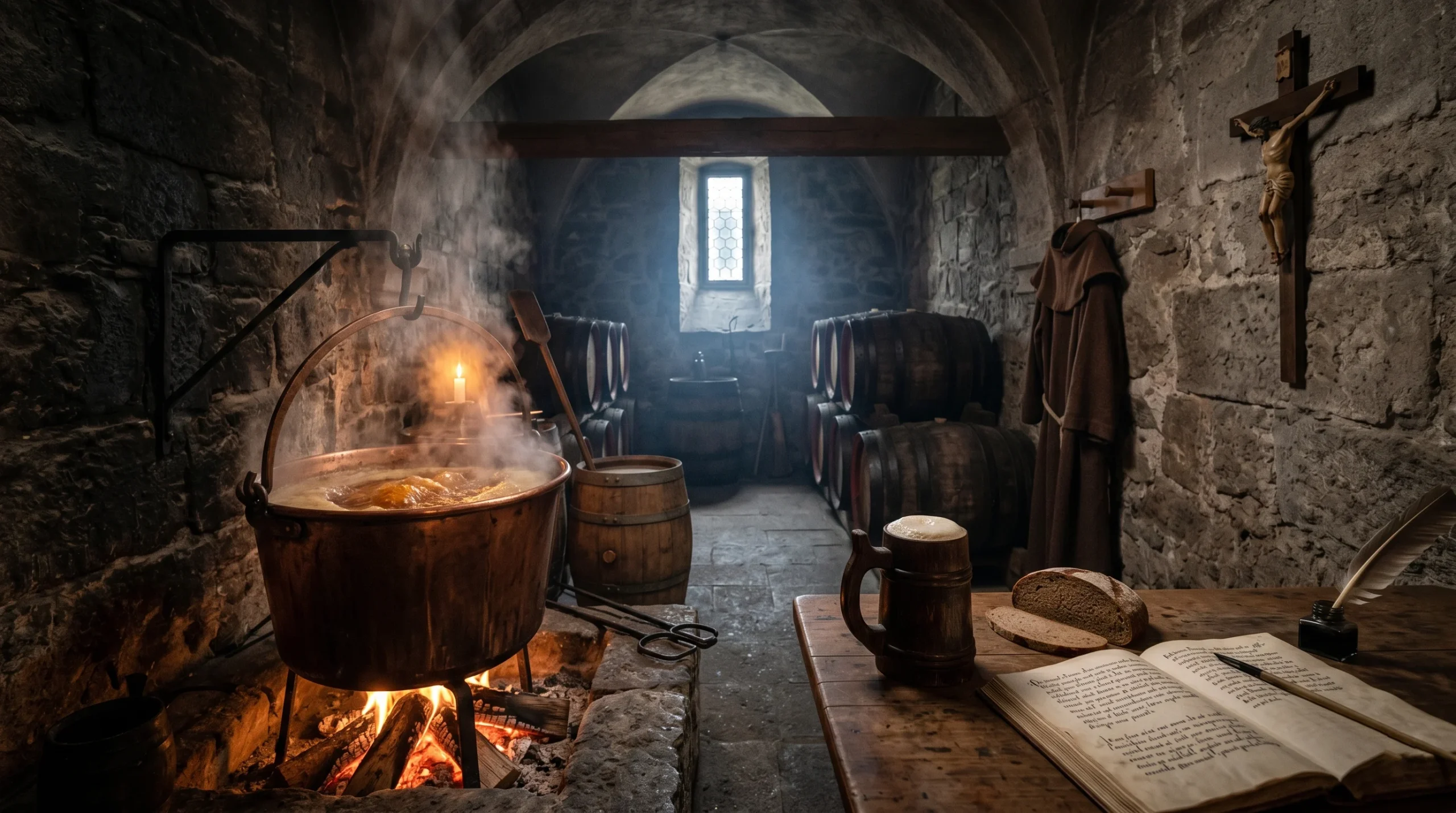
In 1627, a group of monks from the Pauliner order arrived in Munich and founded their own monastery. They followed the Rule of Saint Francis of Paola—a strict rule with 40 days of Lent each year, during which monks were only allowed to drink liquids and not eat solid food.
The problem: ordinary water doesn't provide enough nutrients. Monk Paulaner needs a drink that's nutritious. calories and protein To sustain their bodies for 40 days, they developed a special type of beer. Salvator (“The Savior” in Latin) — with a high ABV and extremely high malt content, it's nutritious enough to replace a grain of rice.
This is the origin of Double Bock. The monk called this beer "liquid bread." In 2011, a journalist named J. Wilson proved this wasn't fable: he followed Lent's 46-day diet, drinking only Doppelbock and water, and eating nothing else—and lived healthily.
To this day, most Doppelbocks still have names ending in "“-ator”"In honor of the original Salvator: Celebrator, Optimator, Triumphator, Consecrator. Over 200 "-ator" Doppelbock trademarks have been registered in Germany.
2. England, 18th Century — Seafaring Beer for the Empire
The British Empire of the 18th and 19th centuries needed beer. The British army in India needed beer. The colonies in the Caribbean needed beer. Merchants in Australia, Hong Kong, and Cape Town needed beer. But beer often didn't survive the 4-6 month voyages across the tropics.
British brewers develop two strong beer styles specifically for export:
IPA (Indian Pale Ale) — This beer has more hops and a higher ABV than regular beer, and is intended for India. Details are provided in the article. Bitter Beer.
Russian Imperial Stout — A very high ABV stout, fit for the Russian court of Catherine the Great. The 18th-century Russian empress was particularly fond of English stout, but the beer often spoiled during the journey from London to St. Petersburg over the Baltic winter. Brewer Thrale in London developed a special stout — 9-12 ABV, high hops, enough to withstand temperatures as low as -30°C in the Baltic. This is the origin of the name “Russian Imperial”"—Imperial stout beer for the Russian court.".
By the 1990s, American craft brewers had revived the style—and transformed it into one of the most popular craft beer styles today. (Details have been discussed in the article.) Stout.
3. Scotland — Beer for the Harsh Climate
Scotland has a cold, humid, windy climate. Scottish brewers have developed their own strong beer tradition. Wee Heavy (also known as Scotch Ale) — a robust, high-ABV malt-driven beer with low hop content (because hops are difficult to grow in Scotland), full-bodied enough to keep you warm on Highland nights.
Wee Heavy differs from British strong beer in character. The British focus on hops and ABV. Scotland focuses on... malt — caramel, toffee, hint of smoky (from the kiln-drying technique of malt on peat). A Wee Heavy classic can be described as “drinking a glass of alcoholic toffee” — not a beer to drink quickly, but a beer to sit and contemplate.
4. Bavaria, 19th Century — Eisbock Born from an Accident
According to legend: during a harsh 19th-century winter in Kulmbach (Bavaria), a barrel of Doppelbock was left outside overnight and partially froze. When the young brewer discovered it the next morning, he feared being scolded and decided... Take the beer out while it's still in liquid form and drink it., leaving the ice. The result was unexpected: the remaining beer — because the ABV was concentrated — had a much stronger, bolder, and more complex character than the original Doppelbock.
This is the origin of Eisbock — “ice bock” — a style of beer brewed like Doppelbock, then partially freeze and remove ice. To concentrate ABV. Because water has a higher freezing point than alcohol, when beer partially freezes, the ice formed is mostly water — the remaining liquid has a higher alcohol concentration.
Traditional Eisbock has an ABV of 9-14%, while some modern versions reach 30%+ (such as Schorschbock 57.5% — one of the strongest beers in the world).
5. Modern America — Imperial Everything
Finally, is American Revolution. By the 1980s and 90s, when craft beer flourished in the US, brewers began adopting the term "“Imperial”"For all styles — not just Stout.".
Anchor Brewing has released Old Foghorn 1975 — First commercial American Barleywine after Prohibition. Sierra Nevada released. Bigfoot Barleywine In 1983, the American Barleywine style was redefined — hopier than English Barleywine, with citrus and pine characteristics from American hops.
By the 1990s and 2000s, American craft brewers had imperialized most styles:
- Imperial Stout (higher strength than the original Russian Imperial Stout)
- Imperial IPA (Double IPA, Triple IPA)
- Imperial Porter
- Imperial Red Ale
- Imperial Pilsner (heretical with German Reinheitsgebot!)
- American Strong Ale — a “catch-all” style for any strong American ale that doesn’t fit into other categories.
General philosophy: If a high ABV makes a character more interesting, why not?
A New Depth: Barrel-Aged
Finally, from 2000 onwards, American craft brewers added a new dimension: Aging whiskey and bourbon in wooden barrels.. Goose Island Bourbon County Brand Stout (BCBS), released in 1992, is a pioneer — an Imperial Stout aged in old Kentucky bourbon casks. The result: a beer with added vanilla, oak, bourbon, and chocolate characteristics — characteristics only a wooden cask can create.
Today, barrel-aged stout is one of the the most expensive and most sought-after category of craft beer globally. Some bottles cost from a few hundred to several thousand dollars. This is the ultimate level of strong beer — the art of pushing the limits of what beer can be.
The German School — Bock Family
The German school is oldest and most controlled In the world of strong beer, while American craft brewers experiment to the extreme, German brewers adhere to tradition. strict rules To preserve traditional quality and character.
The Bock family has many members — the regular Bock, Maibock (Helles Bock), Doppelbock, Eisbock, and Weizenbock (mentioned in the article). Wheat BeerIn this section, we focus on two styles. strongest and most significant — Doppelbock and Eisbock.
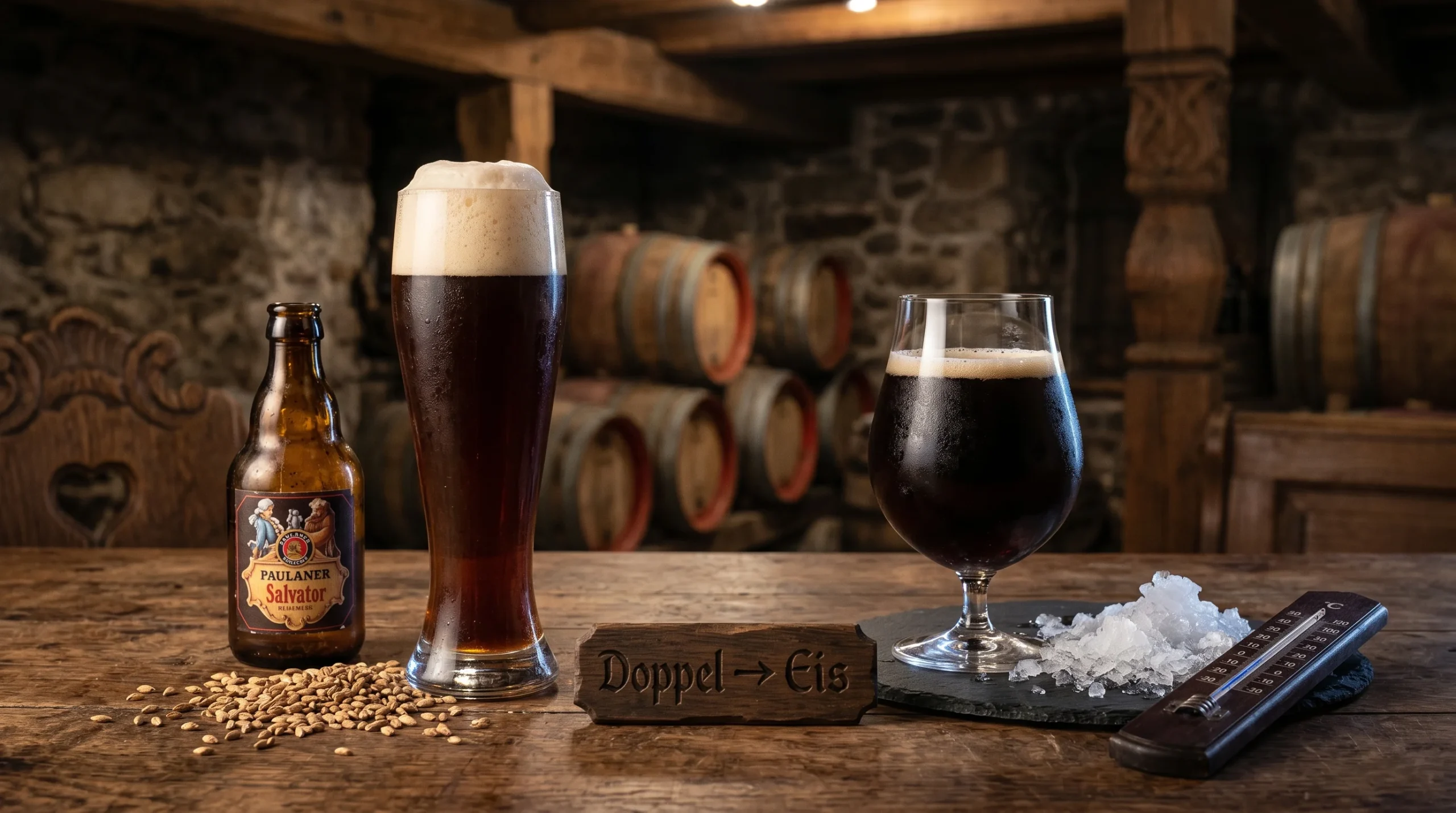
Double Bock — Monk's Loose Bread
Doppelbock is a strong style of beer. Germany's most classic. The name means "Double Bock" — a version that is twice as strong as regular Bock.
Feature:
- ColorFrom deep gold (Helles version) to dark mahogany brown (Dunkel version)
- SmellStrong malt, toasted bread, caramel, toffee, dried fruit (raisin, plum, fig), hint of chocolate in the darker version.
- TasteMalt-forward, moderately sweet, very full-bodied, low hops bitterness, warm but not "burning" alcohol.“
- BodyMedium-full to full, creamy texture
- ABV: 7-10%
The secret to Doppelbock's effectiveness lies in... lager fermentation at low temperature The fermentation process lasts for several weeks (4-8 weeks). Lager yeast works slowly at 8-12°C, consuming all the sugar but not producing esters (fruity flavors from the yeast). The result is beer. clean character rust, allowing the malt and alcohol to shine. This is a philosophical contrast to Belgian strong ales — Belgium celebrates yeast character, Germany rejects it.
A good Doppelbock must have: “"Drinking alcohol" in a sophisticated way — You know the beer has a high ABV, but you don't feel that "burning" alcohol taste on your tongue. Master brewer Doppelbock spent years learning how to achieve this balance.
A classic example:
- Paulaner Salvador — The original beer of the style, still brewed continuously since the 17th century. The benchmark of Doppelbock.
- Celebrator — Doppelbock has a signature bottle featuring a goat wearing a bell. Many beer judges have ranked Doppelbock as the best in the world.
- Spacen Optimator — Doppelbock is internationally popular, with a very distinct malt character.
- Weihenstephaner Korbinian — From the world's oldest brewery (1040). Pure Bavarian Doppelbock.
Ideal pairings: winter stews (Hungarian beef, lamb stew), richly seasoned grilled German sausages, aged cheeses (parmesan, gouda old), chocolate brownie, and raisin/fig for dessert.
Eisbock — Dong Da Beer
Eisbock is a strong style of beer. the most unique in the world —because it's created using physical techniques, not conventional brewing techniques.
Procedure:
- Brewer brews standard Doppelbock (ABV 7-10%)
- Place Doppelbock in a freezing condition (-5°C to -15°C).
- Some of the water in the beer freezes into ice. Alcohol does not freeze (because the freezing point of alcohol is -114°C).
- Take the remaining liquid — beer has a much higher ABV, is thicker, and has a more concentrated character.
- The freezing rate determines the intensity. Typically, removing 10-30 ml of water increases the ABV to 9-14 ml.
Traditional Eisbock has character extremely complex: all the characters of Doppelbock (caramel, toffee, dark fruit, chocolate) but double concentrated. Plus, it adds a new character from the concentrated alcohol — warming, full-bodied, with hints of port wine or whiskey.
This isn't a beer to drink quickly. A 33cl bottle of Eisbock can be enjoyed within 60-90 minutes. The warmer the beer gets (closer to room temperature), the more layers of flavor it reveals.
A classic example:
- Schneider Aventinus Eisbock — Eisbock version of Schneider Aventinus (Weizenbock). ABV 12%. Character: banana + clove + concentrated caramel.
- Kulmbacher Reichelbräu Eisbock — Traditional Eisbock from the Kulmbach region (where the style originated). ABV 9.2%.
- Eggenberg Samichlaus — An Eisbock from Austria, ABV 14%, brewed only on December 6th (St. Nicholas Day) each year. One of the rarest beers in the world.
The Extreme Eisbock Race
During the years 2000-2010, there was a race among breweries to cook. the world's strongest beer using the extreme Eisbock technique — freezing multiple times to remove as much water as possible.
- 2009Schorschbräu (Germany) releases Schorschbock 31% — breaking the world record.
- 2010BrewDog (Scotland) responds with Tactical Nuclear Penguin 32%
- 2010Schorschbräu released Schorschbock 40%, then 43%
- 2020Schorschbräu + BrewDog collaboration release Located in Numbers — 57.5% ABV, using traditional ice distillation technique
This is extreme territory — beer is "stronger" than wine (12-14%), almost as strong as vodka (40%). The philosophical question: At what point does beer cease to be beer and become a spirit? There's no definitive answer, but much of the beer community considers 20%+ to be "novelty"—beer made to impress, not for everyday drinking.
Eisbock Traditional 9-14% remains important and respected categories. This is the beer of Bavarian winter nights, of evenings spent by the fireplace, of special moments that demand richness and complexity.
The English School — Barleywine and Wee Heavy
If the German school is warm elegance (controlled luxury), the Anglo-Scottish school is traditional strength. Strong English-Scottish beers don't try to be subtle — they're bold, robust, high-intensity, with a fierce malt character. These are the beers of cold winter nights in the Highlands, of hearty meat and hard cheese dinners.
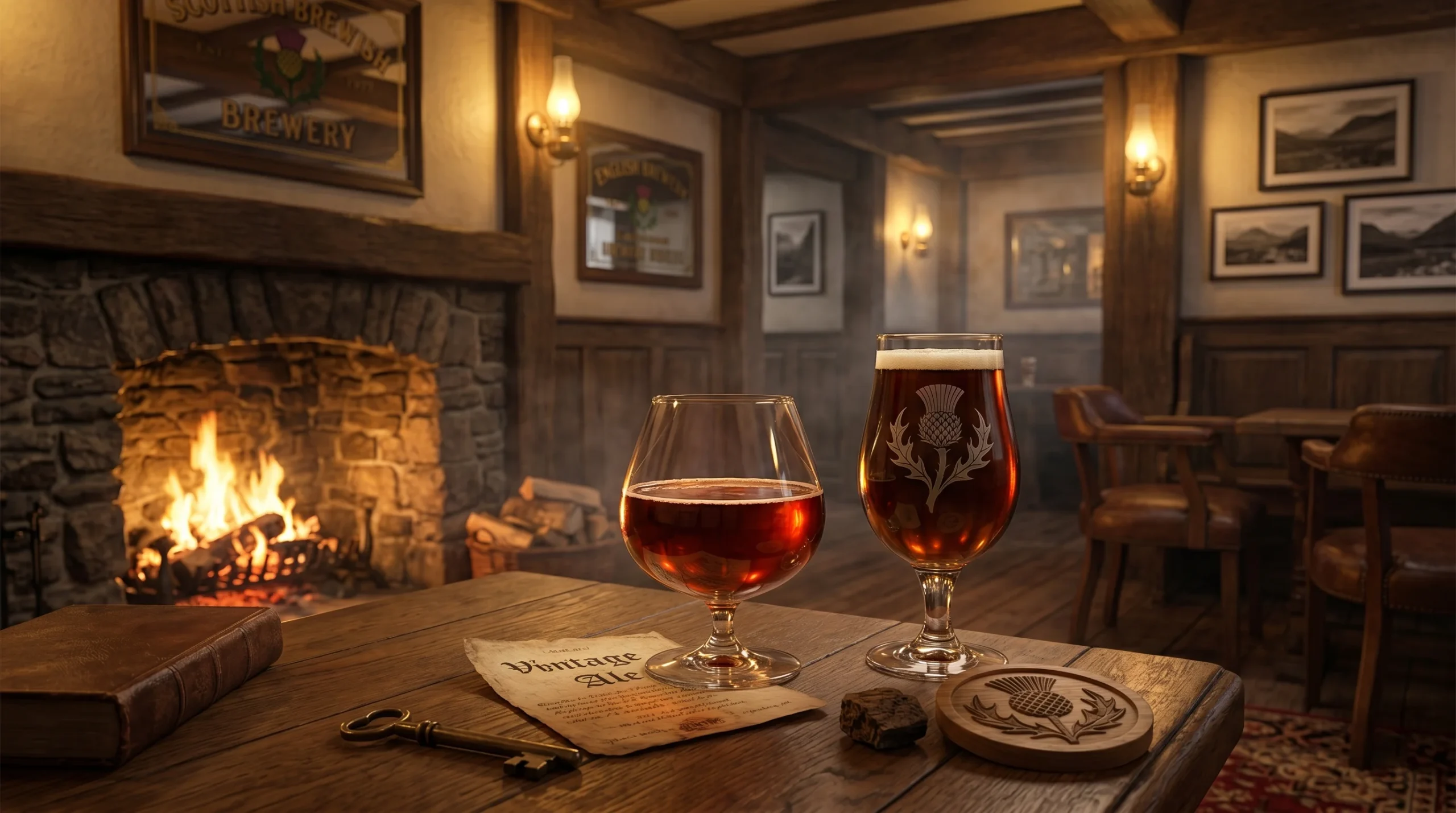
English Barleywine — Wine and Beer
The name "Barleywine" accurately reflects the style: a beer with the intensity and complexity of wine. It's not real wine — it's still beer (brewed from malt, hops, yeast, and water), but its ABV and character are closer to Port wine than regular beer.
Key features of classic English Barleywine:
- Coloramber brown to dark mahogany brown
- Smell: Extra strong malt (caramel, toffee, bread crust), dried fruit (raisin, fig, plum), hint of vanilla, alcohol warming
- Taste: Clearly sweet malt, extremely full body, moderate hops (English noble hops like East Kent Goldings, Fuggles), warm alcoholic finish.
- Body: full to very full, smooth and rich
- ABV: 8-12%
English Barleywine has a tradition. aging It's unique. Unlike most beers, English Barleywine is designed to be drunk after 1-5 years (or longer). As it ages in the bottle, the malt character softens, the alcohol integrates better, and new, complex flavors develop—almost like aging wine.
A classic example:
- Fuller's Vintage Ale (UK) — A new edition is released each year with the production year printed on the bottle. Aging well for 10-20 years.
- Thomas Hardy's Ale (UK) — One of the most legendary Barleywines. Released continuously since 1968, it can age for decades.
- JW Lees Harvest Ale (UK) — Classic vintage Barleywine, released annually since 1986.
American Barleywine — American Version
By the 1970s and 80s, American craft brewers approached Barleywine in their own way. Unlike English Barleywine, which balances malt-hops, American Barleywine Pushing hops to a higher level — character citrus, pine, resin from American hops (Cascade, Centennial, Chinook, Citra).
The core difference:
| Characteristic | English Barleywine | American Barleywine |
|---|---|---|
| Hops character | Earthy, floral, just right. | Citrus, pine, intense |
| Bitterness | Medium (40-60 IBU) | High (60-100 IBU) |
| Price | Malt-forward | Hops-balanced or hops-forward |
| Aging | Good aging for 5-20 years | Best consumed fresh (1-3 years old) |
A classic example:
- Sierra Nevada Bigfoot (1983) — This is Barleywine that redefined American style. Released annually, it has been aged by many collectors.
- Anchor Old Foghorn (1975) — The first commercially successful American barleywine after Prohibition. Pioneer of style.
- Stone Old Guardian — American Barleywine is hopier, with an intense citrus flavor.
Wee Heavy (Scotch Ale) — Highlands' Strong Beer
“"Wee Heavy" in Scottish means "small but heavy" — a small bottle (usually 33cl) containing a high ABV beer. The original name was Scotch Ale, but the name Wee Heavy has become more common in modern craft beer.
Feature:
- Colorreddish brown to dark brown
- SmellExtra strong malt (caramel, toffee, butterscotch), hint of smoky notes from traditional Scottish peat-malt, dried fruit.
- TasteVery sweet malt, extremely full-bodied, low hops bitterness, "rich" character like a meal.
- Body: full to very full, smooth and creamy
- ABV: 6.5-10%
Wee Heavy differs from Barleywine in Focus on pure malt. While Barleywine has a balanced malt-hops, Wee Heavy is almost the same. no hops. This is why Scotland has this tradition — hops are difficult to grow in Scotland's cold climate, and Scottish brewers rely entirely on malt.
Some Wee Heavy whiskies have a smoky hint from malt kiln-dried on peat—a classic Highlands technique. This character is similar to single malt Scotch whisky, evoking images of the cool, misty Highlands.
A classic example:
- Belhaven Wee Heavy — Traditional Scotch Ale, brewed continuously since 1719. This is the benchmark.
- Founders Dirty Bastard (USA) — Wee Heavy is American-style, with a distinctly smoky character.
- Orkney Skull Splitter — Wee Heavy from the Orkney Islands in northern Scotland. ABV 8.5%.
Old Ale — Traditional English Aged Beer
Finally, a niche but significant style: Old Ale. This is a traditional style of strong English beer. Aging in wooden barrels for months to years. before bottling — similar to aging wine.
Old Ale has a different character than Barleywine: oxidized character (sherry, port, tawny), hint vinous (wine-like), sometimes with Brett (Brettanomyces) as a funky character. This is the most complex style of British strong beer — and also the hardest to find.
For example: Theakston's Old Peculier (Older brother), Greene King Old Speckled Hen, North Coast Old Stock Ale (America).
Anglo-Scotland Philosophy
The general philosophy of the Anglo-Scottish school: “"Malt is king. Hops are secondary. Alcohol is the natural result."”
This is in contrast to the American ("hops are king") and German ("control is king") philosophies. Anglo-Scotland celebrates this. traditional strength — Beer brewed for manual laborers, for cold climates, for hearty meals. No fuss, no experimentation — just malt, malt, and more malt.
Modern American School + Belgian Reference
American craft beer has changing the definition of strong beer over the past 40 years. Before that, strong beer was a niche, traditional style. After the American craft revolution, strong beer became popular. The category is extremely developed and innovative. — with hundreds of new styles, new techniques, and a unique "extreme brewing" culture.
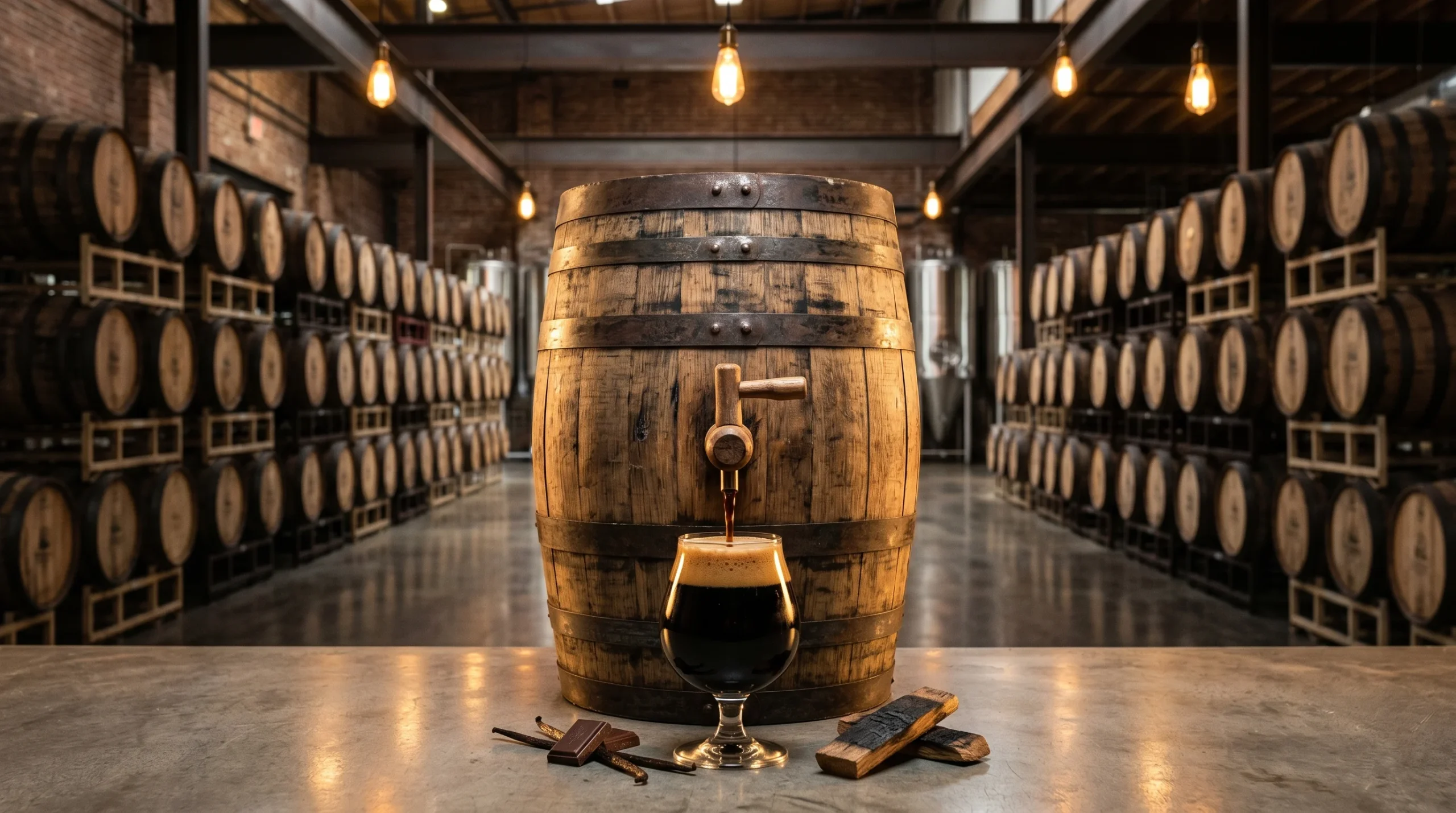
Imperial Everything — A New Philosophy
By the 1990s, American craft brewers applied the term "Imperial" to every style. The philosophy: If style X tastes good at regular ABV, try a higher ABV version..
Some of the main Imperial styles include:
Russian Imperial Stout — Details have been given in the article. Stout. The American version of RIS pushes the ABV up to 10-15%, with extremely complex dark malt, chocolate, coffee, and dark fruit notes.
American Imperial Stout — The American variant of Imperial Stout has a generally hopier character and a similarly high ABV.
Imperial IPA (Double IPA) — Details have been given in the article. Bitter Beer. A powerful version of the IPA, ABV 7.5-10 %, with robust hops.
Imperial Porter — A stronger version of English Porter, with a richer chocolate and coffee character.
Imperial Red Ale — A robust version of American Red/Amber Ale, malt-forward with American hops.
American Strong Ale — Catch-All Strong
This is a style that is "not Imperial Stout, not Barleywine, but a strong American ale.". American Strong Ale This is a catch-all category for high-ABV American ales that don't fit into traditional categories.
Feature:
- ABV 6.3-9.5%
- American hops (Cascade, Centennial, Citra) are usually clear.
- Character can range from malt-forward to hops-forward.
- Body medium-full
- Color: amber yellow to brown
For example: Stone Arrogant Bastard Ale, Dogfish Head Burton Baton, Founders Backwoods Bastard.
Barrel-Aged — The Pinnacle of Modern Strong Beer
Finally, the most sought-after category of modern craft beer: Barrel-Aged Strong Ales. This is a strong beer (usually Imperial Stout, Barleywine, or Old Ale) aged in old whiskey or bourbon barrels for 6 months to 3 years.
Pioneer: Goose Island Bourbon County Brand Stout (BCBS), First released in 1992 in Chicago, Imperial Stout (ABV 14-15%) is aged in old Kentucky bourbon casks. The result: a beer with added vanilla, oak, bourbon, coconut, and rich chocolate characteristics—characters that could not be achieved otherwise.
By the 2010s, barrel-aged had become a trend. private category of craft beer. Several breweries specializing in barrel-aged beer (Side Project in Missouri, The Bruery in California, Founders in Michigan, Cycle Brewing in Florida) have built cult followings — fans line up from 4-5 a.m. to buy “release day” versions of rare editions.
Variations:
- Bourbon barrel-aged: vanilla, oak, bourbon character (most common)
- Barrel-aged whiskeySimilar to bourbon, but with a peat smoky character (if using Scotch whisky in a barrel).
- Rum barrel-agedSweet rum, hint of tropical fruit
- Barrel-aged wine: character port, sherry, tannin
- Barrel-aged tequilaCharacters: agave, citrus
- Barrel-aged maple syrupSweet Maple Character
Some barrel-aged stout fetch surprisingly high prices. Goose Island BCBS limited variants can cost 1 TP 4T 30-1 TP 4T 80 for a 33cl bottle. Some collector bottles on the secondary market can reach 1 TP 4T 500-1 TP 4T 2000.
Belgian School — Reference Belgian Beer
The Belgian school also has a rich tradition of strong beer, but this has been discussed in detail in the article. Belgian beer. Quick summary:
Belgian Quadrupel (Quad) — The strongest style of Belgian Trappist. ABV 10-14. 2%, character of dried fruit + caramel + port wine. Westvleteren 12, Rochefort 10, Chimay Bleue.
Belgian Pale Strong Ale (Belgian Golden Strong) — The strongest Belgian golden beer style. Duvel is the benchmark — bright golden, light body, high ABV (8-10 %), thick, characteristic head.
Belgian Dark Strong Ale — Variations of Quadrupel with unique characters for each brewery.
Belgian Tripel — While not "very strong," it's still a strong beer (7.5-9.5 oz). Westmalle Tripel is the benchmark.
Belgian philosophy differs from that of Germany, England, and the United States: Celebrating yeast character. Belgium believes that Belgian yeast—with its complex fruit esters and spices—is key to creating the "Belgian strong" character. The body may be lighter than German/English yeast, but the character is more complex.
Strong Beer in Vietnam — An Approach
Strong beer in Vietnam has a relatively short history — most only became popular from 2015 onwards with the development of craft beer and specialized bottle shops. But thanks to connections with major markets (Singapore, Hong Kong, Japan), many styles of strong beer have arrived in Vietnam in a surprising way.
Top Strongest Beers Worth Trying in Vietnam
Entry-level (ABV 7-9%, easily accessible):
1. Westmalle Tripel (Belgian Tripel, (Belgium) — A standard Tripel. ABV 9.5%. Amber gold, complex fruit aromas, medium body but full of character. A good entry-point for strong beers.
2. Duvel (Belgian Pale Strong Ale, (Belgium) — ABV 8.5%. “The Golden Devil” — looks light but is strong. Must be drunk slowly.
3. Chimay Red (Première) (Belgian Dubbel, (Belgium) — ABV 7%. Trappist entry-level beer, with dried fruit and caramel characteristics.
4. Paulaner Salvador (Double Bock, (Germany) — ABV 7.9%. Original 17th-century Doppelbock. Found in import supermarkets and German restaurants in Ho Chi Minh City and Hanoi.
Intermediate level (ABV 9-12%, requires a specialized bottle shop):
5. Chimay Bleue (Grande Reserve) (Quadruple, (Belgium) — ABV 9%. Classic Quadrupel Trappist. Rich and complex.
6. Rochefort 10 (Quadruple, (Belgium) — ABV 11.3%. One of the best beers in the world. Character port wine + chocolate + concentrated dark fruit. Currently difficult to find after Beer & Barrel closed, but some craft bottle shops still import it.
7. Ayinger Celebrator (Double Bock, (Germany) — ABV 6.7%. Doppelbock is ranked among the world's highest beer by many beer judges. The bottle features a distinctive goat image.
8. Sierra Nevada Bigfoot (American Barleywine, (USA) — ABV 9.6%. Pioneer American barleywine, strong hops combined with bold malt.
High-end (ABV 11%+, rare and expensive):
9. Schneider Aventinus Eisbock (Eisbock, (Germany) — ABV 12%. Eisbock concentrated from Weizenbock. Complex to the point of being overwhelming.
10. Westvleteren 12 (Quadruple, (Belgium) — ABV 10.2%. The world's most difficult beer to buy. No official distribution channel in Vietnam. Details have been given in the article. Belgian beer and the section on Beer & Barrel.
Bonus: Barrel-Aged Stouts — Goose Island Bourbon County Brand Stout, Founders KBS, Cycle Brewing Hazelnut Stout. Extremely rare in Vietnam, mostly imported through "personal imports" from Vietnamese people who buy bottles in the US and bring them back. Price can range from 1-3 million VND per 33cl bottle.
Pair Strong Beer with Vietnamese Dishes
Strong beers aren't the ideal "meal beer"—most are too complex and have too high an ABV to pair with a long meal. However, there are some combinations worth trying:
- Beef stew + Doppelbock (Paulaner Salvator) — Doppelbock's caramel malt resonates with the character of the richly spiced braised beef.
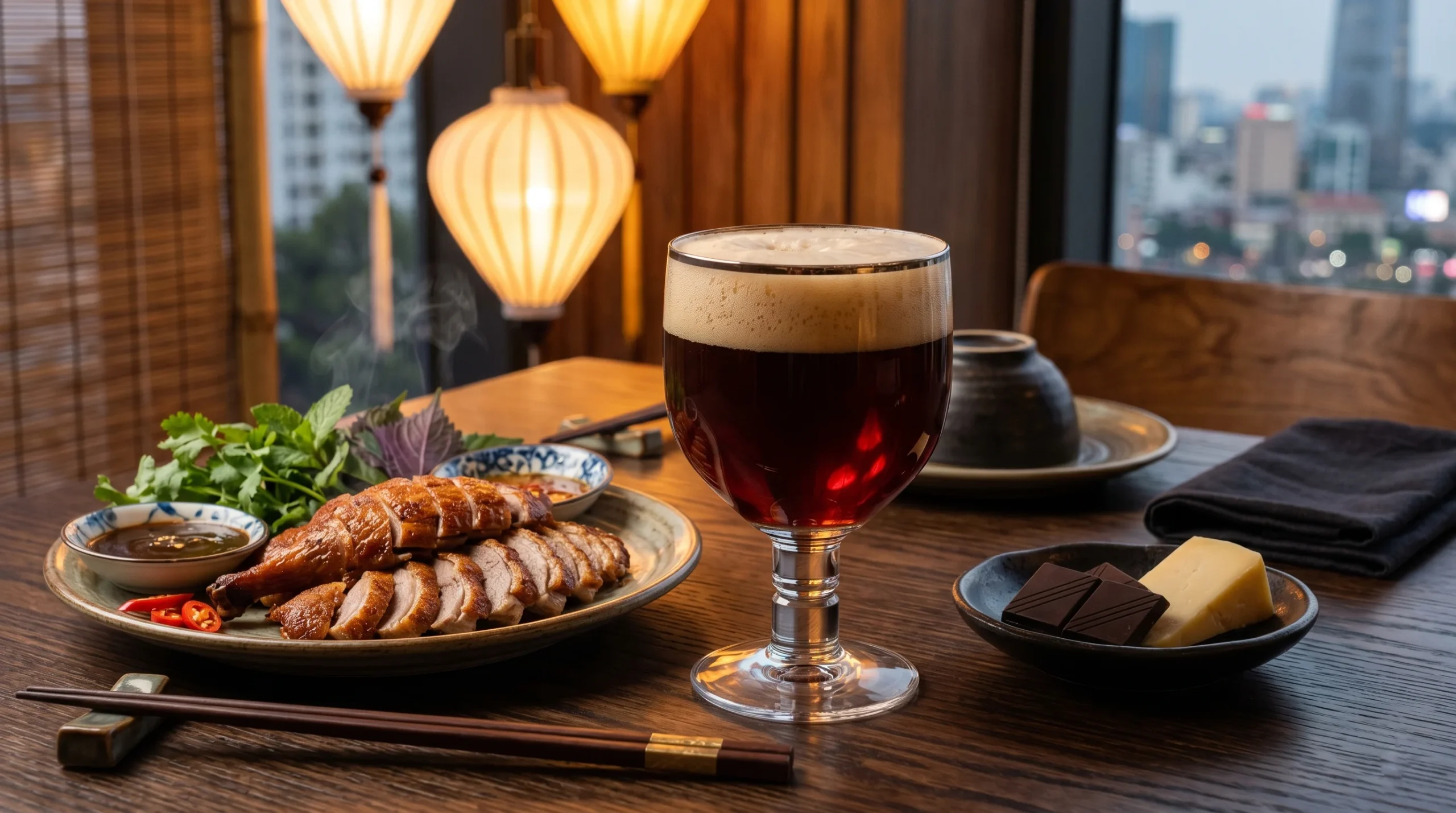
- Peking Roast Duck + Belgian Quadrupel (Chimay Bleue) — Quad match dried fruit and chocolate with fatty duck and hoisin sauce
- Red bean dessert + Imperial Stout Character chocolate + strong coffee match with sweet red bean paste
- BBQ Grilled Meat + American Barley Wine (Sierra Nevada Bigfoot) — Strong hops cut through fat, malt match with BBQ sauce
- Blue cheese + Belgian Quadrupel/Rochefort 10 — Classic combo for dessert
- Dark Chocolate 70%+ + Barrel-Aged Stout — The ultimate dessert pairing
Important note: strong beer should be served at room temperature (15-18°C), not as cold as regular beer. Too cold "closes" the character — the warmer the beer gets, the more layers of flavor "open up". This is similar to red wine — never drink it cold.
The Strong Beer Discovery Journey — 6 Months
January-February: Belgian Entry — Westmalle Tripel and Chimay Red. Get acquainted with Belgian yeast character and complex malt.
March: Germany Doppelbock — Paulaner Salvator and Ayinger Celebrator. Experiencing the malt-forward philosophy of Germany.
April: Quadrupel — Chimay Bleue and Rochefort 10 (if available). The pinnacle of Belgian Trappist winemaking.
May: Barleywine — Sierra Nevada Bigfoot (American) and Fuller's Vintage Ale (English), if available. Compare the two styles.
June: Extreme — A Schneider Aventinus Eisbock and a Barrel-Aged Stout (if you get the chance). The pinnacle of strong beer.
A Philosophical Question — When Is Strong Too Strong?
After drinking and enjoying many different styles of strong beer, you might ask yourself this question: At what point does a high ABV become ostentatious rather than artistic?
There is a truth to this: Not all beers with high ABV are good.. Some strong beers are brewed solely to "show off their ABV"—uncomplicated character, poor balance, just a burning sensation on the tongue. These are bad strong beers.
A good strong beer has other advantages: High ABV is a natural result of the philosophy, not the goal.. A good Doppelbock is strong because it needs enough "liquid bread" for the monks. A Russian Imperial Stout is strong because it needs to withstand the Baltic winter. An Eisbock is strong because of the technique of naturally freezing and concentrating. In these cases, the ABV is high. serving a purpose — not showing off.
When evaluating a strong beer, ask: “If this beer has an ABV of 5%, is it still good?” If the answer is yes — the character is still complex, the balance is still good — it’s a true strong beer. If the answer is no — only a high ABV makes it “good” — it’s a fake strong beer.
This is the test that every beer connoisseur applies. This is also how to distinguish between artful strong beers and ostentatious strong beers.
In summary — “Strength is not the goal”
After nearly 6,000 words about strong beer, there's one core message that deserves to be celebrated: Strong beer isn't about ABV. Strong beer is about philosophy.
In the past five sections, we have explored four different schools of thought with four opposing philosophies:
Four Philosophies, One Story
German School — “"Strong beer must be regulated."”
The 17th-century monk Paulaner cooked Doppelbock with a specific purpose: to sustain the body during a 40-day fast. The 19th-century Bavarian brewer cooked Eisbock using sophisticated freezing techniques. Both followed the same principle: High ABV is a result of philosophy, not an end in itself.. Strong German beer is always tightly controlled, with a malt-forward character and hidden alcohol – never "showy".
The Anglo-Scotland School — “"Strong beer must be robust."”
18th-century English brewers made Barleywine to ensure the beer survived the six-month journey to India. 19th-century Scottish brewers made Wee Heavy to withstand the Highland cold. Both followed the same philosophy: traditional strength. Strong malt, bold character, no fancy experimentation. Strong English-Scotland beer is the beer of manual laborers, of harsh climates, of hearty meat meals.
Belgian School — “"Strong beer needs character yeast."”
Belgian Trappist monasteries have developed Belgian Quadrupel (Quad) and Belgian Pale Strong Ale (Duvel) over the centuries. Philosophy: Celebrating Belgian Yeast — A yeast strain that produces complex fruit esters and spices. The body may be lighter than German/British, but the character is more complex. This is the philosophy that UNESCO recognized in 2016 as an Intangible Cultural Heritage of Humanity.
Modern American School — “"Strong beer must be pushed to its limit."”
21st-century American craft brewers have experimented with every style — Imperial everything, Barrel-Aged everything, ABV 20%+ everything. Philosophy: no limits. If style X tastes good at regular ABV, try a higher ABV. If a higher ABV creates interesting character, try even higher. If bourbon casks add character, try cognac casks, rum casks, or tequila casks. Here's the advice: spirit of innovation It redefined modern beer.
A Bigger Lesson
These four philosophies—German control, British might, Belgian character, American pushing the limits—represent: four different approaches to the same goal: creating strong, valuable beer. All four are significant. All four have created masterpieces.
This is a lesson that strong beer can teach us about art and creativity in generalThere is no single "right." There are many paths to the top. Paulaner monks reached the top through strict control. Highland brewers reached the top through robust tradition. Trappist monasteries reached the top through yeast character. American craft brewers reached the top through extreme experimentation. All are right. All are valuable.
When Is Strength an Art?
Answer the question posed in section 6: When does a high ABV become an art form?
When ABV is high serving a greater purpose — preservation, religion, weather, privilege, or innovation philosophy. When the character is complex enough to justify the intensity. When the balance is so good you forget the high ABV. When every sip is a new discovery.
High ABV becomes flaunt When: it's just for show, with no character, no philosophy, and no balance. This is fake strong beer — and a beer connoisseur will recognize it from the first sip.
Final words
Next time you pick up a bottle of ABV 8%+ beer, take a moment to ask:
What is this beer brewed for? To feed monks in Lent? To survive a six-month train journey? To brave the Highland cold? To honor Belgian yeast? To push style to the limit?
The answer will shape how you enjoy it.
Strong beer isn't for getting drunk. Strong beer is for... Enjoy slowly, to Explore the depths, to honoring tradition or innovation. A bottle of Doppelbock can be drunk within 60 minutes. A bottle of Westvleteren 12 can be drunk within 90 minutes. A bottle of Barrel-Aged Stout can be drunk within 2 hours. These are Slow and steady, like a philosophy..
Drink slowly. Savor it. Feel the malt, the alcohol, the complex character. Remember that you are holding a... artwork in a glass —the result of centuries of tradition or years of experimentation. This is not your ordinary drink. This is ABV's artistry is high..