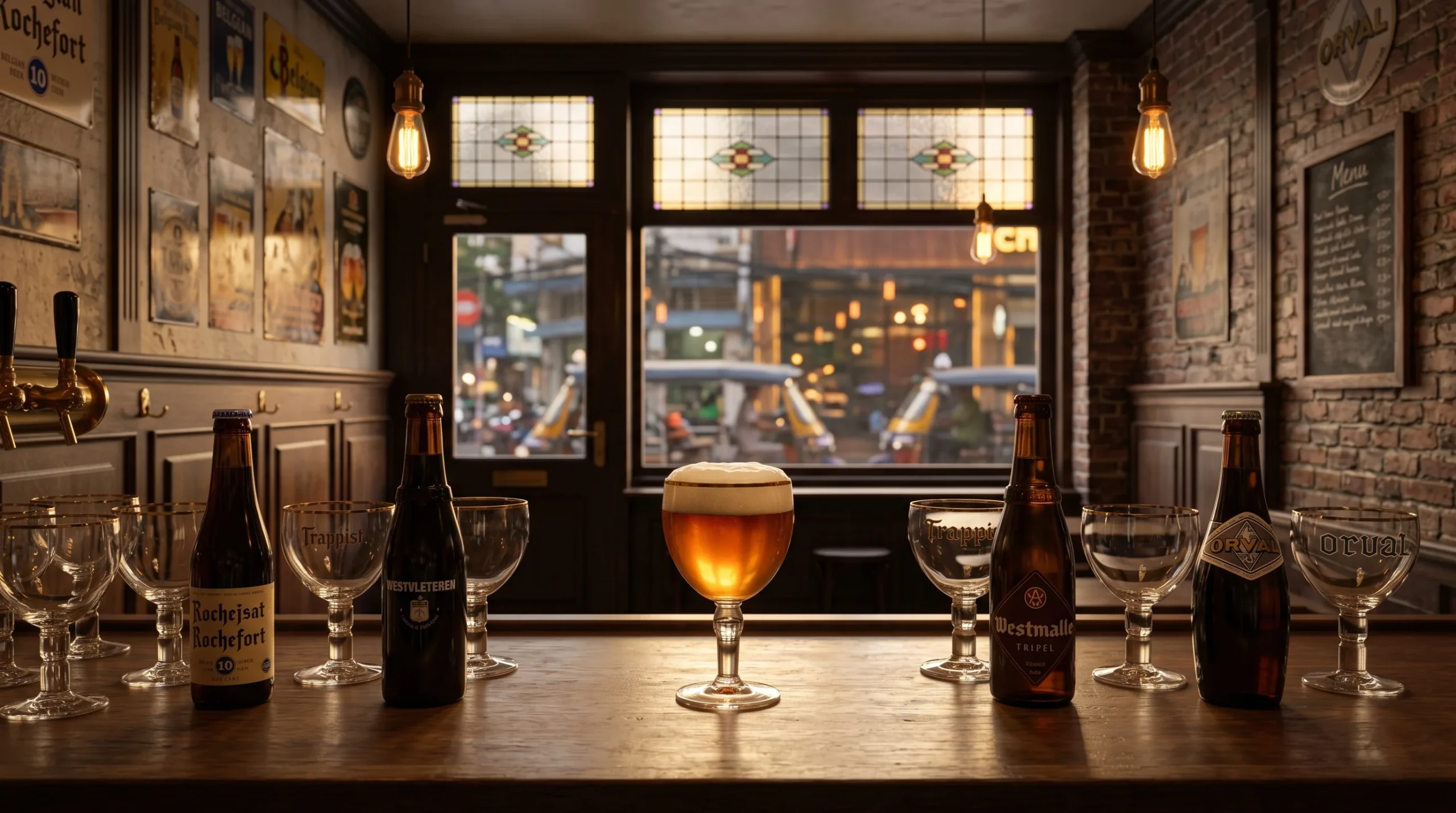
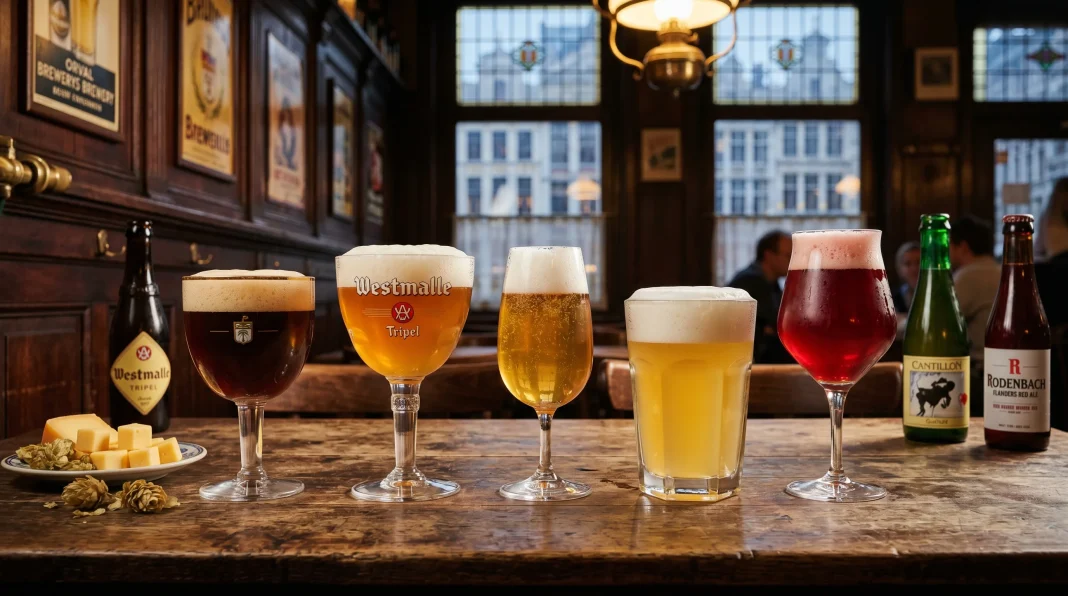
On November 30, 2016, at a conference in Addis Ababa, Ethiopia, a historic decision was made.
The UNESCO Intergovernmental Panel for the Protection of Intangible Cultural Heritage, comprising representatives from 183 countries, has officially recognized it. “"Beer Culture in Belgium"” (Beer Culture in Belgium) is Intangible Cultural Heritage of Humanity.
This is more than just a title. This is a statement from the international community: beer, in Belgium, is not a consumer product. It is a heritage—on par with the art of pita bread making in Iran, the rumba dance in Cuba, and the traditional festivals of Japan and Greece.
A small country in Western Europe, with a population of only 11 million and an area one-third the size of Vietnam, has been recognized worldwide as beer culture capital.
Why Belgium?
This question has many answers, but they all begin with one simple truth: in Belgium, beer is not just a drink — it is part of the national identity.
The average Belgian drinks 74 liters of beer per year — almost a glass a day. The country produces nearly 74 liters of beer per year. 1,500 different types of beer, Belgium has more cafés than any other country in the world. At one time, there were over 200,000 cafés in Belgium — on average, one in five houses. By the mid-20th century, in Belgian schools and universities, low-alcohol beer (called “table beer”, around 1-21 oz ABV) was one of the beverage options served to students — on par with tea and coffee.
Beer in Belgium is present in every aspect of life. In Trappist monasteries, where Cistercian monks have brewed for hundreds of years to sustain their community. In traditional Brown Café pubs, where generations have drunk and conversed. In home kitchens, where beer is used for cooking and as a cheese-washing agent. In weekly beer festivals held throughout the country. And especially, in the Belgian sense of time — some traditional sour beers are aged in oak barrels for up to three years, requiring a level of patience few other countries possess.
When UNESCO made its 2016 decision, they weren't just recognizing the quality of the beer. They were recognizing a way of life — the way a community has preserved and developed its brewing knowledge over more than 1,000 years, making it an integral part of its culture.
This Article
This is a journey through that heritage — and through the specific beer styles that heritage has spawned.
Two parts. The first part tells about culture and history — 1,000 years of Belgian beer, Trappist monasteries, pub culture, brewery families, and why UNESCO decided to recognize it. This is a story of people, of perseverance, and of how a small nation has transformed beer into an art form.
The second part tells about 5 style groups Featuring Belgian specialties — Trappist Ales, Lambic Family, Flanders Sours, Saison & Farmhouse, and Witbier & Belgian Specialty. This is heritage in a tasteable form — each glass a condensed cultural story.
And the final part tells about Vietnamese people — How can we approach this heritage, and more importantly, what can we learn from how Belgium has transformed the drink into a culture?.
For those who have drunk Westmalle, Chimay, Orval, or Cantillon and want to understand more. For those who have never tried Belgian beer and are wondering why it is so highly regarded. And for anyone curious: “Can a country be recognized as a UNESCO World Heritage site because of… beer?”
The answer will become clearer after the next 9,000 words.
1,000 Years of History — From the Middle Ages to Modern Times
To understand why Belgian beer deserves UNESCO recognition, one must begin with a long—very long—period. The history of beer in Belgium doesn't begin in the 19th century with the Industrial Revolution, nor in the 20th century with the craft beer movement. It begins in... Middle Ages — before Belgium existed, when the region was known as "Lower Lothringen" within the Carolingian Empire.
A thousand years of beer. A thousand years of humanity living alongside microorganisms, wooden barrels, and recipes passed down from generation to generation. That's a depth no other nation possesses.
The Middle Ages: When Beer Replaced Water
In the 10th-12th centuries, clean water was a luxury. River and well water was often contaminated with bacteria—drinking it could be fatal. In that context, beer became the safest drink for the common people: the boiling process killed bacteria, and the mild alcohol in beer inhibited the growth of harmful microorganisms.
Everyone drinks beer—women, children, the elderly. Low-alcohol "table beer" (1-21% ABV) is drunk instead of water during daily meals. Children go to school carrying beer in bottles instead of water. This isn't getting drunk—this is survival.
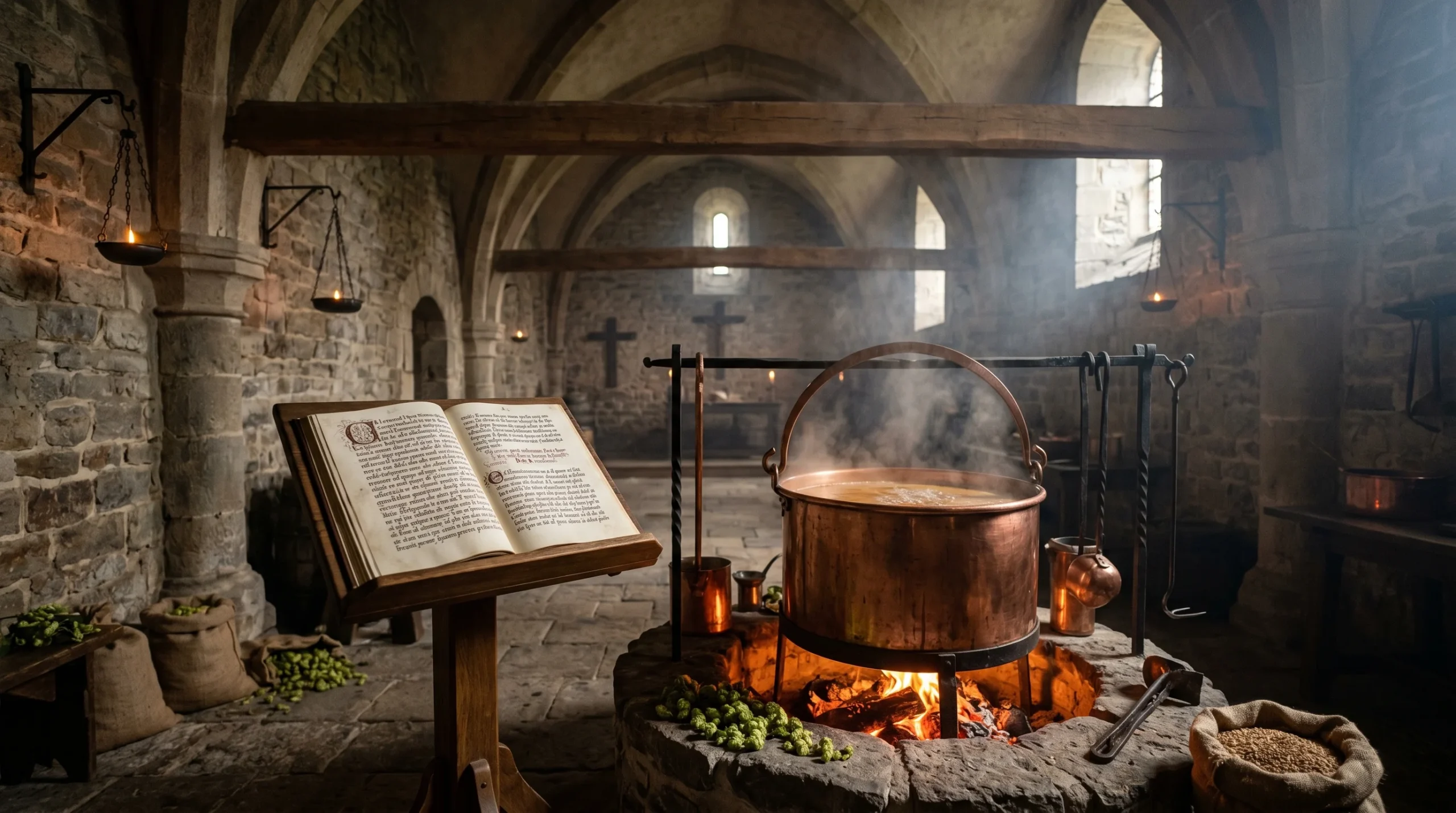
In monasteries, beer became an integral part of monastic life. Cistercian, Benedictine, and later Trappist monks developed brewing techniques to an art form—not just for drinking, but also to sell to local people, sustaining the monastic community.
13th-15th Centuries: The Hops Revolution
Before the 13th century, European beer was brewed with Grui — a mixture of herbs and spices (wormwood, rosemary, thyme). Gruit has a slightly bitter taste and limited preservative properties.
Around the 13th century, the technique of brewing beer with hops was introduced from Germany to the Flanders region. Hops not only add bitterness—they also have natural antiseptic properties, helping the beer to last much longer. The transition from gruit to hops took almost 200 years, but by the 15th century, hops had completely replaced gruit in Belgian beer.
This was also the time when regional beer styles began to take shape. The Pajottenland region (near Brussels) developed a tradition of natural fermentation with wild yeast — a style that later became Lambic. West Flanders developed barrel-aged beers with complex sour characteristics — a style that later became Flanders Red. Wallonia (in the South) developed a light, low-ABV farm beer for summer field workers — a style that later became Saison.
19th Century: The Industrial Revolution and Pilsner's Pressure
In 1842, in Plzeň (Bohemia, now the Czech Republic), brewer Josef Groll created a completely new type of beer — Pilsner. Clear, light, clean, and refreshing. Within a few decades, Pilsner had conquered all of Europe.
Belgian beer—mostly rich, cloudy, complex ales—suddenly seemed "old-fashioned" compared to modern Pilsner. Hundreds of Belgian breweries closed down. The number of styles plummeted. Some classic styles almost disappeared entirely.
But there's a surprise: many Belgian breweries not abandoning tradition. They continue to cook Lambic, Trappist, and Saison the old way—not for economic reasons (obviously, Pilsner sells better), but for cultural reasons. It's their knowledge. It's their heritage.
This "never give up" decision—repeated in hundreds of small breweries across Belgium throughout the 19th century—saved Belgian beer heritage from extinction. When UNESCO recognized it in 2016, they were essentially recognizing that choice. The choice of 19th-century Belgian brewers who refused to abandon tradition in pursuit of trends.
Two World Wars: Great Losses
The 20th century began with two disasters for Belgian beer. World War I (1914-1918) devastated northwestern Belgium—the region with the most breweries. The German army confiscated most of the copper equipment (copper needed for ammunition). More than 1,500 Belgian breweries closed permanently during the four years of war.
During the reconstruction, many classic styles were lost. Some local yeast varieties—which had been cultivated for generations—disappeared when the brewery closed. Some family recipes died out with the old brewers who passed away in the war.
World War II (1939-1945) repeated the tragedy. A few breweries were fortunate enough to survive both wars — Cantillon (Brussels, established 1900), Rodenbach (Roeselare, established 1821), Chimay (established 1862) — becoming rare “heritage islands”.
The 1960s-80s: Recovery
After World War II, the Belgian beer industry had to rebuild from almost nothing. In the 1950s and 60s, most Belgian breweries only brewed Pilsner and a few basic Belgian ales. Lambic beer was practically dead — only a few breweries produced it, and most had to be diluted with syrup to make it more marketable.
The recovery began with an Englishman, not a Belgian. Michael Jackson — not a singer, but a legendary beer writer — wrote the book “World Guide to Beer” in 1977, dedicating a large section to Belgian beer. For the first time, the world learned that there was a small country in Western Europe that still brewed Lambic, Trappist, and Flanders Red using traditional methods.
Michael Jackson did something the Belgians couldn't do on their own—he turned Belgian beer into a "discovery" for the world. Foreign tourists began coming to Brussels, Bruges, and Roeselare to try Lambic, Westvleteren, and Rodenbach. Belgian beer bottle shops opened in New York, Tokyo, and London.
International demand has provided impetus for Belgian breweries. proud of our heritage. Lambic is revived. Trappist is elevated. Classic styles are rediscovered.
21st Century: Craft Beer and Globalization
When the American craft beer movement boomed in the 1990s and 2000s, brewers around the world began to look to Belgium as a potential alternative. source of inspiration. Every "self-respecting" craft brewery must brew a Belgian Tripel, a Belgian IPA, an experimental Saison. Belgian beer has become a "school of thought"—not just in one country.
By the 2010s, Belgian beer was more than just heritage — it was the benchmark. When UNESCO decided to recognize it in 2016, they were officially formalizing a fact that the global beer community had known for a long time: Belgium is the birthplace of most of the interesting things in modern craft beer..
Trappist Dubbel and Tripel are the roots of thousands of Belgian-style ales around the world. Lambic is the ancestor of the entire modern sour beer movement — from the revived Berliner Weisse to the vibrant, colorful Sour Smoothies on Instagram (see article). Sour Beer: From Lambic to Sour IPASaison has become one of the most experimental styles of modern craft beer.
A thousand years. That's the amount of time a small nation has spent transforming water, malt, hops, and microorganisms into an art form. That's the depth of heritage that UNESCO has recognized.
Trappist Monastery — Where Prayer Meets Brewing
Of all the things that make up Belgian beer heritage, nothing is more special than the Trappist tradition.
This is the brewing style that No other country can copy it. — Not because the technique is difficult, but because of its essential requirement: a community of Trappist monks living and working in the monastery is needed. You can buy the equipment, learn the recipe, copy the style — but you can't become a Trappist monk overnight.
Each bottle of Westvleteren 12 you drink is the product of a community of Cistercian monks who have lived together in the Sint-Sixtus monastery since 1831 — nearly 200 years. Each bottle of Orval carries within it the tradition of a monastery built in 1132 — nearly 900 years. This is not beer. This is the crystallization of a lifestyle.
Who is a Trappist?
Trappist is a branch of the Cistercian order—a branch of the Roman Catholic Church. In 1664, Abbot Armand Jean le Bouthillier de Rancé of the La Trappe monastery (France) felt that the Cistercian order had become too liberal, no longer maintaining its original austerity. He introduced "Strict Observance"—a stricter rule regarding silence, labor, fasting, and prayer. Monks who followed Strict Observance were called "Trappists"—named after the La Trappe monastery.
Trappist follows The Rule of Saint Benedict — A code of conduct dating back to the 6th century. One of the core tenets of this code is “"Ora et Labora"” — Prayer and Work. Trappist monks dedicate most of their day to two things: prayer and manual labor. That labor might be farming, baking, cheesemaking, printing books — and for many Belgian monasteries, that is brewing.
Labor is not for making money. Labor is part of monastic life—it is how monks become self-sufficient, independent of others, and at the same time, how they maintain spiritual discipline through manual labor. Beer, for Trappist monks, is not a commercial product. It is side effects of a lifestyle.
“Authentic Trappist Product” — A Logo with Meaning
By the 1980s and 90s, the commercial beer industry had begun exploiting the "Trappist" name for marketing purposes. Hundreds of commercial breweries brewed "Trappist-style" beer and advertised themselves as "Trappist" despite having no connection to any monastery.
In 1997, the Trappist monasteries responded — they founded International Trappist Association (ITA) and register the “Authentic Trappist Product” (ATP) logo. Only beers that meet these requirements will be eligible. 3 strict criteria This logo has just been affixed:
1. Beer must be brewed inside the monastery walls. — not near the monastery, not connected to the monastery, but rather in The monastery. The brewery must be located within the monastery grounds.
2. Beer must be brewed by monks or under the direct supervision of monks. — Outsourced staff may participate in daily operations, but the monk must be the one to make decisions and supervise.
3. Profits are not for commercial purposes. — After deducting the operating costs of the monastery and the living expenses of the monks, the remainder must be used for charitable purposes or the needs of the local community. There are no shareholders, no investors, and no "growth target".

The ATP logo is a small hexagon printed on the bottle label—a resolute symbol of a philosophy different from the rest of the global beer industry.
6 Trappist Monasteries in Belgium
There are currently around 10 ATP-accredited Trappist breweries worldwide. 6 in Belgium — more than any other country. This is why the world associates “Trappist” with “Belgium” — although technically, there are Trappists in the Netherlands, Austria, Italy, England, and the United States.
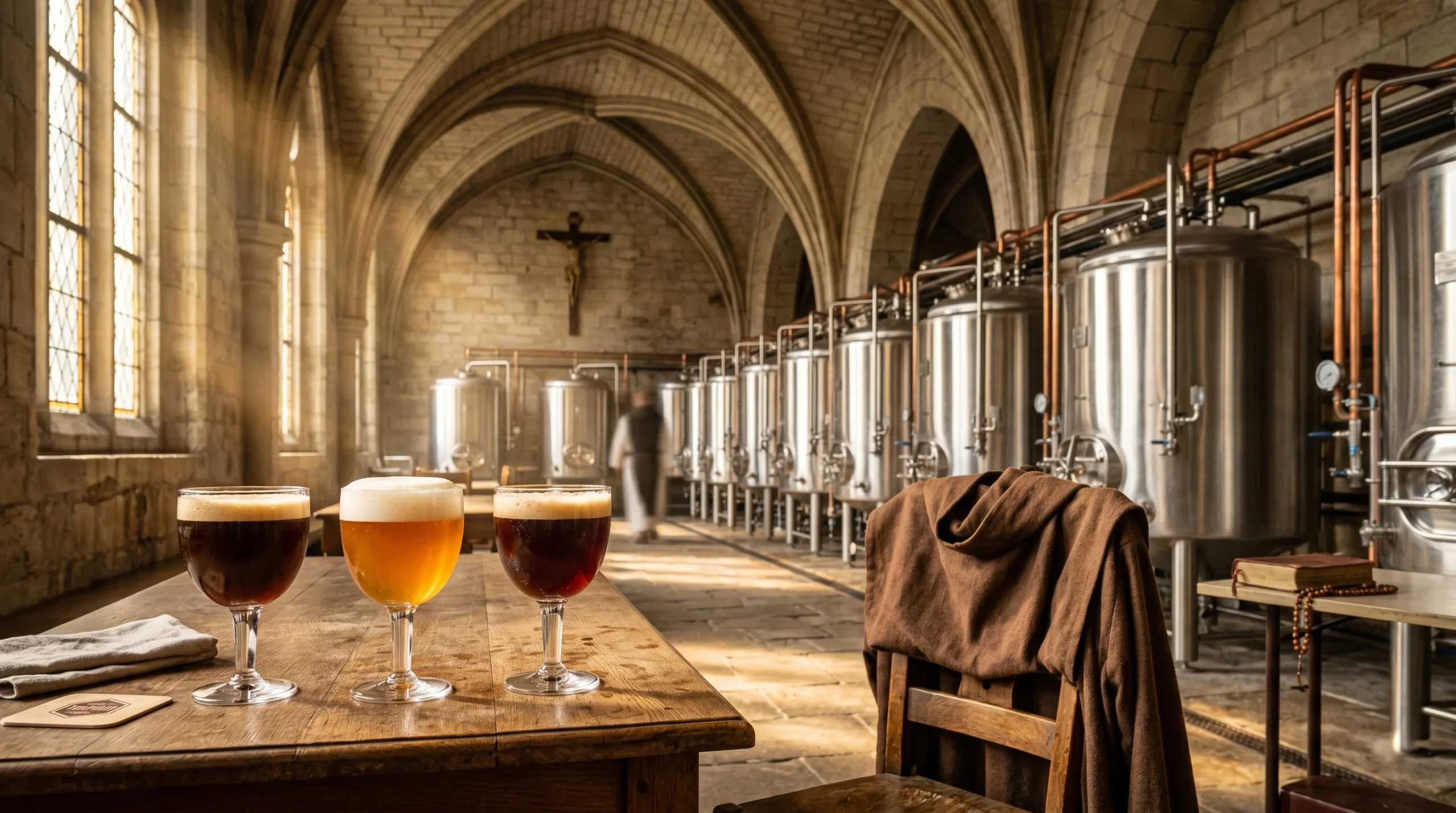
Westveleen (Sint-Sixtus Abbey, founded 1831) — Perhaps the most legendary Trappist. The abbey brews only enough to sustain its community — no expansion, no export. Westvleteren 12 (Quadrupel) is consistently ranked among the top 5 best beers in the world. To buy it, you must pre-order by phone, purchase in limited quantities, and pick it up yourself at the abbey. The abbey rejects all offers to increase production or sell through modern distribution channels. “We are not a business,” the monks say. “We are a community of prayer.”
Chimay (Scourmont Abbey, founded 1862) — the most popular Trappist internationally. There are four main versions: Dorée (drinked only at the Abbey), Rouge (Belgian Dubbel), Tripel (Cinq Cents), and Bleue (Belgian Dark Strong Ale). Chimay is one of the few Trappist wines widely distributed globally — and is the entry-point for most newcomers to Trappist.
Orval (Orval Abbey, restored 1931 — original abbey from 1132) — the most unique Trappist. The abbey brews only ONE commercial beer: Orval — a Belgian Pale Ale with added Brettanomyces dry-hop. This means Orval evolves over time in the bottle — drinking it fresh (3-6 months) is completely different from drinking it aged (1-3 years). This is the Trappist beer most favored by connoisseurs.
Rochefort (Saint-Remy Abbey, founded 1230) — The third oldest monastery in Belgium. They brew three versions: Rochefort 6 (Belgian Dubbel), 8 (Belgian Dark Strong Ale), and 10 (Belgian Dark Strong Ale). Rochefort 10 is often considered one of the most complex beers ever brewed — notes of dried fruit, chocolate, port wine, and vanilla.
Westmalle (Westmalle Abbey, founded 1794) — The abbey “defined” the two most important Trappist styles. In 1856, Westmalle created Belgian Dubbel — a style now copied by thousands of breweries worldwide. In 1934, Westmalle created Belgian Tripel — a style that redefined “drinkable strong beer.” Every brewery brewing Dubbel or Tripel today follows Westmalle’s original recipe.
Achel (Sint-Benedictus Abdij, founded 1844) — The smallest Trappist monastery in Belgium. However, in 2021, the last two monks moved from Achel to Westmalle, causing Achel to lose its ATP status (as there were no longer monks living at the monastery). In 2023, the monastery was sold to a private individual, officially ending 177 years of Trappist tradition. This serves as a reminder that Trappist heritage is not permanent. — It depends on the existence of the monastic community.
Trappist vs Abbey Beer — The Key Differences
This is the most confusing aspect when exploring Belgian beer.
Trappist beer Beer brewed by Trappist monks in Trappist monasteries, meeting the 3 ATP criteria above. Only 10 breweries in the world qualify. 6 are in Belgium.
Mourinho beer (Abdijbier / Bière d'Abbaye) = beer brewed in the Trappist style, but NOT brewed in a monastery. It could be:
- Commercial breweries are named after former monasteries (e.g., Leffe — formerly a real monastery, now a brand of AB InBev).
- The brewery had a contract with a monastery that couldn't brew its own food (e.g., Maredsous — brewed by Duvel Moortgat for the Maredsous monastery).
- Brewery uses the name "abbey" without any connection to a monastery (e.g., Affligem).
Abbey beer can be delicious — Leffe Blonde, St-Bernardus 12, Tripel Karmeliet are all high-quality beers. But they not Trappist. The difference is significant for cultural reasons: Trappist is a monastic heritage, while Abbey beer is a commercial product inspired by Trappist traditions.
When UNESCO recognized them in 2016, they acknowledged both Trappist and Abbey beer as part of Belgian culture — as both represent the unique relationship between religion and beer in Belgian history.
Beer as a Lifestyle
There's a little story about Westvleteren. A few years ago, an American company came up and offered to buy the rights to produce Westvleteren 12 in the US — for a multi-million dollar deal. The monks refused.
When asked why, one monk replied, “We don’t brew beer to sell. We brew beer to sustain the monastery. If we produced more, we would become a business. And we don’t want to be a business.”
This is the philosophy that UNESCO has recognized. It's not about the quality of the beer. It's not about the variety of styles. It's about... a lifestyle — a place where brewing is not for profit, but to serve the community, faith, and tradition.
In a world where everything is measured by GDP and growth rate, Trappist thought is an outlier. And perhaps that is why it is its most precious legacy.
Pub & Café Culture — Beer as a Way of Life
If Trappist is the soul of Belgian beer, then the café is its body — where every tradition is lived out every day.
In Belgium, "café" doesn't mean the same thing as in France or Vietnam. A Belgian café is a place where you drink beer—not coffee. At the beginning of the 20th century, Belgium had more than 200,000 cafes — On average, there's a café in every five houses. Every village has at least one café. Every neighborhood has several. This isn't a "service industry" — it's part of the social architecture.
The number of cafés has declined in the 21st century—by 2005 there were only about 19,300. But the café culture lives on. Every village still has at least one. Every weekend, families still have afternoon meals at their local café. This is where UNESCO has seen “living heritage”—not in museums, but in small street cafés.
Brown Café — A Belgian Cafe
“"Brown Café" (Bruine Kroeg in Dutch) is a concept characteristic of the Flanders region and the Netherlands. It is a traditional café with dark wood interior — The tables, chairs, bar, and floor are all made of oak, weathered by decades of cigarette smoke, beer fumes, and warm lighting.
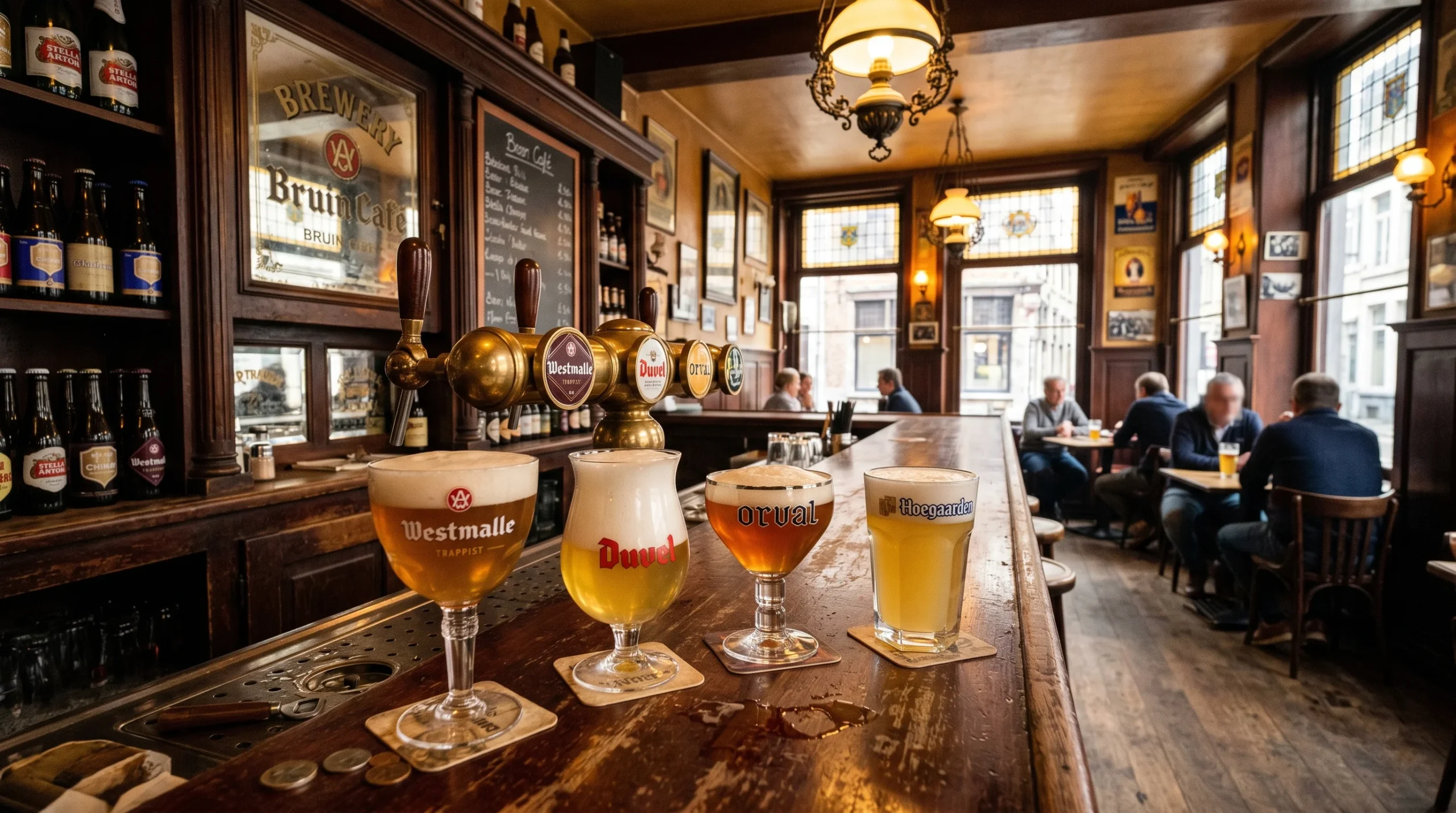
No TV. No loud music. No menus printed on glossy paper. Just a chalkboard with a beer list, and people drinking slowly, chatting, reading newspapers. A typical Brown Café can stay in the same location for 100, 150, sometimes 200 years — the owners are usually families, passed down from generation to generation.
At Brown Café, Belgians aren't in a hurry. A glass of Westmalle Tripel can be drunk in 45 minutes. A dinner with beer can last three hours. This is... Slow and steady, like a philosophy. — Not slow because of laziness, but slow because of a desire to fully enjoy the experience.
Glassware Culture — One Beer, One Glass
This is perhaps the most unique aspect of Belgian beer culture — and what surprises foreigners most when they visit a Belgian café for the first time.
In Belgium, Each type of beer has its own glass.. It's not about "large glasses" and "small glasses"—but rather glasses specifically designed for that style of beer, often with the brewery logo engraved on the body.
- Westmalle Tripel Drink from a chalice (bowl) with a stem — designed to retain the foam and allow the aroma to rise.
- Orval Served in an egg-shaped goblet glass — retaining the characteristic effervescence of Brett Refermentation.
- Duvel Drink it in a short-stemmed tulip glass — designed to create a thick froth of 2-3 cm when poured correctly.
- deck It is drunk from a special glass with a wooden stand because the glass cannot stand on its own — a test tube-shaped glass with a rounded bottom, served with a signature Kwak wooden stand.
- Lambic and Gueuze Drink in a small stem glass — it retains the carbonation and complex flavors.
- Witbier (Hoegaarden) is drunk from a distinctive hexagonal glass — designed in 1957 by master brewer Pierre Celis.
If a café serves Westmalle Tripel in a Duvel glass, or Orval in a Hoegaarden glass, that's considered unprofessional. Customers can request the correct glass. Many good cafés stock hundreds of different types of glasses—sometimes taking up an entire wall behind the bar.
This isn't fancy. This is respect the style of beer. Each glass is designed through testing to optimize the flavor of that particular beer. Drinking Westmalle in a regular beer glass diminishes the experience—no different from drinking wine in a porcelain cup.
Beer Menu as Thick as a Book
A typical Belgian café has 30-50 types of beer on its menu. But that's the basic standard. Belgian "beer destinations" serve far more.
The bar most famous in the world for the quantity of beer it serves is Delirium Café In Brussels — Guinness World Record for the world's thickest beer menu, with over 2,000 types of beer From all over the world (including hundreds of Belgian beers). The menu is printed in a thick, hardcover book, like a dictionary. Each beer has information about its style, ABV, brewery, and recommended pairing.
At Delirium Café, you don't "order quickly." You spend 20-30 minutes reading the menu, asking the bartender, and perhaps trying a few samples before deciding. beer-as-discovery culture — Every visit to the café is an opportunity to discover a new beer.
Beer During Meals — Beer Pairing Is a Culture
In Belgium, beer isn't just drunk at cafes. It's present at everyday family meals—especially weekend dinners.
Concept beer pairing Beer pairing in Belgium is as developed as wine pairing in France. Each dish has a "suitable" beer — Trappist Dubbel with grilled meats, Witbier with seafood, Gueuze with goat cheese, Saison with salad. High-end restaurants in Brussels and Bruges have "beer sommeliers" — experts in beer pairing, the equivalent of wine sommeliers.
Beer is also used for cook. Flamingo Carbonnade — A traditional Flanders beef stew, using Belgian Dubbel as the broth. Lapin à la Gueuze — Rabbit stew with guacamole. Beer-washed cheese is a traditional Belgian product — the cheese is washed with beer during the aging process, creating a distinctive rind.
This is not fine dining. This is a typical family meal — Parents and grandparents sit around the table, each with a glass of beer that complements the dish being eaten, chatting for two to three hours. Children observe, learn, and gradually join in when they are old enough. This is how heritage is passed on — not through books, but through meals.
Festival and Community
Every week, somewhere in Belgium, there's at least one beer festival. Some of the major festivals include:
- Belgian Beer Weekend (Brussels, early September) — Held on Brussels' Grand Place. More than 50 Belgian breweries participated, attracting tens of thousands of people from around the world.
- Tour de Geuze (Pajottenland, every two years) — A weekend tour featuring all the Lambic breweries in the Pajottenland region. Cantillon, Boon, Drie Fonteinen, Hanssens — all open to the public.
- Zwanze Day (Annually, organized by Cantillon) — A single day of the year when Cantillon releases “Zwanze” — an experimental Lambic. Held simultaneously in Brussels and dozens of cities around the world.
Besides festivals, Belgium also has a system brotherhoods — Beer brotherhoods (Bierorde). Each region has its own brotherhood, which organizes events, educates the public, and protects local brewing traditions. Joining a brotherhood is a sign of dedication to beer heritage — not a hobby, but a commitment.
Zythologist — Beer Expert
Belgium was the first country to have an official profession called a "Belgium" or "Belgium". zythologist — Beer experts. Similar to sommeliers (wine experts), zythologists receive formal training at universities and specialized centers. They pass certification exams and work in high-end restaurants, breweries, or as independent consultants.
UNESCO specifically mentioned zythologists in its 2016 recognition document — as one of the pieces of evidence showing that beer brewing in Belgium has been professionalized to the point of being an art form.
This is a profession that doesn't yet officially exist in Vietnam. There are people who are passionate about beer, and people who create beer content, but there's no official certification, no recognized profession. When Vietnam reaches that point, it will be a sign that... Vietnamese beer culture has matured..
Brewery Families — A Tradition Passed Down Through Generations
In Belgium, a brewery is not just a business. A brewery is... family assets — It is passed down from grandfather to father, from father to son, sometimes through 5, 6, or 7 generations.
This is one of the points that UNESCO particularly emphasized when granting recognition in 2016:“Knowledge has been passed down through families and breweries for centuries.“"Not through textbooks. Not through courses. But through..." oral tradition and collective labor — The father worked alongside his son in the brewery, teaching him how to select malt, how to taste wort, and how to read microbial signals.
Each family brewery in Belgium is a living library. When an elderly brewer dies, not just a person is lost — but an entire community is gone. A body of knowledge accumulated over decades. It can also disappear if it is not transmitted properly.
Cantillon — One Family, One Style
In the world of Lambic, no name is as revered as Cantillon.
The brewery was founded in 1900 by Paul Cantillon in the Anderlecht district of Brussels. Today, after more than 120 years and four generations, Cantillon is still run by the family. Jean Van Roy, the great-grandson of Paul Cantillon, is the current master brewer.
The remarkable thing is that the Cantonillon refused modernization. The brewery still uses it. Original equipment from 1900 —the same koelschips, the same old oak barrels, the same copper piping system. When visitors come to tour, they see a brewery exactly as Paul Cantillon built it in the early 20th century.
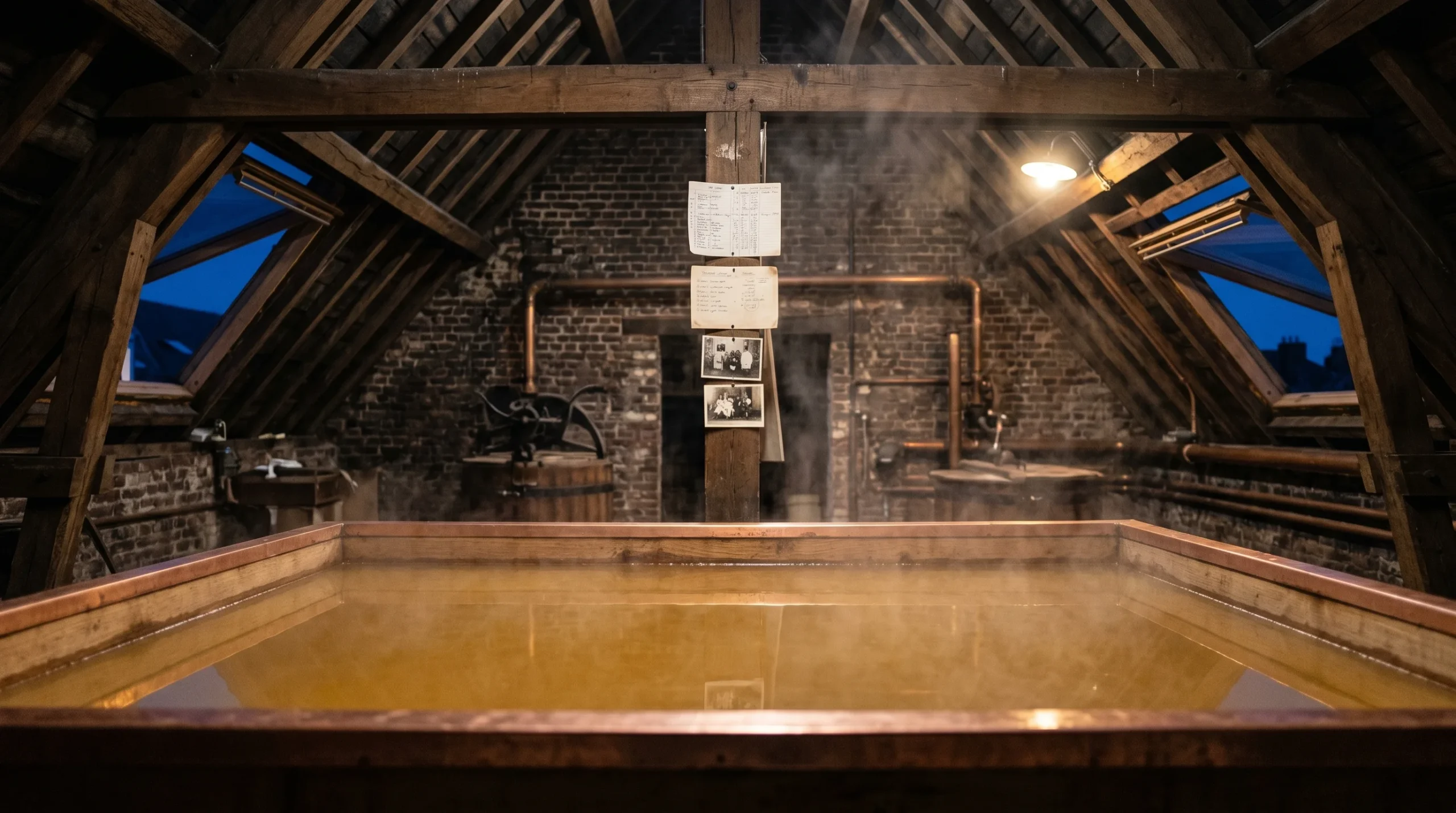
“I’m not changing the equipment,” Jean Van Roy said. “Because the natural microorganisms have ‘settled’ in these wooden barrels for over 100 years. If I replaced the barrels, I would lose the very character that makes Cantillon.”
This is the philosophy“I'm not brewing beer. I'm preserving beer.“The brewery is not an ownership—it’s a responsibility. One generation is merely the temporary caretaker of a legacy, then passes it on to the next.”.
Rodenbach — 200 Years of Tradition
In West Flanders, the Rodenbach family defined a style: Flanders Red Ale. The brewery was founded in 1821 by brothers Pedro and Alexander Rodenbach. After 200 years and many generations, Rodenbach remains renowned for its system. giant oak wood feeders — some of the barrels are over 150 years old.
Each barrel is numbered and its history is documented. Each barrel has its own unique microorganisms — over decades, Lactobacillus and Brettanomyces have settled in the wood, creating an unreplicable character. Some barrels give a stronger character, some a milder one — and Rodenbach's master blender selects each barrel to blend into the final version.
In the decades following World War II, Rodenbach nearly went bankrupt. Pilsner was dominating the market, and Flanders Red was considered "strange" and "old-fashioned." But the family refused to change the recipe. They preferred selling the brewery to Palm Breweries (1998) rather than abandoning tradition. Palm—and later Swinkels Family Brewers—kept Rodenbach brewed exactly as it was for 200 years. This was a fortunate case: a sale that didn't destroy the heritage.
Liefmans — The Woman Who Saved Style
One particularly interesting brewery family story from Belgium is that of Liefmans. The brewery has a tradition of brewing Oud Bruin dating back to 1679 — almost 350 years. But by the 1970s, Liefmans was nearly bankrupt.
Rose Blancquaert-Merckx — a woman married to the son of the Liefmans — decided to save the brewery. She apprenticed with the old master brewer, took over the family recipe, and dedicated much of her life to preserving the traditional Oud Bruin style.
During the decades when Liefmans faced financial difficulties, Rose remained unchanged in her formula. She transferred management several times — Riva (1991), Duvel Moortgat (2008) — but always with conditions. The original formula must be kept unchanged.. Thanks to this, Liefmans Goudenband (Oud Bruin) is still cooked today in the way Rose directed during the 1970s and 80s.
Rose Blancquaert-Merckx passed away in 2008, leaving behind a legacy: a brewery that lives on and a distinctive Belgian sour beer style preserved for future generations.
Boon — Lambic's Master Blender
Frank Boon wasn't born into a family of brewers. He was an engineer who loved Lambic—and in 1975, he bought the small Vandersticken brewery in Lembeek (Pajottenland) when the previous owner was preparing to retire without a successor. Frank changed his name to "Boon" and began a business few dared to undertake: Reviving Lambic in an era when Lambic is dying..
In the 1970s and 80s, Lambic was practically unsellable. Most Lambic was diluted with sweetened syrup to make it easier to drink — the traditional "sharp, funky" character had almost disappeared. Frank Boon refused to follow the trend. He produced Lambic and Gueuze the traditional way — sour, funky, without syrup — and accepted low sales for 20 years.
Today, nearly 50 years later, Frank Boon is regarded as The most important master blender in modern Lambic.. Along with Cantillon and 3 Fonteinen, Boon saved Lambic from extinction. Today, Lambic-specialized bottle shops worldwide consider Boon one of their must-have brands.
The brewery is now operated by Karel Boon —Frank's son — continues the tradition. This is a story of perseverance: 50 years in one style of beer, without compromise.
Continue or Sell?
Not all brewery families have a happy ending. In recent years, many Belgian family breweries have faced a difficult question: Will the next generation want to continue?
Traditional Belgian brewing is hard work—requiring specialized knowledge, a lot of manual labor, and lower profit margins compared to other industries. Many brewers' descendants choose other professions—doctors, engineers, lawyers. If there is no successor, family breweries typically have three options:
- Sell to a large corporation (AB InBev, Heineken, Carlsberg) — often leads to formula changes to optimize costs.
- Sell to another brewery with the same philosophy. (Duvel Moortgat, Palm/Swinkels) — tradition can be preserved, but the "family" element is lost.“
- Close the door — heritage completely lost
This is the biggest challenge facing Belgian beer heritage in the 21st century. UNESCO acknowledges that while it can raise awareness of its preservation, it cannot solve the generational problem. Every year, several family-run breweries in Belgium close or are sold. Each time this happens, a piece of the heritage may disappear.
That's why every bottle of Cantillon, Rodenbach, or Boon you drink today is... a piece of history is being preserved.. It's not about business. It's not about profit. It's because there are people who still believe that beer, in Belgium, deserves to be kept the way their ancestors did.
Why Did UNESCO Recognize It? — A Detailed Analysis
By now, after five sections on culture and history, you may have a better understanding of why UNESCO decided to recognize it in 2016. But for clarity, let's analyze it in detail: What criteria does UNESCO use, and how does Belgian beer meet those criteria?
“What is "Intangible Cultural Heritage"?
UNESCO has many types of heritage sites. The most famous type is World Heritage Sites — tangible heritage sites such as Ha Long Bay, Hue Imperial City, and Hoi An Ancient Town (Vietnam has 8 sites on this list).
But UNESCO has another list — Intangible Cultural Heritage of Humanity (Intangible Cultural Heritage of Humanity). This is a list for cultural practices — not a place, not an object, but a the way people live and work.
Vietnam also has many intangible cultural heritage sites recognized by UNESCO: Quan Ho Bac Ninh, Ca Tru, Hue Royal Court Music, Tam Phu Mother Goddess Worship, and Southern Don Ca Tai Tu — all of which are cultural practices, not historical relics.
Belgian beer is recognized on this list — alongside practices such as Cuban rumba music, Iranian-Turkish pita-making art, and the quality of Japanese sake (recognized in 2024).
5 UNESCO Evaluation Criteria
According to the 2003 UNESCO Convention on the Protection of Intangible Cultural Heritage, a recognized practice must meet five basic criteria:
1. Passed down from one generation to the next.
Belgian beer boasts a 1,000-year tradition, from medieval monasteries to modern family breweries. Brewing knowledge has been passed down through brewer families, Trappist communities, and formally trained zythologists. No other country has such a long and continuous beer tradition.
2. Created and recreated by the community.
Belgian beer offers 1,500 styles brewed by over 150 breweries — not by one large corporation, but by many communities. Each region has its own style (Pajottenland — Lambic, West Flanders — Flanders Red, Wallonia — Saison). Each brewery is a small community. Each café is a place of cultural practice.
3. Provides a sense of identity and continuity.
Belgian beer responds: Beer is part of Belgian identity — to the point that many Belgians say, “When I speak French, I’m Wallonian. When I speak Dutch, I’m Flemish. But when I drink beer, I’m Belgian.” Beer connects Belgium’s two often-divided linguistic and cultural communities.
4. Compatibility with human rights and mutual respect.
Belgian beer responds: Belgian beer culture includes organizations advocating for “responsible beer consumption”—discouraging excessive drinking. Trappist monks use beer profits for charity. Brewery families share their knowledge with the community.
5. Maintaining cultural diversity
Belgian beer delivers: In a world dominated by commercial beers (Pilsner, industrial Lager), Belgium represents stylistic diversity. 1,500 different types of beer demonstrate that cultural diversity can be preserved in the face of globalization pressures.
Comparison with Other Heritage Sites
To understand the place of Belgian beer on the UNESCO list, compare it to similar heritage sites:
Mexican Cuisine (2010) — The entirety of traditional Mexican cuisine (corn, beans, chili peppers, tortilla, mole). This was the first food/culinary heritage recognized by UNESCO.
Beef Diet (2013) — Mediterranean food culture (Italy, Spain, Greece, Morocco, Croatia, Cyprus, Portugal).
Pizza Napoleona (2017) — The art of making Neapolitan pizza the traditional way.
French Gastronomic Meal (2010) — French dining culture (multi-course meals with wine).
Belgian Beer Culture (2016) — Belgian beer culture.
If France is recognized for its "way of eating," Belgium is recognized for its "way of drinking." Both represent a commonality. A philosophy of living life at a slow pace, celebrating food and drink as art..
Registration Process 2014-2016
The process of registering a UNESCO heritage site is not simple. For Belgium, the journey began in 2014.
Norbert Heukemes — a civil servant from Belgium's German-speaking East Cantons region — was the main person leading the project. Along with Sven Gatz (Brussels politician, beer enthusiast) and representatives of the three Belgian language communities (Flemish, French, German), they spent over two years preparing their application.
The documents must prove:
- Beer is a vibrant cultural practice, not just a product.
- The Belgian community is committed to protecting this heritage.
- There are specific plans to pass them on to future generations.
- Consensus among the communities involved (Flemish, Wallonian, German-speaking)
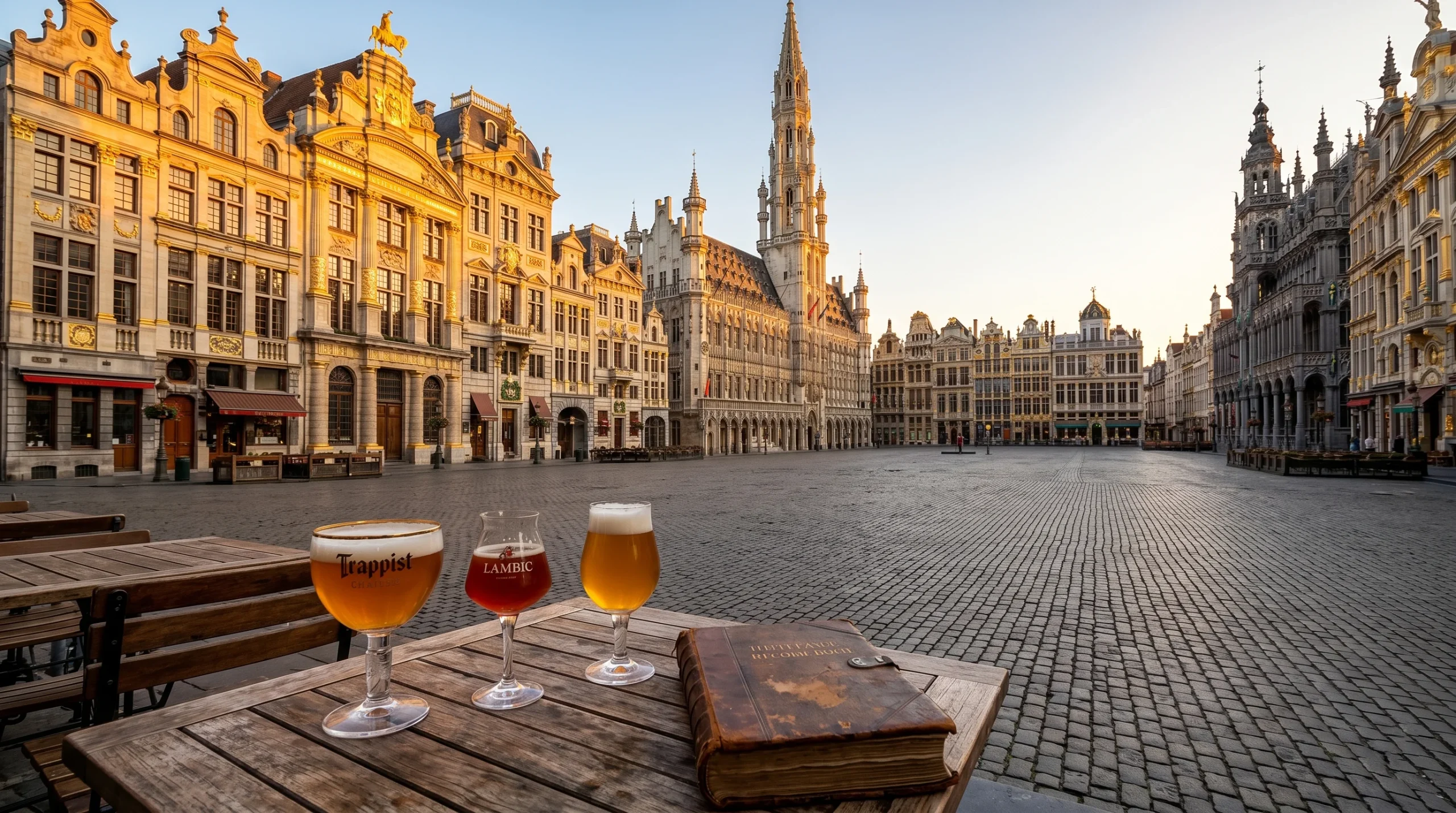
On November 30, 2016, in Addis Ababa (Ethiopia), the UNESCO Council of 183 countries voted—and the decision was passed. Sven Gatz received the news via text message from Norbert Heukemes in Ethiopia. Within hours, the world press was present on Brussels' Grand Place to take "the celebratory photo" at Brewers House.
Significance to the Global Beer Community
The 2016 recognition wasn't just a Belgian event. It meant something for the entire global beer community — because it formalized a fact: Beer can be considered a cultural heritage, on par with wine, cuisine, and traditional musical instruments..
Following Belgium, other countries have also registered to protect their beverage culture:
- Georgia (2013) — Ancient qvevri winemaking method
- Floor (2024) — Asturias cider culture
- Japan (2024) — Sake-making culture with traditional koji mold
- Czech Republic (2025) — Beer culture and brewing (ethnic, in the process of being registered with UNESCO)
Belgium paved the way. After Belgium, other countries looked at their own drinking cultures and realized: This is also a heritage that deserves protection..
Perhaps one day, Vietnam will register a beverage culture for protection — maybe traditional Vietnamese filter coffee, maybe Central Highlands rice wine, maybe Phu Quoc fish sauce. When that happens, Belgium will be the first example proving that beer can be a heritage, and that beverages are more than just drinks.
5 Belgian Beer Style Groups — Overview
After six sections on culture and history, we move on to the “tasteable” section — specific Belgian beer styles. This is where 1,000 years of heritage meet the glass of beer on your table.
Belgium boasts nearly 1,500 types of beer, but they are grouped into five main styles. Each style has its own brewing philosophy, characteristic geographical region, and independent history of development.
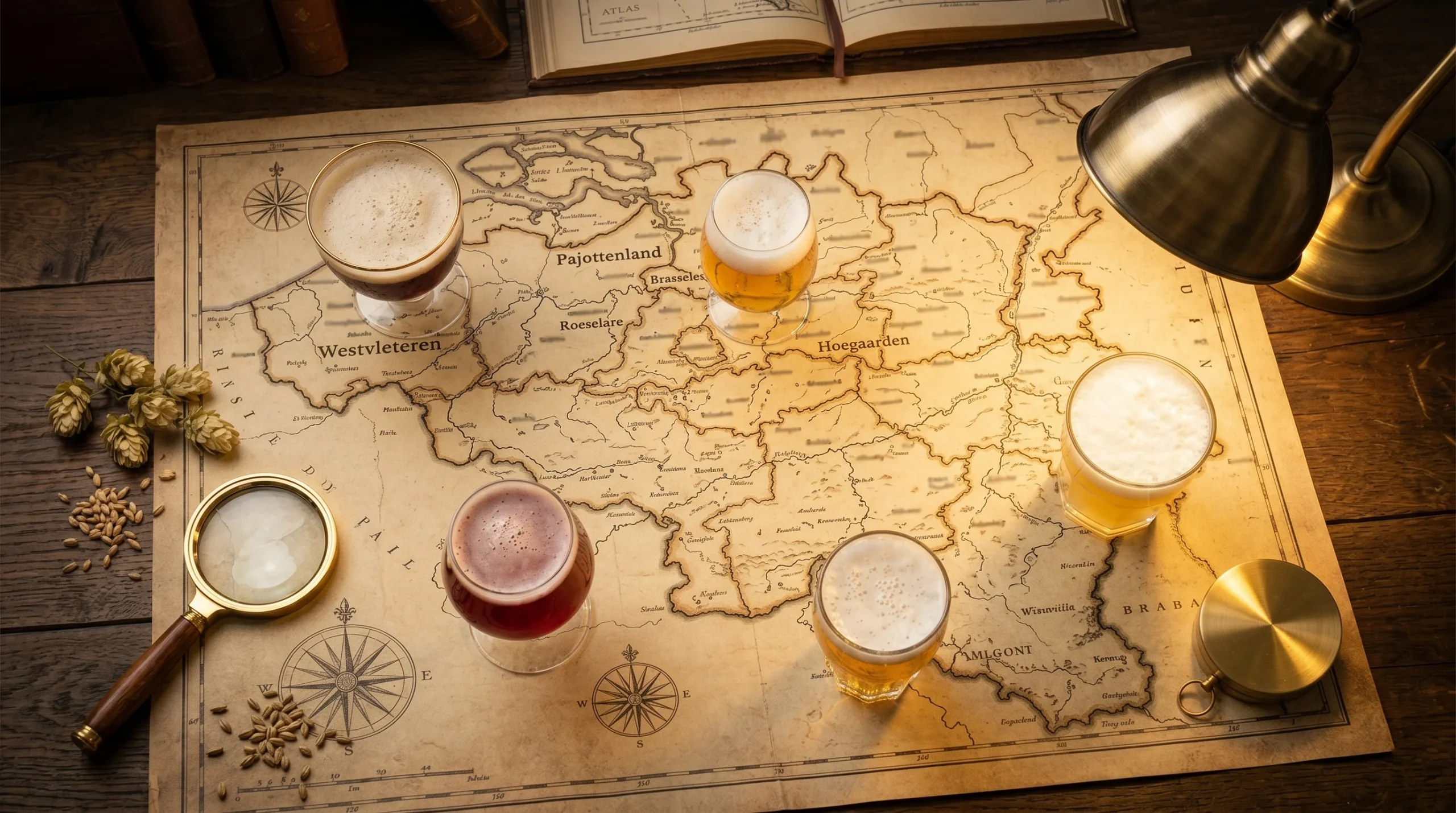
5 Style Groups
1. Trappist Ales — Cistercian monks' beers, brewed in monasteries according to ATP rules. These include Belgian Single (Patersbier), Belgian Dubbel, Belgian Tripel, and Belgian Dark Strong Ale (Quadrupel). Characteristics: bottle-conditioned, uses complex Belgian yeast, and includes added candied sugar to increase ABV while maintaining a light body.
2. Lambic Family — Naturally fermented sour beer from the Pajottenland region. Includes Lambic, Gueuze, Fruit Lambic, and Faro. Characteristics: natural microorganisms in the air, aged in wooden barrels for 1-3 years, sharp sour character + distinctive funky. (Detailed analysis in the article) Sour Beer: From Lambic to Sour IPA.)
3. Flanders Sours — Sour, “wine-like” beers from West Flanders. Including Flanders Red Ale and Oud Bruin. Characteristics: aged in oak barrels for a long time, sour + chocolate + dark fruit character, closer to Burgundy wine than regular beer.
4. Saison & Farmhouse — Farm beers from Wallonia (Southern Belgium) and the French border. Includes Belgian Saison, Bière de Garde, and Belgian Grisette. Characteristics: Belgian yeast creates fruit and spice esters, high dryness, flexible ABV from mild to strong, originally intended for farm workers.
5. Belgian Specialty — Belgian styles that don't fall into the four groups above include Witbier (spicy wheat beer), Belgian Pale Ale, Belgian Blond Ale, and Belgian Golden Strong Ale (Duvel). Characteristic: a philosophy of "free experimentation" — not bound by rigid local traditions, Belgian brewers create new styles.
Some Belgian styles have been analyzed in detail in other articles:
- Lambic Family + Flanders Sours — Details about the microbiology, history, and each substyle in the article. Sour Beer
- Belgian IPA — Belgian-American hybrid style in the article Bitter Beer
- Belgian Dark Ale — In the Dark Ales group of songs Stout
Trappist Ales — Beers of the Trappists
Trappist Ales isn't a style—it's a family. This family has four main members, arranged in order of increasing strength: Belgian Single (Patersbier), Belgian Dubbel, Belgian Tripel, and Belgian Dark Strong Ale (Quadrupel).
The names “Single — Double — Triple — Quadruple” are not accidental. In the old Trappist tradition, monasteries brewed many levels of strength using the same basic recipe — only varying the amount of malt. Each level had its own designation:
- Enkel (Single) — daily beer for monks, lowest ABV, not for commercial distribution
- Dubbel (Double) — a bolder version, reserved for VIPs and sold to the general public.
- Tripel (Triple) — a strong, amber-colored beer, for special occasions.
- Quadruple (Quad) — the strongest, boldest beer, for big celebrations.
This numbering system was developed by the Westmalle brewery in the 19th century and has become the global standard for all Belgian-style ales.
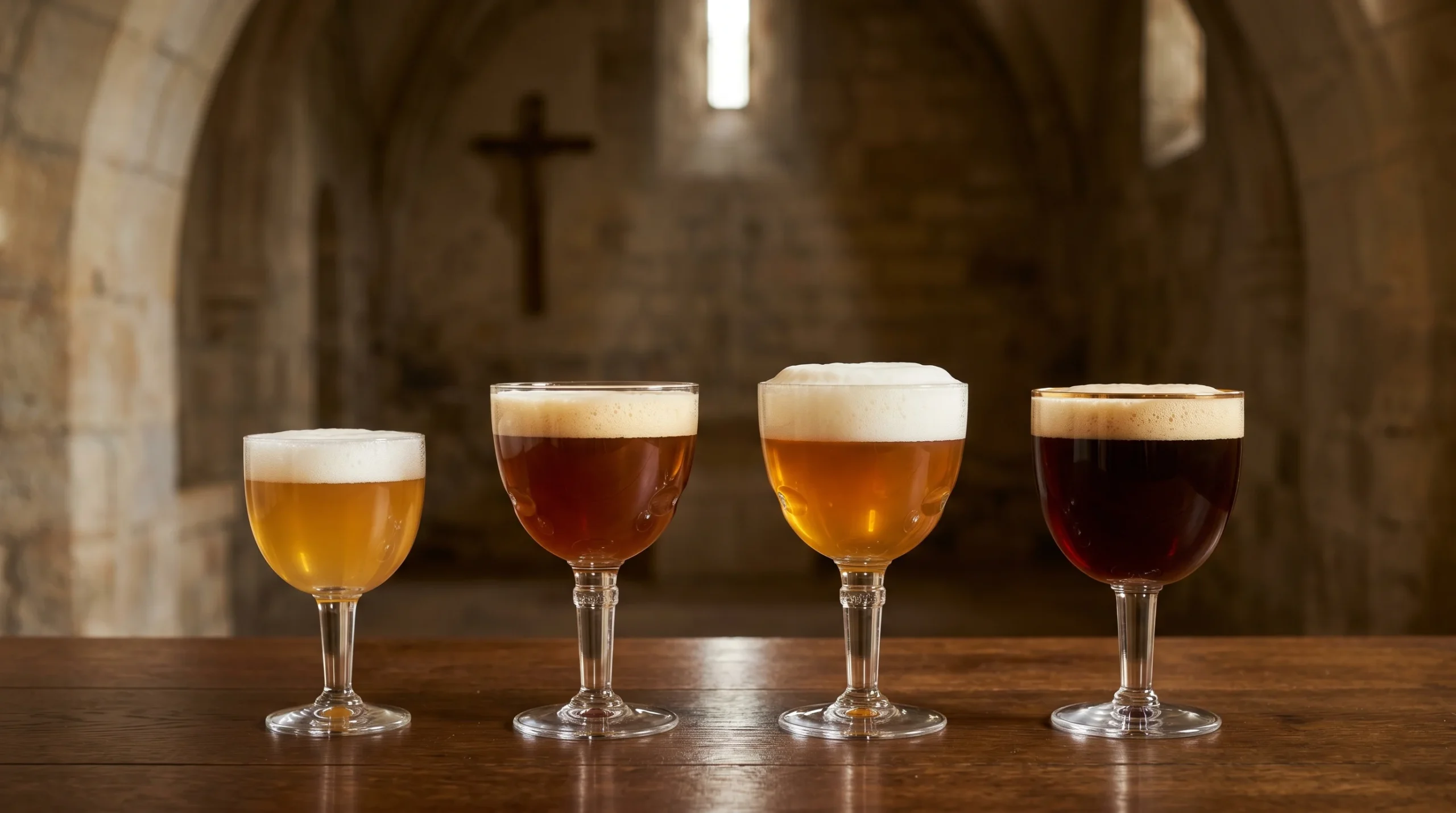
Belgian Single (Patersbier) — Monk's Beer
“"Patersbier" in Dutch means "monk's beer" — the beer that monks drink daily in the monastery.
This is the style least known Among Trappist monks, Patersbier is largely not commercially sold. Traditional Trappist monks drink Patersbier with meals — its low ABV is enough not to interfere with work and prayer, and its mild flavor is enough not to overpower the simple monastery food.
A few Patersbiers can be found on the market — Westvleteren Blond (low ABV), Achel Blond (pre-2021), Chimay Dorée (Chimay Gold) — all are versions of the “table beer” that monks drank daily, commercially released in limited quantities.
Character: pale yellow, light body, mild Belgian yeast aroma (banana ester, light spices), dry finish. This style is so subtle that it doesn't need to be "impressive"—it's designed to be drunk several times a day without causing fatigue.
Belgian Dubbel — Style Defined
In 1856, the Westminster brewery created Westmalle Dubbel — A bolder version of the traditional Patersbier. The beer has a deep brown color from lightly roasted malt, aromas of dried fruit (raisin, prune, fig), light chocolate, and caramelized candied sugar. The ABV is higher than Patersbier but still medium.
Westminster Dubbel became global standard. Thousands of breweries around the world have copied this style — Chimay Red, La Trappe Dubbel, Rochefort 6, St-Bernardus 8, and many versions from the US, Japan, and Australia.
The defining characteristic of "authentic" Dubbel: using Belgian melons Create complex esters (light fruit and spice), add Belgian candi sugar Caramelized sucrose increases ABV without increasing body, and it's bottle-conditioned (natural carbonation in the bottle). This isn't your average "dark brown alcoholic" beer — it's a complex symphony of malt, yeast, and carbonation.
Ideal pairings: roast duck, stew, hard cheeses (gouda, parmesan), dark chocolate.
Belgian Tripel — The Pinnacle of Belgian Brewing
Also from Westmalle, in 1934, brewmaster Hendrik Verlinden created Westmalle Tripel — and redefining “drinkable strong beer”.
Tripel's philosophy: Strong beer, but not heavy.. While most high-ABV beers have a thick body, a strong alcoholic aroma, and are difficult to drink in large quantities, Tripel uses clever techniques to maintain a light body while keeping the ABV high. The secret lies in:
- Pilsner malt (light color) — does not create a heavy body like Munich malt or caramel malt
- Belgian candi sugar — completely fermentable, leaves no body behind
- Yeast Belgian Trappist — High attenuation, fermentation to dry, creating fruity esters instead of sweetness
- Hops Noble Europe — Saaz, Hallertau, Styrian Goldings — for floral notes and moderate bitterness
Results: brilliant amber color, tropical fruit and spice aromas (clove, white pepper, citrus), medium body, high ABV but hidden alcohol (no noticeable alcohol taste), dry finish.
The Westmalle Tripel is still considered the benchmark. Other excellent tripels include: La Trappe Tripel, Chimay Cinq Cents (Tripel), Tripel Karmeliet (Bosteels, with added wheat and oat), and St-Bernardus Tripel.
Ideal pairings: grilled chicken, grilled seafood, soft cheeses, salads with cold cuts. Tripel is also one of the best beers to enjoy "on its own" — just sit back and enjoy it with conversation.
Belgian Dark Strong Ale (Quadrupel) — The Ultimate Dark Ale
When Belgian Dubbel is bold, Tripel is strong — so what is Quadrupel?
Quadrupel (Quad) is a style of combination. The intensity of Tripel with the boldness of Dubbel. Dark brown to mahogany color. Strong aromas of dried fruit (raisin, fig, dark cherry, plum), caramel, port wine, sometimes vanilla and chocolate. Very high ABV. Medium-full body, but not heavy thanks to the high attenuation of the Belgian yeast.
This is the style of Westvleteren 12, Rochefort 10, St-Bernardus Abt 12, La Trappe Quadrupel — these beers are consistently ranked among the top 50 best beers in the world on RateBeer and BeerAdvocate.
Special Westvleteren 12 — The world's most difficult beer to obtain, sold only at the Sint-Sixtus monastery, with limited quantities per customer, no advertising, and no official export — is still considered by many to be the best beer on the planet. This is a big statement, but it's hard to refute once you've tried it.
Quad is not a beer to be drunk quickly. A 33cl bottle can be enjoyed in 45-60 minutes. As the beer warms up, more layers of flavor unfold. This is a beer for special evenings — not an everyday drink.
The ideal pairing: blue cheese (Roquefort, Stilton), dark chocolate dessert, or simply a good book on Saturday night.
Trappist in Vietnam
Trappist is one of the most popular Belgian beers in Vietnam — thanks to its distinctive ATP label, its compelling story, and its reliable quality.
Trappists are easy to find in Ho Chi Minh City and Hanoi:
- Chimay (Red, Tripel, Bleue) — Most common, widely distributed. Ideal entry point.
- Westmalle (Dubbel, Tripel) — A standard of style, unmissable.
- Orval — Most uniquely, there's Brett. Newcomers might be surprised by his unusual character.
- Rochefort (6, 8, 10) — Harder to find, but worth the investment when you come across them.
- La Trappe (Netherlands, not Belgium, but still a Trappist ATP) — Easy to find, reasonably priced.
Westvleteren 12 It is virtually unavailable in Vietnam through official channels — as the monastery does not export. If you find it for sale, be cautious about authenticity and price.
Advice for beginners: start with Chimay Red (Dubbel) or Westmalle Tripel. Then climb to Rochefort 10 or Chimay Bleue (Quadrupel). Finally, if you have the chance, try Orval — the most unique style, unlike anything else.
Lambic & Flanders — A Signature Belgian Sour Beer
The two most important Belgian sourdough beers — Lambic Family and Flanders Sours — have been analyzed in detail in terms of style in this article. Sour Beer: From Lambic to Sour IPA. In this section, we focus on a different perspective: The role of Belgium's geography in creating these two beer styles..
It is no coincidence that both of the world's most important sourdough beers come from Belgium. There is a specific geographical and microbiological reason for this.
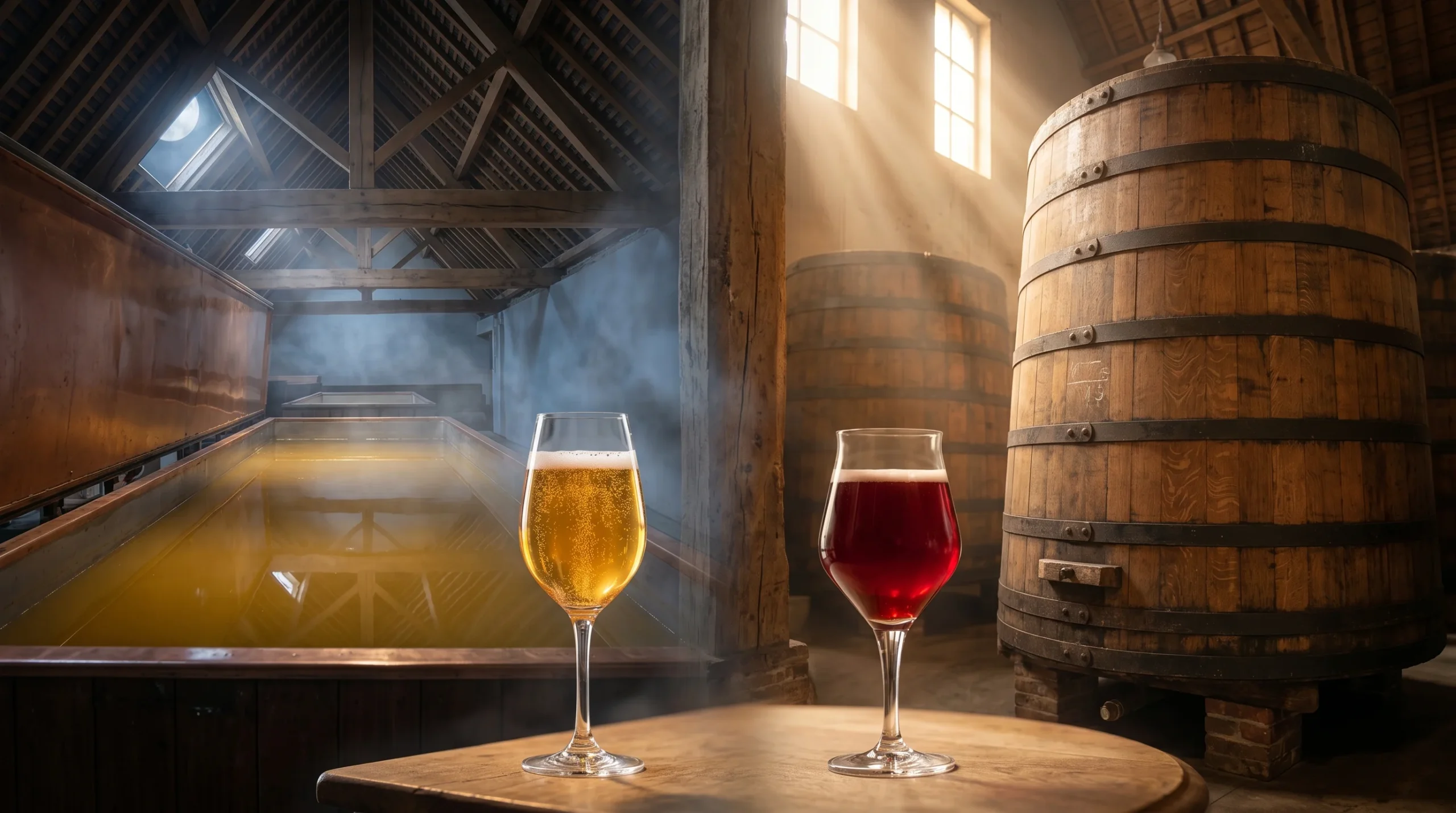
Pajottenland — Land of Natural Microorganisms
Pajottenland is a small agricultural area west of Brussels—approximately 25km × 30km. On a map, it's so small that many Belgians don't even know its name. But in the world of beer, Pajottenland is. one of the most sacred places.
This is the only place in the world where "authentic" Lambic can be cooked. Why? Because the natural microorganisms in the air of Pajottenland—Brettanomyces bruxellensis, Brettanomyces lambicus, and the characteristic Lactobacillus and Pediococcus species—cannot be replicated elsewhere. Brewers outside Pajottenland can purchase the same cultures from labs, but they cannot replicate the diverse microbial balance that Pajottenland naturally possesses.
The unique geographical conditions of Pajottenland:
- Temperate — Not too cold, not too hot — ideal for microorganisms to thrive year-round.
- High humidity — The Senne River flows through the area, creating a humid microclimate.
- Traditional barley and hop farming — The microorganisms in the soil and air have adapted to the brewing ingredients over the centuries.
- Historical accumulation — Over 500 years of Lambic cooking have "established" microorganisms in breweries, storage facilities, and brick walls.
The EU has officially recognized this — Lambic is Traditional Specialty Guaranteed (TSG), a form of legal protection similar to "Champagne" — meaning it can only be produced in a specific geographical area.
The biggest Lambic breweries today: Cantilever (Brussels, in the middle of Pajottenland), 3 Fonteinen (Beersel), Boon (Lembeek — the village that gave it the name “Lambic”), Lindemans (Vlezenbeek), and several other small breweries.
West Flanders — Traditional Oak Barrel
West Flanders is about 100km west of Pajottenland — near the French border. The climate is different, the microorganisms are different — and the style of sour beer is also different.
While Pajottenland celebrates completely natural (Lambic) fermentation, West Flanders develops traditional methods. aged in oak barrels for a long time. Brewers start with controlled Saccharomyces yeast, then allow the beer to "grow" in wooden barrels with Lactobacillus and Brettanomyces "settling" in the wood.
Why does West Flanders have this tradition? There are two factors:
1. Warmer climate than Pajottenland — In the days before refrigeration technology, West Flanders brewers had to find ways to preserve beer in warm weather. Oak barrels, with microorganisms adapted to warm conditions, were the solution.
2. Traditional wood craftsmen — West Flanders has a tradition of making large wooden barrels (foeders) for wine and beer. Brewery Rodenbach has developed a system of enormous foeders — some barrels have a capacity of 6,000-15,000 liters, are 5 meters high, and are over 100 years old.
Rodenbach's feeder system is “"cathedral of beer"” Visitors to Roeselare can explore and see dozens of enormous wooden barrels lined up in church-like hall vaults.
Each vat has its own unique microbiome. The master blender—the most important position in a brewery—is the one who selects each vat to blend into the final version. This is such a microbiological art that it cannot be taught entirely through books—it requires years of learning alongside experienced master blenders.
The most important Flanders Sour breweries: Rodenbach (established 1821, Roeselare), Verhaeghe (Duchesse de Bourgogne — Vichte), Liefmans (established 1679, Oudenaarde), Peter (Bavik — Bavikhove).
Belgium's Role in the Modern Sour Beer World
Without Belgium, there would be no modern sour beer movement.
Every modern craft brewery making Wild Ale, Sour Ale, Brett Beer, or Fruited Sour is following recipes inspired by Belgium. Russian River in California, Jester King in Texas, Side Project in Missouri, Hill Farmstead in Vermont — all mention Cantillon, Rodenbach, and 3 Fonteinen as sources of inspiration.
Until the early 21st century, sour beer was just a small niche—primarily traditional Belgian breweries. By 2020, sour beer had become one of the fastest-growing styles in craft beer globally. Belgium paved the way—not through marketing, but through 500 years of unwavering dedication to tradition.
When UNESCO recognized it in 2016, they were also recognizing this contribution — Belgium is not just keeping the heritage to itself. Belgium has Sharing our heritage with the world. by inspiring brewers across continents.
Saison & Farmhouse — The Farmer's Beer
While Trappist beer is the monk's beer and Lambic beer is the land beer, Saison is Beer of the working hands.
This style originated on the farms of Wallonia (southern Belgium) and the French border—where beer wasn't a celebratory drink, but part of the workday. Each farm had its own small brewery. Every summer, farmworkers were given Saison—a low-ABV, refreshing beer, enough to quench their thirst without making them drunk while wielding their sickles.
The Saison story is the story of functional beer — Beer has a specific purpose, it's not a luxury. This is the fundamental difference between Saison and other Belgian styles. Trappist was born in a monastery. Lambic was born in a barrel. Saison was born amidst barley and wheat fields, during the long summer days of Wallonia.
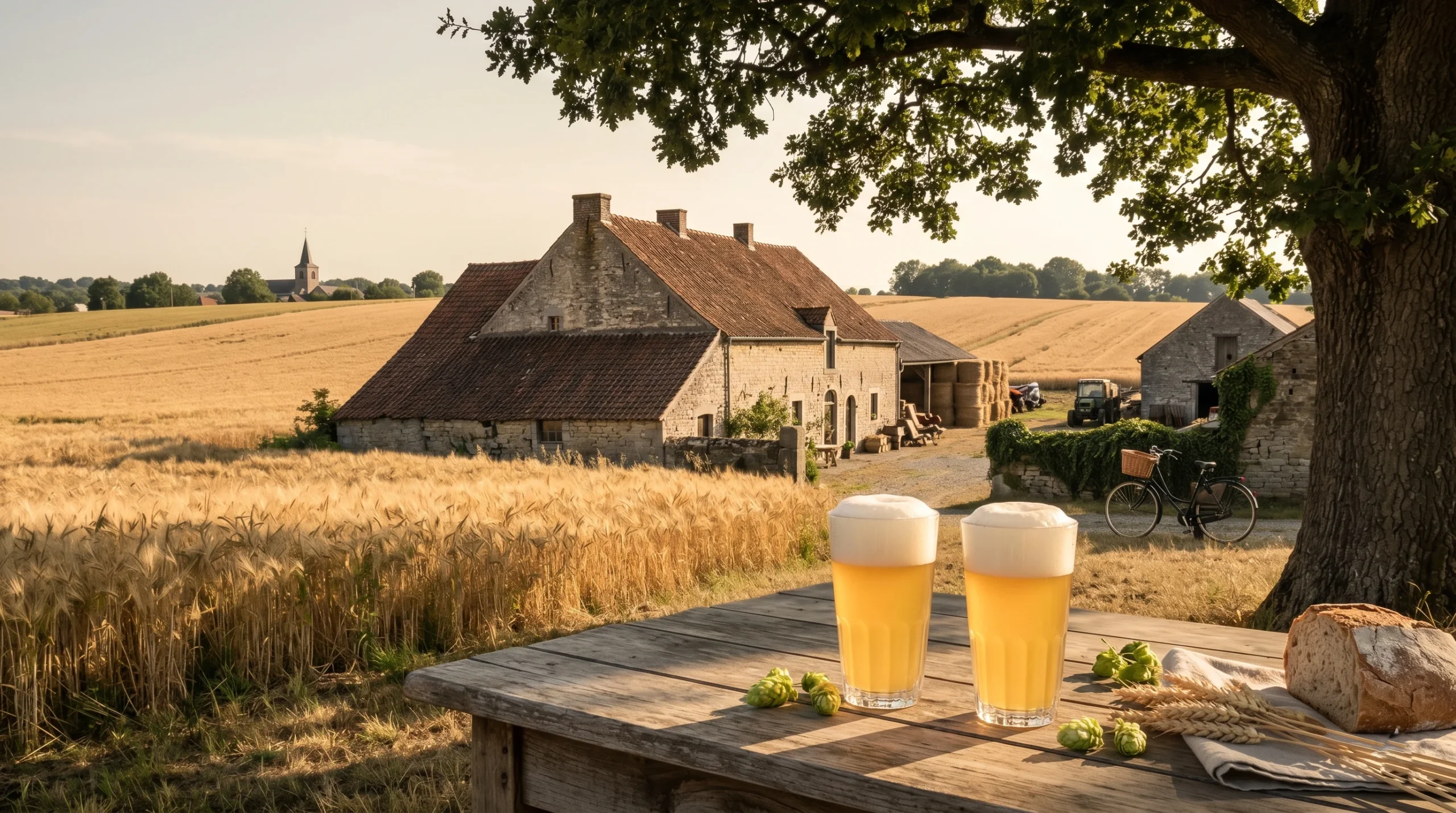
Saison — Literally means "Season"“
In French, "saison" means "season." The name is no coincidence — Saison is the beer of a specific season.
In the 18th and 19th centuries, before refrigeration technology, brewing beer in the summer was impossible — the warm temperatures caused the yeast to contaminate and the beer to spoil. Belgian farm brewers would brew a large batch of beer in the winter or early spring, enough to last through the end of summer. The beer had to:
- Can be preserved for many months. — does not spoil in non-refrigerated warehouse conditions
- Moderate ABV — Not too low (because alcohol helps preserve), not too high (because farmers have to work all day).
- Refreshing — drinkable in the summer heat
- Dried — there is no sweetness left to attract bacteria
Answer: Belgian yeast — Saison yeast (Saccharomyces cerevisiae var. diastaticus) — has the ability extremely high attenuation (They ate all the sugar, leaving the beer very dry) and complex ester formation (Tropical fruit flavors, spices, sometimes a little funky).
Classic Saison characteristics: pale gold to amber gold, citrus + black pepper + floral notes, light to medium body, extremely dry finish, possibly with a hint of Brett if aged longer.
Saison Dupont — A Standard of Living
In the world of Saison, there is one name that stands alone: Brasserie Dupont In Tourpes, Wallonia, the brewery was founded in 1844 on a farm, and remains on that same site today.
Saison Dupont — the brewery's signature beer — is considered to be The gold standard of Saison style. When craft brewers around the world want to learn Saison, they turn to Dupont. When the BJCP (Beer Judge Certification Program) defines the Saison style, they refer to Dupont.
What's special: Saison Dupont is still brewed on the family farm, using a recipe that has remained unchanged since the mid-20th century. Dupont Yeast — cultivated in the brewery for decades — is one of the world's most famous Saison yeasts. Many craft breweries have purchased or copied this yeast, but Dupont's original version remains virtually impossible to replicate.
Bière de Garde — The "Reserved" Beer of the Border Region
Just south of Wallonia lies the Nord-Pas-de-Calais region of France — where the Saison tradition has become a related style: Garden Beach.
“"Bière de Garde" in French means "beer to be kept" — it shares a similar philosophy with Saison (brewed in winter, drunk all year round), but with a slightly different character:
- Malt-forward than Saison — the biscuit and caramel flavors are more pronounced.
- Higher ABV — typically 6-8.5% (%), sufficient for longer storage.
- Hops are milder — without the strong bitter taste.
- It can be aged in wooden barrels, sometimes with an earthy or cellar-like character.
Bière de Garde nearly disappeared in the mid-20th century, but was revived in the 1980s and 90s thanks to breweries. Brasserie Castelain (Saint-Amand-les-Eaux) and Brasserie Duyck (Jenlain). Today, Bière de Garde is a niche yet respected style — representing a linked French-Belgian farm beer tradition.
Belgian Grisette — Miner's Beer
One of the lesser-known styles in the Farmhouse group: Grisette. This is a Wallonia miner's stela from the 19th century.
Industrialization in Wallonia had many coal mines. Miners worked long hours underground, often coming out thirsty. Local breweries brewed Grisette—a lighter version of Saison, with a lower ABV, lighter body, sometimes with added wheat malt for a smoother finish—for the miners to drink after their shifts.
When the Wallonia mining industry declined in the mid-20th century, Grisette nearly disappeared. In recent years, several Belgian breweries and American craft breweries have revived the style as a heritage — not because of market demand, but because of its cultural value.
The Revival in Modern Craft Beer
Saison has a unique story in modern craft beer. Until the 1970s and 80s, Saison was almost exclusively made by Dupont and a few other Wallonia breweries. The style was considered old-fashioned and little known.
But by the early 2000s, American craft brewers — especially Brasserie Saint Somewhere, The Bruery, Hill Farmstead, and Jester King —they “discovered” Saison and fell in love with it. They realized: Saison yeast is one of the most versatile yeasts in the world. It can ferment at very high temperatures (35°C, while most other yeasts only tolerate 20-25°C), producing complex ester flavors, high attenuation — and It doesn't get "broken" when the brewer tests it..
This is why Saison became “The "sandbox" of modern craft beer.. Brewers add fruit, herbs, spices, hops, barrel aging, and blend with Brett—and Saison retains its basic character. A modern craft brewery might have 5-10 different Saison variations on its menu.
Belgium inspired it. The world followed suit. Saison today is one of the most experimental styles in craft beer globally — but its roots remain in Wallonia, in the low-ABV family farms of the farmers.
Belgian Specialty — Belgian Diversity
The four Belgian style groups already mentioned all have clear geographical or cultural roots — Trappist (monasteries), Lambic (Pajottenland), Flanders Sour (West Flanders), Saison (Wallonia). The fifth group — Belgian Specialty — is different: Not bound by region or rigid traditions..
This is where Belgian brewers get creative. This is where unique styles are celebrated. And this is where some of the world's most famous Belgian beers come from.
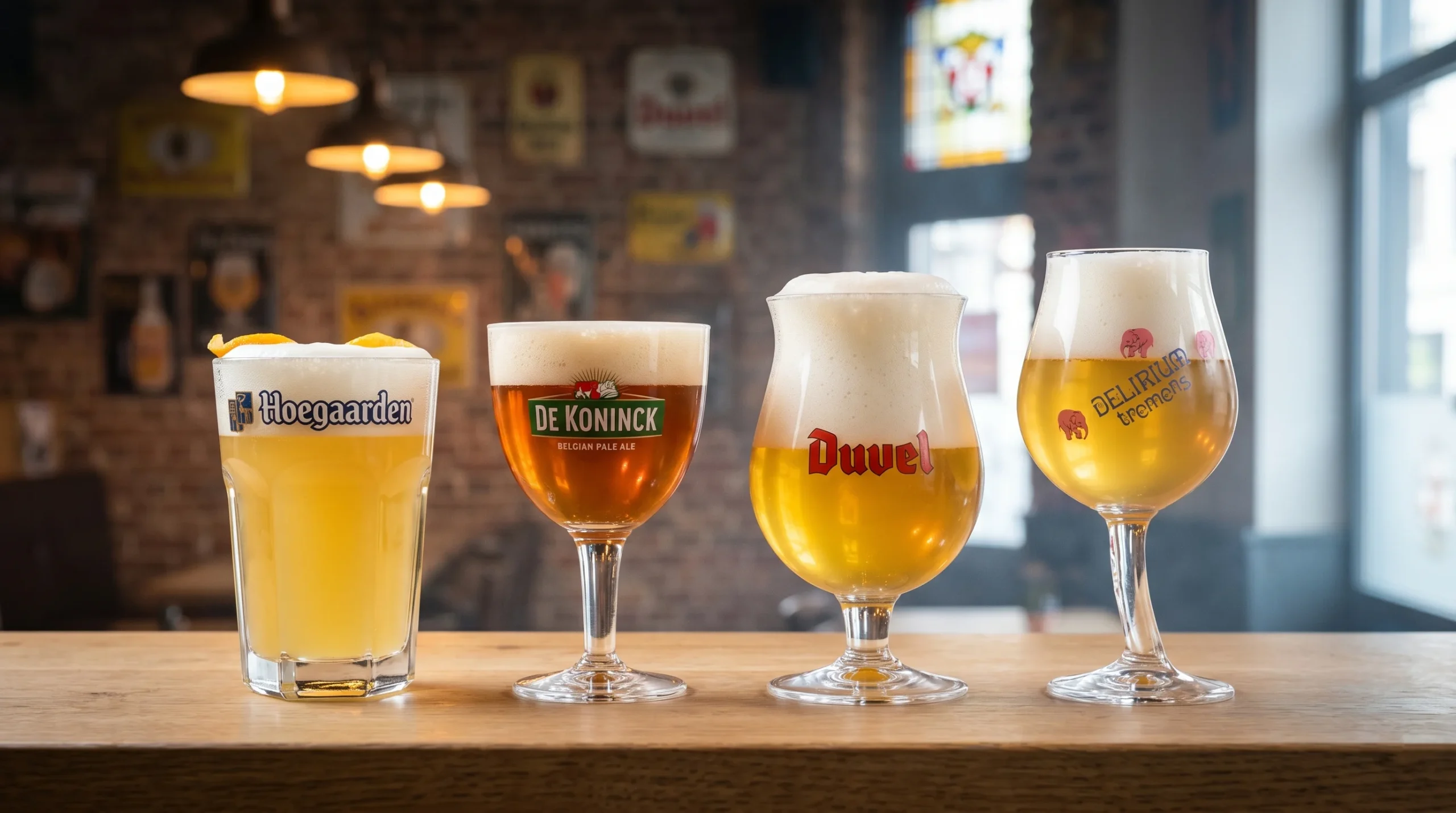
Witbier — Belgian Wheat Beer
Witbier (Dutch for "white beer") is the only Belgian style that uses it. unmalted wheat as the main ingredient.
Unlike German Hefeweizen (which is also a wheat beer), Witbier has additional features. coriander and dried orange peel — Two spices create its distinctive character. Witbier aroma: fresh citrus, slightly spicy coriander, banana ester from yeast, hint of vanilla. Body light, characteristically opaque white.
Witbier's story is quite remarkable. This style has completely dead In the mid-20th century, the last Witbier Brewery—Tomsin in Hoegaarden—closed in 1957. The 600-year-old style had almost disappeared from history.
In 1966, a man named Pierre Celis — not a professional brewer, but a dairy worker in Hoegaarden — decided to revive Witbier. He learned from old brewers who still remembered the recipe, experimented for years, and opened his own brewery. In 1980, Hoegaarden Witbier was launched — and became one of the most successful styles in modern Belgian beer history.
Today, Hoegaarden (now owned by AB InBev) is the world's most popular Witbier. Craft breweries in Belgium and around the globe also make Witbier — Blanche de Bruxelles, Allagash White (USA), Hitachino Nest White Ale (Japan). Every bottle of Witbier you drink today owes a debt to Pierre Celis — the man who saved a 600-year-old style from extinction.
Belgian Pale Ale — Exquisitely Balanced
Belgian Pale Ale is the most "modest" style in the Specialty group — not as powerful as Tripel, not as complex as Saison. But this is the style. most balanced of Belgium — representing the Belgian spirit of "everyday beer.".
Characteristics: amber gold, gentle noble hops (Saaz, Styrian Goldings), Belgian yeast for delicate fruity esters, biscuit malt and light caramel notes, medium body, moderate ABV.
This is the "all-day Belgian beer" style — perfect with lunch, with friends, after work. No intensity, no drama — just balanced and familiar.
A classic example: De Koninck Bolleke (Antwerp — the city's iconic landmark), Palm Speciale, Vieux Temps. De Koninck is special—served in the signature “bolleke” (short, tulip-shaped glass)—so much so that locals call the beer “Een bolleke” instead of the brewery’s name.
Belgian Blond Ale — Golden Light
Belgian Blond Ale is sometimes confused with Belgian Tripel, as both are yellow and use Belgian yeast. However, there are clear differences:
- Blond Ale: Lower ABV than Tripel, lighter body, milder ester character, less "spicy".“
- Tripel: Higher ABV, fuller body, more pronounced ester and spice notes, higher hop intensity.
Belgian Blond Ale is the "entry-level" style for those new to Belgian beer — a beautiful golden color, light ester aroma, and easy to drink. For example: Leffe Blonde (Although not Trappist, it's still a style standard), Affligem Blonde, Brugse Zot.
Belgian Golden Strong Ale — Davel and the Story
Belgian Golden Strong Ale might be the style. “most "deceptive" Belgian beer — bright golden like Pilsner, light body, refreshing… but extremely high ABV.
Beer defines this style as Duvel By Brewery Moortgat. The story behind it: In 1923, Moortgat created a strong beer in response to the popular Pilsner. When the brewery's master brewer tasted the first beer, he exclaimed, "“Dit is een echte duivel!”"(This is a real devil!) — because the beer looks mild but has a high ABV "hidden". The name Duvel ("Devil" in Old Dutch) was born.
Duvel has a distinctive character: double fermentation (primary + secondary in the bottle), long bottle conditioning, noble Czech and Slovenian hops, and characteristic Belgian yeast. The beer has a thick, creamy-white head—to the point that the "correct" way to pour Duvel is an art form (pour decisively into a tulip glass to create a 2-3 cm head of foam).
The Belgian Golden Strong style also exists. Delirium Tremens (Huyghe brewery) — a high ABV beer, served in a glass shaped like a pink elephant (because “delirium tremens” refers to hallucinations caused by excessive alcohol consumption — a clever joke from the brewery).
This is the "style"“Be careful, it's easy to get drunk.”"—because the beer has a light, easy-to-drink character, but the ABV is so high you might not realize it until it's too late.".
Bière de Champagne — When Beer Meets Champagne
A niche but significant style: Champagne (also known as Bière Brut). This is a Belgian style of cooking that combines technique. Method Champenoise French style — second fermentation in the bottle, then remuage (rotating the bottle) and disgorgement (removing sediment) like champagne.
Result: Champagne-like effervescence, complex aromas from yeast aging on lees, light body, high ABV, extremely dry.
For example: DeuS Brut des Flandres (Brewery Bosteels — with the same brewer Tripel Karmeliet) — this beer is brewed in Belgium, then transported to the Champagne region of France to be made into méthode champenoise there. The process takes 9 months and the price is quite high — DeuS is not an everyday drink, but one for special occasions.
This is proof of the philosophy "“no limits”" by a Belgian brewer. If French techniques can elevate beer, why not give it a try? Belgian beer is always open to experimentation, as long as the results are worthwhile.
Belgian Beer in Vietnam — Accessing Heritage
After more than 10,000 words about heritage and style, the final question—and the most important one for Vietnamese readers—is: How can we access this heritage?
Good news: in the last 10 years, the growth of Vietnamese craft beer has brought Belgian beer closer to Vietnamese consumers. Today, if you are in Ho Chi Minh City or Hanoi, you can easily access most Belgian styles — from the ultimate Trappist to the legendary Lambic.
But to get to this point, there have been pioneers—people who have dedicated years of passion and patience to building Belgian beer culture in Vietnam. And among them, there is one name that cannot be overlooked.
Belgian Beer & Barrel Kingdom — The Pioneer
In the story of Belgian beer in Vietnam, there's one name that deserves to be mentioned first: Belgian Beer Kingdom Beer & Barrel.
Established in 2014 in District 3 (Ho Chi Minh City), Beer & Barrel is The first Belgian beer restaurant in Vietnam. — Exclusive importer and distributor of over 100 types of Belgian beer (according to Foody) https://www.foody.vn/ho-chi-minh/beer-barrel-le-quy-don) into the domestic market. The founder is Ms. Nguyen Thi Tuyet — someone who had the opportunity to visit Belgium on a trip and fell in love with its complex beer culture.
The story behind Beer & Barrel has its own unique spirit. After that trip to Belgium, Ms. Tuyet realized something that many Vietnamese people in the 2010s didn't know: beer is not just a refreshing drink. Beer can be... A drink to be savored slowly, with contemplation. — similar to how people enjoy wine.
In 2014, Beer & Barrel opened at 12 Le Quy Don Street, Ward 6, District 3 — nestled in Saigon's neighborhood steeped in French architectural tradition. The space is designed in a vintage European style, with a Belgian beer display tower at the facade — a kind of miniature "beer kingdom" in the heart of the city.
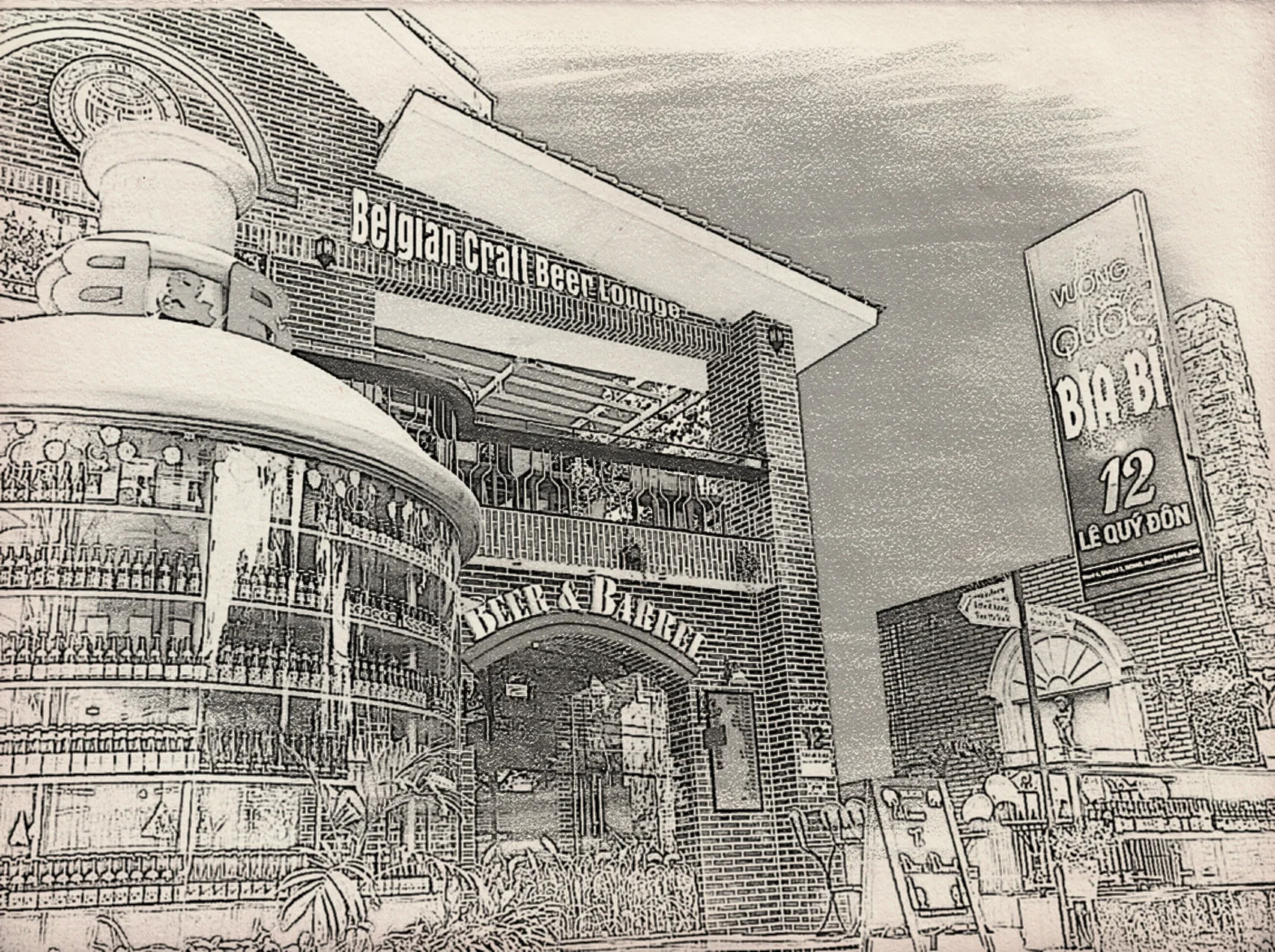
At Beer & Barrel, customers not only get to enjoy authentic Belgian beer — but also get to experience The culture of enjoying beer properly.Each beer was served in its own distinctive glass (as is traditional in Belgium), staff provided knowledgeable advice on the appropriate style, and the atmosphere encouraged slow drinking rather than a frantic "cheers!". Some signature beers on the menu in the past included: Floreffe Prima Melior, Gauloise Triple Blonde, Barbar Bok, Blanche de Manur, RedBocQ, Newton — ranging from Trappist-inspired to Witbier, to Belgian Fruit Beer.
But there are two names in particular that must be mentioned separately — as they are the clearest evidence of the patience and reputation that Beer & Barrel has built over nearly a decade of operation.
Exclusive Contract with Rochefort
Of all the Belgian Trappist brands, Rochefort Saint-Remy Abbey is one of the most selective brands when it comes to choosing distribution partners. They don't sell to just anyone who offers—they only work with partners who have demonstrated seriousness, an understanding of Trappist culture, and a long-term commitment to quality.
Beer & Barrel has achieved something that many other importers have failed to do: Exclusive import contract for Rochefort in Vietnam. This is not something everyone can do. For an independent restaurant in Saigon — not a large corporation, without the backing of a global distributor — securing this contract is a sign of the trust that the Trappist monks have placed in Ms. Tuyet and Beer & Barrel.
Throughout its years of operation, this has been the only place in Vietnam where you can enjoy Rochefort 6, Rochefort 8, and Rochefort 10 In a legitimate and consistent manner, Rochefort 10 — a Belgian Dark Strong Ale ranked among the top 10 best beers in the world by many beer connoisseurs — has arrived in Saigon through the very doors of 12 Le Quy Don Street.
Westvleteren 12 — The “Sacred” Bottles Still Remain
The second amazing story involves Westvleteren 12 — The world's hardest beer to buy.
As mentioned in the Trappist Abbey section, Westvleteren does not sell through conventional distribution channels. The Sint-Sixtus Abbey sells only directly at the abbey gate in West Flanders, with strictly limited quantities per customer, after prior reservation by phone. No exceptions. No VIPs. No exclusive contracts.
To bring Westvleteren 12 to Vietnam, Ms. Tuyet did something that only true passions would do: I flew to Belgium, went all the way to the monastery, lined up with the local Belgians, and bought crates by crate according to the monastery's quota.. This is not a one-time journey. This is patience repeated over many trips, over many years.
The result of that patience: Beer & Barrel once had Westvleteren 12 on its menu — one of the very few places in Southeast Asia at the time that could say so. Each bottle was a piece of the journey to the Sint-Sixtus monastery — not a commercial product, but a symbol. the result of personal dedication.
And here's the most special detail: Even now, after the restaurant has closed, some bottles of Westvleteren 12 are still preserved.. These bottles of beer are more than just drinks — they are living testaments to a time, a journey, and to a Saigon woman who brought Belgian beer culture to Vietnam with her own hands.
A Legacy That Has Closed
But the story of Beer & Barrel has a sad ending.
The COVID-19 pandemic brought an end to the restaurant's journey. Like many other upscale restaurants in Saigon, Beer & Barrel couldn't survive the long months of closure, declining revenue, and the irreversible shift in consumer habits. The doors of 12 Le Quy Don closed — and a part of Saigon's beer culture closed with them.
However, Beer & Barrel was never just a business establishment. For those who have been there—and Beer Magazine has documented this through numerous stories—Beer & Barrel is A place associated with irreplaceable memories..
The first evening trying Westmalle Tripel with my lover, and the first time I understood why beer can be as elegant as wine. A celebratory family meal, when my grandfather first tried Rochefort 10 and nodded – a rare nod from someone who only drank draft beer. Reunions with university friends, when someone ordered a bottle of Rochefort 8 and everyone shared sips like sharing a secret. Nights spent alone at the bar, reading the thick menu, letting the waitress patiently advise on each beer – beginning a love affair that has lasted many years with Belgian beer.
And for some lucky ones — those who are introduced to Westvleteren 12 on special occasions, who get to hear the story behind each bottle — Beer & Barrel is also where they reached the "pinnacle" of the beer world.. An experience that they would find difficult to replicate later, even if they went all the way to Belgium — because the context, atmosphere, and guidance of Beer & Barrel are one-of-a-kind.
To this day, many people are still emotional when they think of Beer & Barrel. Some former customers still keep the signature beers they bought before the restaurant closed — as if preserving a piece of a bygone era. There are stories told repeatedly in Saigon beer groups about "the old days at Beer & Barrel" — not simply out of nostalgia, but because... This place is really more than just a place to drink beer..
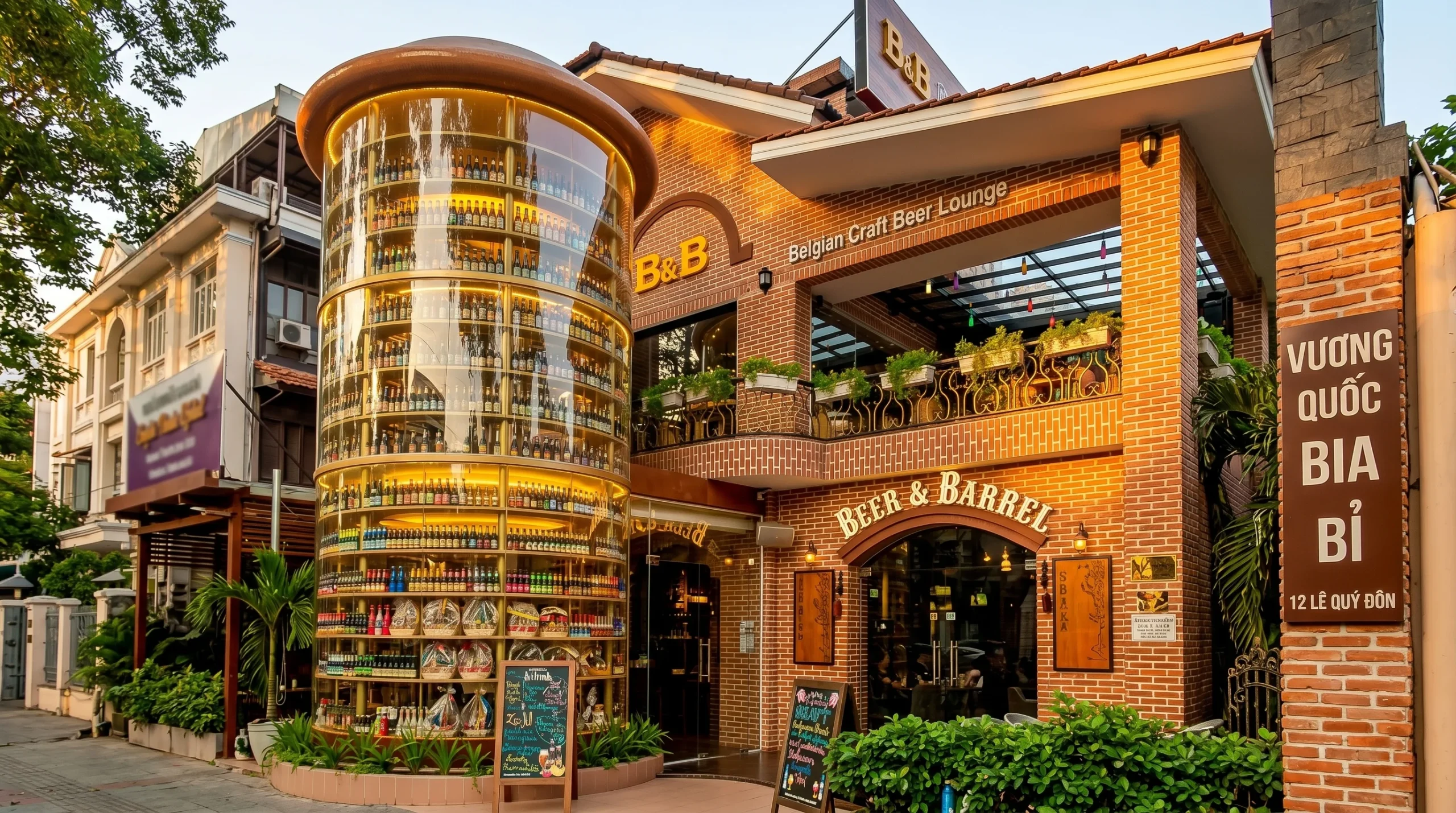
Beer Magazine had the opportunity to rediscover some surviving documents about the old space of Beer & Barrel — including A short video showcasing the restaurant's interior. You can take a look to get a sense of the atmosphere of this place. For those who have never been to Beer & Barrel, this might be the only way to appreciate the sophistication in the design and the passion of the founder.
There is a sad but beautiful truth about heritage: It doesn't need to last forever to be meaningful.. Beer & Barrel has fulfilled its mission — to bring Belgian beer to Vietnamese people in a serious way for the first time, laying the foundation for an entire generation of beer lovers in Saigon, and creating thousands of memories for those who have walked through the doors of 12 Le Quy Don.
Today, when you hold a bottle of Rochefort 10 or Westvleteren 12, remember those who came before you so that you could enjoy them today. Beer & Barrel is one of them. And perhaps that's how heritage works — those who pave the way don't always reach the end, but they made the path endure.
Current Access Channels for Belgian Beer
Besides Beer & Barrel — which has closed but left a legacy — after 10 years of development, the channels for accessing Belgian beer in Vietnam have become more diverse:
Belgian Restaurant & Bar — In Hanoi there are SBB Belgian Beer Club (66 Nguyen Hong Street, Dong Da District) — a bar specializing in Belgian beer with over 100 types of pure Belgian beer imported directly. Opened in 2009, SBB is one of the pioneering establishments for Hanoians to experience Belgian beer. In Ho Chi Minh City, there are also a number of restaurants serving Belgian beer on their menus, although none have yet achieved the scope and expertise that Beer & Barrel once had.
Bottle shop specializing in craft beer. — Most "specialty" Belgian beers can be found in craft beer bottle shops in District 1 and District 2 (Ho Chi Minh City) and the West Lake and Ba Dinh areas (Hanoi). Many shops import directly from Belgian distributors — ensuring quality and freshness (especially important for Lambic and Trappist beers).
High-end supermarket — Large import supermarkets (Annam Gourmet, Tops Market) carry popular brands like Hoegaarden, Leffe, and Chimay. These are easily accessible entry points for newcomers.
Vietnamese craft beer bar — Some craft beer bars in Vietnam have Belgian beers on their menus, usually Hoegaarden, Leffe, Chimay, and sometimes Duvel or Trappist.
Top 10 Belgian Beers Worth Trying in Vietnam
A concrete list for those wanting to begin their Belgian beer journey:
1. Hoegaarden (Witbier) — Entry-level. Pale orange-yellow, coriander and orange flavor, easy to drink. Popular and inexpensive.
2. Leffe Blonde (Belgian Blond Ale) — A friendly Abbey beer. Beautiful golden color, smooth ester, pairs well with all Vietnamese dishes.
3. Chimay Red (Belgian Dubbel) — The most popular Trappist. Reddish-brown, with dried fruit and caramel flavors, pairs well with grilled meats.
4. Westmalle Tripel (Belgian Tripel) — The epitome of style. Amber gold, complex aroma, high ABV but easy to drink. A must-have on the list.
5. Duvel (Belgian Golden Strong) — A “hidden” beer — appears light but is strong. Must be drunk slowly. Especially when poured correctly (creating a thick head of foam).
6. Orval (Unique Trappist) — A style unlike any other. Brett funky aroma, with just the right amount of hop bitterness. Challenging for beginners, but worth it.
7. Chimay Bleue (Belgian Dark Strong) — A classic quadruple. Complex, rich, ideal for a special evening.
8. Rochefort 10 (Belgian Dark Strong) — For those who love Chimay Bleue. Higher intensity, character port wine. One of the best beers in the world. Note: Rochefort was previously exclusive to Beer & Barrel in Vietnam — after the restaurant closed, finding Rochefort through official channels is now much more difficult. Some craft bottle shops may import it in small batches.
9. Saison Dupont (Saison) — The epitome of Saison. Pale gold, citrus and black pepper notes, extremely dry. Discover the Wallonia style.
10. Lindemans Kriek (Fruit Lambic) — Entry-level for Lambic. Fresh cherry, slightly tart, the easiest to drink in the Lambic range. The gateway to the world of Lambic.
Bonus: Westvleteren 12 (Belgian Dark Strong) — The world's rarest beer. There is no official distribution channel in Vietnam. Most of the bottles that have ever been available in Vietnam came from Beer & Barrel — the result of Ms. Tuyet's personal trips to the Sint-Sixtus monastery. Currently, some bottles are still preserved by Beer & Barrel and some former customers — these are "heritage within heritage," not just ordinary drinks.
For those who have already made it past the top 10 and want to go further: search Canton Gueuze, Rodenbach Grand Cru, 3 Fonteinen Oude Geuze. This is the "pinnacle" of Belgian beer heritage.
A film clip from that era: Beer & Barrel's YouTube channel features a video showcasing some of the finest Belgian beers that have arrived in Saigon through the doors of 12 Le Quy Don Street. Each bottle tells a story — and this footage is the only way to visualize the diversity the restaurant has brought to Vietnam. See here.
Pair Belgian Beer with Vietnamese Dishes
Because this article is long, I can't go into detailed pairings. But here are some combinations worth trying:
- Beef pho + Belgian Dubbel (Chimay Red) — The dried fruit notes of Dubbel resonate with the cinnamon and star anise spices of pho.
- Bun cha (Vietnamese noodle dish) + Witbier (Hoegaarden) — Coriander and orange in the beer harmonize with herbs and dressing.
- Roast duck + Flanders Red Ale (Rodenbach Grand Cru) — Acidity and fat content, character wine-like, elevates the meat dish.
- Grilled Seafood + Saison (Saison Dupont) — High dryness and characteristic peppery clean palate
- Bun bo Hue (Hue-style beef noodle soup) + Gose or Berliner Weisse — Details are provided in the article. Sour Beer
- Dark Chocolate + Belgian Dark Strong Ale (Westvleteren 12, Rochefort 10) — The ultimate dessert combo
For a Belgian IPA pairing with Vietnamese dishes, see the article. Bitter Beer. For pairing dark Belgian ales (Dubbel, Quad) with Vietnamese dishes, see the article. Stout (Belgian Dark Ale section).
A Discovery Route for Beginners
If you've never drunk Belgian beer and want to start, here's a 6-month plan:
January-February: Entry-level — Hoegaarden, Leffe Blonde, Chimay Red. Get acquainted with Witbier, Belgian Blond, Dubbel.
March-April: Delving deeper — Westmalle Tripel, Duvel, Saison Dupont. Experience the complexity of Belgian yeast.
May: Unique Discoveries — Orval, Rodenbach Grand Cru. Clash with character Brett and sour Belgian.
June+: Peak — Chimay Bleue, Rochefort 10 (if found), Cantillon Gueuze. Journey to Quadrupel and Lambic.
After six months, you'll have a solid foundation in Belgian beer. You'll be able to distinguish Westmalle from Chimay from Rochefort. You'll understand why Duvel isn't a beer to drink quickly. You'll be able to feel the difference between young and old Lambic.
And most importantly: you will Feel the 1,000-year heritage in every glass.. You may not have the chance to visit Beer & Barrel to begin this journey like many Saigonese have. But the spirit that Beer & Barrel initiated — drinking slowly, respecting style, appreciating as art — can still continue in the bottle shops and craft beer bars that are still operating today. Heritage isn't in the location. Heritage is in how we approach it.
What Can Vietnam Learn from Belgium?
This is an open-ended question to conclude this section — and also a bridge to the final section.
Vietnam has a rich tradition of beverages — filter coffee, lotus tea, Central Highlands rice wine, sticky rice wine, fish sauce. Each of these products has its own history, techniques, and culture. But compared to Belgium, we are not yet... formalize heritage to the point of UNESCO recognition.
What did Belgium do to gain UNESCO recognition? They did:
- Preserving centuries-old brewing traditions — not giving up even as Pilsner takes over the market.
- Developing professional systems — zythologist, beer brotherhood, beer pairing
- Integrating beer into cultural life — pub culture, family, festivals
- Passing knowledge down through generations — brewer family, master blender mentorship
- Registered for legal protection — Lambic TSG, Trappist ATP, Belgian Beer UNESCO
Vietnam can learn from these steps. And it also needs pioneers—like Ms. Nguyen Thi Tuyet and Beer & Barrel—who are willing to invest in bringing foreign heritage and building a culture of beer appreciation in Vietnam, even if the journey doesn't always reach its destination. Because a strong beer culture doesn't come on its own—it needs people who dare to lead, willing to patiently educate the market for many years. Beer & Barrel may no longer exist, but what they sowed—an interest in quality beer, a culture of slow beer enjoyment, respect for style—is still growing in the Vietnamese beer community.
Could Vietnamese filter coffee become a UNESCO heritage? The answer is yes — if we are willing to invest in it. If there is a generation that believes that Vietnamese coffee is not just a beverage, but something special. Culture deserves to be protected..
Belgium has proven that a small country can gain worldwide recognition for its beverage culture. This is not the prerogative of large nations. This is the result of commitment to heritage.
Conclusion — A Lesson About Heritage
When we begin this article, we ask a question: Why does Belgian beer deserve UNESCO recognition?
Hopefully, the answer is clear by now.
It's not because Belgian beer is "the best in the world" — Germany, England, the United States, and many other countries also have excellent beers. Nor is it because Belgium has "the most beer" — quantities can be measured, but culture cannot.
Belgium is recognized for something else — something difficult to define but clear once you're in the middle of it: In Belgium, beer isn't just a product. Beer is a way of life.
Pieces of Heritage
In the last 13,000 words, we have covered:
- 1,000 years of history — from medieval monasteries to modern craft breweries
- 6 Trappist monasteries — a place for prayer and brewing beer is one and the same.
- Pub culture — Brown Café, individual glassware for each beer, beer menu with over 2,000 varieties.
- Brewery Families — traditions preserved through 4, 5, or 7 generations
- UNESCO recognition — Officially recognizing the heritage on the international stage
- 5 style groups — Trappist, Lambic, Flanders Sour, Saison, Belgian Specialty
- Dozens of legendary breweries — Cantillon, Rodenbach, Westmalle, Westvleteren, Chimay, Orval…
Each piece of this puzzle is a story in itself. Together, they form a whole. unique culture which no other country possesses.
A Thought on Vietnam
While writing this, I kept thinking about Vietnam. What can we learn from Belgium?
Vietnam has a rich tradition of beverages. There's Vietnamese filter coffee with its unique, handcrafted brewing method; West Lake lotus tea with its natural lotus aroma; Central Highlands rice wine with its communal rituals; and Phu Quoc fish sauce with its 12-15 month fermentation process. Each has its own historical depth, unique techniques, and place in the culture.
But we are facing challenges similar to those faced by 19th-century Belgium. Global pressures are causing "global" products (Starbucks, Heineken, soft drinks) to dominate the market. Traditional techniques are gradually being replaced by industrial production. The younger generation may not see the value in preserving tradition — because tradition doesn't "scale," doesn't "grow," and doesn't "exit.".
Belgium chose the opposite path. When Pilsner dominated the market in the 19th century, Belgian brewers didn't abandon Lambic, Trappist, or Saison. They accepted lower sales to preserve tradition. When globalization threatened 20th-21st century beer culture, Belgium registered for legal protection — TSG for Lambic, ATP for Trappist, UNESCO for the entire beer culture.
Vietnam could do the same for Vietnamese filter coffee, rice wine, and fish sauce — if we are willing to invest in heritage, not just the market.
A Bigger Lesson
There's another, deeper lesson that Belgian beer teaches us—a lesson that has nothing to do with business or marketing.
In a world driven by speed—drink fast, eat fast, live fast—Belgium is an outlier. A glass of Lambic aged for three years. A bottle of Westvleteren 12 purchased after a phone reservation. A dinner at Brown Café lasting three hours. A 150-year-old Rodenbach beer cask still fermenting as you read this.
This is slow living philosophy — Not slow because of laziness, but slow because of understanding that Some things take time to become worthwhile.. Microorganisms need time to "settle" in the wooden barrel. Traditions need time to form. Culture needs time to be recognized.
When UNESCO recognized Belgian beer in 2016, they were actually celebrating this — not the beer itself, but the beer. the patience of a nation. Patience to preserve Lambic for 500 years when no one else did. Patience to pass down the family recipe through 5-7 generations. Patience for the Trappist monk to refuse to "scale up" even though he could have made millions of dollars.
In a modern culture that prioritizes speed, patience is a form of rebellion. Belgian beer is proof that such rebellion can exist—and can be celebrated.
Final words
Next time you hold a bottle of Belgian beer in your hand—whether it's Hoegaarden at the pub, Chimay Red at the bottle shop, or Westmalle Tripel at a special dinner—take a moment to remember:
You are holding 1,000 years of history in your hands.
You are holding the legacy of a small Western European nation that refused to abandon its traditions in the face of globalization pressures.
You are holding the product of people—monks, brewer families, master blenders—who have dedicated their lives to preserving the knowledge passed down from their ancestors.
You are holding Intangible Cultural Heritage of Humanity in hand.
Drink slowly. Savor it. Remember to be grateful to those who have kept this heritage alive to this day.
And if you ever get to Belgium—go to Brussels, to Roeselare, to Pajottenland. Stand in the middle of a Brown Café while the gaslight burns warmly. Visit the Rodenbach Fountain Hall. If you're lucky, go into a Trappist monastery and buy a case of Westvleteren 12 directly.
That's when you're not just drinking beer. That's when you living with heritage.