
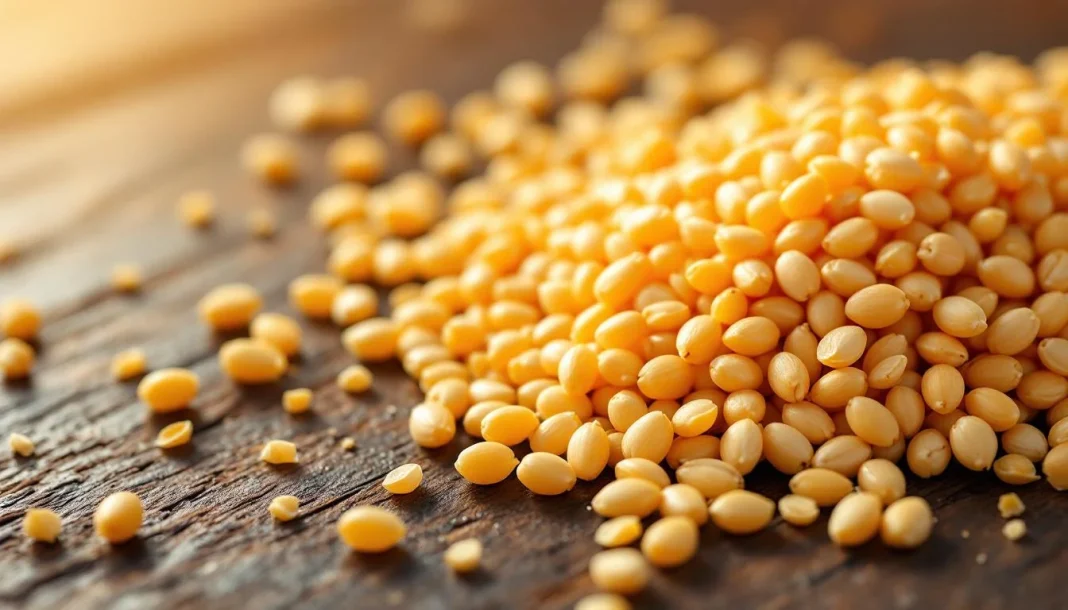
Some malts are born to be the backbone. Some malts are born to create color or distinctive flavor. But Wheat malt—wheat malt—is born to bring softness. It doesn't overpower. It supports. It makes everything rounder, gentler.
When we sip Hefeweizen on a summer afternoon, that creamy sensation on the tongue—largely comes from the wheat malt. The pristine white foam that holds its shape on the rim of the glass, not dissolving quickly—that too is the work of the wheat. This malt doesn't seek to impress. It simply does its job quietly.
Origin and history
Wheat has been a part of humankind for over 10,000 years. But in the history of beer, it was once a forbidden ingredient.
In 1516, the Reinheitsgebot—the German beer purity law—was enacted in Bavaria. Only barley, water, and hops were permitted for brewing beer. Wheat was excluded. The reason wasn't about quality. The reason was economic and political. Wheat was too precious for bread—the people's food. Using it to brew beer was an unacceptable luxury.
But the Bavarian nobility did not abide by their own rules. The Degenberg family in the Bohemian Forest held a monopoly on wheat beer production from 1520. When the family died out in 1602, that right passed to Duke Maximilian I of Bavaria. Weissbier—white beer, wheat beer—became a huge source of revenue for the royal family.
By the 19th century, wheat beer had almost disappeared. Lager dominated the market. But in the 1960s, the Schneider brewery in Kelheim, Bavaria, began to revive the tradition. Georg Schneider VI was determined not to let Weissbier die. He succeeded.
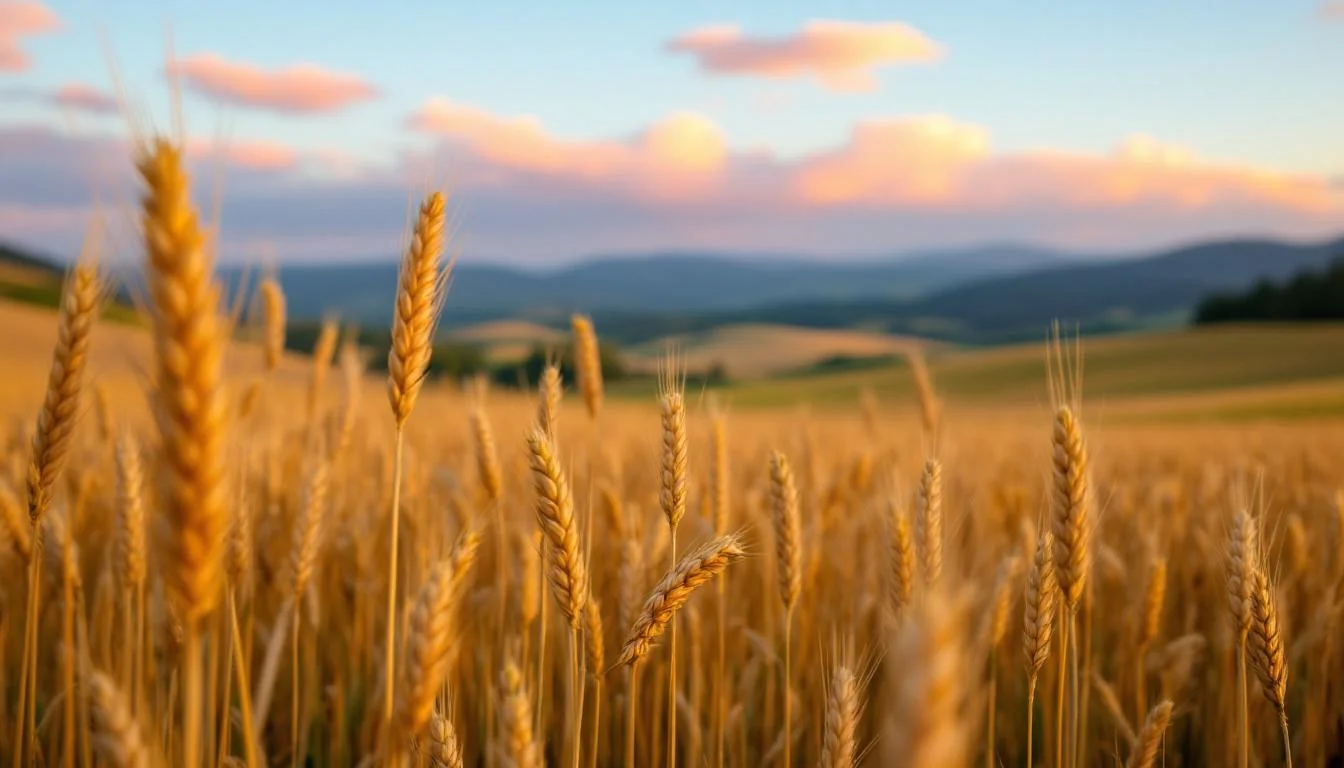
Today, wheat malt is produced throughout Germany. Major maltsters such as Weyermann in Bamberg, Bestmalz in Heidelberg, and Ireks in Kulmbach all have their own wheat malt lines. Bavaria remains the center. But the wheat used to make malt can come from anywhere—from the Thuringia plain to the Brandenburg fields.
German wheat malt differs from malts from other regions. The European winter wheat variety, the lengthy germination process, and the gentle drying method create its unique characteristics. It's a combination of centuries-old tradition and modern science.
Production process
Wheat doesn't have a husk like barley. This changes everything in the malt production process.
Wheat grains are soaked in water at a temperature of approximately 12-15°C. This process lasts 40-50 hours, with alternating soaking and resting periods. The moisture content of the grains needs to reach approximately 43-461 tbsp — higher than that of regular barley. Wheat absorbs water faster because it lacks a protective husk.
The germination period lasts 4-5 days. The temperature is maintained at around 14-18°C. Enzymes develop inside the seed—especially protein-digesting enzymes. Wheat has a higher protein content than barley, so this process is crucial. Root sprouts appear and gradually lengthen. When the length of the root sprouts reaches about 3/4 the length of the seed, germination stops.
Drying wheat malt requires gentle handling. The temperature is increased gradually, starting at around 50°C and ending at 80-85°C. The drying time lasts 18-24 hours. The goal is to retain the light color and preserve the enzymes. This process also helps remove the root sprouts—an undesirable part of the final product.
After drying, the malt is cooled and the rootlets are removed using a rooting machine. The final product is pale yellow wheat malt with a mild aroma of grains and honey.
Technical specifications
German wheat malt has a very light color. The color index ranges from 3-5 EBC, equivalent to 1.5-2.5 Lovibond. This is one of the lightest malts, only slightly lighter in color than Pilsner malt.
Wheat malt has an extractability of approximately 82-851 TP3T by dry weight. This is higher than most common malt bases. The reason lies in the fact that the wheat does not have the husk — the part that does not contribute to the extract but accounts for about 10-131 TP3T of the grain weight. The absence of the husk means more starch in the same volume.
Wheat malt has a protein content of 11-141 TP3T, significantly higher than Pilsner malt's 9-111 TP3T. This protein is the source of the characteristic foam and smooth body. However, it can also cause cloudiness—which is not a drawback in traditional wheat beer styles.
Wheat malt has a relatively high diastatic enzyme activity, reaching approximately 280-350 WK (Windisch-Kolbach units). This means it can not only metabolize its own starch but also support other malts or unsprouted grains. In fact, many recipes use wheat malt to supplement enzymes for other ingredients.
The moisture content of finished wheat malt is typically below 51 TP3T. Friability—the porosity of the grain—is above 801 TP3T, indicating complete transformation.
Flavor and color
Wheat malt isn't the kind of malt that creates complex or groundbreaking flavors. It's more subtle than that.
The dominant aroma is fresh grain—the smell of freshly milled wheat, flour, sometimes freshly baked white bread. No caramel. No roasted notes. Just the purity of grain.
When combined with German wheat yeast, especially Weizen strains like Wyeast 3068 or Fermentis WB-06, wheat malt contributes to more complex flavors. This yeast produces characteristic esters and phenols—banana, clove, sometimes even bubblegum or vanilla notes. But that's the yeast's job. The wheat malt only provides the foundation for those flavors to shine.
In terms of color, Wheat Malt produces beers ranging from pale yellow to straw yellow. Clarity depends on the brewing style and technique. With Hefeweizen, the beer is often cloudy due to suspended proteins and yeast. With American Wheat Ale, the beer can be clearer if filtered.
The most important characteristic that Wheat Malt offers is its mouthfeel. The high protein content creates a soft, almost creamy body. Not the heaviness of Munich or Crystal malts, but a smooth, light glide on the tongue.
The foam also benefits. The protein in the wheat helps create a thicker, more stable, and smoother foam. A properly poured glass of Hefeweizen will have a pristine white foam that stands firm like whipped cream, melts slowly, and leaves streaks of Belgian lace on the sides of the glass.
Typical beer style
Wheat malt is an indispensable ingredient in our family. wheat beer.
Hefeweizen—unfiltered German wheat beer—is a defining style. Traditional recipes require a minimum of 50% Wheat Malt in the grist, with many breweries using up to 60-70%. Names like Weihenstephaner Hefeweissbier, Schneider Weisse Original, and Paulaner Hefe-Weißbier all build upon this foundation. These beers have a soft body, creamy head, and characteristic banana-clove aromas from the yeast.
Kristallweizen—a filtered version of Hefeweizen—also uses a similar proportion of wheat malt. The difference lies in the filtering process, not the raw materials.
Dunkelweizen — a dark wheat beer — combines wheat malt with darker malts such as Munich or Carafa. The result is a beer with a coppery brown color, a more complex flavor with subtle caramel and chocolate notes, but still retaining the characteristic smooth body of wheat.
Weizenbock—a stronger version of wheat beer—pushes the alcohol content to 7-9 % ABV. Schneider's Aventinus is a classic example. Wheat malt still plays a major role, creating a full-bodied character to balance the high alcohol content.
Outside of Germany, Belgian beer There is Witbier — a style that uses both sprouted and unsprouted wheat, combined with orange peel and coriander seeds. Hoegaarden and St. Bernardus Wit are well-known examples. Wheat malt here typically accounts for around 30-50g grist.
American Wheat Ale and Wheat Beer from the craft beer movement also rely on wheat malt, but are often paired with American ale yeast—which doesn't produce the banana-clove notes of German yeast. The result is a cleaner beer, allowing the wheat to speak for itself.
Comparison with malts in the same group
Within the family of wheat malts, Standard Wheat Malt is not alone.
Pale Wheat Malt and Standard Wheat Malt are essentially the same. This is the most common version, light in color, with a neutral flavor, suitable for most wheat beer recipes.
Dark Wheat Malt is roasted at a higher temperature, achieving a color of 15-20 EBC. It imparts stronger biscuit and bread crust notes, making it suitable for Dunkelweizen or beers requiring greater flavor depth.
Caramelized wheat malt has a color of approximately 110-140 EBC. It is a specialty malt, used in small quantities to add caramel and toffee notes to beer.
Compared to Torrified Wheat and Flaked Wheat—unsprouted wheat varieties—Wheat Malt has the advantage of enzymes and self-transformation capabilities. Torrified Wheat and Flaked Wheat rely on enzymes from other malt bases to metabolize starch. However, they produce similar body and foam, at a lower cost.
Compared to Pilsner Malt or Pale Malt from barley, Wheat Malt has a higher protein content, resulting in a softer body and more stable foam. However, it is also more difficult to filter during brewing because it lacks the husk—the natural material that helps filter the wort. Many brewers combine Wheat Malt with Rice Hulls to improve the filtering process.

How to recognize when enjoying it
To truly appreciate wheat malt, we need to pay attention to the subtle details.
First, there's the foam. A beer with a high percentage of wheat malt will have a thick, fine, and persistent head of foam. The foam doesn't dissipate quickly after a few seconds but stands firm, slowly collapsing, leaving white streaks on the sides of the glass. If the beer has a thin, quickly dissipating head of foam, it's possible that the wheat malt doesn't make up a significant proportion.
Next is the mouthfeel. Bring the beer to your mouth and let it glide over your tongue. Wheat malt beer will be smooth, almost creamy, not harsh or rough. It's not the heaviness of dark malt, but rather a smooth, gentle sensation.
The aroma of grains is the third sign. Bring the glass of beer to your nose and inhale gently. Beneath the notes of banana, clove, or hops, there's a fresh, grainy undertone—the smell of wheat, flour, white bread. This aroma doesn't overpower anything. It's quietly present.
Finally, there's the cloudiness. With Hefeweizen and Witbier, cloudiness is normal—due to proteins and yeast. With American Wheat beer, it can be clearer. But both retain the characteristics of wheat.
Next time you hold a glass of Hefeweizen in your hand on a summer afternoon, pause for a moment. Look at the pristine white foam. Feel the smoothness on your tongue. Think of the wheat fields of Bavaria. Of the centuries-old history of brewers and malters. Of the journey from grain to glass of beer.
That's how we appreciate a glass of beer.