Some malts are born to tell stories. Smoked Malt is one of them — not through words, but through smoke. The smoke permeates each grain, infusing the proteins and starches, then reborn in the glass of beer as a memory of ancient ovens.
Before modern drying ovens, all malt had a smoky flavor. That was inevitable in the modern era. But as technology changed, the smoke gradually disappeared from beer. Only Bamberg—a small town in Franconia—retained that smoky flavor. And Smoked Malt became a heritage.
Origin and history
The story of Smoked Malt begins with necessity, not choice.
In the 16th century, all of Europe dried malt directly over fire. The wood burned, smoke rose, and the malt absorbed it. Every beer at that time had a smoky flavor—from English ales to German lagers. Nobody thought it was special. It was simply the only way.
In 1635, the indirect drying oven appeared in England. Coke replaced wood. Smoke disappeared. By the 18th century, most of Europe had switched to new technology. Beer became "cleaner," lighter. But Bamberg—a town of 70,000 in Upper Franconia, Bavaria—refused to change.
It's not because they're conservative. It's because they love that flavor.
Schlenkerla—a brewery founded in 1405—still maintains tradition. They dry the malt using oak wood from the surrounding forests, just as their ancestors did 600 years ago. Weyermann Malting, also founded in Bamberg in 1879, later became the world's largest producer of smoked malt.
In 1992, the BJCP officially recognized Rauchbier as an independent beer style. Smoked malt, once a local specialty, became a globally sought-after ingredient. Craft breweries from the US to Japan began experimenting. The ancient smoky flavor was reborn in modern recipes.
Today, Bamberg remains a sanctuary. Nine breweries in this small town continue to produce Rauchbier. UNESCO has recognized Bamberg's old town as a World Heritage Site — and smoked beer is an integral part of that heritage.
Production process
Smoked malt starts like any other malt: soak, germinate, wait. But at the final step, everything takes a different turn.
Barley is soaked in water for 24 to 48 hours, reaching a moisture content of approximately 44-46 LTP3T. The seeds germinate in 4-6 days, enzymes develop, and starch is ready for conversion. At this point, the process is still completely normal.
Then the fire was lit.
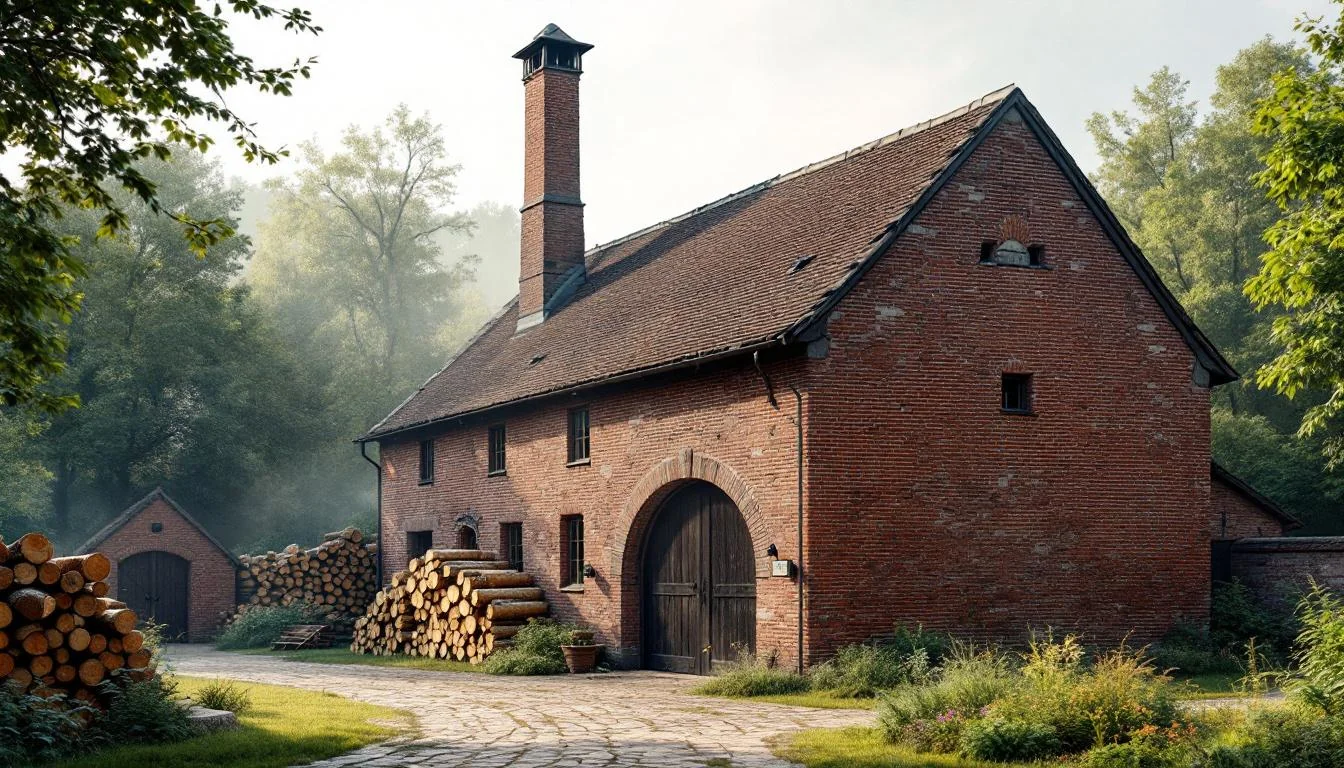
At Weyermann, they use oak from Franconian forests. The wood is burned in a separate kiln, with smoke channeled through pipes into a drying chamber where the green malt is waiting. The temperature is kept low—around 55-60°C in the initial stage—to allow the smoke time to penetrate each grain.
The process takes 24-48 hours. The malt absorbs phenolic compounds from the smoke: guaiacol creates a smoky flavor, syringol provides a woody aroma, and 4-methylguaiacol gives a warm sensation. The temperature is gradually increased to 80-85°C to complete the drying process.
The type of wood determines the character of the malt. Oak wood gives a subtle, balanced smoky flavor. Alder wood (common in the US) creates a gentler taste. Cherry wood brings fruity notes. Peat—the peat of Scotland—gives a strong, smoky flavor reminiscent of Islay whisky.
Technical specifications
In terms of data, Smoked Malt is almost indistinguishable from regular Pilsner Malt. The difference lies in what cannot be measured by machines.
The color ranges from 2 to 6 EBC, equivalent to 1.5-3 Lovibond. It's so light that it barely affects the beer's color. The extract content is approximately 80-82% — the standard for high-quality base malts.
Protein content is in the range of 10-11.5%, sufficient to support opacity and foam retention. Moisture content is below 5%. Diastat (enzyme) capacity remains intact, allowing for self-transformation of starch during cooking.
The only difference: phenol content. Weyermann reports 10-30 ppm phenol in their Beechwood Smoked Malt. Briess (USA) with Cherry Wood Smoked Malt has lower levels, around 5-15 ppm. Peat Malt from Scotland can reach 50 ppm or higher.
This number determines the intensity of the smoke in the beer. 10 ppm gives a subtle aroma. 30 ppm creates a strong impression. 50 ppm or more will dominate all other flavors. Brewers need to understand the phenol index of each batch of malt to control the results.
In terms of functionality, Smoked Malt can make up a 100ml malt bill in a traditional Rauchbier. Or just 5-10ml when you want to add a subtle layer of complexity. There's no fixed formula — only the balance each brewer finds.
Flavor and color
Open a bottle of traditional Rauchbier. Take a deep breath. It smells of a winter hearth, of bacon hanging in the barn, of oak wood burning in the night.
Smoked malt doesn't contribute significantly to the color. The beer retains its straw yellow or amber hue depending on the other malts in the recipe. But the aroma and flavor—that's where smoked malt truly shines.
The top notes are pure woody smoke. Not the pungent smoke of charcoal, but the gentle smoke of hardwood. Warm. Enveloping. Evokes memories of camping trips or fireplaces on cold nights.
Beneath the surface is bacon. Not crispy fried bacon, but traditional smoked bacon — melted fat, red meat, mineral salts. This umami sensation comes from phenolic compounds interacting with malt proteins.
Deeper down are notes of leather, damp earth, and sometimes even a hint of metal. These notes emerge when the Smoked Malt ratio is high or when Peat Malt is used instead of oak.
The taste on the tongue begins with a light malty sweetness, transitioning to smoke in the middle, and finishing with a long, smoky aftertaste. Hop bitterness is balanced by the natural saltiness from phenols. Low to medium carbonation prevents the smoky notes from dissipating.
Interestingly, the smoky flavor in beer changes with temperature. Too cold, the smoke is suppressed. Too warm, the smoke becomes harsh. 8-12°C is the ideal balance — cool enough to be refreshing, warm enough for the smoke to be released.
Typical beer style
Rauchbier is the birthplace of Smoked Malt. But the aroma of smoke has traveled far beyond Bamberg.
Rauchbier (Bamberg Smoked Lager) — Original style, using 100% Smoked Malt. Schlenkerla Märzen is the benchmark: deep amber color, strong bacon aroma, balanced sweet malt flavor with rich smoke. Alcohol content 5-6%, bitterness 20-30 IBU. Belongs to the family traditional lager, but with a completely different personality.
Smoked Porter and Smoked Stout — A natural combination of roasting and smoking. Alaskan Smoked Porter (USA) is a classic example, using malt smoked on local alder wood. The smoky notes blend with chocolate and coffee, creating an incredibly complex layering. A distinctive variation in the world. stout.
Grätzer/Grodziskie — A Polish smoked wheat beer, nearly extinct and then revived. Light, bright, high carbonation, subtle smoky notes. Made with 100% oak-smoked wheat malt. Alcohol content of only 2.5-3.5%, ideal for summer. A different approach to wheat beer traditional.
Smoked Scotch Ale and Wee Heavy Scotland has a tradition of using Peat Malt in whisky, and some breweries have adopted it. strong beer. The smoky aroma is more intense than oak, combined with rich caramel and warm alcohol notes. Not common, but impressive.
Furthermore, Smoked Malt appears in small proportions in many experimental styles: Smoked IPA, Smoked Saison, and even Smoked Gose. Not to dominate, but to add an unexpected depth.
Comparison with malts in the same group
Within the specialty malt family, Smoked Malt stands alone. No other type achieves the natural smoky flavor from the drying process. However, comparisons are still worth making.
Beechwood Smoked Malt vs Peat Malt —The difference is like day and night. Beechwood offers gentle smoke, bacon, and warm wood notes. Peat Malt offers intense smoke, tobacco, iodine, and sea notes. Beechwood pairs well with lagers and porters. Peat Malt is for those who love Islay whisky and want an extreme experience.
Smoked Malt vs Rauchmalz — Actually, they are one and the same. Rauchmalz is simply the German name for Smoked Malt. But when you see "Rauchmalz" on the label, it's usually a product from Germany with the traditional Bamberg style.
Smoked Malt vs Melanoidin Malt — Both add depth to beer, but in different ways. Melanoidin Malt creates toasted bread and honey flavors from the Maillard reaction. Smoked Malt creates smoky flavors from phenols. It's possible to combine both in the same recipe for maximum complexity.
Smoked Malt vs Liquid Smoke — Some commercial breweries use artificial smoke flavoring instead of Smoked Malt. The results are completely different. Liquid Smoke gives a one-dimensional, harsh smoky flavor lacking depth. Smoked Malt creates a vibrant smoky flavor that changes with temperature and time. There are no shortcuts to replacing tradition.
How to recognize when enjoying it
Don't rush to drink. With smoked beer, the ritual begins before lips touch the glass.
Raise the glass to your nose. Inhale gently. The smoky notes will come first—not cigarette smoke or car exhaust, but kitchen smoke, wood smoke, the smoke of winter afternoons in a wooden house. If you recognize bacon or ham, it's Beechwood Smoked Malt. If there's hint of tobacco, iodine, or the distant sea, it's Peat Malt.
With the first sip, let the beer spread across your tongue. Smoke should appear in the middle of your palate, not at the tip of your tongue. The sweet malt flavor comes first, followed by the smoke, and the hop bitterness finishes. If these three layers are clearly separated, it's a well-brewed smoky beer.
Pay attention to the temperature. As the beer warms in your hand, the smoky aroma unfolds, becoming more complex. That's why people in Bamberg drink Rauchbier slowly, not as hastily as they would with a Pilsner in the summer.
The aftertaste is the ultimate measure. Quality smoked beer leaves a long, warm aftertaste, like sitting by a fireplace after dinner. If the aftertaste is harsh, spicy, or disappears too quickly—something is wrong in the production process.
Pair it with: smoked cheese, Franconia sausage, BBQ grilled meat. Or, more simply—just a quiet evening and some patience.
In the homogeneous world of industrial beer, Smoked Malt reminds us that there was a time when everything had a fiery flavor. And sometimes, the best way to move forward is to look back.