
In 1993, a small brewery in Bavaria had to decide: continue using the old hop variety with its uncertain supply, or switch to Magnum—a new variety that was little known. They chose Magnum. Thirty years later, that choice became the industry standard.
Magnum isn't a hop variety to show off. It doesn't have the tropical mango aroma, nor the striking pine notes. It does one thing: it delivers clean bitterness, then retreats. And it is this very humility that makes it one of the most widely used hop varieties in the world.
Origin and history
Magnum originated at the Hüll Hop Research Institute in Bavaria, Germany. This is the world's oldest hop research facility, operating since 1926. In 1980, scientists at Hüll completed the breeding process for Magnum, but it wasn't officially registered and commercially released until 1993.
Magnum's parents are Galena—an American hop variety with a high alpha acid content—and a German hop line numbered 75/5/3, which has no trade name. The goal of the breeding program was clear: to create a high-alpha acid hop for bittering, while retaining the clean, neutral character typical of German hop.
The arrival of Magnum coincided with a period when the industrial beer industry was seeking more efficient solutions. Traditional hop varieties like Hallertauer Mittelfrüh were susceptible to disease, had low yields, and modest alpha acid content. Breweries wanted something more reliable—something that could produce strong bitterness without using excessive amounts of raw materials.
The Hallertau region, where Magnum is grown, is the world's largest hop growing area. Approximately 2,400 hectares of agricultural land are dedicated to hop, accounting for nearly one-third of global hop production. Hallertau's soil has deep clay layers, and its continental climate with cold winters and warm summers is ideal for hops to develop strong roots and accumulate bitter acids.
After its launch, Magnum quickly spread beyond Germany's borders. Breweries in the US, China, and South America began importing it. By the 2000s, Magnum was also being grown in the Yakima Valley, Washington—where the drier climate produced a version of Magnum with a slightly higher alpha acid profile than the original German strain.

Interestingly, Magnum never really became popular with the average beer drinker. No one would call out "IPA made with Magnum" or search for its signature flavor. But among brewmasters, Magnum was a household name—like salt in the kitchen. No one talked about salt, but without it, everything tasted bland.
Technical specifications
Magnum belongs to the hop group with a high alpha acid content, ranging from 101 TP3T to 141 TP3T depending on growing conditions and harvest year. German-grown versions typically range from 11-131 TP3T, while American Magnums can reach 141 TP3T. Beta acid is in the range of 4.5-61 TP3T, creating a fairly balanced alpha/beta ratio—this contributes to a soft, non-harsh bitterness.
Magnum has a relatively low total oil content, only about 1.0-1.5 ml/100g. The main oil components are humulene and myrcene, but in modest amounts. Because of this low oil content, Magnum doesn't offer much aroma when used for late-hopping or dry-hopping — it's designed to work in the early stages of cooking.
Magnum has fairly good shelf life. After 6 months of storage at room temperature, it still retains approximately 75-80% of its original alpha acid content. This is important for large breweries, where the raw material may sit in storage for months before use.
The Magnum harvest season in Hallertau typically falls between late August and mid-September. This variety has good resistance to verticillium wilt—a disease that devastated many traditional German hop varieties in the 1970s and 1980s.
Aroma and flavor
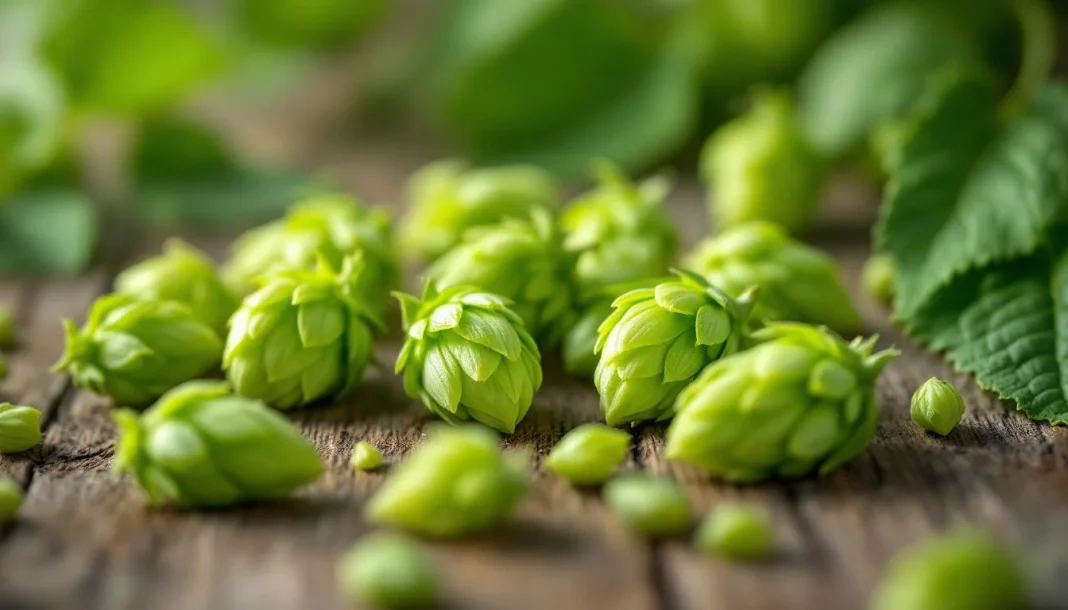
If you smell a handful of fresh Magnum hops, you'll detect a subtle herbal scent—somewhere between dry grass and green leaves. No ripe fruit, no vibrant flowers. Just something clean, almost invisible.
When boiled in wort, Magnum releases iso-alpha acids—compounds that create bitterness. This bitterness is described as "clean" and "neutral," meaning it doesn't leave a lingering aftertaste or a harsh sensation in the throat. Compared to some other hop bitterings like Galena or Nugget, Magnum has a softer bitterness that dissolves more easily into the overall beer.
There's a subtle hint of spice in Magnum—somewhat reminiscent of white pepper or nutmeg. But this flavor is very delicate, only emerging upon careful tasting and often masked by other ingredients in the beer. Some brewmasters recognize this note and consider it Magnum's "signature," distinguishing it from other neutral bittering hops.
Once the beer has fermented and stabilized, the bitterness from the Magnum becomes subtle. It doesn't stand alone as a prominent element, but blends into the beer's structure like the framework of a house—we don't see it, but it holds everything together.
For those accustomed to American IPAs with their tropical flavors, Magnum might be disappointing due to its "blandness." But that's precisely the point. Magnum doesn't try to impress. It tries to disappear—leaving behind a sense of balance.
This style of beer uses this hop.
Magnum is the top choice for these lines. light beer, Especially German Pilsner and Helles. These styles require a moderate, clean bitterness to balance the subtle sweetness of the malt. A typical German Pilsner has an IBU of 25-45, and Magnum can achieve this number without distorting the underlying malt flavor.
Many large breweries use Magnum for their industrial lager lines. When producing millions of liters of beer annually, consistency and predictability are crucial. Magnum allows for precise control of bitterness according to the recipe — no surprises, no fluctuations.
In the world of craft beer, Magnum often serves as a base bittering in more complex recipes. A brewmaster might use Magnum at the beginning to establish the bitterness, then add Citra or Mosaic at the end to add flavor. This approach is common in West Coast IPAs—a style belonging to this family. bitter beer It requires a high level of bitterness, but still needs room for the hop aroma to shine.
Some lines stout Styles like Schwarzbier or Baltic Porter also use Magnum. With these styles, malt roast is the star — hops just need to stand in the background, providing a counterweight without competing for attention. Magnum does that job well.
Compare to hops in the same group
Magnum and Galena
Galena is one of Magnum's genetic "parents," so it's not surprising they share similarities. Both belong to the bittering hop group with high alpha acid content. However, Galena tends to leave a longer-lasting bitter aftertaste and has a slightly fruity (blackcurrant) flavor that Magnum lacks. If you need a more pure bitterness, Magnum is a safer choice.
Magnum and Nuggets
Nugget, introduced in the US in 1983, has the same alpha acid profile as Magnum (11-14%). However, Nugget has a more pronounced herbal flavor—some describe it as “herbal” or “slightly spicy.” In blind testing, brewmasters often recognize Nugget more easily because it has a more “personality.” Magnum is so neutral it’s almost invisible.
Magnum and Taurus
Taurus was also developed in Hüll, Germany, with the same goal as Magnum. Taurus has a slightly higher alpha acid (12-17%), but it's less popular because some brewmasters find Taurus's bitterness a bit "harsh"—not as smooth as Magnum's. In the German bittering hop race, Magnum still holds the lead.
How to recognize when enjoying it
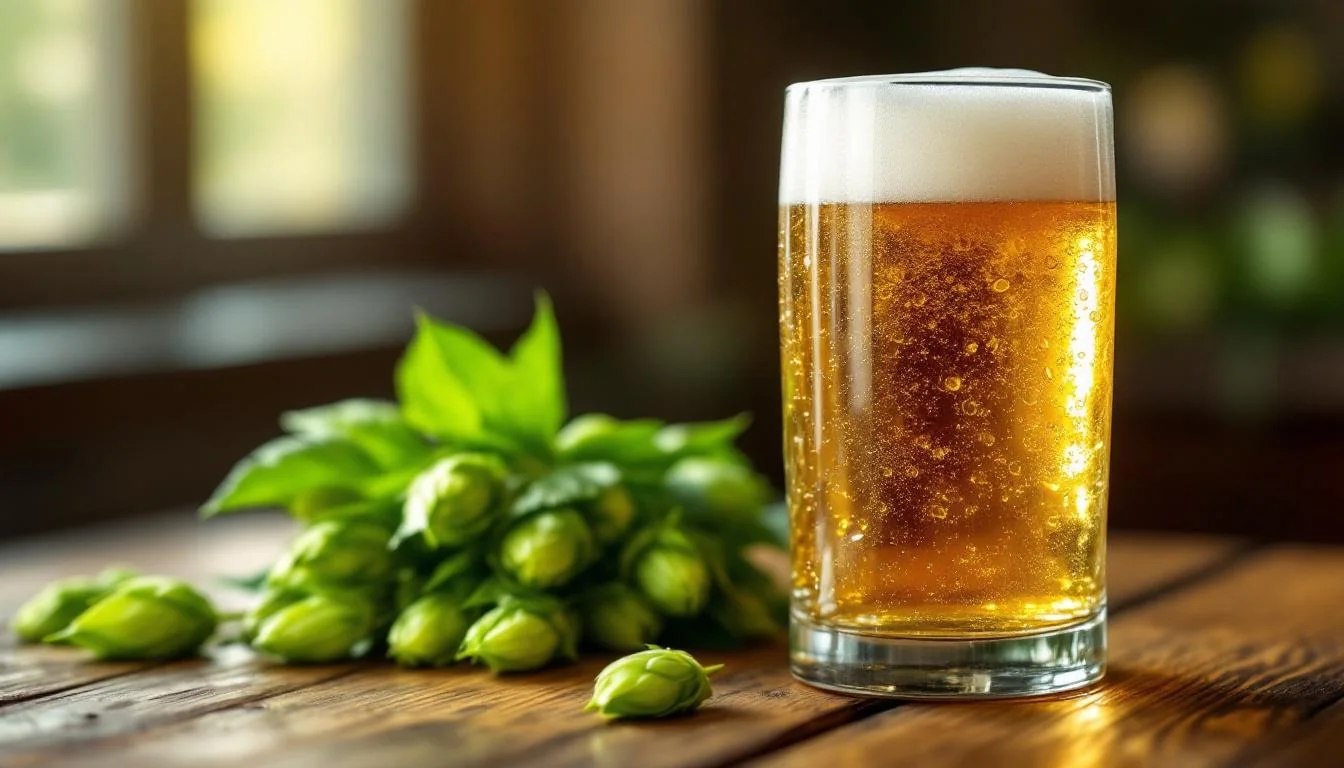
When holding a glass of German Pilsner, the first thing to notice is the sensation on the middle of your tongue. The bitterness of a Magnum doesn't hit you right away—it appears gently, like a reminder that this isn't sugar water. If that bitterness dissipates quickly, leaving no harsh or astringent taste in your throat, chances are the Magnum is working.
Try comparing it to a hop-heavy American IPA. There, the bitterness can come from many sources and linger. With a beer using Magnum as the primary bittering, we see a “clean”—like drinking a glass of water after a heavy meal. Bitter, but not lingering.
Your nose won't be of much help in identifying a Magnum. Its aroma is too subtle, often masked by other malt or hop notes. But if the beer has a moderate, balanced bitterness and no strange "off-flavors," a Magnum might be quietly contributing.
Next time you're sipping a Helles or Pilsner, take a few seconds to think about the things we don't realize. Hop varieties like Magnum exist not to be celebrated—but so that beer can be itself, nothing more, nothing less. Sometimes, greatness lies in knowing when to retreat.