
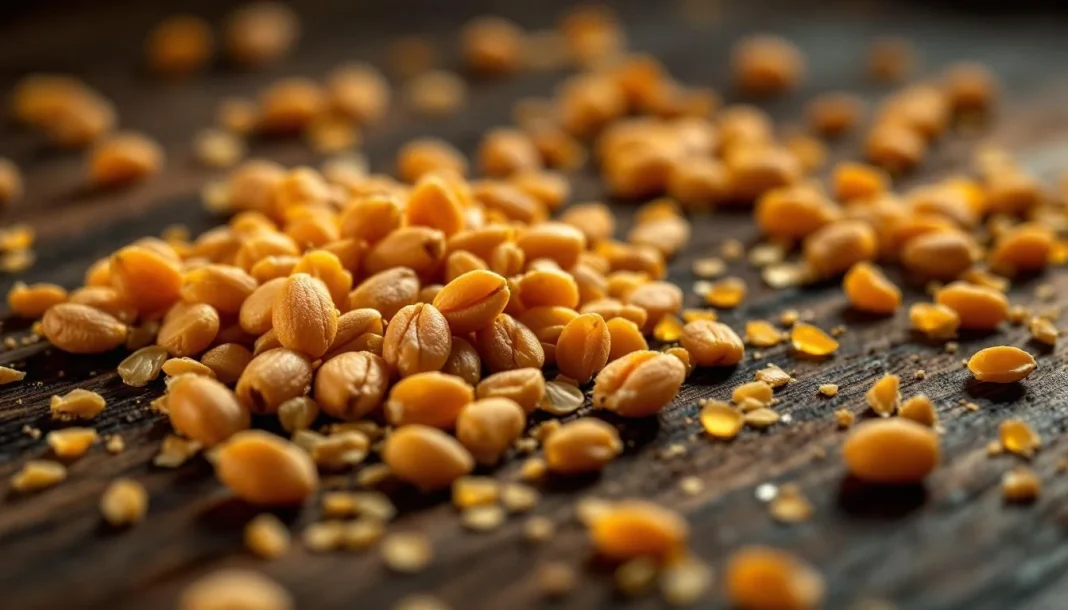
Some malts are born to be the foundation. And some malts are born to tell stories.
Munich Malt belongs to the second group. It doesn't just provide sugar for the yeast—it carries the history of a land, the aroma of 19th-century bakeries, and the amber hue of Bavarian autumn afternoons. This is a special base malt: it has both the ability to transform starch itself and contributes to shaping the beer's flavor profile.
Origin and history
Munich Malt originated in Munich in the 1830s, during a period when the Industrial Revolution was transforming the European beer industry.
Previously, most malt in Bavaria was dried using wood or charcoal. The temperature was uneven. Smoke permeated each grain. The beer had a strong smoky flavor—not a choice, but the destiny of the technology at the time.
In 1836, Gabriel Sedlmayr II—heir to the Spaten brewery—returned to Munich after a long study trip throughout England and continental Europe. He brought with him knowledge of the technique of indirectly drying malt with hot air, a method the English had adopted to produce smokeless pale malt.
But Sedlmayr didn't simply copy the original. He adjusted the drying temperature to be higher and extended the kilning time compared to English pale malt. The result was a new malt: cleaner, less smoky, but still retaining the characteristic depth of flavor of the Bavarian region.
The name "Munich Malt" wasn't coined by Sedlmayr. It gradually evolved as brewers across Europe referred to this type of malt—after the city where it was perfected and popularized.
In 1841, Anton Dreher in Vienna—Sedlmayr's companion on brewery surveys—also developed Vienna Malt in a similar way, but at a lower drying temperature. These two malts together revolutionized European lager in the mid-19th century.
Munich Malt became the backbone of Märzen — a beer brewed in March, aged throughout the summer in naturally cool cellars, and served at the first Oktoberfest in 1810. That legacy remains intact to this day.
Production process
Munich Malt starts with European two-row barley — varieties selected for their moderate protein content and thin husks.
The soaking process lasts approximately 48 hours, raising the seed moisture content to 44-461 tbsp. Germination takes place over 4-5 days at a temperature of 14-18°C, allowing enzymes to fully develop without excessive starch depletion.
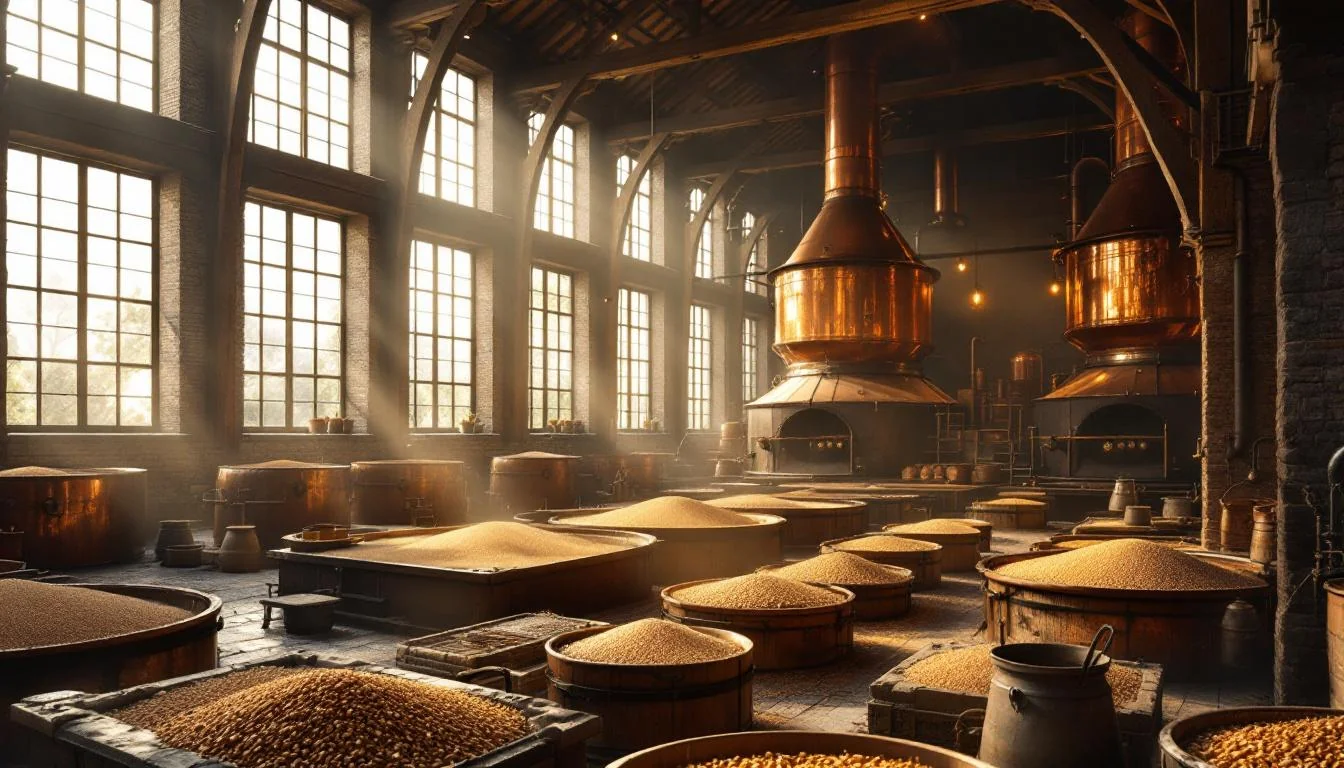
The difference lies in the drying process. Instead of rapid drying at low temperatures like pale malt, Munich Malt undergoes a “curing” process at higher temperatures—typically between 100°C and 115°C—while retaining a certain amount of moisture.
It is this combination of high temperature and residual moisture that triggers the powerful Maillard reaction. Sugars and amino acids in the seeds interact, producing melanoidins—compounds that give the seeds their characteristic color and flavor.
The entire kilning process takes 24-48 hours. The result is malt grains ranging in color from deep yellow to amber, depending on whether it's the Munich I or Munich II version.
Technical specifications
Munich Malt comes in two popular versions. Munich I (or Munich Light) ranges from 12-20 EBC, equivalent to 5-8 Lovibond. Munich II (Munich Dark) is darker, ranging from 20-30 EBC, or 8-12 Lovibond. Some producers also offer special editions up to 35 EBC.
Munich Malt has a slightly lower extraction rate than Pilsner Malt — typically 80-82% (fine grind, dry basis). This means that for the same volume, you get less sugar. But that trade-off is entirely worth the flavor it delivers.
Protein content ranges from 10-12%, sufficient to provide foam and body to the beer without causing cloudiness. The Kolbach index (degree of protein modification) is typically in the range of 38-42%, indicating that the malt has been well modified.
Key point: Munich Malt retains significant enzyme activity. Its distatic power is around 70-80 Lintner—enough to metabolize its own starch and support a small amount of non-enzymatic malt. This is why Munich Malt is classified as a base malt, although it plays a specialty role in many recipes.
Flavor and color
The aroma of Munich Malt is reminiscent of golden toast. Not white bread, but a type of German dark bread with a crispy crust and a dense interior. There's a hint of honey, a touch of roasted chestnuts, and a subtle caramel note hidden beneath.
The malty sweetness is unmistakable. It's not the sweetness of refined sugar—it's a deep, warm sweetness, like roasted grains. The Germans call it "malty"—an adjective for which it's difficult to find an accurate equivalent in Vietnamese.
Melanoidins in Munich Malt add depth to the flavor. These compounds not only influence the aroma but also contribute to the overall sensation on the palate—a full-bodied, rounded taste.
In terms of color, Munich Malt imparts a deep golden to amber hue to beer. When using 100% Munich Malt, you can achieve a beer color in the range of 15-25 EBC — enough to create a strong visual impression without falling into the reddish-brown zone of crystal malt.
It's noteworthy that Munich Malt doesn't have any bitterness or burnt taste. Despite being roasted at high temperatures, the Maillard process is controlled to produce only positive flavor compounds. This is the boundary it maintains compared to darker roasted malts.
Typical beer style
Märzen and Oktoberfest were the first homes of Munich Malt. These lines lager beer This beer uses Munich Malt as its base — sometimes up to 100% — creating its characteristic amber color and full-bodied malt flavor. When you raise your glass of Oktoberfest beer at the festival, it is the Munich Malt that is telling its story.
Dunkel — a Bavarian dark lager — also relies on Munich Malt as its backbone. Not to be confused with stout dark beer Whether from Ireland or England, Dunkel Munich offers a pure malt flavor, without any burnt bitterness from roasted malt. Munich II is often chosen for this style, sometimes combined with a small amount of Carafa to enhance the color.
Bock and Doppelbock — lines strong beer German-made Doppelbock utilizes Munich Malt to create a rich malt base, strong enough to counterbalance the high alcohol content. In a glass of Doppelbock, Munich Malt helps maintain balance even if the ABV may exceed 8%.
Outside of Germany, Munich Malt appears as a specialty malt in many recipes. Some breweries IPA Using 5-10% Munich Malt adds depth to the malt bill. Scottish Ale and Brown Ale also frequently feature Munich Malt.
Comparison with malts in the same group
Vienna Malt is its closest sibling. Both originated during the same period, from the same group of pioneers. But Vienna Malt is dried at a lower temperature—only around 90°C—resulting in a lighter color (6-9 EBC) and a more delicate malt aroma. Vienna Malt evokes butter cookies, while Munich Malt evokes toasted bread.
Compared to Pilsner Malt, Munich Malt is like an "upgraded" version in terms of flavor. Pilsner Malt (3-4 EBC) is almost a blank canvas — it provides efficient sugar but doesn't leave a strong flavor imprint. Munich Malt sacrifices some performance for personality.
Melanoidin Malt — sometimes called “super Munich” — pushes the Maillard reaction further. With a color of 60-80 EBC, it delivers a much more concentrated malt flavor. However, Melanoidin Malt loses its enzyme activity and can only be used as a specialty malt.
Belgian Aromatic Malt is another variant in this family. While similar in color to Munich II, Aromatic Malt has a sweeter aroma, closer to honey and jam than bread. This is the difference between German tradition and Belgian brewing philosophy. Belgium, the land of beer.
How to recognize when enjoying it
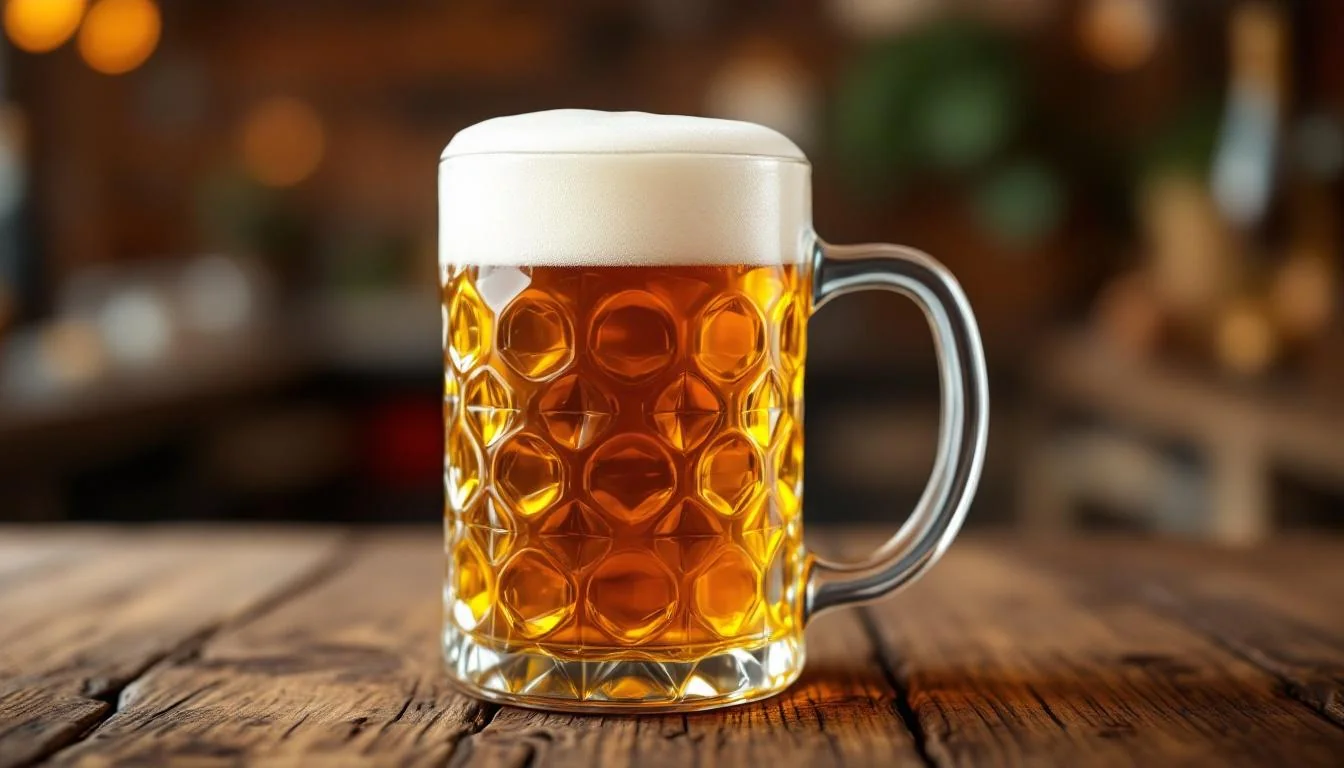
Before drinking, observe the color of the beer. If you see an amber to copper-brown hue in a glass of Märzen or Dunkel, Munich Malt is almost certainly present.
Bring the glass to your nose. The aroma of toasted bread, roasted grains, a hint of honey—that's the signature of Munich Malt. This aroma is distinctly different from the sweet caramel notes of crystal malt or the coffee scent of roasted malt.
With the first sip, let the beer spread across your tongue. Munich Malt delivers a pure "malty" sensation — a warm, sweet malt flavor, not overly sweet or burnt bitter. There's a certain thickness to the taste, as if the beer has "bones" rather than being watery.
The aftertaste is clean. This is a characteristic of German lagers in general and Munich Malt in particular. There is no lingering, unpleasant aftertaste. The malt flavor gradually fades, leaving a warm sensation on the palate.
When you hold a glass of Märzen on a cool autumn day, or sip a Dunkel at the oak table of a traditional pub, remember that the flavor has passed through nearly two centuries — from Munich to your glass, without losing an ounce of its identity.