Some things have existed for so long that people forget to ask about their origins. Pale Ale Malt is one of them. It's in most beer recipes we drink. It's the foundation. It's the starting point. It's the benchmark against which all other malts are compared.
But "foundation" doesn't mean commonplace. Pale Ale Malt embodies the history of British industry, the energy revolution, and the philosophy of a balanced beer—not too sweet, not too bitter, just right for everything to blend together.
Origin and history
Before the 18th century, English beer was a cloudy brown. Not because the brewers wanted it that way, but because they had no other choice. Barley was dried with wood, straw, or whatever combustible material. Smoke permeated the grain. Temperature was uncontrolled. As a result, the malt was dark in color, smoky in smell, and of inconsistent quality.
Then coke appeared.
Around the 1640s, brewers in Derbyshire began experimenting with coke—a fuel that burned hotter, more evenly, and most importantly, smokeless. The barley grains retained their natural pale color. For the first time in history, the English saw amber-colored beer.
But it wasn't until the 19th century, in Burton-on-Trent, that Pale Ale Malt truly became legendary.
Burton-on-Trent is a small town in Staffordshire, situated on the River Trent. The well water there has an unusually high sulfate content—a phenomenon later dubbed "Burtonization" by scientists. When combined with lightly dried Pale Ale Malt, Burton's water produces beers with unparalleled clarity, crisp hop flavors, and a dry finish.
Bass Brewery, founded in 1777, was one of the first breweries to capitalize on this advantage. By the mid-19th century, Burton-on-Trent's Pale Ale was being exported to India, Australia, and throughout the British Empire. Pale Ale Malt was no longer a local ingredient — it had become a global standard.
Today, major British malt producers such as Crisp Maltings, Muntons, and Simpsons continue this tradition. They use Maris Otter, Golden Promise, and modern varieties bred for temperate climates. But the gentle, tightly controlled drying process remains essentially unchanged.
Production process
All malts start from dried barley grains. Pale Ale Malt is no exception, but the differences lie in the finer details.
The first step is soaking. Barley grains are soaked in water for about 40 to 48 hours, with intermittent resting periods to allow the grains to “breathe.” The moisture content increases from 121 tbsp to approximately 44-461 tbsp. The grains begin to germinate.
The germination period lasts 4 to 5 days in temperature-controlled drums or seed trays. Enzymes in the seeds—especially alpha-amylase and beta-amylase—are activated. Starch begins to metabolize. Young shoots emerge but do not yet exceed the length of the seed.
Then comes the drying process — the step that determines the identity of Pale Ale Malt.
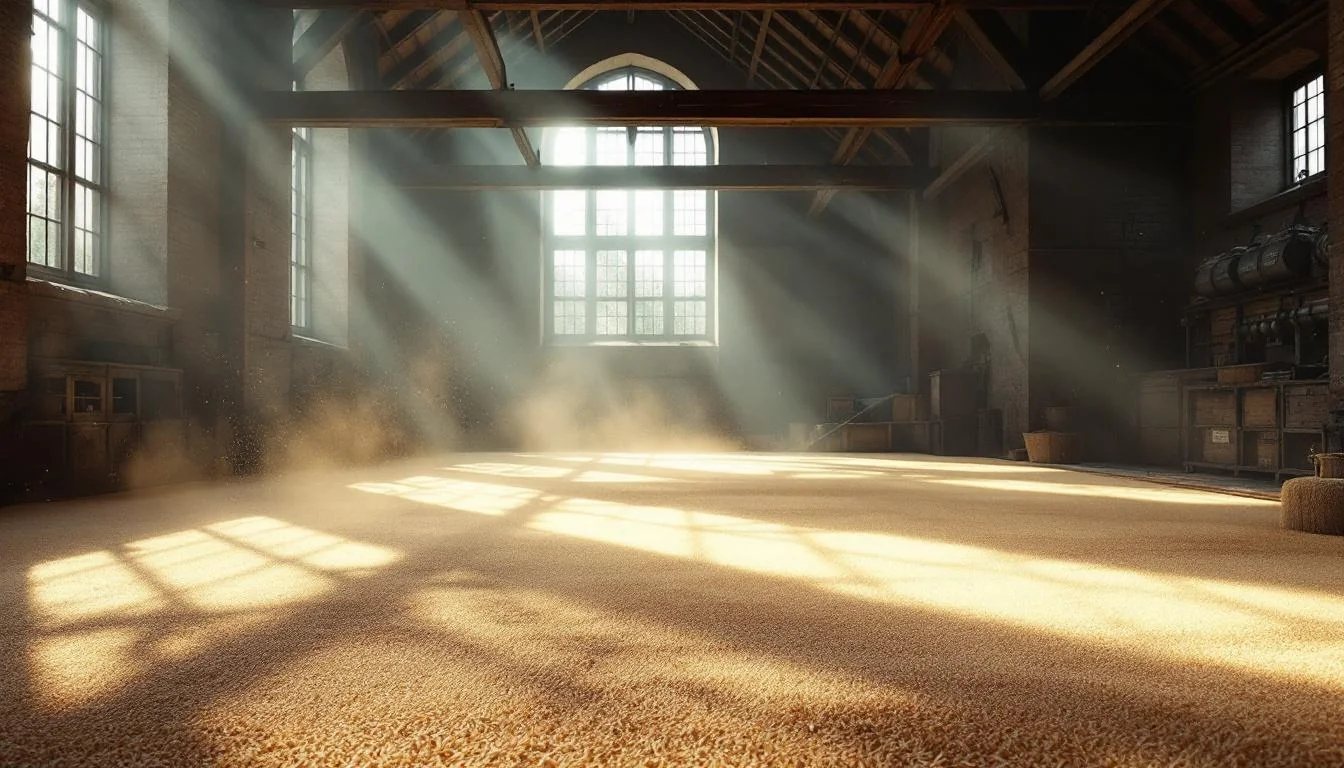
Unlike malt lager, which is dried at very low temperatures (below 80°C), Pale Ale Malt is dried at a slightly higher temperature: around 95-105°C in the final stage. The drying time is also longer. This creates a mild Maillard reaction — proteins and sugars react with each other, producing compounds with bread-like, biscuit-like, and slightly honey-like flavors.
After drying, the malt is destemmed, cleaned, and stored at a moisture content below 5%. The final product is a darker yellow than Pilsner malt, but still falls within the "pale" group — light in color.
Technical specifications
Pale Ale Malt has a color range of 5-7 EBC, equivalent to 2.5-3.5 degrees Lovibond. It's lighter than Munich malt, but darker than Pilsner malt by about 1-2 EBC units. This difference is subtle on paper, but when viewed in a glass, it's clear: Pale Ale has a warm amber hue that Pilsner lacks.
In terms of extractability, Pale Ale Malt achieves approximately 80-82% using the Congress mash measurement method. This means that from 1 kg of malt, brewers can obtain about 300-310 OG (Original Gravity) points per gallon of water. This is a high yield, sufficient for Pale Ale Malt to be the sole base malt in most recipes.
Protein content typically ranges from 9.5-11.5 µTP3T. This protein level is sufficient to provide amino acids for the yeast, creating stable beer foam, but not so high as to cause cloudiness. The Kolbach index—the ratio of soluble protein to total protein—usually reaches 38-45 µTP3T, indicating good variability during germination.
Pale Ale Malt's enzymatic activity is strong enough to completely metabolize its own starch, with some remaining to support small amounts of adjunct such as wheat or corn flour. Diastatic power is typically in the range of 50-70 Lintner — lower than Pilsner malt, but still sufficient for most needs.
Flavor and color
If Pilsner malt is a blank sheet of paper, then Pale Ale Malt is an ivory sheet—it already has a nuance, a story to tell.
The first aroma when smelling a raw Pale Ale Malt is that of toasted bread. Not burnt bread, but perfectly toasted bread—a golden-brown crust, slightly sweet, slightly nutty. This is the result of the Maillard reaction during the drying process. Melanonoid compounds form in moderation, creating a warm base aroma without overpowering the other ingredients.
In the finished beer, Pale Ale Malt offers a light sweetness of malt, accompanied by notes of chestnut and a hint of honey. It doesn't have the pronounced caramel flavor of crystal malt, nor the roasted notes of dark malt. It's the foundation, the balance, the thing that allows the hops and yeast to shine.
In terms of color, Pale Ale Malt produces beers ranging from deep yellow to pale amber, depending on the proportions used and the types of malt added. When using 100% Pale Ale Malt, the beer will have a coppery yellow color — brighter than amber ale, but warmer than German lager.
Another important characteristic is body—the fullness of the beer. Pale Ale Malt produces a medium body, not as watery as Pilsner malt, but not too heavy either. This aligns with the philosophy of English beer: beer to be drunk in large gulps, throughout the evening at the pub, not to be sipped slowly.
Typical beer style
Pale Ale Malt was born to brew English beer. This is hardly surprising.
English Bitter—a classic session beer from British pubs—is built entirely on a Pale Ale Malt base. From the Ordinary Bitter with its modest 3.2-3.81 TP 3T ABV, to the Best Bitter and Extra Special Bitter (ESB), all rely on Pale Ale Malt to create a warm, slightly sweet malt base, balanced with English hops like East Kent Goldings or Fuggle.
English Pale Ale—a cousin of Bitter—is also inseparable from Pale Ale Malt. This style of beer has crossed the ocean, becoming the inspiration for American Pale Ale and later, India Pale Ale (IPA). Although the American version typically uses American two-row malt, Pale Ale Malt remains the choice of brewers who want to retain the British essence in their recipe.
Traditional India Pale Ale — not West Coast IPA or New England IPA — was originally brewed entirely from Pale Ale Malt. The high extraction properties of this malt allowed for brewing with an OG of 1,060-1,075, enough alcohol to sustain the long journey from England to India.
Additionally, Pale Ale Malt also appears in many recipes. Stout and Porter. Not in the primary role, but as a base for dark roasted malts to shine. Some craft brewers also use Pale Ale Malt in Belgian beer, especially Belgian Pale Ale and some Saison versions, to add malt depth that Pilsner malt lacks.
Comparison with malts in the same group
Within the base malt group, Pale Ale Malt sits in the middle ground — neither too light nor too dark.
Compared to Pilsner Malt, Pale Ale Malt is about 2-3 EBC darker and has a more complex flavor profile. Pilsner Malt is dried at a lower temperature, retaining more enzymes, and creating a cleaner profile—almost neutral. Pale Ale Malt has a more distinct personality, with bread and nut notes that Pilsner lacks.
Compared to Vienna Malt, Pale Ale Malt is lighter and less sweet. Vienna Malt (6-9 EBC) begins to show distinct notes of honey and butter cookies, while Pale Ale Malt retains its restraint. Munich Malt is even bolder (12-25 EBC), with notes of caramel and dark toasted bread crust.
Compared to Maris Otter—a premium Pale Ale Malt made from heritage barley—standard Pale Ale Malt has a simpler flavor profile. Maris Otter offers exceptional depth, a hint of damp earth, and a longer finish. This is why many craft brewers are willing to pay the higher price of 20-30% for Maris Otter.
Compared to American Two-Row, Pale Ale Malt has a more robust flavor profile. American Two-Row is typically lighter-dried, creating a "clean" malt base where the hops take center stage. This is a difference in brewing philosophy: America emphasizes hops, while England emphasizes balance.
How to recognize when enjoying it
To recognize Pale Ale Malt in a glass of beer, we need to slow down.
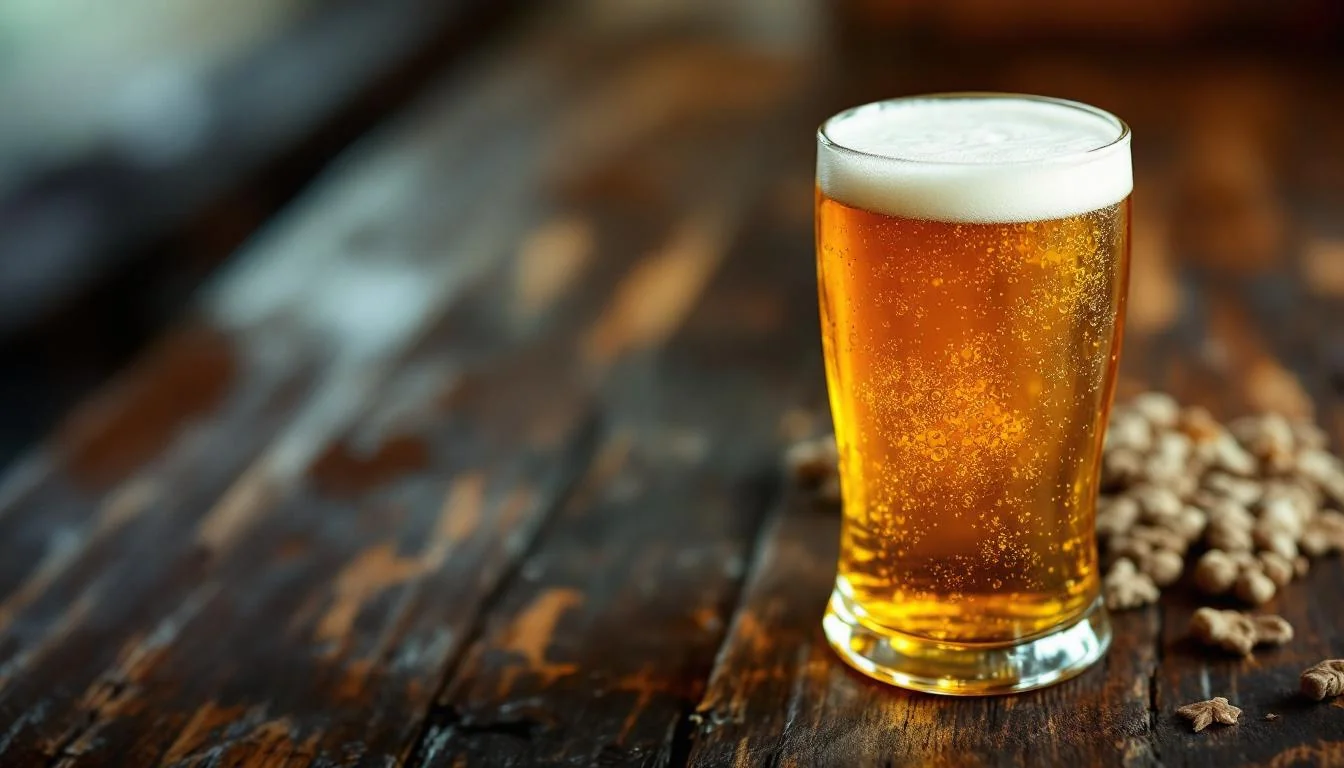
First, look at the color. If the beer has a warm amber yellow—not the straw yellow of a lager, not the reddish-brown of an amber ale—it's likely a Pale Ale Malt is at the base. A slight copper sheen under light is a characteristic sign.
Next, smell it. The malt aroma of Pale Ale Malt isn't as intense as caramel or chocolate malt. It's more subtle—like freshly baked white bread, roasted chestnuts, or diluted honey. If the beer has a warm base aroma without being overly sweet, that's a sign of Pale Ale Malt.
When drinking, pay attention to the body. Pale Ale Malt offers a moderately full-bodied sensation—not watery, but not thick either. The gentle malt sweetness complements the hops without competing for attention.
Finally, pay attention to the aftertaste. Pale Ale Malt leaves a dry, clean aftertaste with a hint of lingering grain. There's no burnt bitterness of roasted malt, nor the lingering sweetness of crystal malt.
Perhaps the most admirable quality of Pale Ale Malt is its humility. It's there, providing a foundation, keeping everything in balance, but never demanding attention. Like the most important things in life—we often only notice them when they're absent.