There are yeast strains that need no introduction. They're already in every sip of beer you drink, in every batch brewed by homebrewers, in every fermenter in craft breweries from San Francisco to Saigon. WLP001 California Ale is one of them — a yeast strain that has shaped an entire movement.
When we think of American craft beer, we often think of hops, malt, and bold recipes. But behind it all, quietly working in the shadows at 18-21°C, is a yeast strain that was isolated more than four decades ago. Its story begins at one of the oldest continuously operating breweries in San Francisco.
Origin and history
WLP001 California Ale wasn't born in a modern laboratory. It was isolated from the Anchor Brewing Company—a brewery that had existed since 1896 in San Francisco. When Fritz Maytag acquired Anchor in 1965, he didn't just save a brand from bankruptcy. He preserved a microbiological legacy.
This yeast strain was isolated and commercialized in the early 1990s by White Labs—a brewing yeast laboratory based in San Diego. Chris White, the founder of White Labs, worked at the University of California San Diego before founding the company in 1995. He realized that homebrewers and small breweries needed access to high-quality yeast strains—something previously only available to large breweries.
WLP001 quickly became White Labs' best-selling yeast strain. The reason is simple: it's clean, it's stable, it lets the malt and hops do the talking. In an era where American craft beer is seeking to define its identity — separating itself from bland industrial lagers and heavy-smelling traditional English beers — WLP001 is the answer.
This yeast strain is actually closely related to Saccharomyces cerevisiae var. diastaticus, but WLP001 itself does not carry the STA1 gene — meaning it does not over-ferment like some other diastaticus strains. This is a crucial point for controlling final gravity.
From San Francisco, WLP001 spread throughout the United States and then the world. Sierra Nevada, Stone Brewing, Ballast Point — many iconic breweries have used this strain or close variants. It became the default "house yeast" of the American craft beer movement.
Biological characteristics
WLP001 belongs to the species Saccharomyces cerevisiae — the same species as baker's yeast, but selectively bred over hundreds of years for beer fermentation. This is a typical ale yeast, active in the upper layer of the wort during the active fermentation phase.
The ideal fermentation temperature is between 18-21°C (65-70°F). At lower temperatures, around 15-17°C, the yeast produces an extremely clean profile—almost lager. At temperatures above 22°C, slight esters begin to appear, but never as dominant as with English or Belgian yeasts.
The attenuation of WLP001 is 73-80%, placing it in the medium to high range. This means that with a wort of 1.050 OG, the final gravity typically falls between 1.010-1.014. The beer is neither too sweet nor too dry — it's well-balanced.
The flocculation ability is average. The yeast will settle after completing its task, but not as quickly as English yeast. This results in a clearer beer after conditioning, while still providing enough suspended yeast to complete thorough fermentation.
Alcohol tolerance up to 10-12 % ABV, sufficient for most common beer styles. For stronger batches like Imperial Stout or Barleywine, a higher pitch rate or additional yeast at the final stage may be needed.
Flavor and character
If I had to use one word to describe WLP001, it would be "clean." Not clean in the sense of being tasteless. Clean in the sense of being transparent — you can see right through the yeast to the malt and hops underneath.
The ester of WLP001 is very light, almost imperceptible at optimal fermentation temperatures. If there is any, it's a hint of fruitiness—a fleeting green apple, a light ripe pear—but never banana, never bubblegum like German wheat yeast. This is the choice when you want the hops to take center stage.
Phenol is virtually nonexistent. No cloves, no tobacco, no smoke. WLP001 does not carry the POF+ (Phenolic Off-Flavor positive) gene — a key difference from Belgian yeast or wheat yeast.
Structurally, WLP001 produces a medium body with a moderate dryness in the finish. There is no significant sulfur, and no diacetyl if fermented correctly. If diacetyl is present—buttery, rich caramel notes—it indicates incomplete fermentation or temperature fluctuations.
The unique feature of WLP001 is its ability to bring out the hops. In a Pale Ale or IPA, you'll fully appreciate each layer of flavor: citrus from Citra, pine and resin from Simcoe, tropical from Mosaic. The yeast doesn't interfere or compete. It stands aside and lets the ingredients shine.
Typical beer style
WLP001 is the backbone of American IPA style — From traditional West Coast IPAs to modern variations. When you drink a West Coast IPA with notes of pine, grapefruit peel, and a dry, bitter finish, chances are WLP001 or its relatives are at work.
American Pale Ale
This is the style that WLP001 was born to serve. Sierra Nevada Pale Ale—perhaps the most famous American craft beer—uses a yeast strain with a similar profile. A balance of light caramel malt and citrus hops, a clean, dry finish—that's the hallmark of American Pale Ale with California yeast.
West Coast IPA
This IPA style emphasizes dryness, bitterness, and vibrant hop aromas. The WLP001 delivers all of that. High attenuation creates a lean body, a clean profile allows the hops to shine through, and a dry finish invites the next sip. Stone IPA, Ballast Point Sculpin, Russian River Blind Pig — all belong to this style.
American Amber Ale and Red Ale
With more malt-forward styles, WLP001 still works well. It lets the caramel and toffee from the crystal malt shine through while maintaining a clean finish. The Fat Tire Amber Ale from New Belgium is a prime example.
Blonde Ale and Cream Ale
In its lighter styles, WLP001 produces a neutral, easy-drinking profile. Blonde Ale with WLP001 is accessible even to those new to craft beer — not too complex, not too bland.
Geographic region and terroir
California is no coincidence that this yeast strain originated there. The San Francisco Bay Area—where Anchor Brewing is located—has a unique Mediterranean climate: dry summers, wet winters, and mild temperatures year-round. This created ideal conditions for ale fermentation at room temperature, before the advent of modern temperature control systems.
But this isn't terroir in the traditional sense, like wine or coffee. Yeast can be cultivated and transported. What defines California is its brewing philosophy: prioritizing fresh ingredients—especially hops—and letting yeast take the lead.
The American craft beer movement originated in California in the 1970s and 80s. Anchor, Sierra Nevada—the pioneers were all there. They needed a yeast strain that reflected their vision: beer different from industrial lager, but not a copy of British or German beer. WLP001—or Anchor's original strain—became the solution.
Today, WLP001 is used all over the world. From craft breweries in Tokyo to homebrewers in Hanoi, this yeast strain is no longer geographically limited. But every time we use it, we are connecting with a tradition — the tradition of those who built American craft beer from scratch.
How to recognize when enjoying it
When holding a glass of beer fermented with WLP001, don't look for the smell of yeast. Look for its absence.
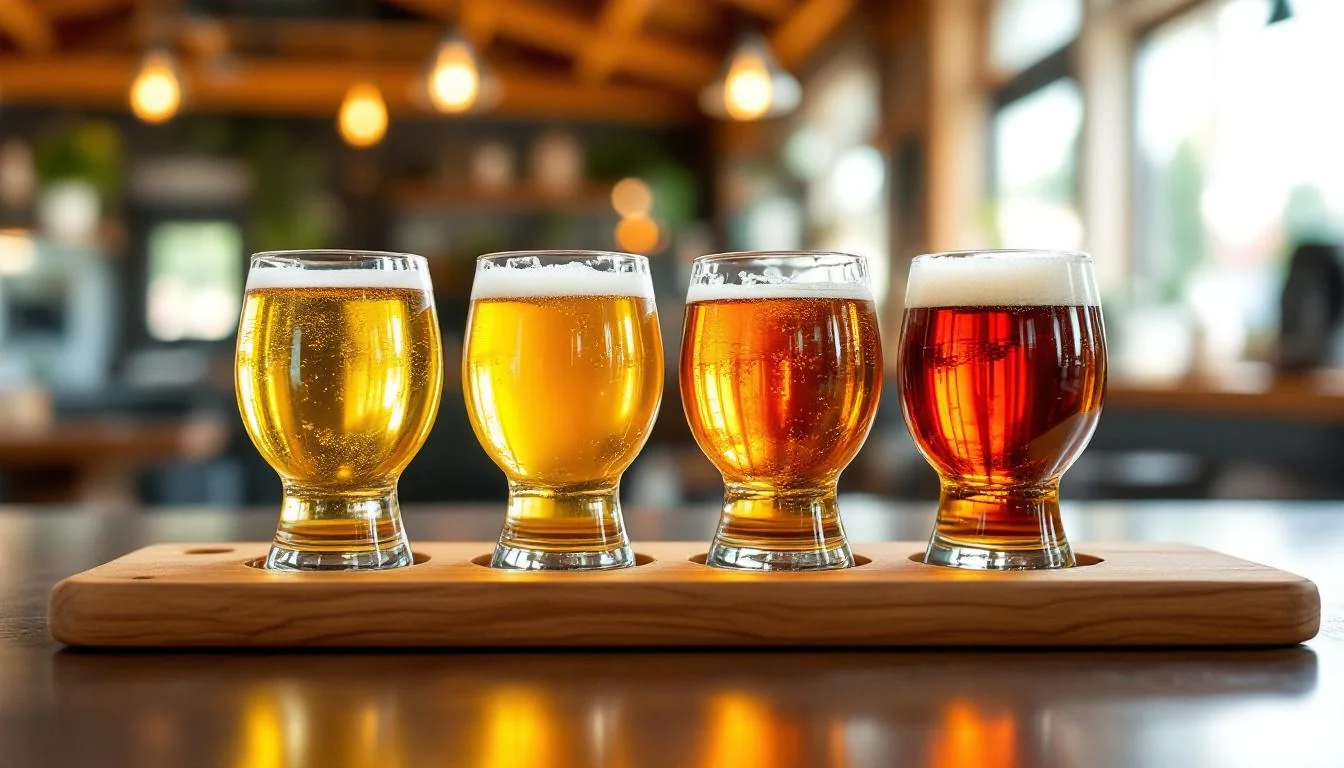
Bring the glass to your nose. If you smell distinct hops—citrus, pine, tropical—without hints of banana, clove, or butter, that's a first sign. The malt aroma might be bread, light caramel, or biscuit, but it's always clean, free of sulfur or phenols.
When drinking, pay attention to the finish. WLP001 produces a dry to medium finish, leaving no lingering sweetness. The body is medium, neither too full nor too thin. Carbonation is generally moderate, supporting a refreshing sensation.
If the beer is an IPA or Pale Ale, the bitterness will be clean and lingering but not harsh. The hops will be the star, the yeast the stage. That's the philosophy of California Ale: the best yeast is the one you don't recognize.
There are things in beer that can't be measured by IBU or ABV. WLP001 teaches us that sometimes, the most important thing is knowing when to step back—to let other things shine. Next time you raise a glass of West Coast IPA, take a moment for the yeast that has been quietly working. No name, no accolades. Just a clean sip, just as it should be.