
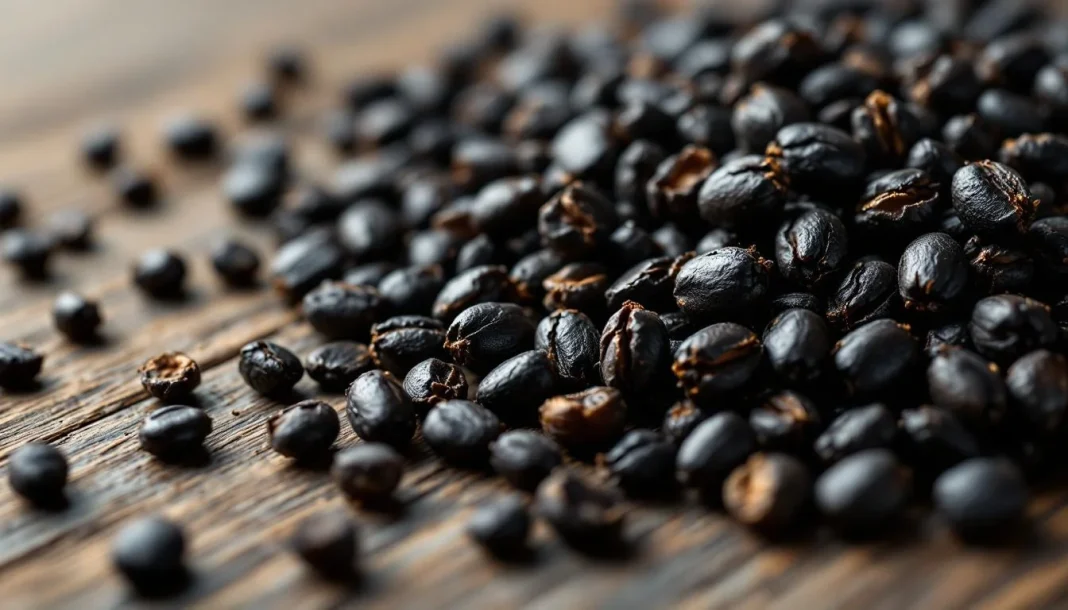
There are ingredients that don't need malting to become legendary. Roasted barley is one of them — dark roasted barley, never sprouted, yet it has shaped an entire beer nation.
When Arthur Guinness tried to evade the malt tax in the 18th century, he inadvertently created the recipe that would build an empire. Roasted Barley isn't malt in the technical sense. It's raw barley, roasted until charred black. But it's precisely that rawness that gives birth to Irish Dry Stout—dry, bitter, and unmistakably unlike any other stout beer in the world.
Origin and history
The story of Roasted Barley begins with a law. In 1785, Great Britain imposed a heavy tax on malt—germinated grain. Irish brewers, accustomed to innovating in the face of adversity, found a way out: roasting unmalted barley directly.
Dublin became the center of this small revolution. Guinness's St. James's Gate distillery, founded in 1759, gradually transformed its recipe. By the mid-19th century, Roasted Barley had become an indispensable hallmark of every Guinness batch. Not because it was cheaper—but because it offered a unique flavor that chocolate malt or black malt couldn't replicate.
The Irish call it "dry stout character"—a dry, lingering sensation in the throat, an unsweetened espresso aftertaste, and a thick, velvety foam. It all comes from burnt, unfermented barley grains.
Unlike English Porter, which uses brown malt or chocolate malt, Irish Stout is steadfast in its use of roasted barley. This difference isn't just about tax; it's about identity. When you drink Guinness, Murphy's, or Beamish—Ireland's three largest stout breweries—you're tasting the same philosophy: original, unsprouted roasted barley.
Today, Irish maltsters like Minch Malt in Athy, County Kildare, still produce roasted barley using traditional methods. Roasting temperatures reach 230°C, and the roasting time is 2-3 hours. Nothing has changed in over two centuries — because there's no need to change.
Production process
Roasted Barley goes against all conventional malt production processes. No soaking. No sprouting. No slow kiln drying. Just fire.
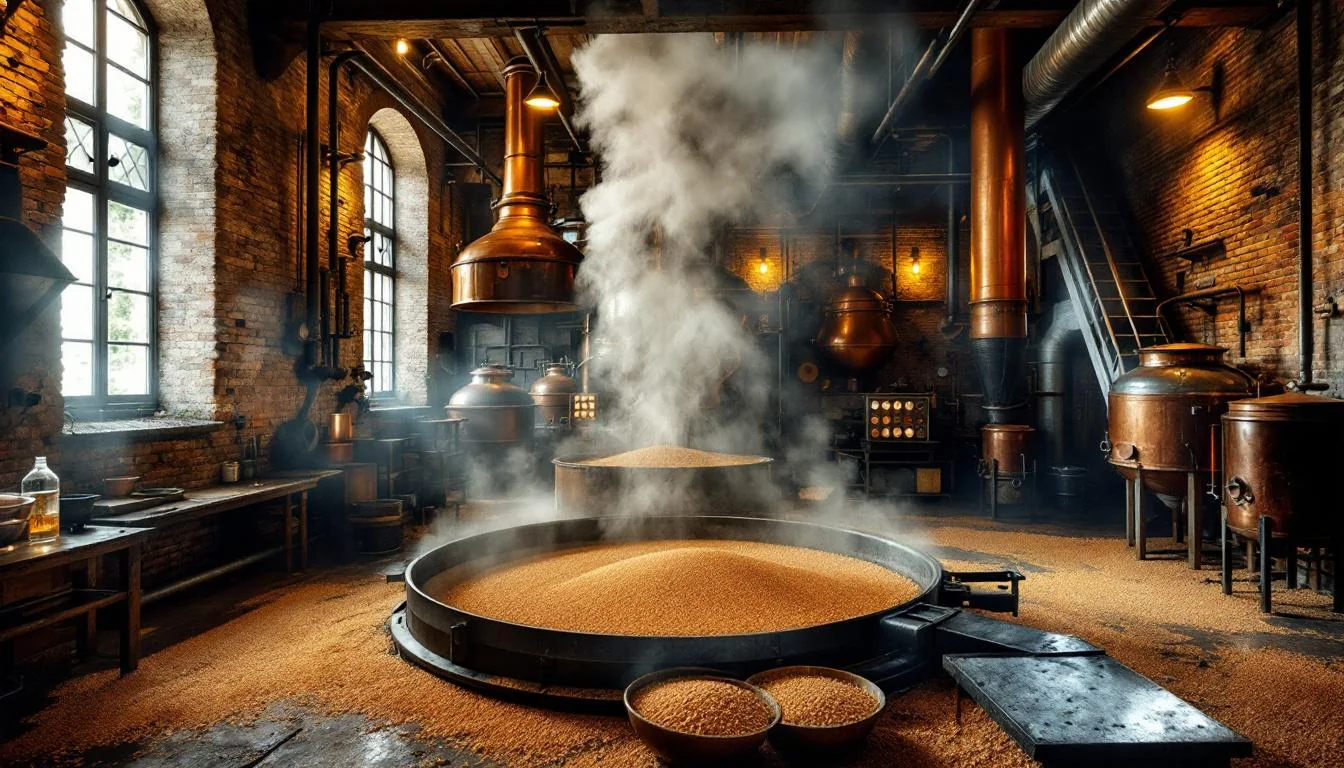
The raw barley grains are cleaned, impurities are removed, and then they are fed directly into industrial roasting drums. The initial temperature is around 180°C, gradually increasing to 220-230°C over 2-3 hours. This process is called roasting — completely different from the gentle kilning of base malt.
The Maillard reaction is intense. Sugars and amino acids in the bean react at high temperatures, creating hundreds of new flavor compounds. Melanoidins form, giving the coffee its deep black color. Pyrazine compounds appear, providing the characteristic aroma of roasted coffee.
Because it doesn't sprout, roasted barley lacks enzymes. The starch remains in its original form, not converted into sugar. This means it can't saccharify itself during mashing. But that's also why it has that characteristic dry taste — no excess sugar to sweeten it.
After roasting, the beans are rapidly cooled with cold air to stop the thermal reaction. The final product has a glossy black color like charcoal, a strong coffee aroma, and a slightly charred outer shell.
Technical specifications
Roasted barley belongs to a special group of ingredients with an extremely high color index. Its color ranges from 1000 to 1400 EBC, equivalent to 375-525 Lovibond — the darkest of all grains used in brewing. Just 3-5% in the recipe is enough to darken an entire batch of beer.
Roasted barley has a significantly lower extractability than regular malt. The figure is typically in the range of 60-70 oz compared to 80 oz for pale malt. This is understandable — the lack of malting means the starch hasn't been converted into an easily extractable form.
The protein content ranges from 9-12%, depending on the barley source. This protein is not highly soluble in wort, but it contributes to the body and, especially, foam retention. This is why Irish Stout always has a thick, creamy, and persistent foam.
Roasted barley has very low moisture content, usually below 31% (3% RI). This allows it to be stored for a long time without molding or spoiling. However, aromatic compounds will gradually evaporate over time, so manufacturers recommend consuming it within 6 months of the roasting date.
An important characteristic: Roasted barley significantly lowers the pH of the wort, by approximately 0.1-0.2 units for every 5% used. This affects the mashing process and needs to be taken into account when formulating the recipe.
Flavor and color
Roasted Barley is unlike any other roasted malt. Its taste is dry. Very dry. Like unsweetened espresso on a Dublin winter morning.
The dominant note is coffee—not sweet, milky coffee, but dark, almost burnt, roasted black coffee. Alongside that is the scent of pure cocoa, without the sweetness of chocolate. Some people also detect notes of ash, charcoal, and burnt-on toast.
The bitterness of Roasted Barley is different from the bitterness of hops. It's drier, harsher, and lingers in the throat rather than spreading throughout the mouth. This is called "acrid bitterness"—a somewhat sour bitterness characteristic of the Maillard reaction at high temperatures.
In terms of color, Roasted Barley produces a deep black tone with a ruby red sheen when viewed under light. Unlike black malt, which can have a grayish-black color, Roasted Barley always retains a touch of warmth in its black hue — like embers that haven't completely gone out.
What's special about Roasted Barley: It doesn't have the chocolatey sweetness of chocolate malt, nor the caramel notes of crystal malt. It's purely bitter and dry. This is why Irish Dry Stout has "dry" in its name — the dryness comes from the barley itself.
The foam is also affected. Roasted Barley helps create a creamy, light brown foam that spreads and clings to the glass for a long time. When you drink Guinness, the foam streaks on the glass are like lace—that's the hallmark of Roasted Barley.
Typical beer style
Irish Dry Stout Roasted barley is the irreplaceable domain of roast barley. Guinness, Murphy's Irish Stout, Beamish—all three build their flavors on this roasted barley foundation. The ratio is typically 7-10% total grain, enough to create the characteristic dark color and dry bitterness without overpowering other notes.
Irish Dry Stout is the "lightest" style of stout beer — ABV is only 4-4.5%, with a thin to medium body and low carbonation. Roasted Barley is a perfect match as it provides a strong flavor without adding alcohol or a heavy body.
Oatmeal Stout Roasted barley is also commonly used, albeit in lower proportions — around 3-5 parts per 1 tbsp. The oats in the recipe already provide a smooth body, so the roasted barley only needs to play a role in adding color and flavor depth. The result is a more balanced stout, still dark but softer than Irish Dry Stout.
American Stout—the American version of traditional stout—sometimes combines Roasted Barley with chocolate malt and black patent malt. This blend creates complexity that cannot be achieved with any single ingredient. However, to maintain its characteristic "dry finish," Roasted Barley must still make up the largest proportion of the roasted malts.
Foreign Extra Stout — The export version of Irish Stout with a higher ABV (6-8%) — uses more roasted barley to balance the alcohol content. Guinness Foreign Extra Stout sold in Africa and Asia is a prime example, with its intense bitterness and thick, dark color.
Comparison with malts in the same group
Roasted barley is often confused with Black Patent Malt and Chocolate Malt. All three are dark and bitter. But the difference lies in their origins.
Black Patent Malt is barley that has been malted and then roasted until dark. It contains enzymes (although these are deactivated by heat) and sugars (although caramelized). The bitterness of Black Patent is smoother and less harsh than Roasted Barley. The color is also different — Black Patent has a cool, grayish-black tone, while Roasted Barley has a warm, dark black with a reddish tint.
Chocolate malt is roasted at a lower temperature—around 200-220°C compared to 230°C for roasted barley. The result: a sweet, bitter chocolate flavor, not dry and sticky. Traditional English porters use chocolate malt for this reason—they want it sweet, not dry.
Carafa from Weyermann (Germany) is a modern, dehusk-processed version – the husks are removed before roasting. This significantly reduces the astringency and bitterness. Carafa Special offers a dark color without the dryness of Roasted Barley. It's a great choice for those who want a dark color but are wary of strong bitterness.
Roasted wheat, unlike barley, has no husk, so its bitterness is much milder. Some producers use roasted wheat to partially replace roasted barley to reduce the harshness of stout.
How to recognize when enjoying it
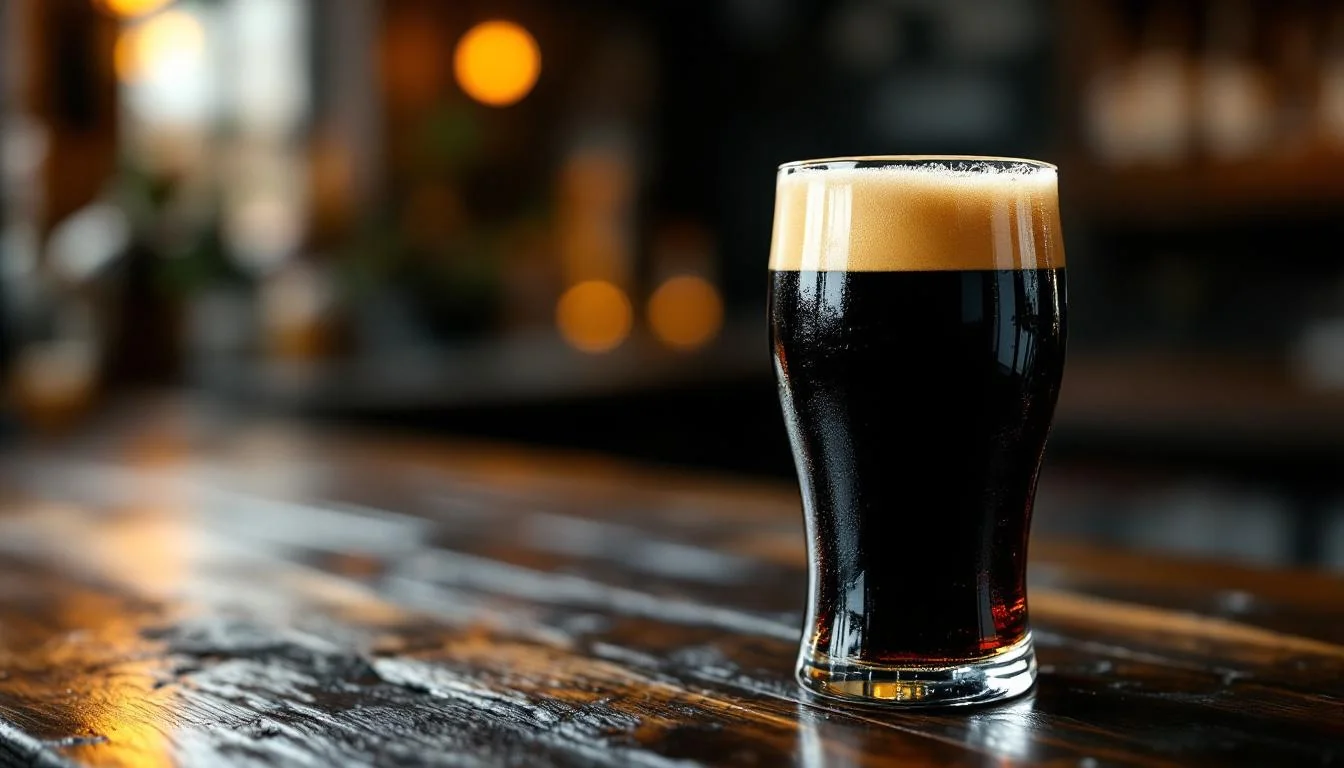
When you bring the glass of beer to your lips, pay attention to the foam first. The foam of Roasted Barley beer is light brown to mellow and thick like whipped cream. If the foam is pure white, it may be a stout made with Carafa or Black Patent instead of traditional Roasted Barley.
Take a deep breath. The aroma of strong, unsweetened roasted coffee, sometimes with a hint of burnt notes—that's Roasted Barley. If you smell sweet chocolate or caramel, the recipe may have used more Chocolate Malt or Crystal Malt.
The first sip should focus on bitterness and dryness. Roasted barley has a sharp, lingering bitterness in the throat, unlike the spreading bitterness of hops. The finish is dry, without any sweetness. If you sense a chocolatey sweetness at the end, it's a sign of chocolate malt or lactose.
A little tip: taste again after the beer has warmed up a bit. At room temperature, the coffee and ash notes of Roasted Barley become more apparent. This is why the Irish drink stout at cellar temperature — around 10-12°C — rather than cold like lager.
Slow down. A proper Irish Stout with Roasted Barley isn't meant to be drunk quickly. It's a conversation with two centuries of history — from the malt tax act of 1785 to the Dublin bar tonight.