There are things in the world of beer that weren't born to be rushed. Brettanomyces is one of them. This yeast doesn't ferment in a few weeks. It needs months, sometimes years, to complete its job.
And strangely enough—for hundreds of years, no one knew it existed. All that was known was that beer stored in old wooden barrels in the Pajottenland region would gradually turn sour, acquire a leathery aroma, and the scent of ripe fruit. They called it the magic of the air. Of time. Of the invisible.
The vandal becomes an artist.
In 1904, a Danish scientist named Niels Hjelte Claussen was conducting research at the Carlsberg laboratory in Copenhagen. He received a simple task: to find out why English beer developed unusual flavors after being bottled and transported by sea.
Ales from Burton-upon-Trent often smell quite different once they leave the distillery. Not spoiled. But different. Some people hate it. Some people love it.
Claussen found the culprit under a microscope. A type of yeast never before recorded. He named it Brettanomyces — “English yeast” — because he believed it was characteristic of English beer. But he was partly wrong. Brett, as brewers call it, doesn’t belong in England. It belongs everywhere that beer ferments naturally.
From Senne Valley to the state-of-the-art laboratory
Brettanomyces actually found its home not in England, but in the Senne Valley, southwest of Brussels. This is the birthplace of Lambic—the oldest surviving style of beer in Europe.
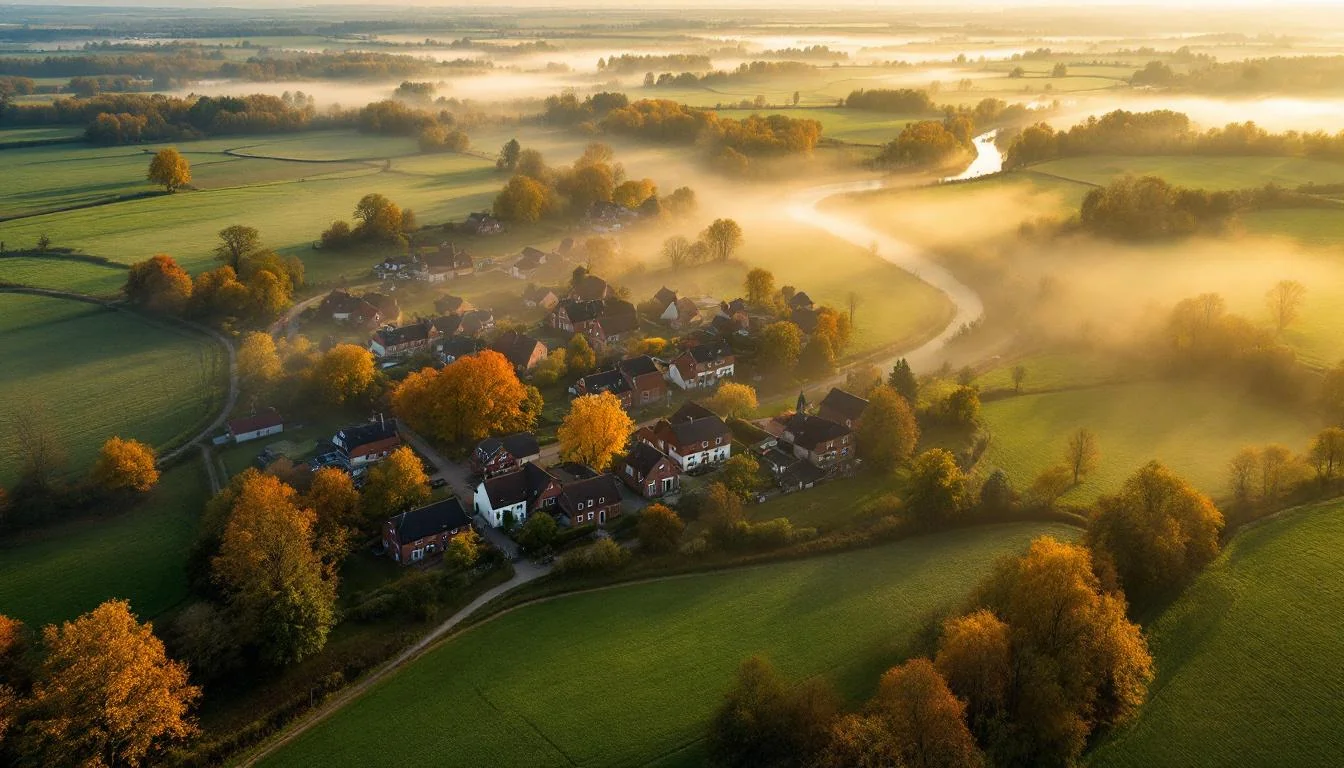
In breweries like Cantillon, Boon, or Drie Fonteinen, they don't add yeast to the beer. They let the brewed liquid cool overnight in shallow tanks called vats. koelschip. The night air carries hundreds of types of microorganisms. Among them is Brettanomyces.
In 1889, the Dutch microbiologist Martinus Beijerinck first described this species under the name Torula. However, it was Claussen's 1904 research that officially gave birth to the name Brettanomyces. He isolated it from English beer, but subsequent studies confirmed its presence in Belgian beer, wine, cider, and even on fruit peels.
The main species in the world of beer.
Brettanomyces bruxellensis —the most common variety, named after Brussels — is the backbone of Lambic and Gueuze. It produces acetic acid, leather notes, and absolute dryness. Brettanomyces anomalus They usually yield more tropical fruit esters. Brettanomyces lambicus, Despite its name being reminiscent of Lambic, it is actually less common in modern production.
Interestingly, Brett isn't unique to Belgium. Researchers have found the wild strain in California, in the French Jura region, and in vineyards and orchards around the world. But it was Belgian brewers who transformed this destructive strain into an artist.
The Biology of Slowing
Brettanomyces belongs to the genus Brettanomyces, Saccharomycetaceae, the same family as Saccharomyces cerevisiae—the common ale yeast. But their mechanisms of action are completely different.
Saccharomyces is a sprinter. It consumes simple sugars—maltose, glucose—for days to weeks. Then it goes dormant. Brettanomyces is a marathon runner. It starts slowly, sometimes only becoming active after Saccharomyces has "left the field." But it has a capability that Saccharomyces lacks: it consumes more complex sugars, the dextrins that ordinary yeast leaves behind.
Brett's fermentation temperature is quite flexible, typically ranging from 15°C to 27°C, but it can survive at much lower temperatures. At Cantillon, natural fermentation is seasonal—cool in winter, warming in spring. Brett adapts to all of them.
One important characteristic: Brett produces both acetic and lactic acids in the presence of oxygen. This explains why beer fermented in wooden barrels—where oxygen can slowly permeate through the wood grain—has a characteristic acidity that cannot be replicated in sealed steel tanks.
A symphony of flavors
Describing Brett's flavor profile is a challenge. Not because it lacks specificity, but because its specificity is so broad, so dependent on conditions.
At a mild level, Brett offers tropical fruit flavors—pineapple, mango, ripe papaya. Esters like ethyl caproate and ethyl caprylate create these notes. This is why many modern craft brewers use Brett as a spice, adding a layer of complexity without making the beer overly “wild.”.
At a stronger level, Brett begins to produce 4-ethylphenol and 4-ethylguaiacol—compounds that create the scent of leather, stables, and horse sweat. It doesn't sound appealing. But in the right context, at balanced concentrations, these scents create an irreplaceable depth. That's why Brett is called "funky"—a word with no perfect Vietnamese translation.
There's another aspect: dryness. Brett eats everything the Saccharomyces leave behind. As a result, the beer can reach a final fermentation level of almost 100% dry matter. No residual sugar. No sweetness. Only bones—the pure structure of malt and hop, embellished with acids and esters.
Brett's signature beer styles
Lambic is the natural home of Brettanomyces. sour beer This uses 100% natural fermentation, and Brett is one of many microorganisms involved — along with Pediococcus, Lactobacillus, Enterobacter, and dozens of others. Young Lambic (one year old) is often intensely sour and unbalanced. Older Lambic (three years or older) is milder and more complex, with Brett playing a key role in “cleaning” out unwanted flavors.
Gueuze—a blend of old and young Lambic—is the pinnacle of blending artistry. The blender must understand that Brett will continue working in the bottle, creating natural carbonation while balancing acidity and flavor over time.
Flanders Red Ale, another style in the line. Belgian beer, Using Brett in the barrel aging process. Rodenbach is a classic example — cherry acidity, oak tannins, and a light funky base from Brett create wine-like complexity.
In the modern craft beer world, Brett has transcended Belgian borders. American breweries such as Russian River, The Bruery, and Jester King use Brett in styles ranging from Saison to American Wild Ale. There are even "brett-ed" IPAs—adding Brett during the secondary stage to create tropical depth without acidity.
Land and air
Pajottenland, a small rural area west of Brussels, is Brett's sanctuary. Covering less than 500 km², it boasts the world's highest concentration of Lambic factories — Cantillon, Boon, Drie Fonteinen, Tilquin, Girardin.
Why this place? Partly it's the topography — the Senne River valley creates a humid microclimate, conducive to the growth of microorganisms. Partly it's tradition — centuries-old mills have “nurtured” their own unique microbial ecosystems within their wooden walls, ceilings, and composting bins.
Brett's terroir isn't just geography. It's history. Each brewery has its own "flora"—a unique collection of microorganisms that can't be replicated. Cantillon tried moving some of the wooden barrels to the new brewery, but it took years for the new beer to achieve the same characteristics as the beer from the old Brussels facility.
Beyond Belgium, Brett is being "domesticated" in many places. Texas Hill Country in the US, with its hot, dry climate, produces wild ales with a distinct character. The Jura region of France, where Vin Jaune wines also use Brett, is experimenting with beer. But nowhere has the historical depth of Pajottenland.
Recognizing Brett in the beer
What are we looking for when we raise a glass of Gueño, Flanders Red, or American Wild Ale?
First, there's the nose. Brett often leaves a leathery scent—like opening an old leather handbag. Or a stable scent—not the smell of manure, but the smell of dry straw, old wood, the quiet air of a farm. If Brett is mild, we'll catch notes of tropical fruit—ripe pineapple, mango, sometimes passion fruit.
On the tongue, Brett's signature is dryness. Brett beers typically lack lingering sweetness. Carbonation is usually high, creating a lively sensation on the palate. If acidity is present—from accompanying Lactobacillus or Pediococcus—the sourness is "cleaned up" by Brett over time, becoming rounder and less harsh.
The finish is usually long-lasting. Not the bitterness of hops. Rather, a complex aftertaste—slightly sour, slightly funky, slightly fruity—lingers like an unanswered question.
Brett teaches us a lesson about beer, and perhaps about life: not everything needs to be rushed. There are bottles of beer that need three years to perfect. And the drinker, perhaps, also needs time to understand.