
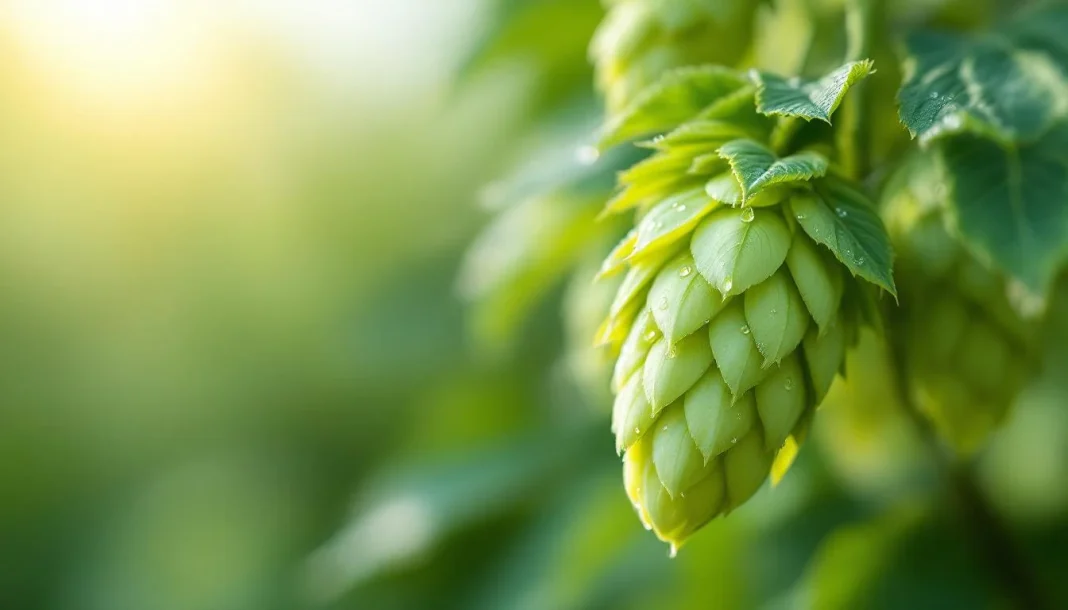
Some hop varieties are born to make a strong impression. Styrian Goldings doesn't belong to that group. It belongs to the group of hops that make you stop, tilt your head, and wonder: what scent just passed by?
In a carefully brewed English Bitter or a smooth Belgian Blonde, Styrian Goldings doesn't shout. It whispers. The scent of damp earth after rain, white flowers in late spring, a hint of hay and classic spices. It's the aroma that European brewers have relied on for decades, and that leisurely beer drinkers always seek out.
Origin and history
The story of Styrian Goldings begins not in Slovenia, but in England. The original hop variety was Fuggle — one of the oldest English hop varieties, discovered by Richard Fuggle in Kent in 1861.
In the late 19th century, the English hop industry faced a devastating verticillium wilt epidemic. Many growers sought to relocate the crop to new lands. Fuggle was brought to Styria — then part of the Austro-Hungarian Empire, now Slovenia — around 1876.
The Styrian land changed everything. The humid continental climate, rolling hills, and mineral-rich soil created a completely different variant. Through generations of natural selection and adaptive farming, the English Fuggle gradually became the Styrian Goldings — a new name to distinguish them from their relatives across the strait.
The main growing region is concentrated around Žalec, a small town located in the Savinja Valley. Slovenians call this the “golden-green valley”—referring to the color of the hop vines stretching across the hillsides. Since the beginning of the 20th century, Styrian Goldings has been Slovenia’s most important hop export variety, accounting for the majority of the national production.
It's worth noting that, despite bearing the name "Goldings," Styrian Goldings is not genetically related to the East Kent Goldings family of England. The name was chosen later, perhaps for commercial purposes—to evoke the high quality of the British Goldings line. Scientifically, they are still direct descendants of Fuggle.

Today, Slovenia maintains approximately 1,500 hectares of hop plantations, with Styrian Goldings accounting for a significant proportion. The Slovenian Institute of Hop Research and Brewing in Žalec continues to develop sub-varieties such as Styrian Aurora, Styrian Bobek, and Styrian Wolf—all inheriting the characteristics of the original variety.
Technical specifications
Styrian Goldings belongs to the classic aromatic hop group, with a modest alpha acid content ranging from 4.5% to 6%. Beta acid is in the range of 2.5% to 3.5%, creating a balanced alpha-beta ratio—characteristic of traditional European hop varieties preferred for their aroma rather than bitterness.
The total oil content is moderate, approximately 0.5 to 1.0 ml/100g. Of this, farnesene is present in unusually high amounts—ranging from 15 to 20 units—and is the component responsible for the characteristic herbal and floral aroma. Humulene fluctuates around 25-30 units, while myrcene is at a low level of approximately 20-25 units.
The hop harvest season in Slovenia typically falls between late August and mid-September. The humidity and temperature of the Styria region during this period create ideal conditions for hops to develop their fullest aromatic profile.
Aroma and flavor
Bring a handful of Styrian Goldings to your nose, and the first thing you notice is the scent of earth. Not dry, barren earth, but forest soil after a rain — damp, deep, and slightly sweet. This is the foundation of the entire fragrance profile.
The second layer is floral. Small white flowers—like jasmine, daisies, or elderflower. Not as intense as roses or lavender, but more delicate, more distant. Like walking through a garden in the early morning and catching a scent still lingering in the dew.
Spices emerge in deeper layers. A hint of white pepper, very subtle. Sometimes clove, but fainter, more like a memory than a distinct presence. Some brewers add notes of dried herbs—thyme, sage, or oregano—depending on the season and growing conditions.
When mixed with beer, Styrian Goldings doesn't leave a citrusy note like American hops, nor the sharp herbal flavor of German Noble hops. Instead, it creates a smooth, aromatic base, like a canvas for other ingredients to shine. The aftertaste is typically earthy and floral, lingering just right – not overly persistent, but memorable.
There's a certain "rustic" quality in Styrian Goldings that's hard to find in modern hop varieties. It evokes images of rural European kitchens, where dried herbs hang from rafters and the scent of garden earth wafts in through open windows.
Beer style using Styrian Goldings
Styrian Goldings is a classic choice for hair care. European light beer, Especially in English Bitter and English Pale Ale. For beer styles that require subtle hop notes, not an overwhelming malt flavor, Styrian Goldings provides just the right amount of herbs and floral notes. Many British breweries use it as a hop finishing agent—added at the end of the brewing process to preserve volatile aromas.
Lines Belgian beer This hop variety is also favored. Belgian Blonde, Belgian Pale Ale, and even some traditional Saisons use Styrian Goldings to add aromatic depth without competing with the characteristic ester and phenolic notes from Belgian yeast. The earthy and spicy profile of the hop blends naturally with the spicy and fruity notes of the Belgian yeast.
English ESB (Extra Special Bitter) is another style where Styrian Goldings shines. Here, the moderate bitterness of the hops combines with caramel malt and biscuit notes, creating a balanced beer that's easy to drink in large quantities without being cloying.
Some modern craft brewers experiment with Styrian Goldings in Czech or German-style lagers as an interesting alternative to Saaz or Hallertauer. The result is often a pilsner with a distinct character—still clean and crisp, but with added earthiness and warmer herbal notes.
Compare to hops in the same group
Fuggle (UK) —a close relative — shares many characteristics with Styrian Goldings but tends to be greener, with more pronounced fresh grassy and woody notes. Fuggle also often has a minty quality that Styrian Goldings lacks. In direct comparison, Styrian Goldings is softer and more earthy, while Fuggle is fresher and more vibrant herbal.
East Kent Goldings (UK) — Despite sharing the same name, it belongs to a completely different hop variety. EKG has a profile of honeyed flowers, light citrus notes, and subtle, aristocratic English spice. If Styrian Goldings is a rural valley, East Kent Goldings is a meticulously manicured villa garden.
Styrian Aurora — A hybrid descendant of Styrian Goldings and Northern Brewer. Aurora has a higher alpha acid profile (7-9%) and incorporates additional citrus notes and resins not found in the original strain. This is the choice when brewers want to retain Styrian characteristics but require more bitterness and a more modern flavor profile.
How to recognize when enjoying it
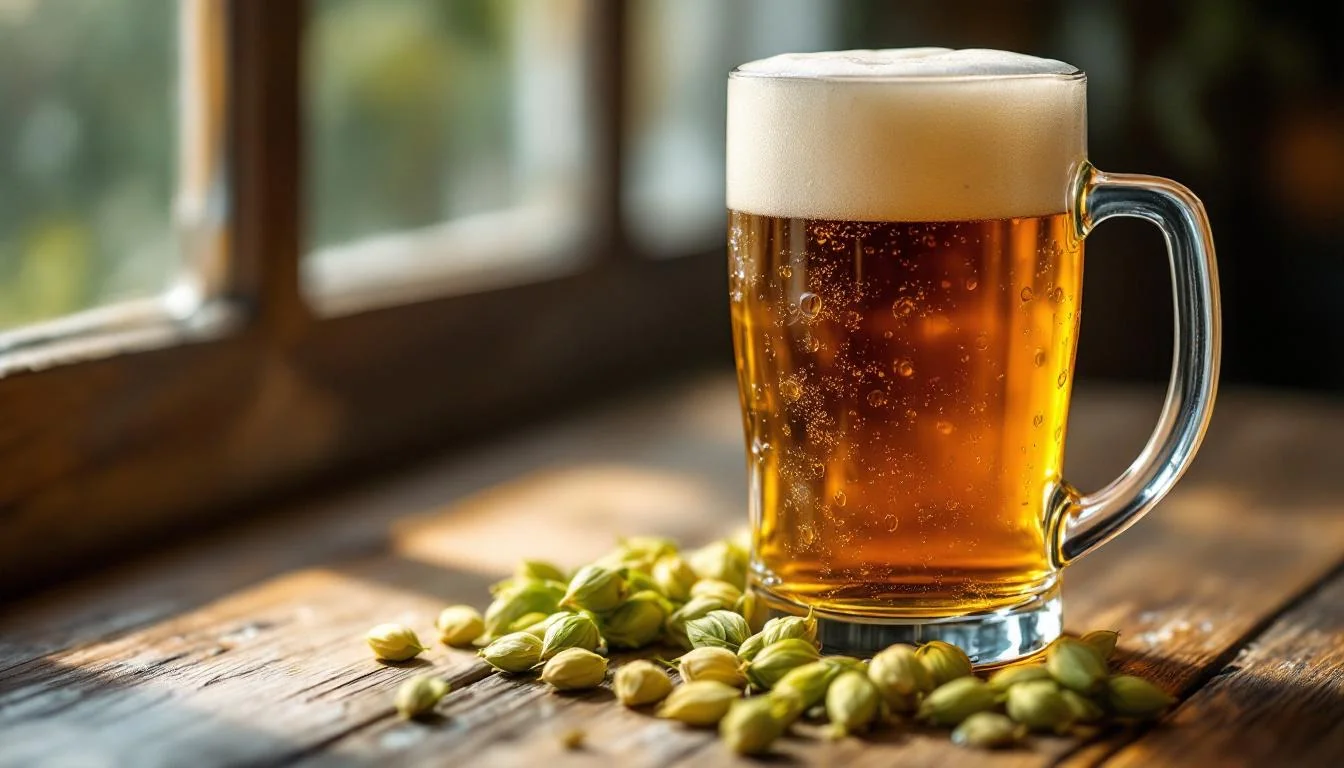
When holding a glass of Styrian Goldings, bring your nose to it before drinking. Look for a base note—not the first thing that pops up, but the one that lies beneath. Earth. Dried flowers. Maybe a hint of warm spice.
With the first sip, pay attention to the bitterness. It will be mild, round, and not harsh. The bitterness of Styrian Goldings dissipates quickly, giving way to the malt and other elements. This is hop that knows how to recede.
The aftertaste is where Styrian Goldings leaves its clearest mark. A slightly dry, earthy sensation lingers for a few seconds after swallowing. If you can detect a hint of "rusticism" in the finish—like the smell of hay in a barn, or the soil in a vegetable garden—that's it.
Styrian Goldings taught us that hop doesn't need to be shouted to be heard. Sometimes, the deepest aromas come from patience—of the grower, the brewer, and the person slowly bringing the cup to their lips.