There's something in lager beer that we rarely think about. Not the hops. Not the malt. It's the silence.
The silence of yeast—when it works at near-freezing temperatures, slowly, patiently, leaving no trace but crystal-clear clarity and a taste so clean that one forgets it is the product of living organisms.
The moment glaze becomes art.
In 1883, at the Carlsberg brewery's laboratory in Copenhagen, Emil Christian Hansen successfully isolated a pure strain of brewer's yeast for the first time. But the story of WLP830 doesn't begin in Denmark. It begins in a small town thirty kilometers north of Munich—home to the world's oldest continuously operating brewery.
Weihenstephan. The name sounds like the sound of a monastery bell echoing through the Bavarian mist.
The yeast strain that White Labs later coded as WLP830 is believed to have originated in the very cold cellars of Weihenstephan—where Benedictine monks had been brewing beer since 1040. They didn't know what yeast was. They only knew that when beer was brewed in the cold caves through the winter, it became clearer, cleaner, and could be preserved until summer.
The Bavarians call this process redern — meaning "to store". From that, we get the word "lager".
History and origins
To understand WLP830, we need to go back to the 19th century — the golden age of microbiology and also the time when the brewing industry transitioned from artisanal to industrial.
Before Hansen, yeast was a mystery. Brewers called it "Godisgood"—because no one could explain why the sweet liquid would spontaneously turn into alcohol. They passed the yeast from batch to batch, praying that the next batch wouldn't turn sour.
In 1883, Hansen demonstrated that bacterial contamination and strange flavors in beer came from the use of impure yeast. He isolated a strain. Saccharomyces carlsbergensis — later renamed to Saccharomyces pastorianus — and the beer industry is never the same again.
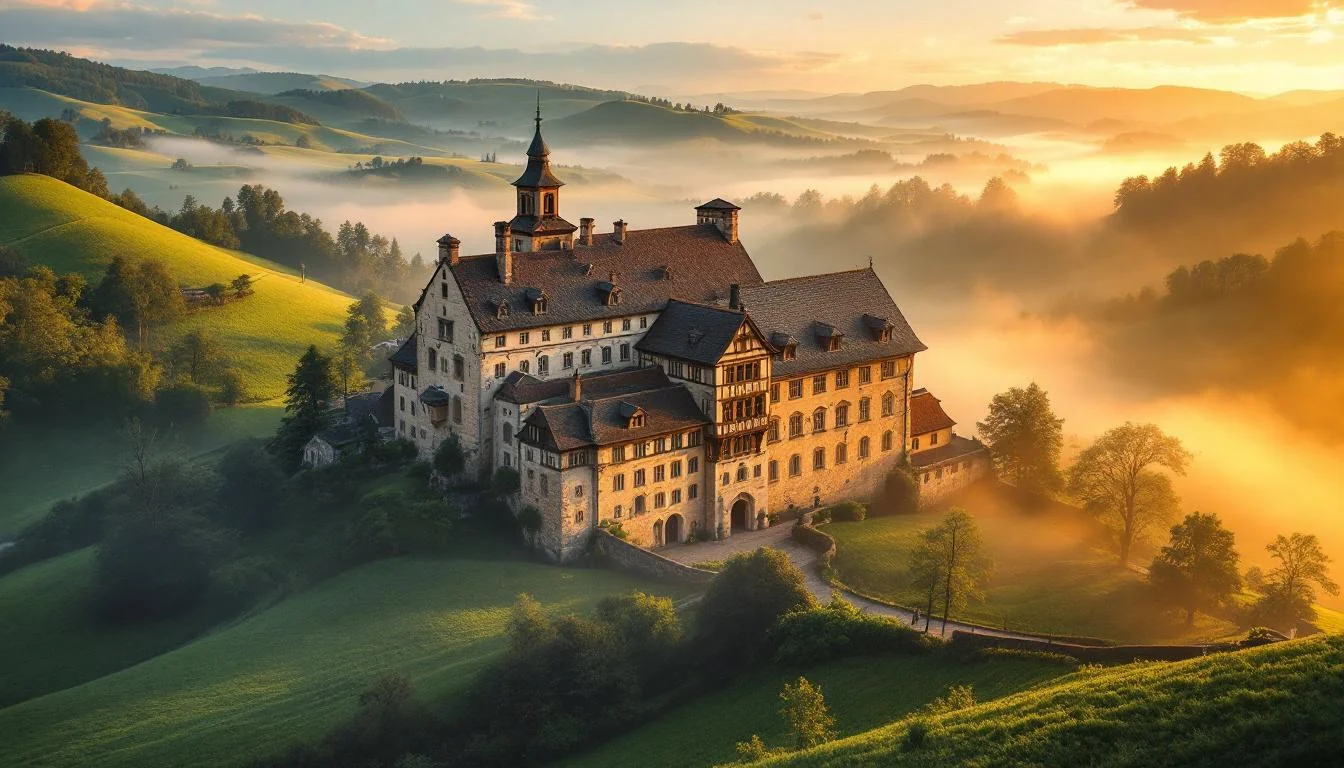
Weihenstephan, Freising — the birthplace of the 34/70 lager yeast strain, ancestor of WLP830
But Carlsberg shared this technology free of charge with the whole world. German breweries—already famous for lager—quickly adopted it and developed their own yeast strains, adapted to local conditions.
Weihenstephan, with a history spanning nearly a thousand years, has become a center for yeast research in Germany. Their 34/70 strain — a direct ancestor of WLP830 — is considered the ”standard lager strain” used by most commercial German breweries.
White Labs, founded in San Diego in 1995, collected and preserved this strain under the code WLP830. They simply called it "German Lager"—no need for any fancy adjectives.
The same yeast strain is sold by Wyeast under code 2124, and Fermentis in dry form as SafLager W-34/70. All originate from the same source: Freising, Bavaria.
Biological characteristics
WLP830 belongs to the species Saccharomyces pastorianus — a natural hybrid between S. cerevisiae (men ale) and S. eubayanus (Wild yeast from Patagonia, South America). This hybridization occurred approximately 500-600 years ago, perhaps when wild yeast from transatlantic trade accidentally encountered European ale yeast in cold brew cellars.
The ideal fermentation temperature for WLP830 is between 10-13°C, significantly lower than that of ale yeast (18-22°C). At this temperature, fermentation is slow—typically taking 2-3 weeks compared to 3-5 days for ale—but in return, the yeast produces almost no esters or phenols.
The sedimentation rate of WLP830 is rated as "medium to high". After fermentation, the yeast aggregates into a thick layer at the bottom of the tank, leaving the beer clear without much filtration. The attenuation rate ranges from 73-77%, meaning the yeast converts most of the sugar into alcohol but still leaves enough body for the beer.
In particular, WLP830 can withstand fairly high alcohol concentrations — up to 9% ABV — and can ferment under the high pressure conditions of industrial tanks without stress.
Flavor and character
If the ale men are the opera singers—always seeking attention with their fruity ester high notes and spicy phenols—then the WLP830 is the double bass player in the orchestra. It never stands in front of the stage. But without it, the entire piece would lack depth.
The most distinctive flavor of the WLP830 is… no distinctive flavor. It sounds paradoxical, but that's exactly what lager brewers look for: a neutral base for the malt and hops to shine.
At the right temperature, WLP830 produces an extremely clean profile — virtually free of esters (banana, apple flavors) or phenols (clove, smoky flavors). If present, it's only a slight sulfur content from the primary fermentation stage — which completely disappears after a few weeks of lagering.
What WLP830 delivers is balance. Pilsner malt will be expressed with a gentle, bread-like sweetness. Saaz or Hallertau hops will reveal subtle herbal notes without being masked. The bitterness will be dry and decisive.
If fermented at higher temperatures (above 15°C), WLP830 begins to produce a slight ester—often a stronger green apple or sulfur flavor. This is not a defect, but a characteristic that some German breweries intentionally exploit to create their own "signature" brewery.
Typical beer style
The WLP830 is the backbone of most styles. light lager German tradition. Each style is a lesson in restraint.
German Pilsner
Dry, bitter, and clear. German Pilsner requires the yeast to disappear completely so that the Saaz or Hallertau Mittelfrüh hops can take center stage. WLP830 does this perfectly. The finished beer has a straw-yellow color, a thick white head, and a lingering but not harsh bitter finish.
Munich Helles
If Pilsner leans towards hops, Helles leans towards malt. WLP830 allows the soft, bread-like sweetness of German Pilsner malt to emerge — not too sweet, not too dry. This is the kind of beer Munichans drink every day, and its balance depends on the yeast.
Marzen/Oktoberfest
A beer of autumn. Amber color, light caramel malt flavor, and a balanced bitterness. WLP830 must be fermented cleanly so as not to "taint" the Viennese and Munich malt flavors with esters.
Schwarzbier
Version stout of a lager. Black like coffee but light body, with a gentle roast flavor. WLP830 keeps the beer from being heavy — dark yet clean.
Geographic region and terroir
Bavaria is not just the birthplace of WLP830; it is the reason this glaze exists.
This region is situated at an altitude of 500 meters above sea level, with long and cold winters. Before the advent of refrigeration, it was one of the few places in Europe where lager could be brewed and fermented naturally. Breweries dug deep underground cellars, filled with ice from the Alps lakes, and left the beer to rest through the winter.
Lager yeasts—cold-loving organisms—evolved in these conditions. They learned to work at temperatures where ale yeasts would hibernate. They learned to settle to the bottom of the vat to avoid being scooped up with the foam.
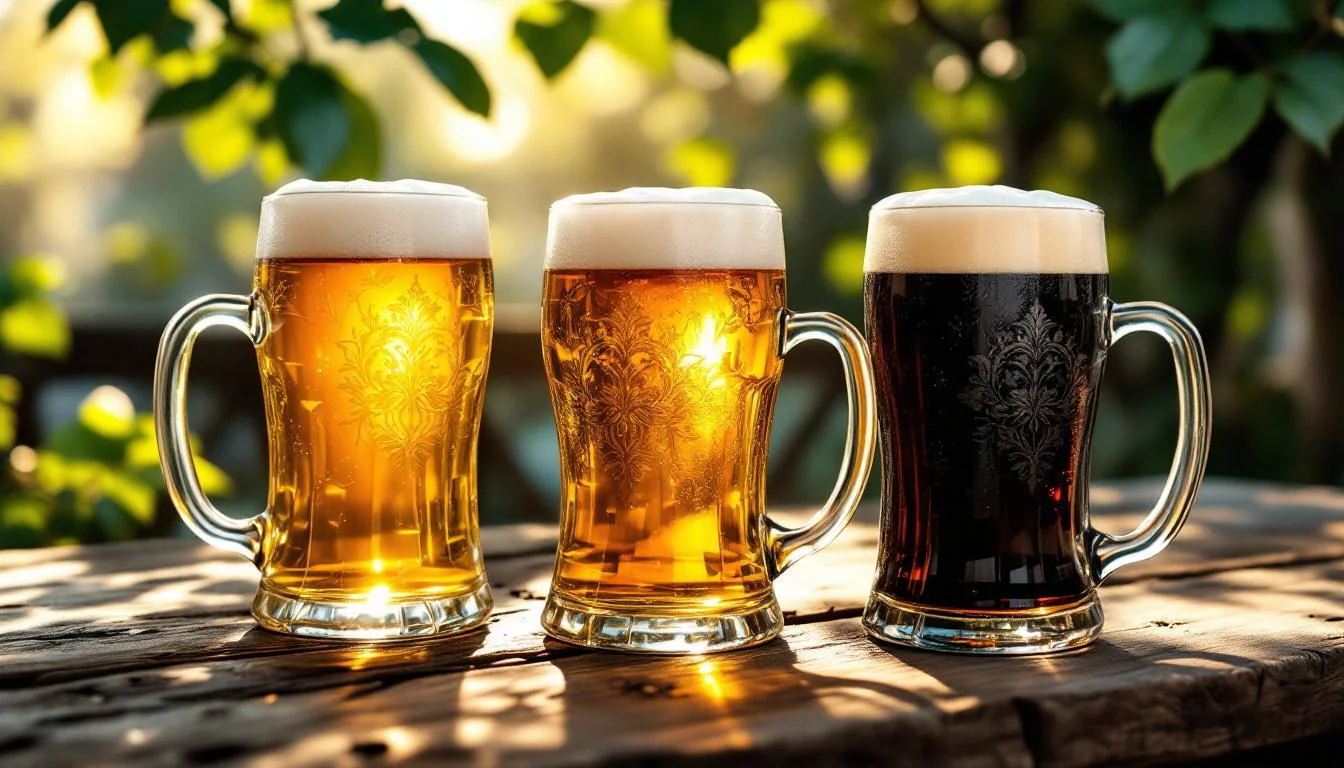
Helles, Märzen, Schwarzbier — three different faces of the same yeast strain
The water in Bavaria is relatively soft, especially in Munich and Freising. Soft water brings out the malt flavor without creating harsh bitterness — perfect for Helles and Dunkel. Pilsen in the Czech Republic has even softer water — the reason Pilsner originated there.
Today, WLP830 is used all over the world — from craft breweries in America to homebrew shops in Vietnam. But each time we ferment at 10°C, we are recreating the conditions of Bavarian cellars from three hundred years ago.
How to recognize when enjoying it
When holding a German lager in your hand, don't look for complexity. Look for absence.
There's no banana flavor from ale yeast. No spiciness from Belgian yeast. No tropical fruit aroma from kveik yeast. Just malt, hops, and water—three ingredients prescribed by Reinheitsgebot since 1516.
If the beer has a slight sulfurous smell, like a recently extinguished match – that's a sign that the WLP830 is young and hasn't been lagering long enough. If it has a green apple or buttery (diacetyl) flavor – the beer needs more resting time for the yeast to "clean up".
The best lager is the one you finish drinking and don't remember what you just drank — just the feeling of satisfaction, refreshment, and a desire for more.
It is the art of invisibility. That is WLP830.
Next time we raise a glass of Pilsner or Helles, let's take a moment to think of the tiny creatures that toiled in the dark, in near-freezing temperatures, for weeks on end — just so we could enjoy a sip of beer as clear as Alpine spring water.