
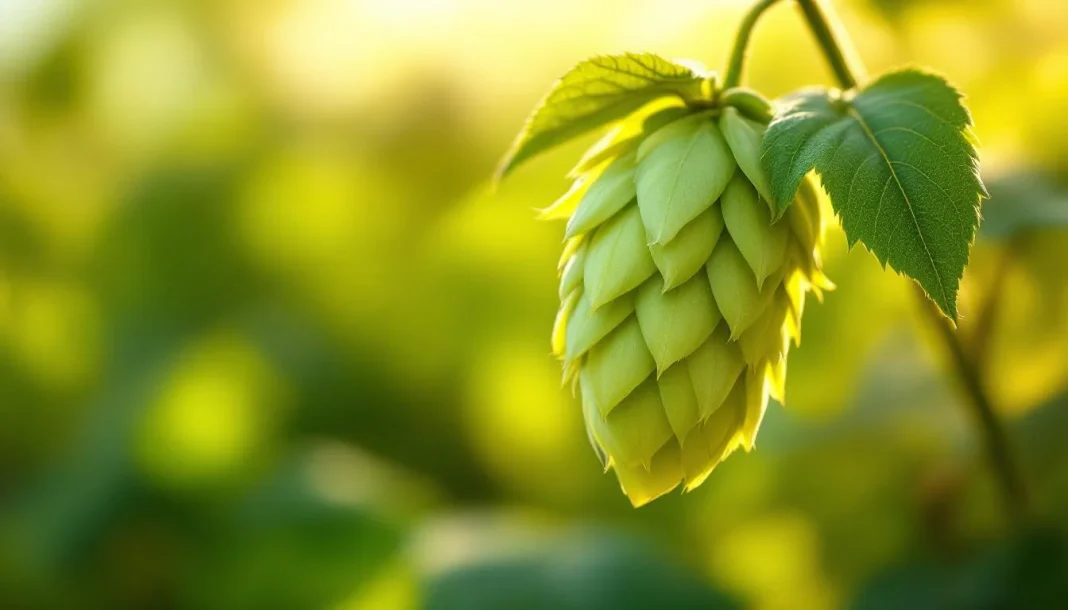
In 2009, a bottle of Pale Ale from a small Melbourne brewery appeared at the Great American Beer Festival. Tasters paused. They couldn't find any familiar words to describe the aroma that was hitting their noses. Not American grapefruit. Not European lime. It was passion fruit—a tropical fruit that traditional hops never evoked.
That bottle of beer was Galaxy. And from that moment on, the international brewing community began to look at the South with different eyes.
Origin and history
Galaxy was born from a research program spanning over two decades in Australia. The story began in 1994, when scientists at Hop Products Australia (HPA) crossbred an aromatic German hop variety with a native Australian wild hop variety, designated J78. The initial goal was simple: to create a hop variety that could withstand the harsh climate of the brown continent while retaining a strong enough aroma to compete in the international market.
The selection process took sixteen years. Hundreds of hybrid plants were tested, evaluated, and eliminated. Only one line passed all the screening rounds — it was assigned the code J211. In 2009, J211 was officially commercialized under the name Galaxy.
The name wasn't chosen randomly. Australians wanted a word big enough to encapsulate their ambition—to take their hop out of the shadow of America and Europe. “Galaxy” evoked vastness, distance, and distinction. And indeed, its flavor was unlike anything the North had ever produced.
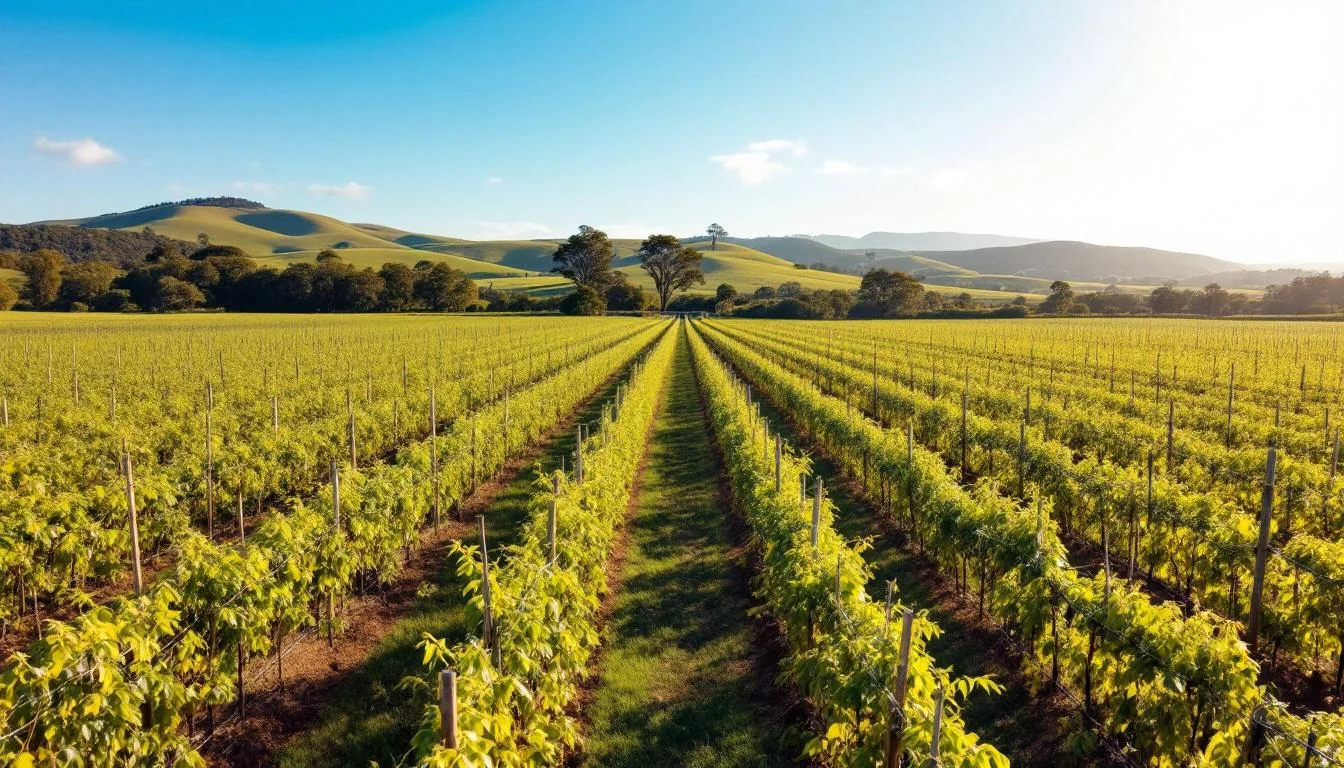
The Galaxy hop growing region is concentrated in Tasmania—a small island south of Australia, where the climate is cooler than the mainland and rainfall is more consistent. The Derwent Valley and Bushy Park are two of the main locations. In addition, some smaller areas are grown in Victoria, around the town of Eurobin in the Alpine Valley. The total area of Galaxy hop cultivation across Australia is approximately 400 hectares—not large compared to hop growing regions in the Pacific Northwest, but enough to make Galaxy Australia's most important export hop variety.
What's special is that Galaxy remains exclusively owned by HPA. No hop gardens outside of Australia are permitted to grow this variety. This controlled scarcity is both a commercial strategy and a way to preserve its unique identity.
Technical specifications
Galaxy belongs to the dual-purpose hop group — it can be used for both bitterness and flavor. The alpha acid content ranges from 111 TP3T to 161 TP3T, averaging around 13.51 TP3T. This is a high level, allowing brewers to achieve the desired bitterness without using excessive amounts of other ingredients. Beta acid ranges from 51 TP3T to 6.91 TP3T, creating a softer, secondary bitterness during beer fermentation.
But the real highlight of Galaxy lies in its essential oils. The total oil content reaches 3.0 to 5.0 ml per 100g — significantly higher than most traditional European hops. Of this, myrcene accounts for approximately 33-411 TP3T, contributing to the characteristic tropical fruit aroma. Farnesene — a rare component in American hops — can reach 3-61 TP3T, providing a light and complex floral note.
The Galaxy hop harvest in Tasmania falls in March and April — autumn in the Southern Hemisphere. This coincides with spring in the Northern Hemisphere, meaning that when American and European brewers run out of fresh hop, Australian hop is just arriving. This off-season timing inadvertently becomes a commercial advantage.
Aroma and flavor
Hold a handful of Galaxy pellets to your nose. The first thing you notice is passion fruit—not a hint, but a direct, clear scent, as if someone had just cut a passion fruit in half right in front of you. This aroma comes from thiol compounds, especially 4MMP, which is also present in Sauvignon Blanc wine and fresh passion fruit itself.
Behind the passion fruit is the peach. Not a ripe, juicy peach, but one that's just right—still a little crunchy, still a little tart. Next is the orange, but not the Valencia orange from America. This is a mandarin orange, sweeter, less bitter, closer to a tangerine.
When hops are simmered for a long time in a wort pot, the fruity notes soften, giving way to a clean, non-harsh bitterness. But when used in the dry hop or whirlpool stage, Galaxy unleashes its full spectrum of aromas. Many brewers describe it as a tropical cocktail—with hints of pineapple, mango, and papaya lurking in the background.
One thing to note: Galaxy can become too strong if used in high doses. Some batches have been criticized for being "soapy" or smelling like cosmetics when dry-hoped too much. Moderation, as always, is key.
Beer style using Galaxy
Galaxy finds its biggest stage in the lineup. IPA. Traditional American IPAs that use Galaxy in the late addition or dry hop stage will have a vibrant tropical aroma profile, distinctly different from IPAs using Citra or Mosaic. But where Galaxy truly shines is New England IPA — a style that is opaque, soft, and emphasizes aroma over bitterness. The high protein structure of New England IPAs helps retain the hop essential oils, and Galaxy seems made for that.
Australian-style Pale Ale — sometimes called Australian Pale Ale or XPA — almost always uses Galaxy hop. Stone & Wood Pacific Ale, one of Australia's best-selling craft beers, built its entire empire on this hop variety. XPA style is typically lighter than American Pale Ale, with an alcohol content of around 4.2-5.0% TP3T, but the aroma is just as impressive.
Additionally, Galaxy also appears in some wheat beer American style, where the subtle sweetness of wheat combines with tropical fruits to create an experience almost like dessert beer without added sugar or flavorings. Some experimental breweries have even incorporated Galaxy into their offerings. sour beer Kettle Sour style, utilizing the sourness to enhance the inherent passion fruit flavor.
Compare to hops in the same group
Galaxy is often paired with New Zealand's Nelson Sauvin — two Southern Hemisphere hop varieties with distinctly different flavors. But they are more different than similar. Nelson Sauvin has the characteristics of a white grape, a slight sulfur note reminiscent of wine, and a somewhat "funky" finish. Galaxy is purer — tropical fruit dominates, lacking the exotic facets of Nelson.
Compared to Citra—the most famous American hop variety known for its fruity notes—Galaxy leans more towards passion fruit and peach than grapefruit and orange. Citra has a sharper bitterness, while Galaxy is softer in the aftertaste. Many brewers combine the two to create a broader flavor profile.
Another comparison is with Vic Secret — an Australian hop variety that came after Galaxy, also from the HPA program. Vic Secret leans more towards pineapple and herbs, less passion fruit, and has a resinous note that Galaxy lacks. If Galaxy is a fruit cocktail, Vic Secret is that cocktail with an added sprig of mint.
How to recognize when enjoying it
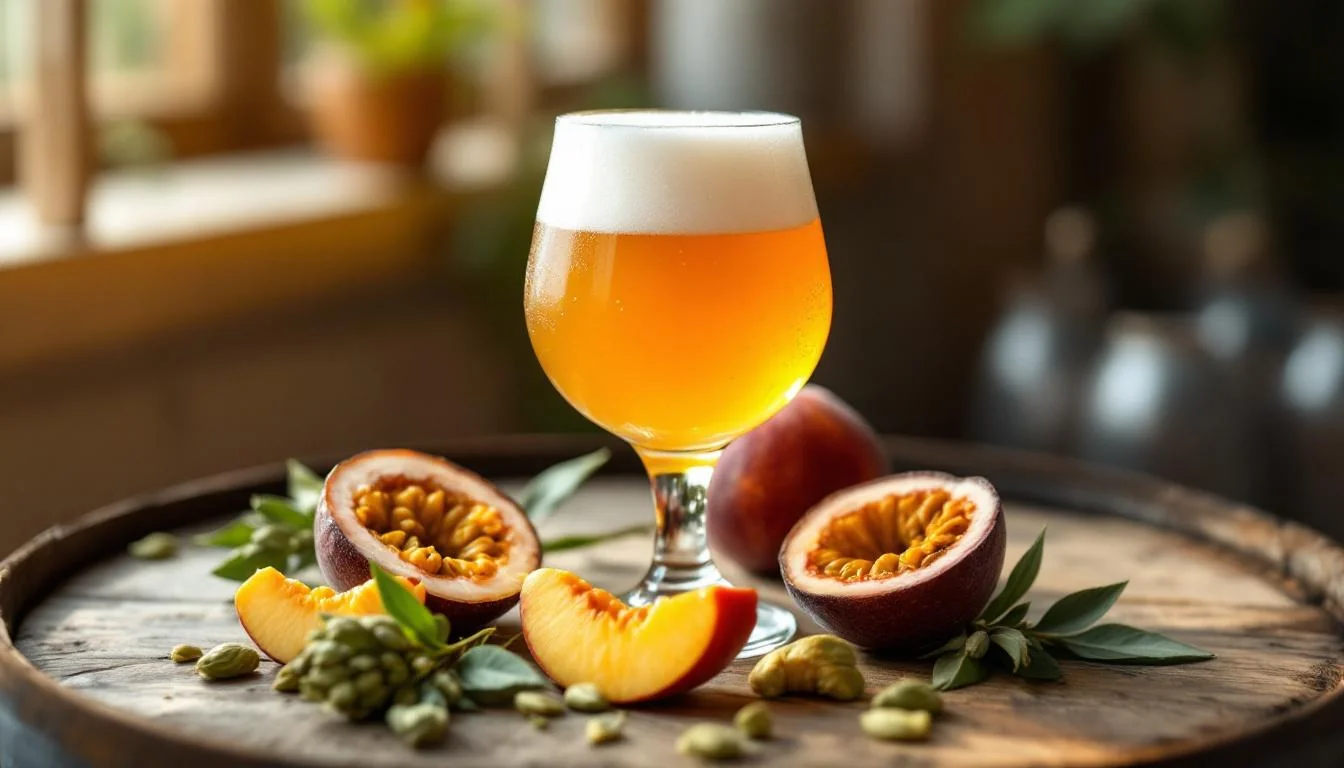
When holding an IPA labeled with Galaxy, start with your nose before you drink. Raise the glass, take a slow breath. If there's a significant amount of Galaxy, passion fruit will appear immediately—no need to search. It's the foreground note, not hiding anywhere.
With the first sip, pay attention to the middle of your tongue. The fruit flavors will precede the bitterness. Peach, citrus, maybe a hint of mango if the brewer used a lot of hops in the whirlpool. The bitterness of Galaxy doesn't come as early as Centennial or Columbus — it waits at the end, gentler, not a sharp, rebounding bitterness.
The aftertaste is where Galaxy leaves its mark. A light, almost diluted honey-like sweetness lingers after swallowing. There's no metallic or harsh bitterness that some high-alpha hops leave behind.
If you drink a bottle of Australian beer on an ordinary afternoon and suddenly think of a tropical summer—even though you've never been there—you've probably just encountered Galaxy. This hop needs no introduction. It speaks to the drinker, in the language that ripening fruit has used for millennia.