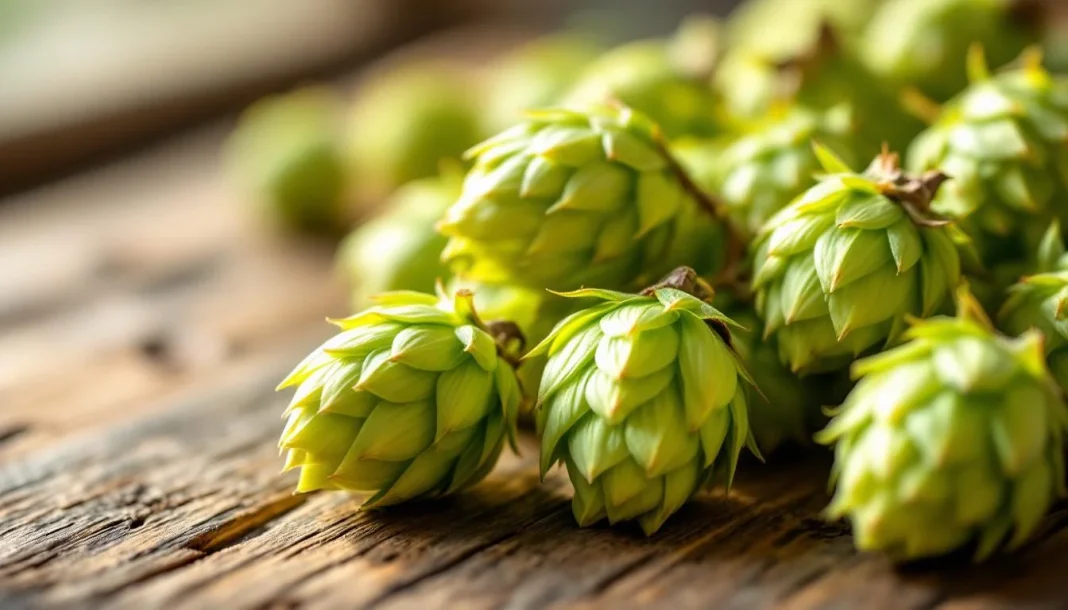
In 1991, at a small pub in Portland, Oregon, a young brewer opened a barrel of hops that had just arrived from Yakima Valley. The scent of pine resin filled the room—not the delicate floral aroma of European hops he was used to. It was Chinook, a hop variety only six years old, quietly reshaping how Americans thought about beer.
Three decades later, Chinook still stands. Not as flashy as the later generations of Citra or Mosaic. But it hasn't disappeared either. It's become the backbone—the hop that many brewers turn to when they need a solid bitterness and a deep, rich base.
Origin and history
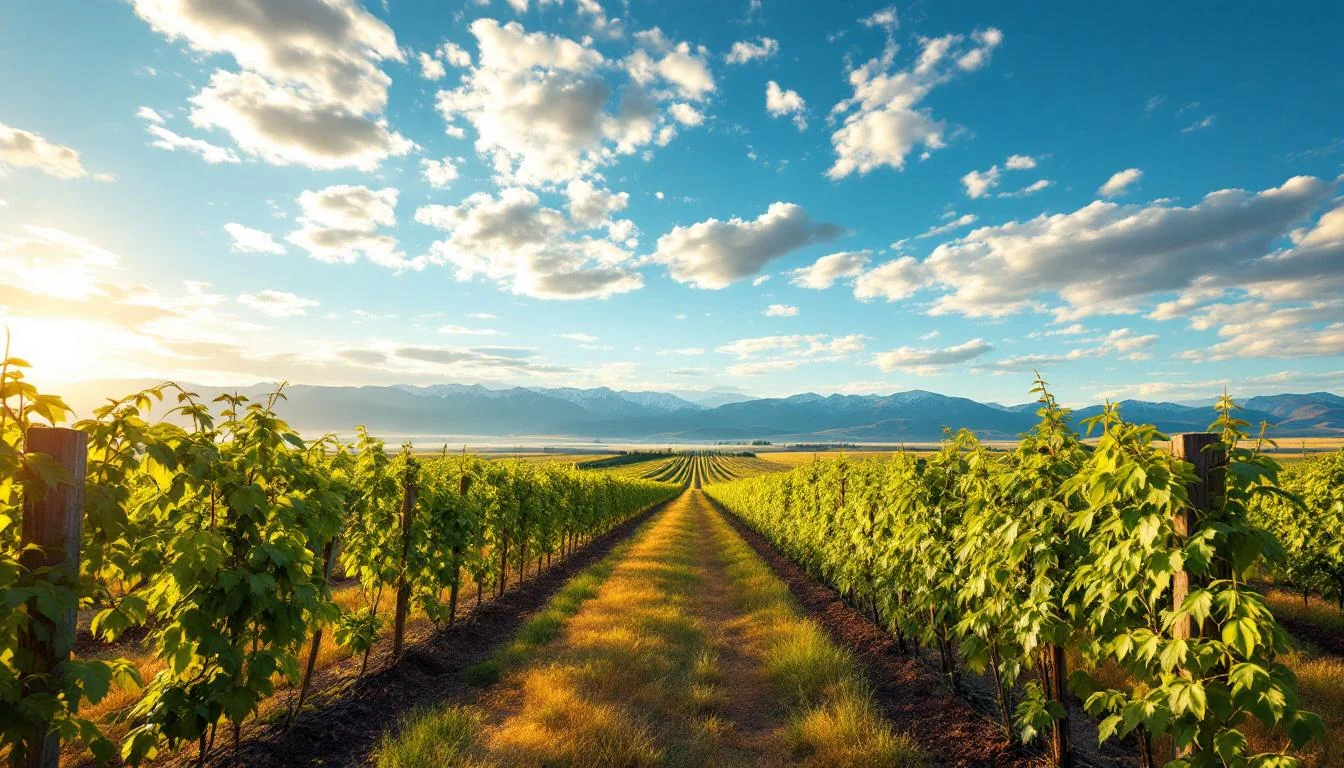
Chinook was founded in 1985 at a USDA research station in Prosser, Washington—in the heart of the Yakima Valley. This is the largest hop-growing region in the United States, where the semi-arid climate and volcanic soil provide ideal conditions for hop cultivation.
The man behind this hop variety is Dr. St. Kenny and his research team at USDA-ARS. They crossbred the Chinook from Petham Golding—an English hop variety—with a USDA male hybrid designated 63012M. The goal was clear: to create a hop variety with high alpha acid content, good disease resistance, and suitability for cultivation conditions in the Pacific Northwest.
The name "Chinook" comes from the Native American tribe that lived along the Columbia River, on the border between Washington and Oregon. It is also the name of the warm wind that blows down from the Rocky Mountains—the wind that melts snow and heralds the arrival of spring. The name carries the spirit of the land.
When it was first released, Chinook was positioned as a biting hop. High alpha acid, reasonable price, and consistent yield—factors sought after by industrial breweries. But the craft beer wave of the 1990s changed the perspective. Brewers began using Chinook in the later stages—late addition and dry hopping—and discovered the complex flavors hidden beneath its seemingly "just bitter" exterior.
Sierra Nevada, one of the pioneers of American craft beer, incorporated Chinook into its Torpedo Extra IPA recipe. Deschutes Brewery used it in its Fresh Squeezed IPA. These names helped Chinook transcend its secondary role, becoming one of the most beloved hop varieties in the American IPA movement.
Technical specifications
Chinook belongs to the high alpha hop group. Alpha acid content ranges from 12 to 14 percent, with some harvests reaching up to 15 percent depending on the year's conditions. Beta acid is in the range of 3 to 4 percent, creating an alpha-beta ratio of approximately 3.5:1 — characteristic of bitter hop.
The total essential oil content ranges from 1.5 to 2.5 ml per 100 grams of dry hops. Myrcene predominates at 35 to 45 percent, explaining the characteristic resinous and herbal notes. Humulene is second at 18 to 25 percent, contributing to the woody and earthy undertones. Caryophyllene accounts for approximately 9 to 11 percent.
The Chinook harvest season in Yakima Valley typically falls between late August and mid-September. This is when the hop fields are busiest—six- to seven-meter-tall vines are cut and fed into cone-separating machines. Chinook yields a decent amount, around 1,500 to 2,000 pounds per acre, lower than some commercial varieties but stable year after year.
Aroma and flavor
Break a fresh Chinook cap between two fingers. The first thing that hits your nose is pine resin—the scent of a coniferous forest after a rain, of freshly cut wood. Not the gentle scent of scented candles, but the real scent of pine, with sharpness and depth.
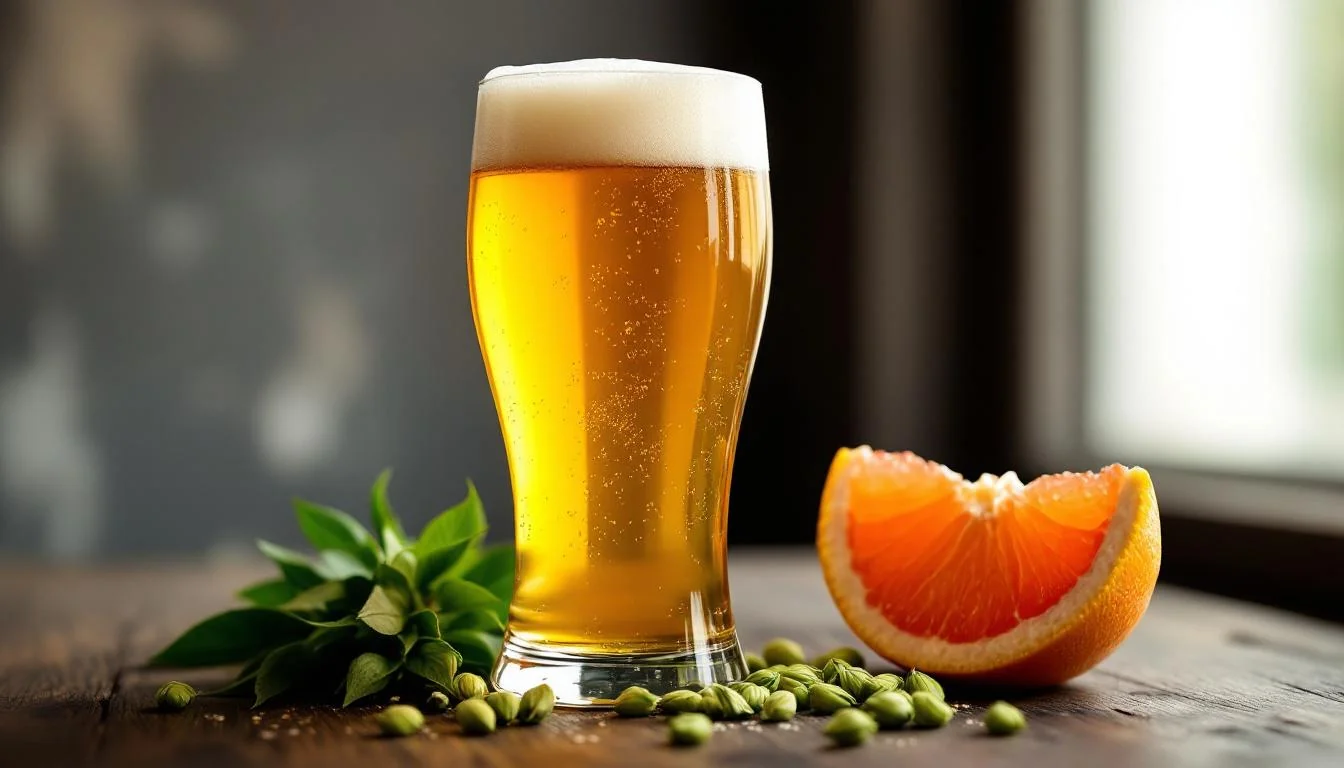
Beneath the layer of pine resin lies grapefruit. Not a sweet grapefruit, but a perfectly ripe one, with the white peel still slightly bitter. Some call it grapefruit pith — the subtle astringent taste that lingers after eating. This is what distinguishes Chinook from more purely citrus varieties like Citra or Amarillo.
If you pay close attention, there's also a layer of herbal notes in the background — a hint of musk, a touch of dried thyme. Experienced brewers often say Chinook smells "dank" — an English term describing a strong, slightly damp scent reminiscent of forests and wild vegetation. This is a characteristic not everyone likes, but those who do like it really do.
On the palate, Chinook offers a clean yet persistent bitterness. It's not as intensely bitter as some extremely high alpha hops, nor does it dissipate quickly. It lingers on the back of the tongue, slightly astringent, with a resinous aftertaste. This is a well-developed bitterness—not noticeable in the first sip, but fully apparent in the second half.
The style of beer using Chinook.
Chinook was made for American IPA. Its high alpha content allows brewers to achieve the necessary IBU level without using excessive hops, saving costs while maintaining intensity. Its pine and grapefruit notes become the signature of the West Coast IPA line — clear, golden beers with a distinct bitterness and a dominant hop flavor from start to finish.
Chinook is also a common addition to Double IPAs and Imperial IPAs. At higher alcohol levels, the lingering bitterness of Chinook balances the high malt content without being overwhelmed. Many brewers use Chinook as a base, then add more fruity hop varieties like Simcoe or Centennial during the dry hop stage.
American Pale Ale is another option. With a more moderate amount of hop, Chinook demonstrates a balance between malt and hop without being overwhelming. Classic Pale Ales from the Pacific Northwest often bear the hallmarks of Chinook — moderate bitterness, subtle pine notes, and a dry finish.
Some brewers experimented with Chinook in American Barleywine and Imperial Stout. Here, Chinook plays a different role—no longer the star, but the orchestrator. Its resinous notes blend with dark caramel and chocolate from roasted malt, creating an unpredictable layering of complexity. Not everyone can do it, but when they succeed, it's memorable.
Compare to hops in the same group
Chinook is often paired with Centennial and Columbus—the classic trio of American C-hop. All three have high alpha acids, all possess distinctly American characteristics, but differ in detail.
Centennial is gentler. If Chinook is pine resin and bitter grapefruit, Centennial leans towards floral and orange notes. It's called the "Super Cascade" because it resembles Cascade but is stronger. The bitterness of Centennial is also softer and less viscous. In a batch, Centennial usually takes second place — adding depth without being overpowering.
Columbus (also known as Tomahawk or Zeus — part of the CTZ trio) is the opposite, even more intense than Chinook. Alpha acids can reach 17 percent or more. Columbus's aroma is heavy on earth and dark herbs, with less fruit. Many brewers use Columbus for its base bitterness because it is more "neutral" — it doesn't leave such a strong aroma imprint.
Simcoe is a close relative of Chinook, despite being released nearly two decades later. Both share notes of pine resin and nuts, but Simcoe adds layers of berries and melon that Chinook lacks. Many modern IPA recipes combine Chinook with Simcoe to capture the essence of both worlds.
How to recognize when enjoying it
When holding a West Coast IPA and wanting to know if it has Chinook, start with your nose. Bring the glass up and take a light sniff. If there's a distinct pine resin note—not a mild pine, but a sharp, slightly "dank" pine—that's the first sign. Chinook doesn't hide itself.
With the first sip, pay attention to the bitterness. Chinook allows the bitterness to build up gradually. It's not noticeable in the first sip, but it becomes apparent in the second, and by the third, it lingers clearly on the back of the tongue. This is a kind of bitterness with a "backbone"—it doesn't dissipate as quickly as some newer hops.
The aftertaste is where Chinook leaves its final mark. After swallowing, wait a few seconds. If there's a slightly tart grapefruit flavor—like the white pith—mixed with a hint of pine resin, that's Chinook saying goodbye. Not a tropical fruit aftertaste like Citra, not a floral aftertaste like Cascade. But a forest aftertaste.
Chinook has been here since 1985. It's not new, it's not trendy anymore. But it still stands there, in those IPA bottles that people want to drink again and again. Perhaps that's the true measure of a hop variety — not the hype at launch, but its enduring presence after three decades.
Next time you pick up a glass of beer, if you smell the scent of the Northwestern pine forests, take a moment to sip slowly. It could be Chinook telling the story of Yakima Valley, of the people who bred it, and of its long journey from a bitter hop variety to an integral part of American beer culture.