
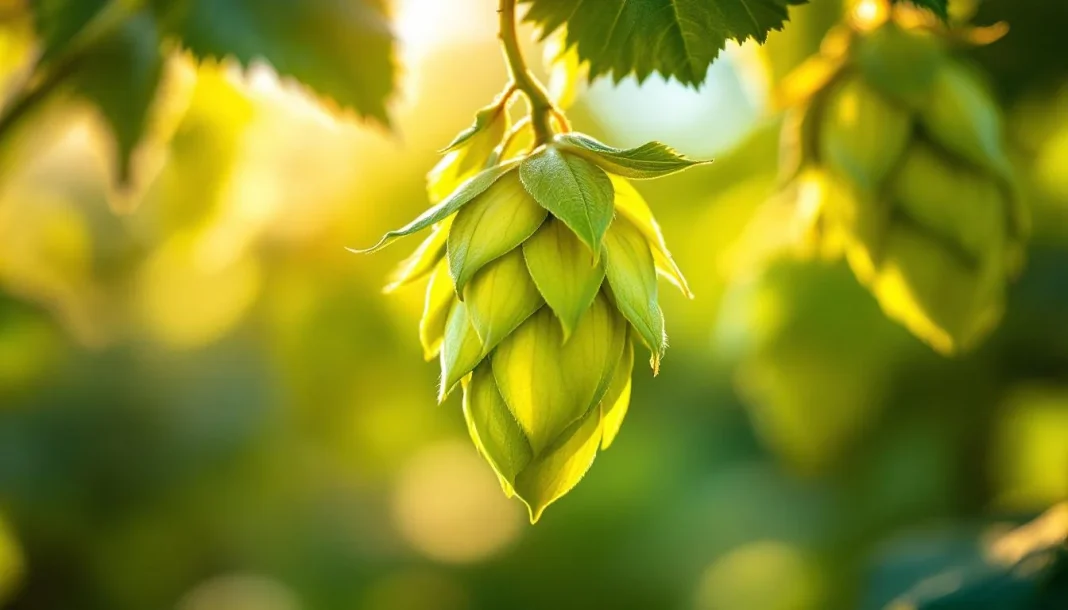
In 1844, a farmer named Johann Baptist Bentele stood in a field in Tettnang, watching the first hop vines begin to wrap around the wooden trellis. He could not have known that nearly two centuries later, this very hop variety would be referred to by brewmasters around the world with a dignified term: noble hop.
Tettnanger isn't a hop variety for those seeking intense bitterness or explosive tropical fruit flavors. It's a hop of restraint. Of delicate, misty layers of flavor. Of beers that require time to understand.
Origin and history
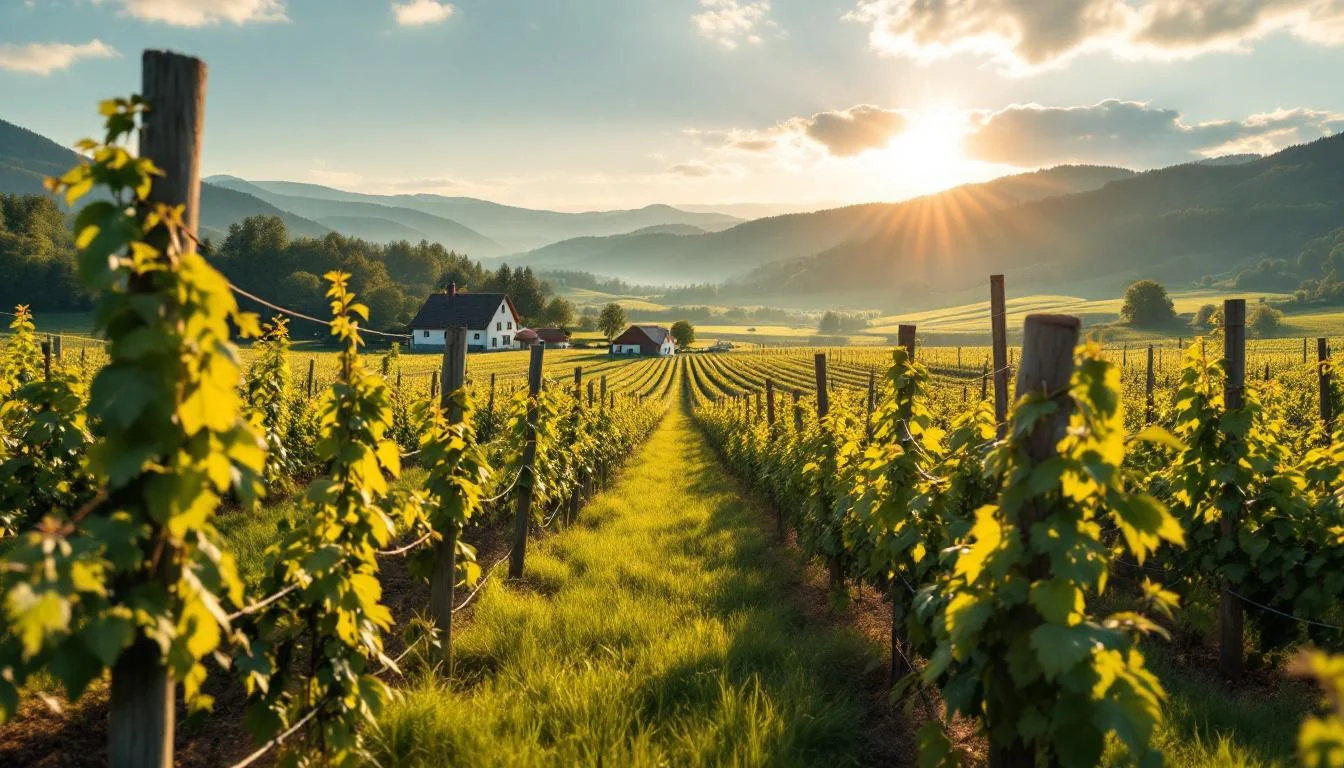
Tettnang is a small town located in the state of Baden-Württemberg, in southern Germany, less than 15 km from Lake Bodensee. The area has a mild climate, fertile alluvial soil, and regular rainfall—ideal conditions for growing hops.
The history of hop cultivation in Tettnang dates back to around 1844, when local farmers recognized the economic potential of the plant. Initially, they cultivated the Saaz (Žatec) variety from Bohemia, but through generations of natural selection and adaptation to the local soil, a unique variant emerged. It was simply called Tettnanger—a name that carries the name of the region.
By the mid-19th century, Tettnang had become one of Germany's three most important hop-growing regions, alongside Hallertau and Spalt. These three regions formed the Bavarian hop triangle, supplying the raw materials for the booming German beer industry during the period of industrialization.
In 1867, Tettnanger was officially recognized as a distinct hop variety with stable genetic characteristics. Researchers classified it as a “noble hop”—a title reserved for four traditional European hop varieties with delicate aromas and low alpha acids: Saaz, Hallertauer Mittelfrüh, Spalt, and Tettnanger.
Throughout the two world wars, the area planted with hops in Tettnang suffered a severe decline. Many fields were abandoned, and many valuable hop varieties were lost. But since the 1950s, local agricultural cooperatives have made efforts to restore them. They preserved purebred gene lines while modernizing cultivation techniques.
Today, the Tettnang region has around 130 families growing hops on an area of nearly 1,500 hectares. This is the third largest hop-growing region in Germany and the only authentic Tettnanger supplier in the world.
Technical specifications
Tettnanger belongs to the low alpha acid hop group, ranging from 3.5% to 5.5%, with an average of around 4.5%. This means the hop doesn't produce a strong bitter taste but rather contributes a gentle, elegant aroma and bitterness.
Tettnanger's beta-acid content ranges from 3% to 5%, resulting in an alpha/beta ratio of approximately 1:1. This balanced ratio is characteristic of noble hops, contributing to its smooth bitterness and clean aftertaste.
The total oil content of Tettnanger is moderate, ranging from 0.5 to 0.9 ml/100g. Of this, myrcene accounts for approximately 36-45 TP3T, humulene 22-32 TP3T, and farnesene 14-19 TP3T. The unusually high farnesene content is one of the hallmarks of authentic Tettnanger — most other hop varieties have farnesene below 11 TP3T.
The Tettnanger hop harvest season runs from late August to mid-September, slightly earlier than in northern hop regions. Tettnanger hops thrive at altitudes of 400-500 meters above sea level, where the large diurnal temperature range helps essential oils accumulate in the hop cones.
Aroma and flavor
When you bring a fresh Tettnanger cone to your nose and gently rub it between your fingers, the first thing that emerges is a floral scent. Not the vibrant scent of roses or the pungent scent of jasmine, but the scent of wildflowers—gentle, fleeting like an early morning breeze.
The second layer is herbal. There's something of dried basil leaves, sun-dried grass, a hint of dill. These notes aren't isolated but interwoven, forming a combination the Germans call "würzig"—a mildly spicy, pungent scent that's difficult to translate into Vietnamese.
At its deeper layers, Tettnanger carries subtle spice notes. Not the spicy black pepper or pungent cinnamon, but rather the aroma of coriander seeds—fresh, slightly sweet, with a hint of lemon. This is the characteristic that makes Tettnanger a favorite among many Belgian brewers.
When used in beer, Tettnanger never overwhelms. It sits in the background, supporting the other components. In a classic German pilsner, you'll recognize Tettnanger by its "clean" feel—no lingering bitterness, no overly prominent hop notes. Everything blends seamlessly with the malt and yeast, creating a unified whole.
The aftertaste of Tettnanger is one of elegance. The bitterness dissipates quickly, leaving a slight dryness in the throat and a fleeting floral aftertaste on the palate. Nothing dramatic, nothing controversial. Just balance.
Beer style using Tettnanger
Tettnanger is the soul of German Pilsner — the style of beer that has shaped the world beer industry. These lines light beer Classic brews from southern Germany are almost incomplete without this hop variety. Its low alpha acidity allows brewers to use large amounts of hop without creating harsh bitterness, while floral and herbal notes add depth to the light Pilsner malt.
Munich Helles — a pale lager that originated in Munich in the late 19th century — also frequently uses Tettnanger. Here, the hops balance the sweetness of the malt, creating an easy-drinking, smooth beer, perfect for long afternoons in a beer garden.
One little-known fact: many home cooks Belgian beer Tettnanger is also quietly used, particularly in Witbier and Belgian Pale Ale lines. Tettnanger's natural coriander seed aroma subtly complements the traditional spiced recipe of Belgian wheat beer, while its gentle character doesn't overpower the characteristic orange and coriander notes.
For wheat beer In German styles like Hefeweizen or Kristallweizen, Tettnanger is often used in small amounts to provide a base. The purpose is not to make the hops stand out, but to cleanse the palate, balance the sweetness of the wheat, and create a dry finish.
Comparison with other hop varieties in the same group
In the quartet of noble hops, Tettnanger is often confused with Saaz — and not without reason. Both share a common genetic ancestry and many characteristics: low alpha acid, subtle floral and spicy notes, and high farnesene content. However, Saaz leans more towards grassy and earthy notes, while Tettnanger has more pronounced herbal notes. In a Bohemian Pilsner, Saaz feels more "rustic"; in a German Pilsner with Tettnanger, the beer has the characteristic "würzig" depth of German beer.
Hallertauer Mittelfrüh — its Bavarian counterpart — shares many similarities with Tettnanger but leans more towards lavender and elderflower than herbal notes. Mittelfrüh also has a slightly higher alpha acid profile (4-6%), allowing for a more pronounced bitterness in the same amount used.
Spalt — the lesser-known noble hop — has a stronger spicy character than Tettnanger, with distinct pepper and woody notes. If Tettnanger is the scent of spring wildflowers, Spalt is the scent of autumn pine forests.
How to recognize when enjoying it
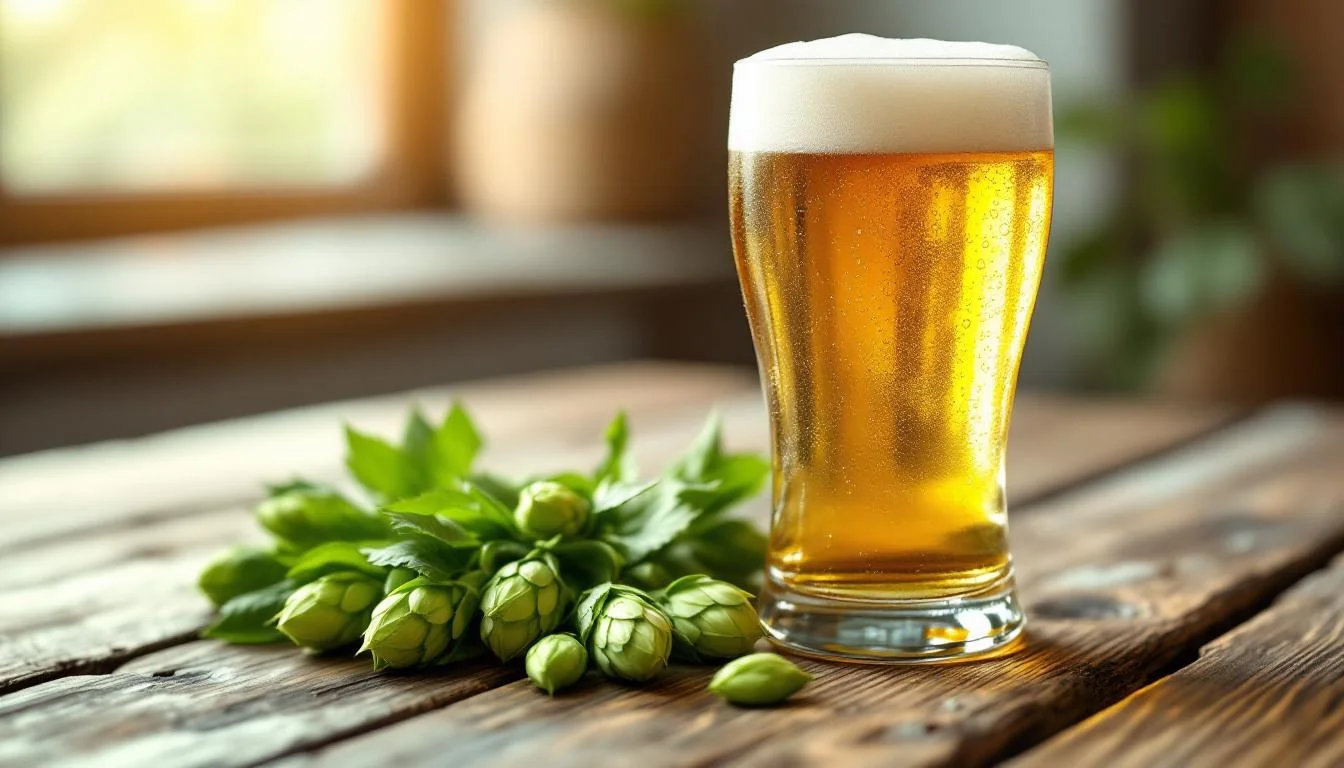
When you raise a glass of German Pilsner or Helles brewed with Tettnanger, start with your nose before you drink. Bring the glass to your nose and inhale gently. Look for wildflowers—light, not harsh, like the smell of hay in the early morning sun.
With the first sip, let the beer spread across your tongue. The bitterness of Tettnanger appears in the middle of the palate, not at the tip of the tongue or the back of the throat. It's mild, almost just a hint, then quickly dissipates. If you feel a slight "spicy" sensation—not chili-like, but herbal-like—that's a characteristic sign.
The aftertaste is where Tettnanger truly shines. After swallowing, pay attention to the sensation in the back of your throat and palate. You'll notice a slight dryness, a fleeting hint of grass, and then—absolute cleanliness. No lingering bitterness, no metallic aftertaste, nothing to "pass over.".
Tettnanger isn't a hop that impresses with the first sip. It's a hop that you appreciate in the second and third glasses, as the subtleties gradually emerge layer by layer. There are things that only truly become apparent when we slow down long enough to listen.