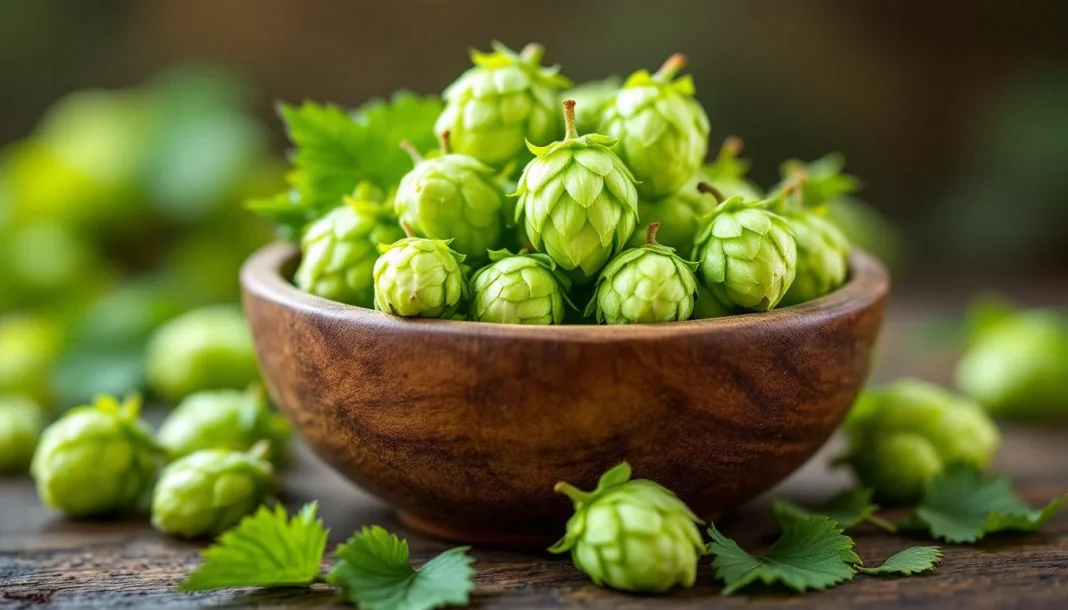
In 1975, a small bottle of beer was capped at the Anchor Brewing Company in San Francisco. Fritz Maytag—who saved the brewery from bankruptcy—decided to experiment with a new hop variety. No one could have imagined that this Liberty Ale would completely change the history of American beer. The hop in that bottle was called Cascade.
Before Cascade, American beer was almost synonymous with pale, light-flavored, uncharacteristic lagers. Major breweries catered to popular tastes. Hop played only a technical role—providing just enough bitterness, without leaving a distinct mark. Cascade emerged and broke all the rules. Fresh grapefruit, floral notes, and spices—something unprecedented in American beer. Beer lovers began searching for something different. Cascade gave them exactly that.
Forty years later, Cascade remains the most widely grown hop variety in America. Not because it's the strongest or the most unique. But because it opened a door—a door to the craft beer world as we know it today.
Origin and history
Cascade is not a naturally occurring hop variety. It was created in a laboratory through a breeding process that lasted over a decade.
The research program began in 1956 at Oregon State University, under the leadership of Dr. Stanley Nelson Brooks. The initial goal was quite simple: to create hop varieties with better disease resistance, especially against powdery mildew—a nightmare for hop farmers in the Pacific region.
Cascade is the result of a cross between Fuggle—a classic English hop variety—and Serebrianker, a Russian hop variety. This is an unexpected combination. Fuggle provides the familiar earthy and floral notes of English beer. Serebrianker—less well-known—contributes to its disease resistance and adaptability to the climate of the American Northwest.
In 1968, a new hop variety was selected and named Cascade — after the Cascade Mountains, which run from British Columbia, Canada, down to Northern California. This mountain range is symbolic of the Pacific Northwest, where hops thrive best.
In 1972, Cascade was officially announced and registered. But the market wasn't enthusiastic. The big breweries—Budweiser, Miller, Coors—didn't need hops with a strong flavor. They wanted hops that were mildly bitter, neutral, and wouldn't upset the taste buds of the general consumer.
Cascade nearly died prematurely.
Fritz Maytag saved it. In 1975, he decided to use Cascade as the dominant hop flavor for Liberty Ale. This decision was completely against the trend. Liberty Ale had a strong hop flavor, a clear bitterness, and — most importantly — a distinct personality. The bottle became legendary. It is considered the first prototype of the American IPA.
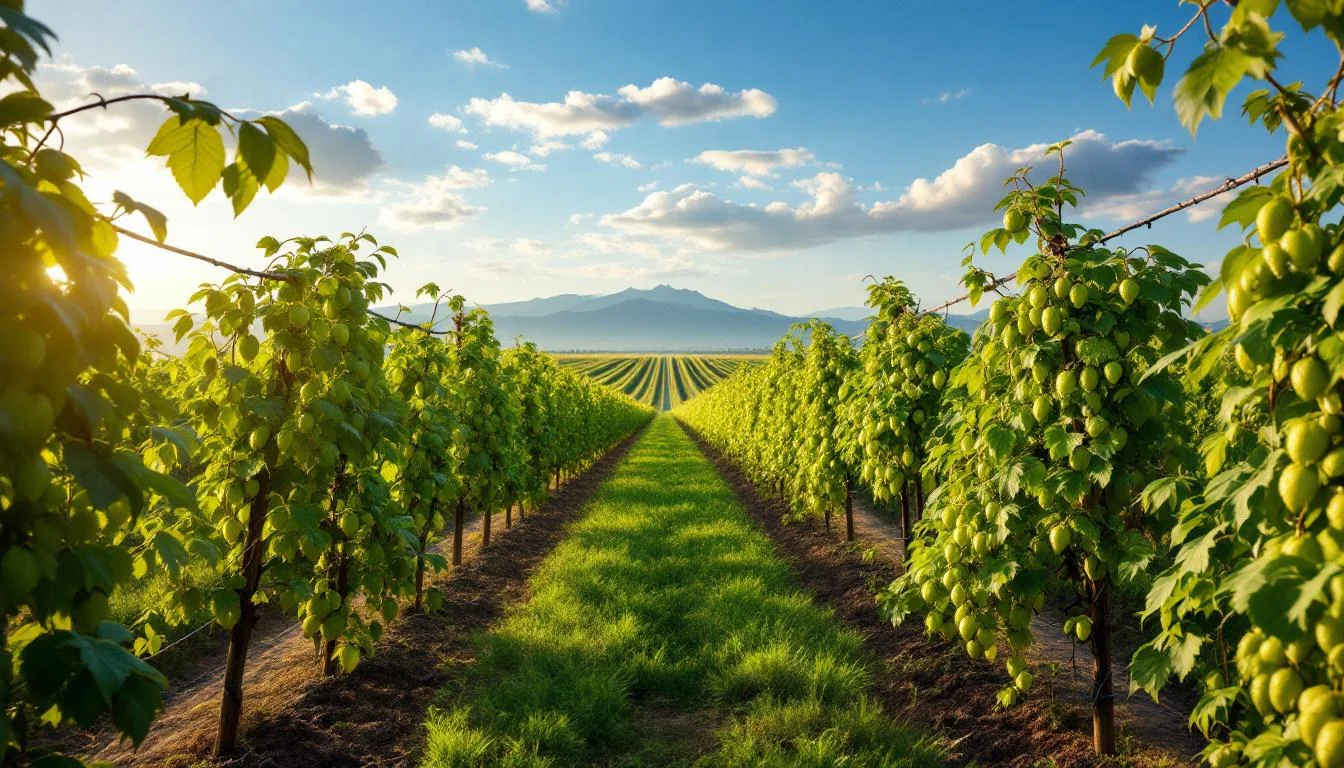
The Cascade region is primarily concentrated in the Yakima Valley, Washington. Nestled behind the Cascade Mountains, this valley enjoys a semi-arid climate with hot summers, cool nights, and little rainfall. Mineral-rich alluvial soil and irrigation from the Yakima River create ideal conditions for hop cultivation. Over 751 tons of U.S. hop production comes from this region.
Today, Cascade hops are no longer exclusive to the United States. This hop variety is now grown in New Zealand, Argentina, and some regions of Europe. But Cascade Yakima Valley is still considered the benchmark — with the fullest and most balanced aroma profile.
Technical specifications
Cascade belongs to the dual-purpose hop group, usable for both bitterness and flavoring. Its alpha acid content ranges from 4.51 TP3T to 71 TP3T, averaging around 5.51 TP3T. This is relatively low compared to modern hop varieties—but sufficient to create a smooth, non-harsh bitterness.
Beta acidity ranges from 4.81 TP3T to 71 TP3T, creating a gently lingering bitterness in the aftertaste. The alpha/beta ratio is close to 1:1—a rare characteristic—giving Cascade a more balanced and rounded feel than many other hop varieties.
The total oil content ranges from 0.8 to 1.5 ml/100g. Prominent oil components include myrcene (45-60%), humulene (10-16), and caryophyllene (3-6). Notably, Cascade has a high content of linalool—a compound that contributes to its delicate floral scent. Geraniol and citronellol contribute to its characteristic citrus notes.
Cohumulone—the component that influences bitterness—accounts for approximately 33-40% of total alpha acids. This level is slightly high, but not enough to create a harsh bitterness. Cascade still provides a smooth, pleasant bitterness.
The Cascade harvest season in Yakima Valley typically falls between late August and early September. This is when the essential oil content peaks, before the weather turns cold.
Aroma and flavor
If I had to describe Cascade with a single word, it would be grapefruit.
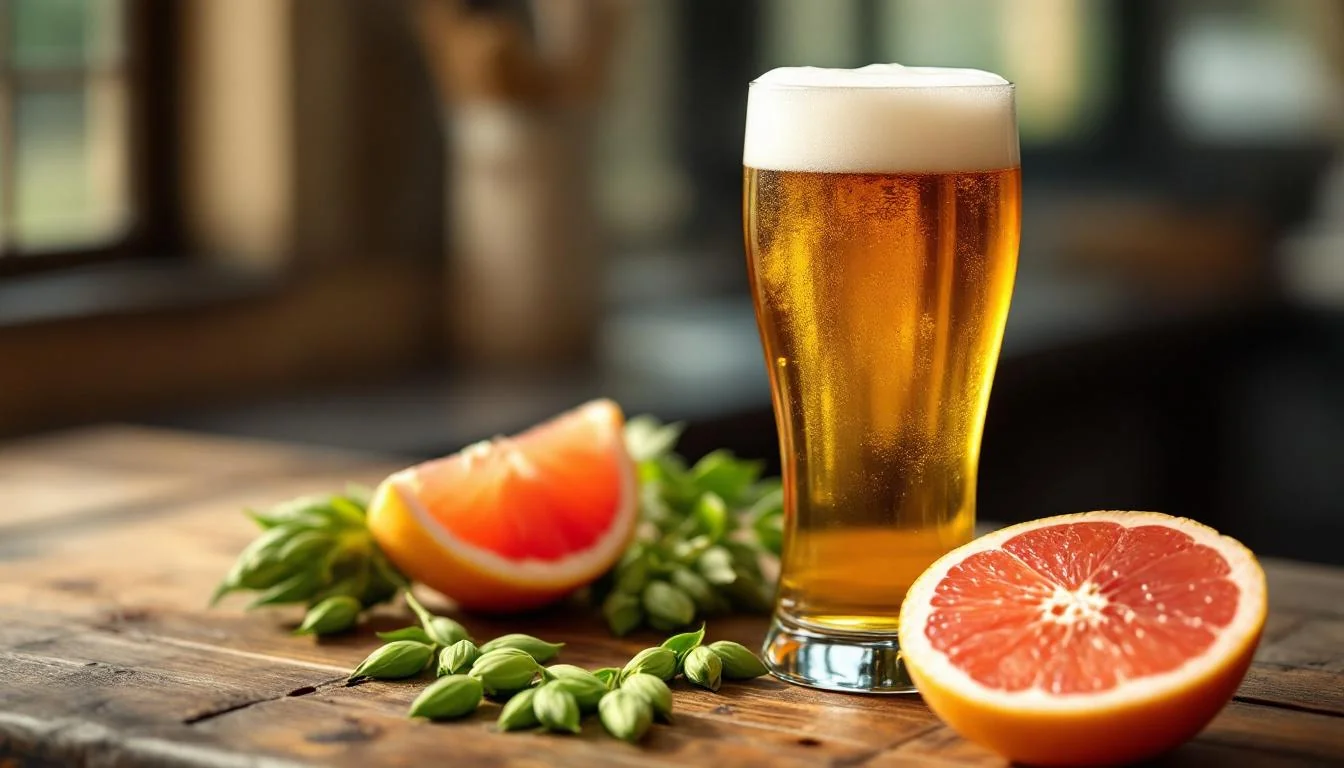
It's not a sweet grapefruit. It's a type of grapefruit with pink flesh, a refreshing sour taste, and a slightly bitter peel. When you peel a grapefruit, essential oils burst out, creating a fresh, invigorating scent. Cascade gives you that feeling.
But Cascade isn't just grapefruit. If you smell it more closely, you'll find multiple layers of scent overlapping each other.
The top notes are citrus—grapefruit, lemon, and a hint of orange. This aroma is the first to emerge when you raise your beer glass to your nose. It's fresh, bright, and clear.
The second layer is floral. Not the intense scent of roses or jasmine. Rather, it's small white flowers—orange blossoms, grapefruit blossoms, wildflowers. This scent is lighter, emerging after the initial citrus note has subsided.
The third layer is spice. A touch of black pepper, a hint of pine. This is a legacy from Fuggle — like English hop in Cascade's blood. This spice layer isn't strong, but it adds depth, preventing the Cascade scent from becoming monotonous.
When drinking, Cascade's taste is softer than its aroma. It's moderately bitter, not harsh. A slight resinous aftertaste lingers in the throat. The aftertaste has a green tea note—a characteristic few people notice, but it's very noticeable if you pay attention.
Cascade isn't like the "face-punching" hops of Simcoe or Citra. It's more subtle. It invites you to smell it again, take another sip, to discover each layer of flavor.
The Cascade style of beer
Cascade is the soul of American Pale Ale and American IPA. This is an undeniable fact.
American Pale Ale
American Pale Ale—the beer style that sparked the American craft beer revolution—couldn't exist without Cascade. Sierra Nevada Pale Ale, introduced in 1980, uses Cascade as its main hop note and has become the benchmark for the entire style. The grapefruit notes of Cascade are perfectly balanced with the light caramel malt, creating an easy-drinking yet distinctive beer.
American IPA
With American IPAs, Cascade doesn't usually stand alone. It's paired with Centennial, Chinook, or Columbus to create more complex hop blends. Cascade acts as the base—with delicate floral and citrus notes—while the other hops add depth and bitterness. Many brewers call this a “C-hop combo”—a classic combination of hop varieties beginning with the letter C.
Blonde Ale and American Wheat
Cascade also appears in lighter styles such as Blonde Ale and American Wheat. Here, Cascade is used sparingly—just enough to add a touch of floral and citrus notes, without overpowering the malt. This is a subtle approach, suitable for those new to craft beer.
Session IPA
Session IPA — a light-bodied IPA, under 5% ABV — is the ideal playing field for Cascade. With its not-too-high alpha acid, Cascade offers moderate bitterness, keeping the beer refreshing and easy to drink multiple glasses. Its fresh citrus notes complement the light body of Session IPA.
Compare to other hops in the same group.
Cascade belongs to the "C-hops" group — American hop varieties beginning with the letter C, developed from research programs in Oregon and Washington. The three most prominent representatives are Cascade, Centennial, and Chinook.
Cascade and Centennial
Centennial is often called “Super Cascade”—and for good reason. Centennial has a higher alpha acid profile (9.5-11.51 TP3T compared to Cascade’s 5.51 TP3T), resulting in a noticeably stronger bitterness. In terms of aroma, Centennial retains the characteristic citrus notes but leans more towards lemon and orange than grapefruit. Cascade is elegant, Centennial is powerful. These two hop varieties are often used together—Cascade for late hop and dry hop, Centennial for bittering.
Cascade and Chinook
Chinook is different. It has a very high alpha acid profile (12-14%), creating an intense bitterness. The Chinook flavor leans more towards pine and spice than citrus. If Cascade is like fresh grapefruit, Chinook is like a pine forest after the rain. Chinook is suitable for full-bodied West Coast IPAs, while Cascade is for more balanced styles.
Cascade and Amarillo
Amarillo—though not belonging to the "C-hops" group—is often compared to Cascade due to their similar citrus undertones. However, Amarillo leans more towards orange and mango, being sweeter and more tropical. Cascade maintains its position with a tangy grapefruit scent, less sweetness, and more pronounced floral notes.
How to recognize when enjoying it
When holding an American Pale Ale or IPA in your hand, you can recognize Cascade by a few distinguishing features.
First, bring the glass to your nose. If you smell grapefruit—grapefruit, tart and slightly bitter in the peel—it's highly likely Cascade is in the recipe. This aroma rises first, is clear, and easily recognizable.
Next, look for floral notes. Cascade always carries a subtle hint of white flowers, hidden beneath the citrus layer. If the beer only has tropical fruit notes without any floral ones—it's likely Citra or Mosaic, not Cascade.
When drinking, pay attention to the bitterness. Cascade offers a soft, gentle bitterness that doesn't linger too long. If the bitterness hits the back of the tongue hard and remains persistently—that's a different hop, possibly Chinook or Columbus.
The aftertaste of Cascade has a slight resinous quality and — if you pay attention — a hint of green tea. This is the most subtle distinguishing feature.
Cascade isn't the kind of hop that makes a strong first impression. It requires you to slow down. Take another sniff. Take another sip. Let the flavors unfold slowly.
Perhaps that's why Cascade is still here, after almost fifty years. It doesn't yell at you. It waits for you to listen.