There are some IPAs that make us pause. Not because of their intense bitterness, but because of a strange aroma—like standing in a pine forest where someone has just cut an orange in half right next to you. The scent of tree resin blends with citrus peel, both wild and refreshing. That's the first time many people encounter Simcoe.
This hop variety isn't as loud as Citra, nor as trendy as Mosaic. But for the past two decades, Simcoe has quietly appeared in some of America's most beloved IPA recipes. Russian River's Pliny the Elder. Bell's Two Hearted Ale. These names have become legendary — and Simcoe is an integral part of them.
Origin and history
Simcoe originated from the breeding program of Yakima Chief Ranches, one of the largest hop corporations in the Pacific Northwest. Development began in 1988, when researchers bred an experimental hop line codenamed YCR 14. The selection and evaluation process lasted over a decade.
In 2000, this hop variety was patented and officially released under the name Simcoe — named after Lake Simcoe in Ontario, Canada. A somewhat unusual name for a hop variety originating in Washington, but it evokes images of a clear blue lake nestled amidst vast pine forests — precisely what one can smell in a glass of beer.
Simcoe's pedigree is kept secret, information exclusive to Yakima Chief Ranches. This is different from many hop varieties that publicly disclose their origins. We only know that it belongs to the "dual-purpose" group — used both for bitterness and flavor.
The Yakima Valley, where Simcoe is primarily grown, is located in central Washington state. This valley provides approximately 751 tonnes of U.S. hop production. The semi-arid climate, long summer days, and fertile alluvial soil from the Yakima River all create ideal conditions for hop to thrive.
In its early years, Simcoe was primarily used by veteran brewmasters. Vinnie Cilurzo of Russian River was one of the pioneers, incorporating Simcoe into his Pliny the Elder recipe in 2000. This Double IPA was subsequently consistently voted one of the best beers in the world.
By the mid-2000s, when the American craft beer movement boomed, Simcoe became one of the most sought-after hop varieties. Demand far exceeded supply. Many small breweries had to wait in line or sign long-term contracts to secure supplies.
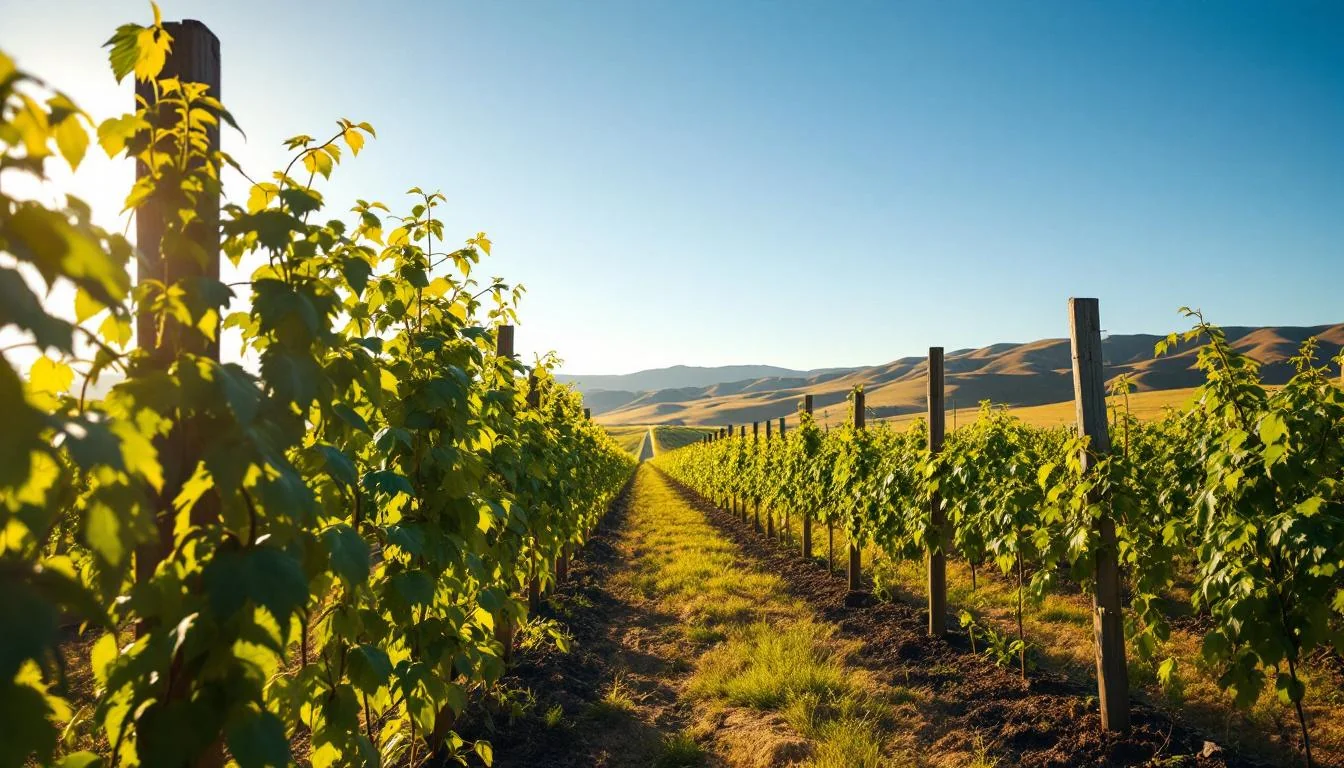
Today, Simcoe remains a protected, proprietary hop variety. Only farms belonging to the Yakima Chief Ranches system are permitted to grow it. This helps control quality, but also results in a higher price compared to publicly available hop varieties.
Technical specifications
Simcoe belongs to the hop group with a high alpha acid content, ranging from 12% to 14%. This figure places it among the most effective bittering hop varieties, on par with Columbus or Chinook. Its lower beta acid content, typically from 4% to 5%, creates an ideal alpha/beta acid ratio for both bittering and aroma.
Simcoe's distinguishing feature lies in its aromatic oil content. The total oil content ranges from 2 to 2.5 ml per 100 grams—among the highest in commercially available hop varieties. Myrcene accounts for approximately 60-65%, providing the characteristic herbal and resinous base notes. Humulene and caryophyllene are present in moderate amounts, adding woody and spicy depth.
The Simcoe harvest season in Yakima Valley typically runs from late August to mid-September. The timing is carefully calculated—too early results in a lack of aromatic oils, too late allows the alpha acids to begin decomposing. The hops are harvested when the moisture content is around 75%, then dried to 8-10% before packaging.
Simcoe has a moderate shelf life. After six months of storage at room temperature, approximately 35-40% alpha acid is lost. Therefore, frozen hop pellets are recommended to preserve their properties.
Aroma and flavor
Opening a Simcoe pellet pack, the first thing that hits your sense of smell is the scent of pine. Not the artificial pine found in floor cleaners, but the smell of fresh pine resin—like you just broke off a small branch from a young pine tree. It smells resinous, oily, and slightly sticky.
Next comes the citrus layer. Ripe navel orange. Freshly squeezed grapefruit peel. A hint of lemon in the background. But not the sweet, canned-juice citrus — this is citrus with depth, with the bitterness of the peel, with pure oil.
In the third layer, more complex notes emerge. A hint of passion fruit. Gentle red berries. And sometimes, in high-quality hop batches, we catch the scent of damp earth after rain — earthy yet fresh.
When added to beer, Simcoe exhibits different characteristics depending on the time of use. Adding it at the beginning of the brewing process—the aroma dissipates, leaving only a clean, non-harsh bitterness. Adding it at the end of brewing or in a whirlpool—the pine and citrus notes burst forth powerfully. Dry hop—all the layers of aroma blend together, creating a complete olfactory picture.
The bitterness of Simcoe is considered "clean"—leaving no metallic or astringent aftertaste like some other high-alpha hop varieties. The bitterness is quick, peaking in the middle of the tongue, then fading towards the back of the throat. The finish is long-lasting with hints of pine resin and dried orange peel.
There's a controversial characteristic: some people detect a "cat pee" smell in Simcoe. This is a naturally occurring sulfur compound, present in very low concentrations. For most drinkers, it blends into the overall flavor as a light, funky note. For some, it stands out as an unpleasant pungent odor. This is why Simcoe is often blended with other hops rather than enjoyed on its own.
Beer style using Simcoe
Simcoe is the backbone of the line. American IPA and Double IPA. The high alpha acid content allows for a strong bitterness without using excessive hops. Pine and citrus notes add depth to formulas requiring aromatic complexity. Pliny the Elder, considered a benchmark for Double IPA, uses Simcoe as one of its key hops, along with Columbus and Centennial.
West Coast IPA—the quintessential IPA style of the American West Coast—is almost inseparable from Simcoe. Its resinous and piney characteristics define the very "West Coast character" that people talk about: dry, bitter, piney, and citrusy. Breweries like Stone Brewing, Firestone Walker, and Lagunitas all have IPA lines that use Simcoe in their recipes.
Pale Ale is also a suitable playing field for Simcoe. With its lighter alcohol content and bitterness, Simcoe is primarily used in the late addition and dry hop stages. The aim is to bring out the aromas without overwhelming the palate with bitterness.
Some brewers experiment with Simcoe in Imperial Stout and Porter. It sounds strange, but the pine and resinous notes of Simcoe surprisingly complement the coffee and chocolate flavors of dark-roasted malt. Founders Brewing once released a dry-hopped version of Imperial Stout with Simcoe, which received positive feedback from the community.
Compare to hops in the same group
Simcoe and Citra
Both are modern American hops with strong fruity notes. But Citra leans more towards tropical—mango, passion fruit, guava—while Simcoe has a more pronounced pine and resinous base. Citra is more "lively," Simcoe is more "subdued." When blended together, they create a profile that is both tropical and resinous in depth.
Simcoe and Columbus (CTZ)
Columbus also has pine and citrus notes, but on a rougher, more dank level. If Simcoe is a pine forest in the early morning, Columbus is a pine forest after a storm—heavier, more earthy, with a hint of garlic and onion in the background. Columbus is suitable for bittering, Simcoe is more versatile in all three roles.
Simcoe and Amarillo
Amarillo has a strong citrus scent, almost a typical "orange hop" aroma. Simcoe has citrus notes but is more balanced with pine and berry. Amarillo is brighter, Simcoe has more depth. In IPA formulations, Amarillo is often used to "brighten" the scent, Simcoe is used to "deepen" it.
How to recognize when enjoying it
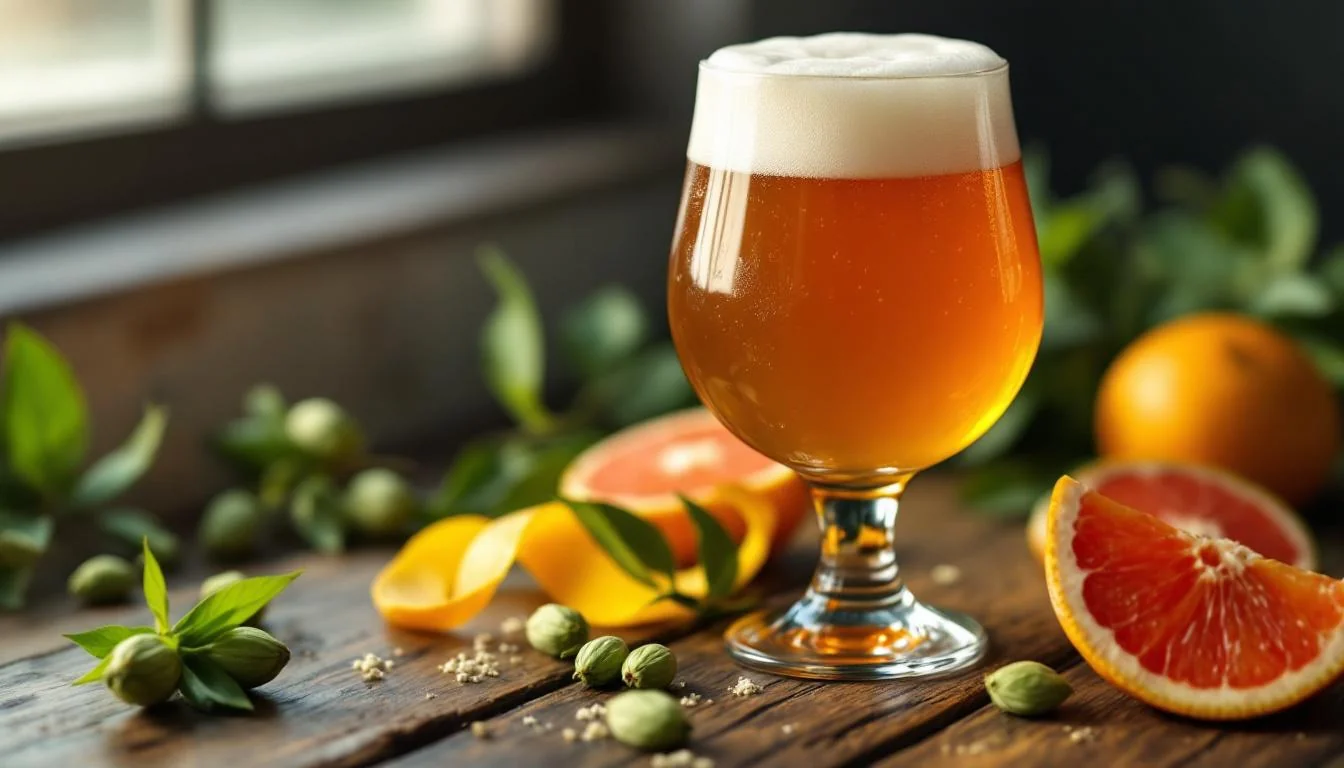
When you pick up an IPA advertised as containing Simcoe, start by bringing the glass to your nose before drinking. Take a slow breath. Look for the scent of pine—not dry pine, but fresh, slightly oily, and somewhat sticky pine. If you find it, that's the first sign.
Next, look for the citrus layer in the background. Orange and grapefruit are usually more prominent than lemon. If there's only citrus without pine, Simcoe may be playing a supporting role or being overshadowed by other hops.
When drinking, pay attention to the bitterness in the middle of your tongue. Simcoe has a quick onset of bitterness, a clear peak, and then it recedes. It doesn't linger as persistently as some other hops. The aftertaste should have a hint of resin—like chewing a young pine needle.
If Simcoe beer is dry-hoped strongly, a slightly "funky" note might emerge that's hard to describe. This is characteristic, not a flaw. It's like a touch of wildness in an otherwise refined beer.
Drink slowly. Let the beer warm in your hands. The aroma of Simcoe changes with temperature — citrus is more prominent cold, pine and resin become more prominent warmer. A good Simcoe IPA is a small journey, from an orange grove into a pine forest, and then back out with a clean aftertaste.
And sometimes, between the clicks, we realize that a hop variety can tell a story—about the land where it was born, about the people who patiently bred it for twelve years, about the brewmasters who trusted it enough to include it in their recipes. Simcoe isn't the loudest hop. But it's a hop worth listening to.