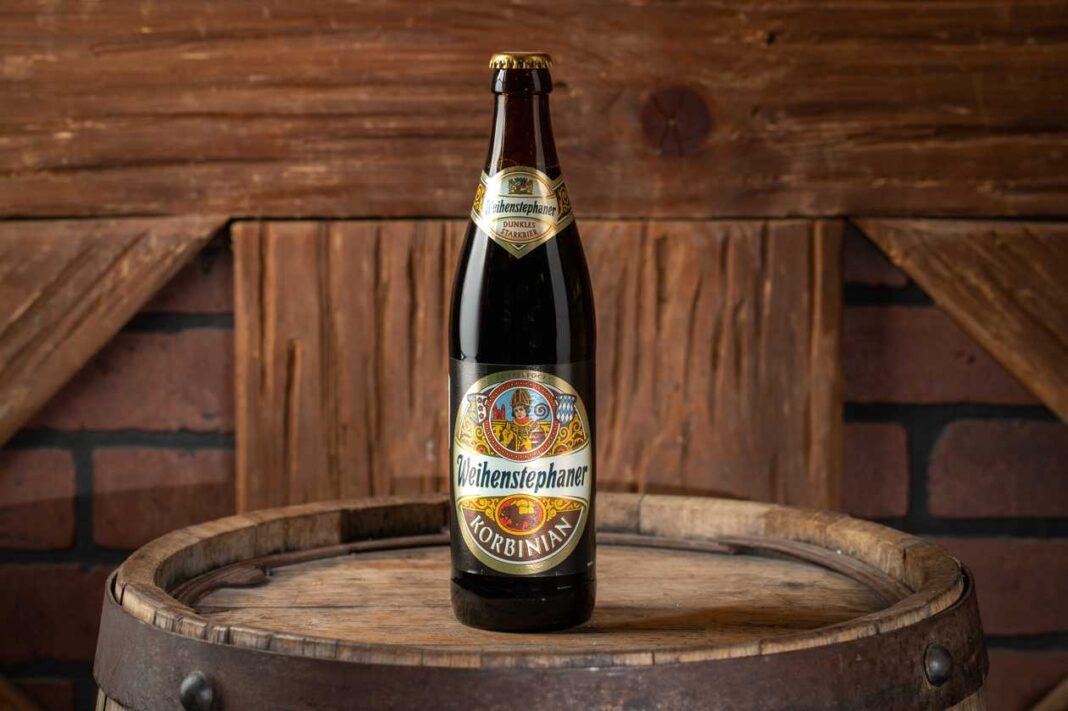

On the misty slopes of Nährberg, where the old pines whisper in the ancient wind, stands a monastery like a forgotten page in a book – Weihenstephan. The shadow of time lingers on every stone slab, every window is a window of memory, and every flickering candle is a glimpse from the past. From that silent source, a legend is born, as quiet and sacred as a prayer: Weihenstephaner Korbinian – from there, a legend of drunkenness from the Bavarian hills was told…
1. The Thousand Year Journey of the Korbinian Stele
The history of Korbinian began not only with a beer recipe, but also with the first steps of a man with a sacred mission: Saint Corbinian. Around year 724, he left the countryside of Aquitaine (France) to travel to Bavaria, carrying the mission of preaching the Christian faith. Overcoming dangerous mountains and forests and countless challenges, Saint Korbinian arrived in Freising - where he founded the first monastery and sowed the seeds of civilization for this land.
Legend has it that: During his pilgrimage to Rome, he was attacked by a bear. Instead of punishing him, he tamed the wild beast and made it carry his luggage for miles like an obedient servant. This image – sacred and metaphorical – became the spiritual symbol of the entire Freising region, and was later depicted on the label of Korbinian beer as a symbol of strength, faith and forgiveness.
Year 725From the first small church founded by Saint Korbinian, Benedictine monks gradually built a monastery complex on the Weihenstephan hill – the highest point in Freising. Initially, the monks farmed, treated patients, taught, and… brewed beer. At that time, beer was a daily drink instead of unsafe water, and was the main source of nutrition during the fasting seasons. Beer recipes began to take shape, hidden deep in ancient texts kept in cool stone cellars.
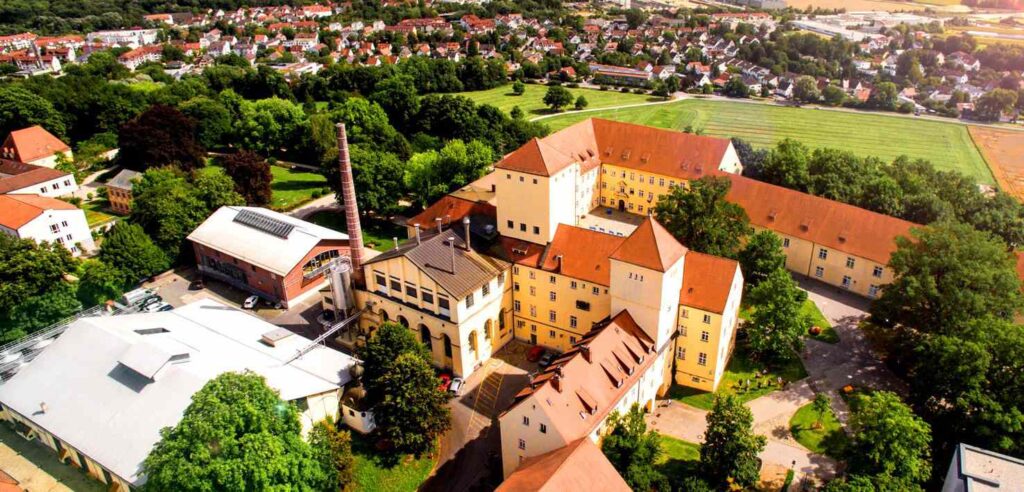
By 1040, Weihenstephan monastery officially received a license to produce and sell beer from the city of Freising – marking milestone of the birth of the world's oldest operating brewery. This is not only a place to brew beer, but also a place to distill the spirit, culture and knowledge of an entire Christian civilization in the heart of medieval Europe.
Over the centuries, Weihenstephan has seen wars, plagues, natural disasters and even the dramatic secularization of the 18th century. The monastery was dissolved in 1803, but the brewery lived on – like an immortal underground. By 1921, it had become “Bayerische Staatsbrauerei Weihenstephan”, a state-owned brewery in Bavaria and affiliated with the Technical University of Munich. From here, Weihenstephan became the world's leading center for research, training and transfer of brewing techniques.
On that journey, Korbinian – line Double Bock Powerful and rich – born as a tribute to the saint Korbinian. Originally brewed in winter for Lent, as a “liquid bread” to nourish the body and spirit. Korbinian’s deep sweetness, thick body, and high alcohol content are the result of generations of monks and brewers who devoted themselves to their craft as esoteric artists in the shadows.
Today, when drinking a bottle of Korbinian, the drinker is not only tasting the sweetness of malt, but also touching an invisible thread that connects them to a millennium of culture, religion and human aspirations, all encapsulated in the smooth foam, dark brown colour and shimmering amber of this legendary beer.
2. Doppelbock: Hymn From the Monastery's Rock
Double Bock – a name that carries the weight of a prayer chapter echoing between the domes of German churches – is a beer style born in a monastery, for the ascetic yet humane fasting seasons. Born in the 17th century at the Paulaner monastery in Munich, this beer is affectionately called “liquid bread” – liquid bread – because it provides the energy and nutrients needed by monks who abstain from solid foods during Lent.
With a high malt content, Doppelbock has a rich sweetness and a heavy body. alcohol concentration 7.4%, like solid walls supporting the delicate soul within. This beer was brewed in winter, sealed in cold stone cellars to ensure clarity, depth of flavor, and a perfect lingering note like a deep note from the past.
The name “Doppelbock” – means “block pair"” – not only indicates double the alcohol content of regular bock, but also implies abundance, richness and completeness. In the world of German beer, Doppelbock is the final chapter of the party, the lingering note that makes people reluctant to part. And Korbinian – with its reddish-brown color like burnt amber, the rich aroma of caramel, toast, dried fruit and chocolate – is the illustrious representative, the profound soul of that style.
When you drink Korbinian, you are not just enjoying a beer; you are embracing an ancient art form where every sip is a poetic excerpt, every whiff a medieval manuscript. It invites contemplation rather than consumption, calls for silence rather than noise.
3. The Art of Enjoyment: When Beer Becomes Poetry
Korbinian is not meant to be drunk, but to be admired, as one might stand before a painting of an angel. In the dim, warm space of a wood-paneled room, where the firelight dances in the eyes Tulip Glass, the beer foam is like a thick layer of clouds supporting the entire sky of memories. Each sip is a baptism of emotions, each flow on the tip of the tongue is like a chorus between taste buds and soul.
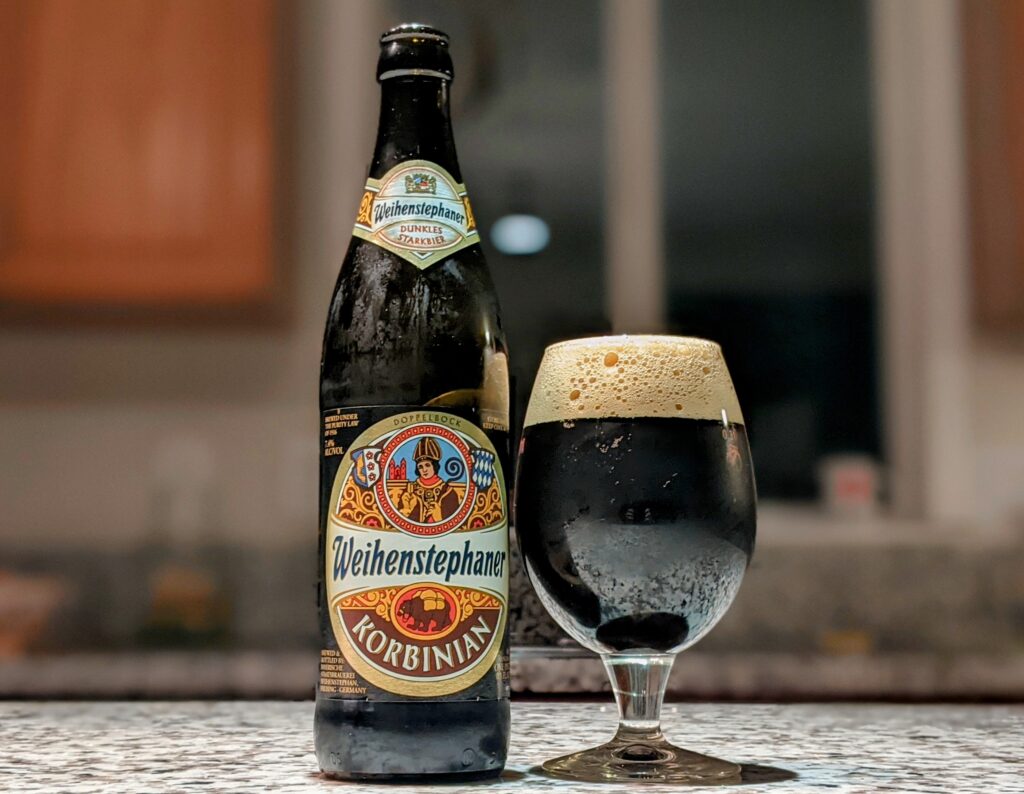
At 8–10°C, sober but calm beer – like a monk just leaving meditation. Caramel flavor sweet as youthful love poetry, a little dark chocolate like a winter dream, mixed dried fruit like old letters still smelling of ink. Those layers of scent do not dissolve, but pile up like vestments in a cathedral.
When combined with smoked ribs, cheese long time or cake, Korbinian did not interrupt but joined in. A complete symphony is only formed when there is enough bass, treble, and silence – where people are silent with emotion.
If one afternoon your heart casts a long shadow like a row of pine trees in late autumn, look for Korbinian – it will sing an ancient lullaby, soothing you with wine, with incense, and with nameless things.
4. A Beer Lover's Response: When Memories Call Korbinian
Many have called Korbinian “a love song without words,” and indeed, each listener leaves behind a separate story, like pen marks on an ancient sheet of music.
An elderly man in Vienna shared: “I drank Korbinian on a windless winter night, when the snow fell as softly as a piano. The beer was warmer than the fireplace, and deeper than the unfinished pages of my diary from 1983.”
A young Japanese woman recounts her first taste of Korbinian at an old beer hall in Freising: “I don’t fully understand its history, but the sweetness made me cry. It was as if I was being hugged by a grandmother I had never met, as if someone from a thousand years ago put their hand on my shoulder and said ‘be safe, my child’.”
And a young musician in Munich once wrote: “I wrote a whole song for a sip of Korbinian. It not only evoked emotions, but it also unlocked my past.”
These responses are not to praise, but to remind us that when beer reaches its quintessence, it will no longer be in the glass, but in the heart.
5. Weihenstephan: Class Through Time
Through many beer festival seasons, Korbinian continues to be honored. This Doppelbock has won many times. Gold Medal at World Beer Awards, most notably with the title “Germany's Best Book” as a proud affirmation of the German soul in every drop of yeast.
Not stopping there, Korbinian is also highly appreciated at prestigious international beer competitions such as World Beer Cup, Australian International Beer Awards (AIBA) and European Beer Star, where the world's leading appraisers nod at its depth and sophistication.
6. Conclusion: Farewell in the Eternal Ferment
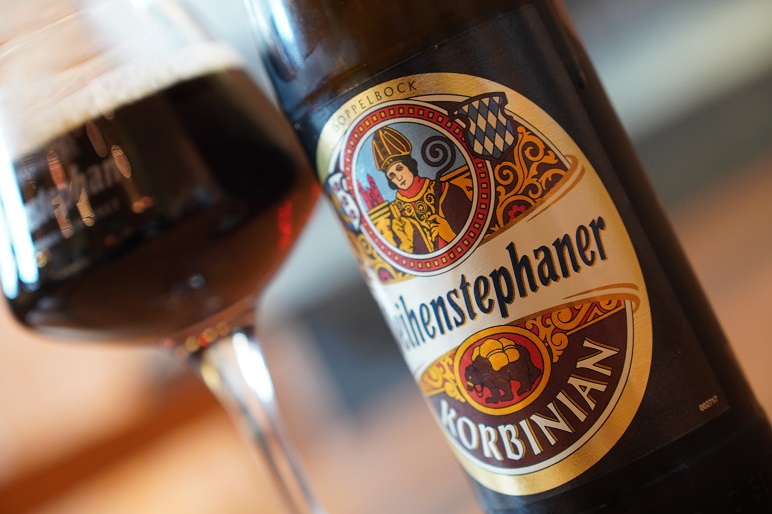
The glass is down, but the heart still wants to leave. There are flavors that do not need yeast to linger, do not need alcohol to warm the heart. Korbinian is one of them – the yeast that blooms not only in the beer, but also in the drinker's memory.
There may come a day when you forget the specific musical notes, the names of delicious dishes, or the long introductions. But each sip of Korbinian, with its deep brown color like the evening sun and its rich sweetness like memories, will still occasionally come back. Like a familiar melody suddenly resounding on an old street corner, or a light scent drifting in a quiet autumn afternoon...