American Blonde Ale

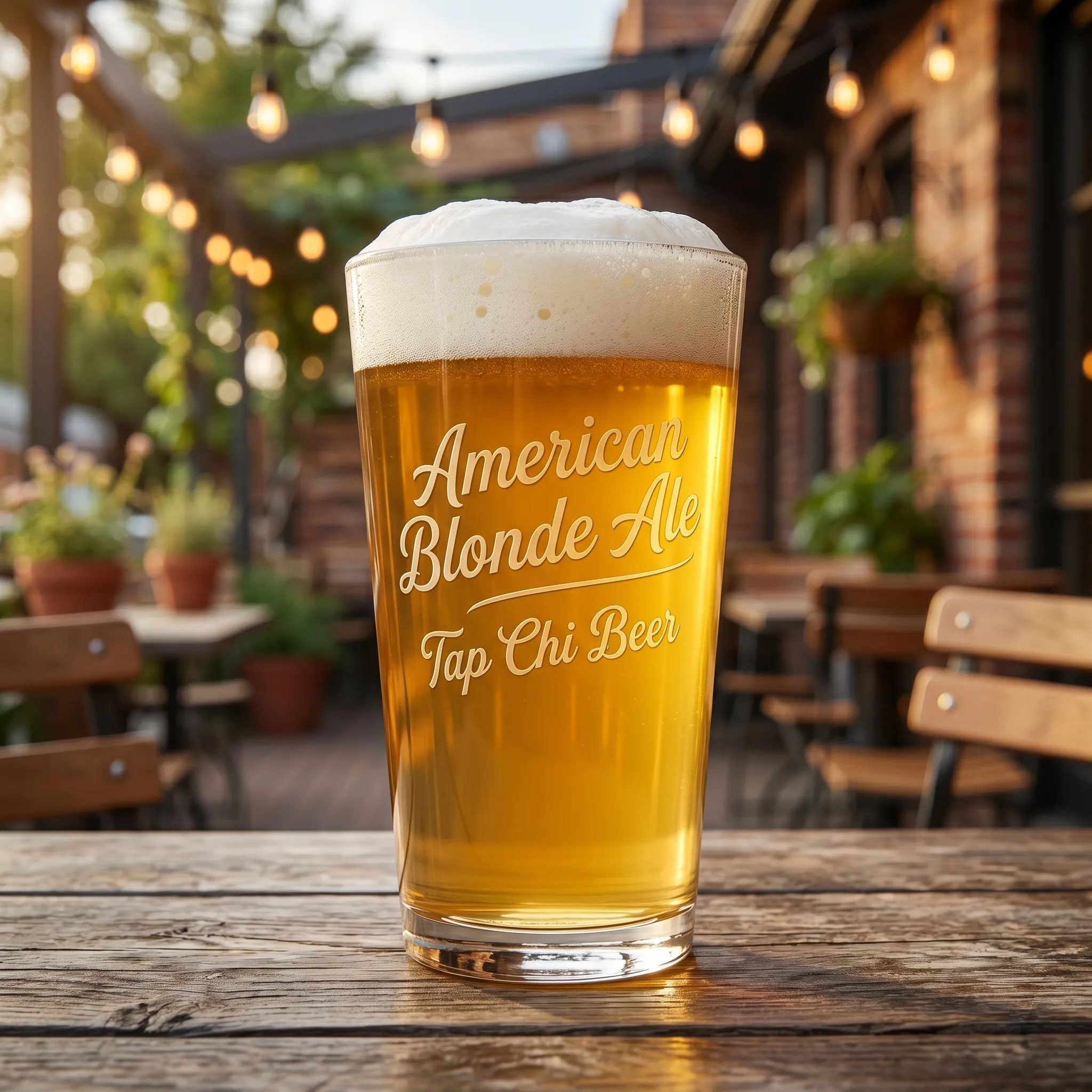
Ly American Blonde Ale màu vàng sáng với bọt trắng
Bland
Dark
Light
harsh
Short
High
5.5
3.8
28
15
7
3

Overview

American Blonde Ale là một phong cách bia rất dễ tiếp cận trong thế giới craft beer Mỹ, thường được xem như ‘cửa ngõ’ cho người mới bắt đầu.

Phong cách này được tạo ra để mang lại trải nghiệm nhẹ nhàng, cân bằng và dễ uống, nhưng vẫn có cá tính hơn lager công nghiệp.

Beer is usually colored. light yellow to dark yellow, hương vị thiên về malt nhẹ, bánh mì và một chút hoa bia tinh tế. So với IPA, Blonde Ale ít đắng hơn và không quá phức tạp, nhưng vẫn giữ được sự tươi mát và dễ uống.

Đây là kiểu bia rất phù hợp để uống hàng ngày hoặc làm quen với craft beer.

Food Combinations

Appetizers:
Chicken salad
Cheese:
Mozzarella
Dessert:
Bánh bông lan

Cup & Temperature

Recommended cup type:
Ideal temperature:
5–8 °C
See the Beer list:

QUANTITATIVE INDICATORS

1.038 – 1.054

― OG

1.008 – 1.013

― FG

3.8 – 5.5%

― ABV

15 – 28

― IBU

0.28 – 0.74

― BU:GU

3 – 7

― SMR

2.3 – 2.7

― CO₂ Volumes

70 – 78%

― Loss

FORM

COLOR

Màu vàng nhạt đến vàng sáng.

TRANSPARENCY

Bia trong và sáng.

FOAMING

Bọt trắng mịn và khá bền.

FLAVOR

ALCOHOL

Nhẹ, khá êm.

hops

Hương nhẹ, hơi thảo mộc hoặc floral.

MALT

Vị bánh mì, ngũ cốc và chút ngọt nhẹ.

FRUIT

Có thể có trái cây nhẹ như táo hoặc lê.

SPICES / SMOKE

Not common.

FEEL

BEER BODY

Nhẹ đến trung bình, rất dễ uống và mượt.

GA DEGREE

Medium.

AFTERTASTE

Cuối vị gọn, sạch và hơi ngọt nhẹ.

LEVEL OF FERMENTATION

Medium

INGREDIENT

HOPS VARIETIES

Cascade, Willamette

MALT

Pale malt, light caramel malt

WATER

Light mineral water

YEAST

American ale yeast

DEFINE

QUANTITATIVE INDICATORS

  • OG (Original Gravity): is an index indicating how thick the wort (unfermented beer) is, that is, how much sugar is extracted from the malt before the yeast is added. This index is compared to pure water (specific gravity = 1.000 at 15.5°C). For example, if OG = 1.050, it means that the wort is about 5% thicker than water. The higher the OG, the more sugar the yeast has to convert, so the finished beer usually has a higher alcohol concentration, a thicker body, and a more pronounced sweet aftertaste. Conversely, low OG (e.g. 1.035–1.040) often produces light, easy-to-drink beers with less alcohol and less sweetness.
  • FG (Final Gravity): is the specific gravity of the beer after the fermentation process is complete, meaning that most of the fermentable sugar has been converted by the yeast into alcohol and CO₂ gas. Because the amount of sugar in the beer has decreased a lot at this point, FG is always lower than OG. For example, a batch of beer with OG = 1.050 and FG = 1.010 means that almost all the sugar has been “eaten up”, resulting in a dry, less sweet beer with an alcohol content of about 5%. If FG is higher (for example 1.018–1.020), the beer will retain more unfermented sugar, creating a sweet aftertaste and a thicker beer body.
  • ABV (Alcohol By Volume): is an index showing the alcohol concentration of beer, calculated as a percentage of alcohol volume in the total volume of beer (for example 5% ABV means that in 100 ml of beer there is 5 ml of alcohol). This index is always higher than the measurement by weight (Alcohol by Weight). Brewers can estimate ABV based on the difference between OG and FG using the formula: ABV (%) ≈ (OG – FG) / 0.0075. For example, if OG = 1.050 and FG = 1.012, we have (1.050 – 1.012) / 0.0075 ≈ 5%, meaning the finished beer has about 5% alcohol content. Simply put: the higher the OG and the lower the FG, the stronger the beer will be, and if OG and FG are close together, the beer will be light and low in alcohol.
  • IBUs (International Bitterness Units): IBU is a measure of the bitterness of beer, calculated by the amount of alpha acids from hops dissolved in the beer (1 IBU = 1 mg of alpha acids in 1 liter of beer). The scale usually ranges from 0 (no bitterness) to over 100 IBU. However, most beer drinkers only perceive the bitterness clearly in the range of 8–80 IBU; below 8, it is difficult to detect bitterness, above 80, the mouth does not distinguish any more even though the beer is more bitter. For example, light lager beers are usually at 10–20 IBU, while IPAs can be 50–70 IBU.
  • BU:GU (Bitterness Ratio): is the ratio between bitterness (IBU) and potential sweetness from the wort (OG), indicating how balanced the beer is: around 0.5 is balanced, less than 0.5 is a sweet beer, more than 0.5 is a bitter beer; the simple formula is to take the IBU and divide it by the last two digits of the OG (remove the 1.0 in front), for example a pale ale with OG = 1.052 and IBU = 37 then BU:GU = 37/52 = 0.71, meaning the beer is quite bitter compared to its sweetness, and although carbonation also affects this perception, it is not included in the formula.
  • SRM (Standard Reference Method): is a scale for measuring the color of beer, usually ranging from 2 to 50, with the lower number being the lighter the beer and the higher the number being the darker the beer; this is an analytical method based on the light absorption level of beer, published by the American Beer Chemistry Association and widely used to quantify color. For example: SRM = 2–3 is a straw-colored beer, SRM = 5–6 is a golden yellow, SRM = 10–12 is a copper red, SRM = 16–17 is a chestnut brown, SRM = 25–39 is a dark brown, and SRM 40 or more is a dark beer.
  • CO₂ Volumes (Gas): is an index indicating the amount of CO₂ gas dissolved in beer, calculated by gas volume compared to beer volume; the most common level is between 2.2–2.7 volumes, while the total can be from 1 to more than 3. This amount of CO₂ is a natural product of the fermentation process created by yeast and microorganisms. To visualize: a keg (i.e. metal beer kegs, usually 30–50 liters) at 2.5 volumes means that there is enough CO₂ gas in the beer to pump out and fill 2.5 kegs of the same size, it is this dissolved gas that creates the effervescence, refreshing feeling and white foam on the surface of the beer.
  • AA (Apparent Attenuation): is an index that represents the percentage of sugar from malt in the wort that has been converted by yeast into alcohol and CO₂ gas during fermentation, usually between 65% and 80% for most beers. If the number is above 80%, it shows that the yeast is working very hard, making the beer dry, compact, less sweet and light-bodied. If it is below 60%, there is still a lot of residual sugar, so the beer will be sweeter, heavier and more flavorful; this index is calculated by the formula [(OG – FG) / (OG – 1)] × 100. For example, a batch of beer with OG = 1.080 and FG = 1.020 will give AA = 75%, meaning that about three-quarters of the sugar has been consumed by the yeast, resulting in a moderately dry beer with a less sweet aftertaste.
 

FORM

  • Color (SRM): See SRM section in section Quantitative Index above.
  • Transparency: Is the level of transparency of beer, different from the concept of color or brightness.
    • Levels: clear - transparent - slightly cloudy - opaque - opaque (not see-through).
    • In beer, solid particles can include unfermented sugars, proteins, yeast residues, and many other components.
    • The level of solid particles remaining in beer is called turbidity.
  • Foaminess
    • Levels: none, slow bubbling, medium bubbling, fast bubbling.
    • Foam is an important component of beer, creating a sensation of heaviness or lightness on the tongue and stimulating the trigeminal nerve – which senses temperature, texture and even coldness; carbonation can be detected by smell (carbonic acid), and also affects the appearance and creates the characteristic head of most beer styles.
    • The foam can be naturally occurring (created by yeast during fermentation) or added to the beer under pressure; in addition to CO₂, beer can also be infused with nitrogen, which produces smaller bubbles and a smoother mouthfeel than CO₂.


FLAVOR

  • Alcohol
    • Levels: imperceptible, mild, pronounced, harsh.
    • The alcohol in beer is ethanol (ethyl alcohol) – the main ingredient that creates alcohol concentration.
    • The alcohol concentration in beer can range from below 3.2% to above 14% ABV, perceived through smell, taste and mouthfeel.
    • In addition to ethanol, beer may also contain fusel alcohol (higher alcohol), which often gives a harsh taste.
  • Hops
    • Aromas and flavors may include: citrus, tropical, fruity, floral, herbal, onion-garlic, pungent, spicy, woody, green, pine, cedar, resinous.
    • Bitterness can be: mild, medium, strong, harsh.
  • Malt
    • Aromas and flavors may include: cake batter, cereal, biscuit, bread, toasted, caramel, prune, roasted, chocolate, coffee, smoky, tannic.
    • Malt is called the “soul of beer” because it is the main source of sugar for yeast to create alcohol and CO₂ gas.
    • Malt is produced from barley or other grains after soaking, germinating, drying, roasting and brewing.
  • Fruit (Esters)
    • Common fruit flavors: apple, apricot, banana, blackcurrant, cherry, fig, grapefruit, kiwi, peach, pear, pineapple, plum, raisin, raspberry, strawberry…
    • Some common esters:
      • Isoamyl acetate (from wheat yeast): banana, pear aroma.
      • Ethyl acetate: smells like solvents, nail polish.
      • Ethyl hexanoate: red apple, fennel scent.
  • Spices/ Smoke (Phenols)
    • Some common phenols:
      • 4-vinyl guaiacol: clove, cinnamon, vanilla scent.
      • Chlorophenols: antiseptic, mouthwash.
      • Syringol: smoky, campfire smell.
      • Tannins / Polyphenols: velvety, astringent, rough like sandpaper.


FEEL

  • Beer body
    • Levels of sensation: dry, soft, filling the mouth, sticky.
  • Alcohol content
    • Levels: low, medium, high.
  • Aftertaste
    • Levels: short (under 15 seconds), medium (about 60 seconds), and long (more than 60 seconds).
  • Fermentation level
    • Levels: low, low average (-), average, slightly high average (+), high


INGREDIENT

  • Hops
    • Hops provide resins and essential oils that help shape the aroma, flavor, bitterness, head, body, and perceived sweetness of beer; they also help stabilize beer and extend shelf life.
    • Today, brewers around the world use more than 100 different varieties of hops.
  • Malt
    • A variety of barley and malt varieties are used in beer production, including light malts (pilsner and pale two-row), high-temperature kilned malts (Munich and Vienna), roasted/specialty malts (chocolate and black) and even ungerminated barley; wheat malt is also commonly used.
    • Malt provides both fermentable and non-fermentable sugars along with proteins, which directly influence the aroma, alcohol content, body, color, flavor, and head retention of beer.
  • Water
    • Some common taste characteristics: chalky, flint, sulfurous, and many others.
    • Beer is mostly water, so water is an extremely important ingredient. Some brewers keep the chemistry of their water source the same, while others adjust the mineral content to bring out the characteristics they want their beer to express.
    • Water provides minerals and ions that influence many of the characteristics of beer.
    • Common minerals: carbonate, calcium, magnesium, sulfate.
  • Yeast
    • Yeast consumes sugars from germinated barley and other fermentable materials, producing CO₂ gas, alcohol, and aroma compounds; the flavor imparted by yeast will vary depending on the yeast strain, temperature, exposure time to beer, oxygen levels, and many other factors.
    • Types of yeast:
      • Ale: Saccharomyces Cerevisiae, which produces a lot of esters (fruity flavors), is known as a top-fermenting yeast, and works well at warm temperatures (around 15–21°C).
      • Lager: Saccharomyces Pastorianus, which can produce sulfur compounds, is a bottom-fermenting yeast that works well at cool temperatures (around 7–13°C).
      • Men Weizen: common in German-style wheat beers, considered an Ale yeast.
      • Brettanomyces: wild yeast, creating characteristic flavors such as meadow, tropical fruit and many other nuances.
      • Other microorganisms: include Acetobacter (acetic acid-producing), Lactobacillus and Pediococcus (lactic acid-producing), and several others.


According to references from CraftBeer.com – Beer Styles Study Guide; BJCP.org - Beer Judge Certification Program