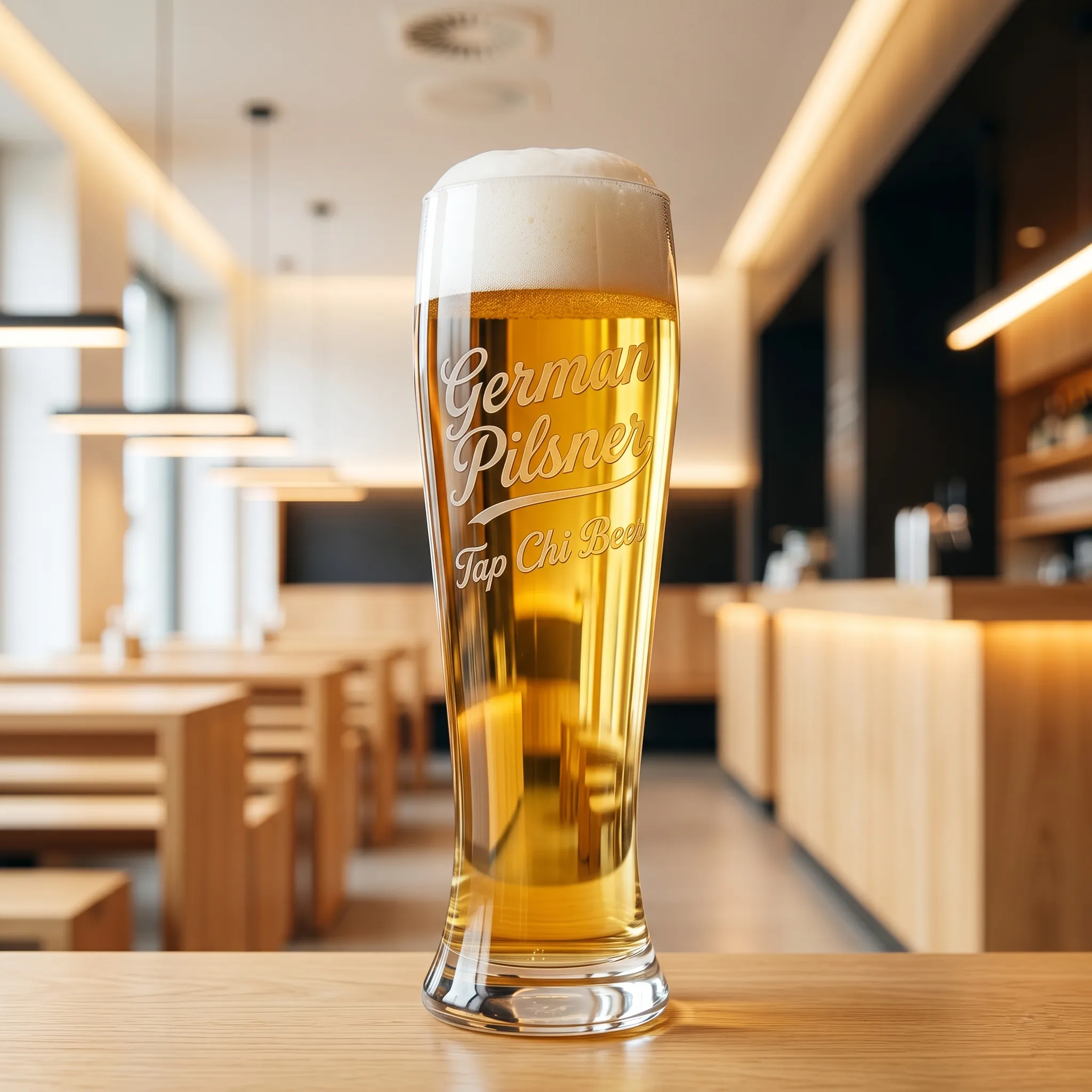
German Pilsner It is the German version of the pilsner style, which emerged after this style exploded in popularity. Plzeň (Czech Republic) in 1842 and quickly spread throughout Europe. When German brewers approached this new style in the late 19th century, they didn't simply copy it, but rather... Adjusted to suit harder water sources and the German preference for a distinctly bitter taste..
As a result, the German Pilsner was created as a version. Sharper, drier, and more hop-forward., With its distinct bitterness and clean aftertaste, this style quickly became one of the most popular lagers in Germany, especially in northern cities like Hamburg and Bremen.
Beer has color bright yellow to pale yellow, with fragrance Hops, herbs, floral notes, and a slightly spicy kick., usually derived from traditional hop varieties such as Hallertau. Compared to Czech Pilsner, German Pilsner Less sweet malt, more bitter, and drier., creating a very "crisp" and decisive feeling.
Thanks to the balance tilted towards hops and dryness, This style provides an experience. Fresh, crisp, and incredibly refreshing., becoming the benchmark for many modern lager varieties worldwide.

 Vietnamese
 English
 Japanese
 German