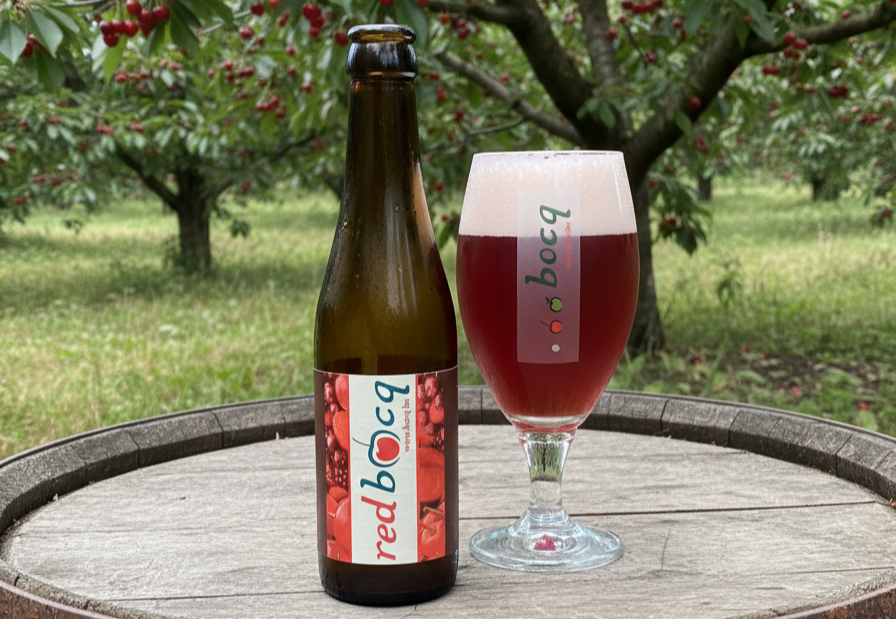

That night, I sat alone in the small cafe, my heart heavy, almost unable to breathe. Nothing surrounded me but a feeling of loss, the feeling that I had let slip away the only woman who had ever patiently stayed by my side. All apologies came too late, and regret clung to me like a dark stain that refused to let go.
Glass Redbocq It lay down before me, simple yet enough to make me pause. I raised the glass, as if to see if a sip of beer could free me from myself. The scent of orange lingered on my lips, a hint of coriander gliding down my throat. The 3.11 TP3T alcohol content didn't make me drunk, but it made me clearly see the pain I had been trying to avoid.
I drank more, and each sip pulled me back to the truth: I was wrong, I had lost her. But in the cool, soothing taste of Redbocq, There was a strange softness in my heart. Not easy comfort, but a kind of peace that stopped my heart from struggling…
1. History of Brasserie Du Bocq Factory
Nestled in the tranquil Purnode Valley, where wheat fields stretch to the edge of the forest, Brasserie Du Bocq It began in 1858 as a true family brewery. At the time, founder Martin Belot had no grand ambitions; he simply wanted to produce beers pure enough to serve his village. However, that very sincerity became the foundation for the creation of one of Wallonia's most distinctive craft breweries.
What makes Du Bocq special is that the brewery didn't choose the path of rapid industrialization like many others. They maintained the traditional in-bottle fermentation technique – a method that requires time, patience, and skilled craftsmanship. In each bottle of beer, the yeast continues to live, develop, and create deeper, rounder, and more natural layers of flavor. It's not just a technique, but a philosophy: "beer must breathe, it must mature in its own way.".
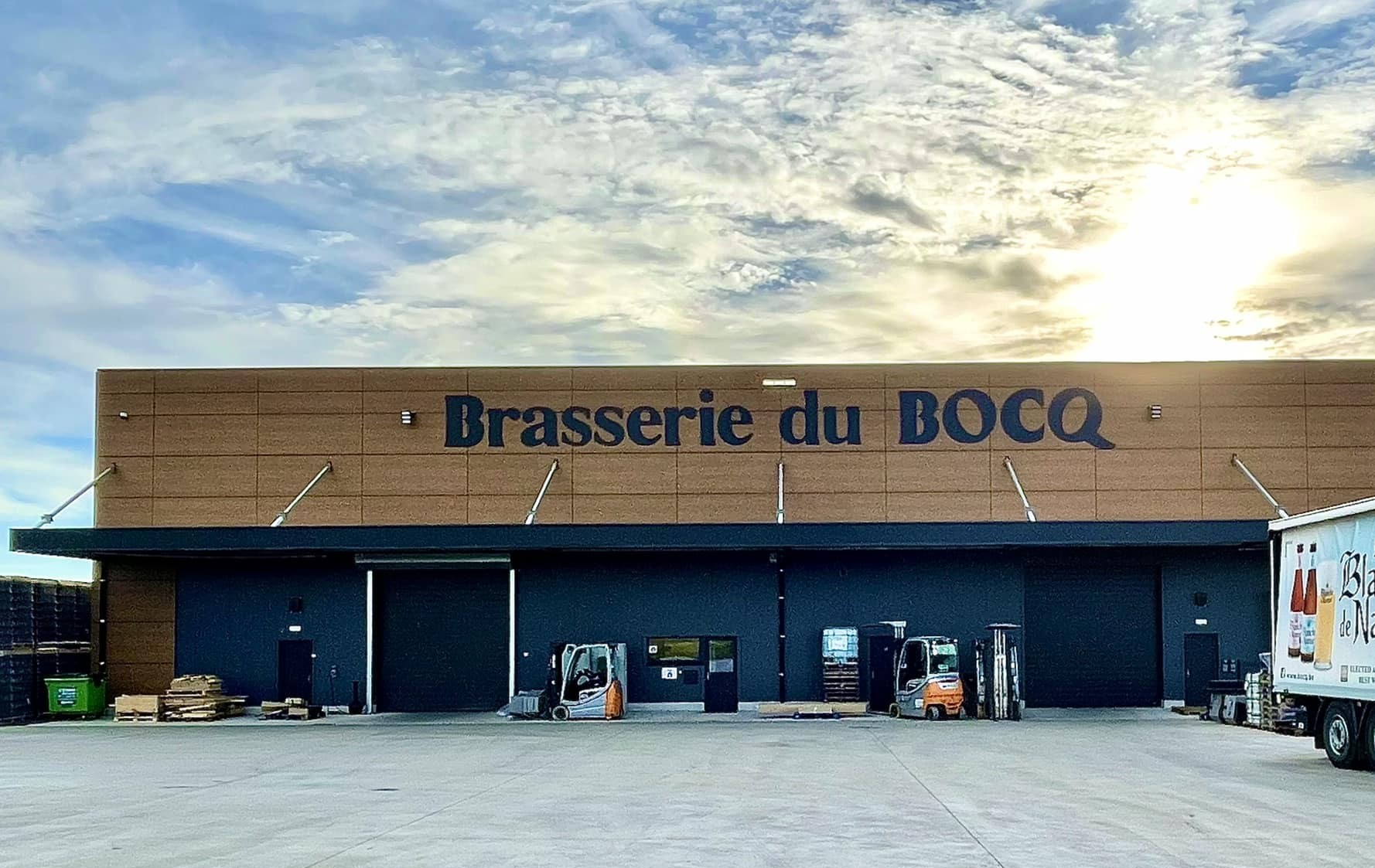
In the early 20th century, despite the wars and economic crises sweeping across Europe, Du Bocq persevered. They expanded the brewery, improved equipment, but still preserved the spirit of craftsmanship. In fact, generations of brewers passed down their skills within the village itself, making Du Bocq not just a factory – but a part of a collective memory.
In the following decade, Du Bocq gradually expanded its reach globally with beer lines that were loved by the international beer-drinking community. Names like... Blanche de Namur, Season 1858, Their seasonal specialty lines have made their mark in numerous international competitions, bringing prestige to the brewery. But the most valuable thing is not the number of awards, but what they haven't lost: the authenticity in every batch of beer.
When looking at Redbocq, One might easily think this is just a light, easy-drinking beer. But in reality, it embodies the entire spirit of Du Bocq: the meticulousness of the 19th century, the unwavering dedication of generations of artisans, and a love for pure wheat beers. Every drop is the result of nearly two centuries of preservation and refinement – a long journey that began in Martin Belot's small family kitchen.
Today, Du Bocq still stands there, in the middle of Purnode village, unassuming and quiet. But every day, thousands of bottles of beer leave the brewery, carrying with them a story spanning over 160 years, spreading to beer lovers around the world.
2. Flavor and Characteristics of Red Bocq
2.1 Fragrance – When the Layers of Fragrance Unfold Like a Morning in a Wheat Field
From the moment the glass of beer was brought close, Redbocq Gently unfolding its top notes – light as a breeze through a ripening orange grove. The citrus scent isn't explosive, but subtle, fresh, like the breath of early morning. Following that, the fragrance... Coriander As delicate as the final brushstroke on a piece of calligraphy, it's fleeting yet enough for the drinker to recognize the meticulous attention to detail in each brewing formula of the factory.
The more gently you swirl the glass, the more the aroma develops. The wheat provides a soft, slightly creamy feel, creating warmth in the base notes. All of this combines with natural carbonation for a vibrant sensation, as if the fragrance is moving in the air.
2.2 Taste – When Purity Becomes a Language of Its Own
The first sip of Redbocq It leaves a cool sensation running down the tongue – not a sharp, metallic coolness, but rather the gentle coolness of spring water. The citrus notes spread subtly, carrying a delicate sweetness from the wheat. This is followed by a thin layer of coriander, enough to highlight the cleanliness, but without making the flavor overpowering or harsh.
What makes Redbocq What sets it apart is its balance. No single flavor overwhelms another. Each layer of flavor acts like an instrument in a symphony – citrus provides the bright rhythm, wheat the smooth foundation, and coriander the accent. The finish is short, clean, and crisp, yet leaves a lingering, refreshing sensation in the throat.
2.3 Mouthfeel – Light yet Not Barely Textured
From a technical standpoint, Redbocq Have:
- The body is lightweight, giving a graceful feel.
- High carbonation enhances freshness, creating a "bursting" sensation with every drop of beer.
- A pale yellowish, slightly cloudy color – a characteristic sign of Witbier brewed with a high wheat content.
- The fine, white foam is durable yet light as a cloud, helping to retain the flavor better throughout the drinking process.
This gentleness is not a lack of depth. On the contrary, it shows careful refinement. Brasserie Du Bocq in creating a beer with a clear structure but still retaining its characteristic drinkability.
3. How to Enjoy Red Bocq the Right Way
3.1 Ideal Temperature – When Flavors Are Fully Awakened
A glass Redbocq It only truly reveals its full beauty when enjoyed at the right temperature. 4-7°C. At this temperature range, the orange notes come alive, the coriander reveals its most delicate flavors, and the natural carbonation creates a refreshing coolness that spreads quickly across the tongue. If too cold, the flavors are suppressed. If too warm, the taste becomes bland. The perfect balance is found between 4-7°C.
3.2 Tulip Glass – When the Shape of the Glass Transforms Red Bocq into a Complete Experience
In the world of craft beer, the glass is not just a container, but an integral part of the experience. Redbocq, This is especially true when considering that this light and delicate beer requires a glass that is elegant, deep enough, and truly understands its flavor. And no glass is more suitable than this one. Tulip.
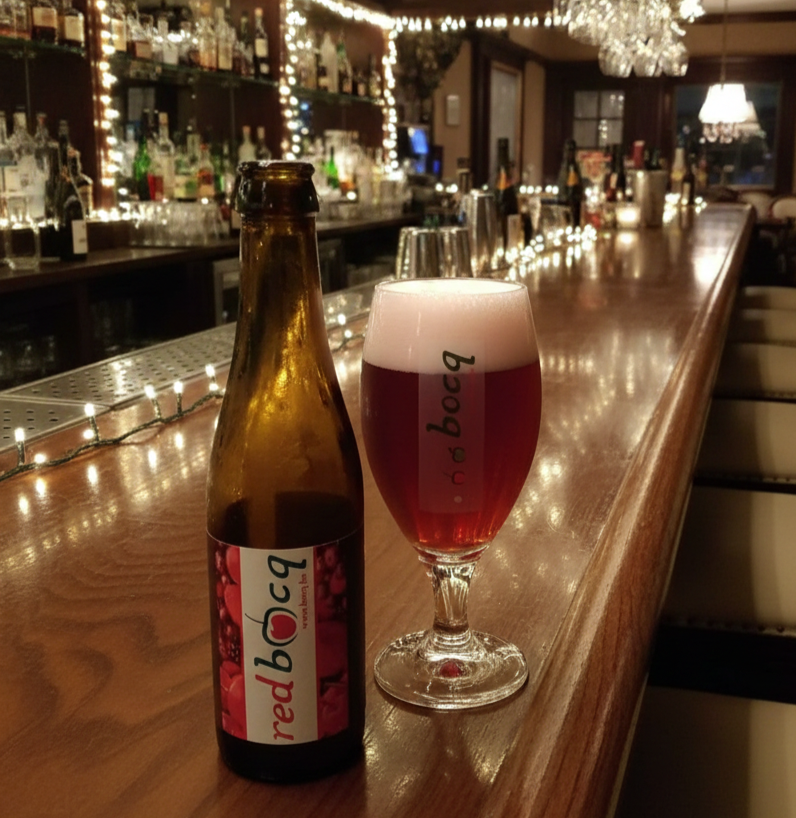
The Tulip glass has a bulbous body like an opening flower, while the rim is slightly closed, as if holding onto the most delicate elements. This structure creates three key advantages when enjoying Red Bocq:
1. Preserves and directs fragrance.
The slightly closed rim of the glass prevents the aromas of orange, wheat, and coriander from dissipating too quickly. It gathers the layers of scent, leading them directly into the nasal cavity, allowing the drinker to fully appreciate the refreshing spirit of a Witbier. With Red Bocq, which has a light, subtle scent, this is especially important.
2. Foam structure steel
Redbocq features a striking, fine white foam. The bulging body of the glass provides ample space for the foam to "hold," while the narrower rim helps to retain the foam for longer. This foam is not only visually appealing but also acts as a "flavor shield," preserving the aromatics throughout the drinking experience.
3. Carbonation expands naturally.
The wide base of the glass allows the CO₂ in the beer to be released slowly. This makes each sip of Redbocq more vibrant, providing a gentle effervescence, a refreshing sensation, and a noticeable burst of citrus flavor.
But the Tulip is more than just a technical detail. When you gently swirl the glass, observing the pale yellow hue and the light bubbles drifting along the sides, you'll understand that this glass also evokes softness – a softness that is at the heart of beauty. Redbocq.
Perhaps that's why beer connoisseurs often say: “"Without Tulip, Redbocq would only have told half the story."”
3.3 Pouring Techniques – When Finesse Determines a Beautiful Glass of Beer
Pouring Red Bocq is also a small art:
- Hold the glass at an angle. 45 degrees
- Pour gently along the side of the glass to avoid breaking the foam structure.
- When the beer is about one-third full, switch to pouring straight down to create the foam. 1-2 cm
That layer of foam is not only visually appealing, but it also retains the aroma, making each sip more flavorful.
3.4 Food Pairings – Where Redbocq Refinedly Celebrates Each Flavor
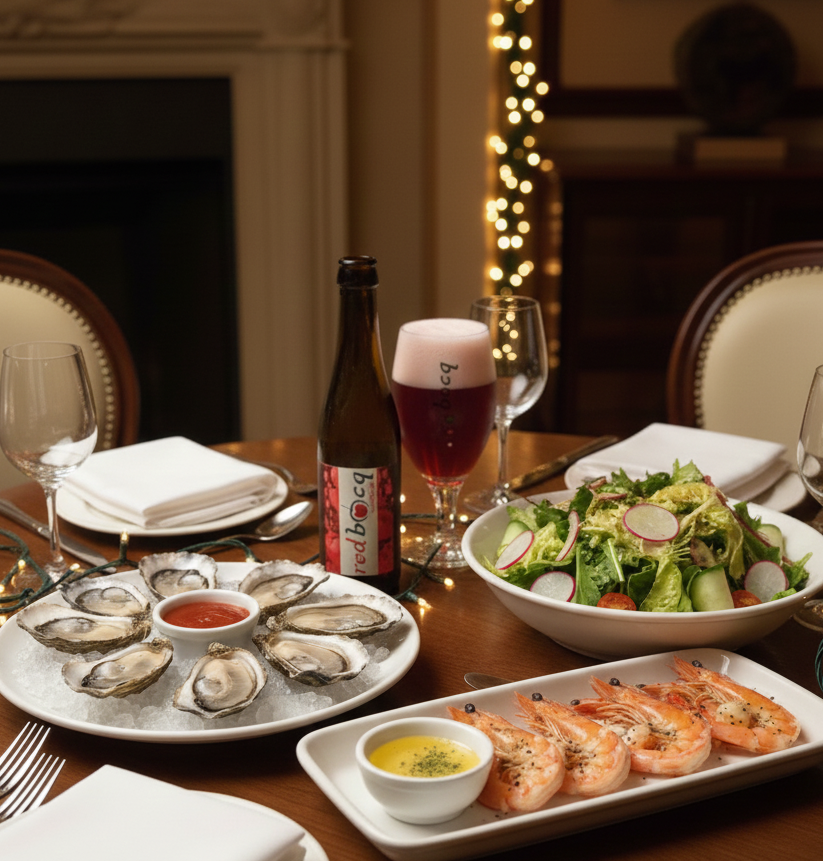
With its characteristic lightness and freshness, Redbocq It becomes the ideal companion for light and flavorful dishes:
- Crispy leaf salad with a light sour dressing
- Fresh seafood: oysters, sashimi, steamed shrimp
- Sushi – where the mild sourness of the rice meets the citrus of Red Bocq, creating a delightful harmony.
- Steamed dim sum, fresh rice noodles, spring rolls – dishes with delicate aromas and a translucent texture.
If you want to try something bold, pair Redbocq with mango salad, spicy sour shrimp salad, or Shrimp with passion fruit sauce. The citrus notes in the beer will burst forth, intertwining with the sweet and sour flavors of the dish, creating a sensation that is both unique and refreshing.
3.5 The Perfect Time to Enjoy – When Red Bocq is Drinked with All Your Heart
Redbocq isn't the beer for boisterous parties. It's perfect for relaxed moments:
- On a hot afternoon, when you crave something cool and refreshing.
- After a long day, when the mind needs to relax.
- When sitting alone but not wanting to sink into gloom.
- When sharing a peaceful moment with close friends.
Redbocq offers a sense of relief, like a slow breath helping you get your life back on track.
4. The Story of Red Bocq in Vietnam
For a while, I thought I would never forget the feeling of walking in. Beer & Barrel, place Redbocq It was once exclusively distributed in Vietnam. The cafe nestled on a small street in Saigon, its warm yellow lights spilling onto the sidewalk like a gentle invitation. And I sat there, at that familiar wooden table, with the girl who had held my hand through the most beautiful days of my youth.
We shared a glass of Red Bocq. I remember the pale yellow color under the light reflecting off her face – so gentle, delicate, and peaceful. She took a small sip and smiled, a smile I can only remember now, not see. She spoke to me, her voice so soft I had to lean closer to hear:
“"This glass of beer is just like you. Light, but enough to melt someone's heart."”
I laughed then, never imagining those words would haunt me for years afterward like a tiny needle under my skin. Because now, both she – and Beer & Barrel – have left my life.

On the day the café closed, I went alone. The chair we used to sit in was still there, but emptier than ever. I ordered one last Red Bocq, sipping slowly as if trying to hold onto what was slipping away. The orange aroma, the coriander flavor… all brought back memories of the moments we spent together. I drank and realized that not only had the café disappeared from the city, but she had also disappeared from my life in the same way: gently, smoothly, and without a second glance.
There were times I asked myself: “"Why do gentle things disappear so quickly?"” But then, with a gulp of beer, I suddenly felt my heart settle down, feeling a little lighter.
If someone were to ask me what's special about Redbocq, I'd say that for many, it's just a glass of beer. But for me, it's a whole period of memories: a pub that's closed, a girl who's left, and a part of me that once remained there.
Perhaps that's why, whenever I think of Redbocq, I hear a little poem echoing in my heart:
“"The old shop is locked now.",
The ancients were also far away.,
Only the scent of old beer remains.,
"Keep a piece of my heart."”
5. Conclusion – When the Last Sip Closes an Old Story
When I put down my glass Redbocq Sitting down at the table – the last beer of a long day – I suddenly realized that feeling was exactly the same as the moment I left Beer & Barrel for the last time, or the moment I watched that girl's back disappear into the fading afternoon sun. Not noisy, not dramatic, just a gentle ending, but enough to stir indescribable emotions within me.
I began this article with pain, a beer, and a regret I thought I would never be able to put into words. And now, as I close it, I still sit here with that feeling – but lighter, clearer, like a wound that has stopped bleeding. Redbocq It didn't help me forget; it simply placed a thin veil over those painful memories, allowing me enough peace of mind to look back.
Perhaps, during the nearly two-century journey of Brasserie Du Bocq, They never imagined that a glass of their beer would become a bridge between a person and their own memories. But for me, Redbocq has done just that – quietly and beautifully…