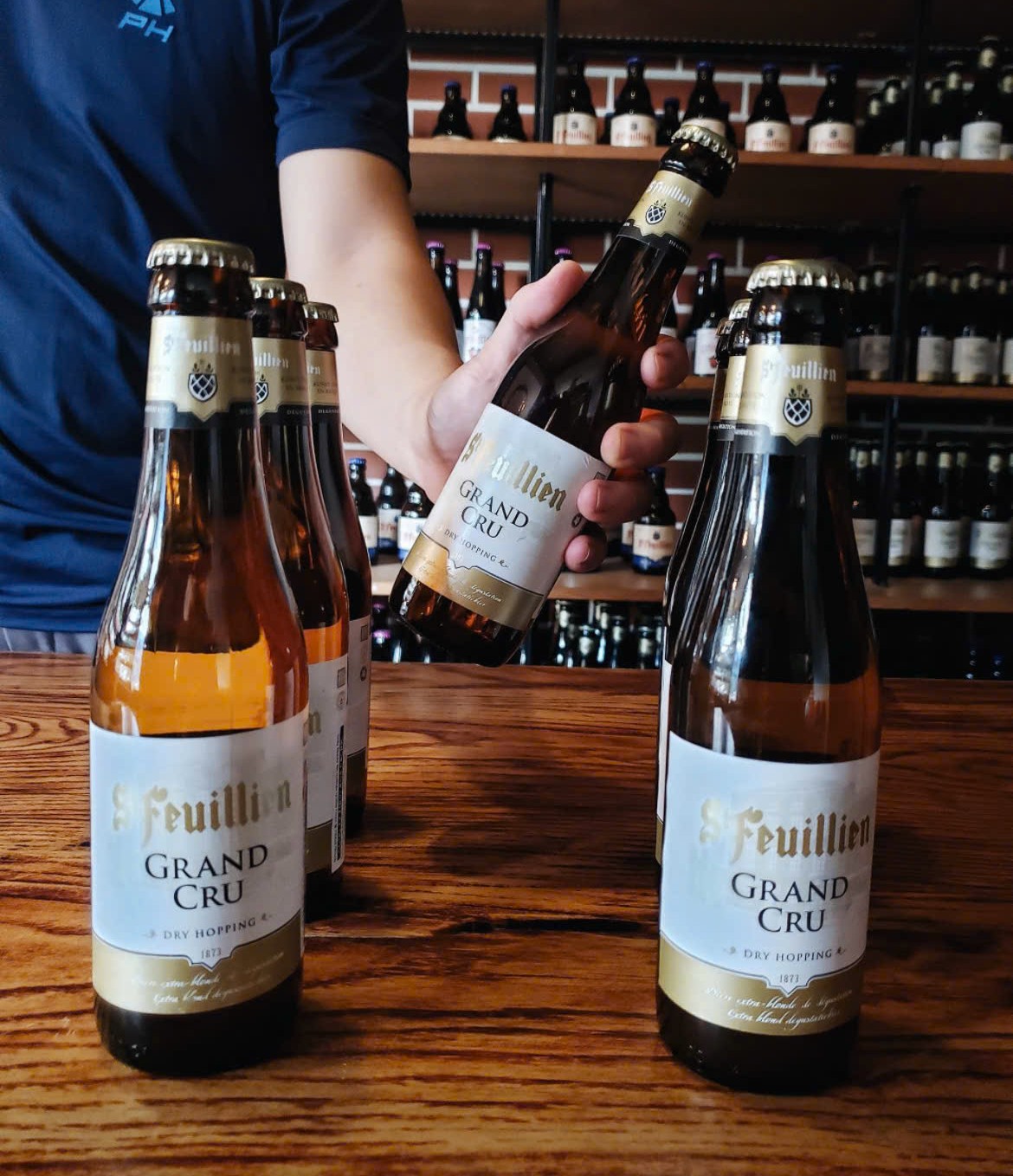

My name is Khanh. I've lived here for several years, in a strange city where winters are longer than conversations, where I go to work, return to my small rented room, and learn to get used to the silence. I have no relatives, nor close friends to call myself a support system. On nights when I miss Vietnam, miss home-cooked meals, miss the familiar voices echoing in my old kitchen, I often go out, find a quiet bar, and order a beer that I've been enjoying for a long time.
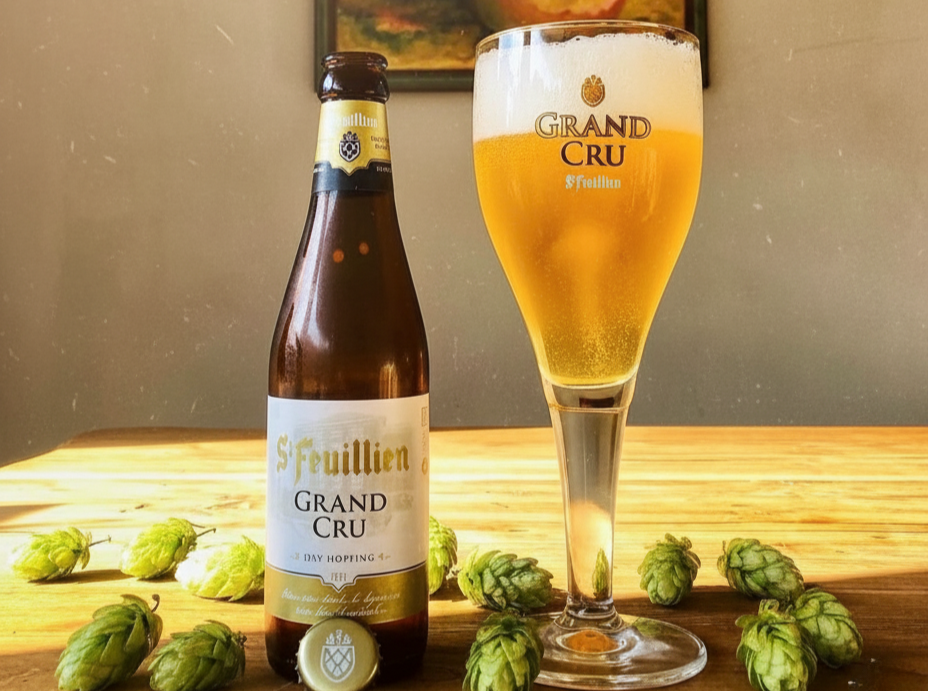
I choose St. Feuillien Grand Cru Not because it's famous, nor because it's strong. I chose it because there's something in the taste of that beer that resonates with my own mood. Slow, deep, and introspective. The dark yellow glass of beer sits before me, a thick layer of white foam rising and settling, like the emotions of a man accustomed to hiding his sadness inside.
This article wasn't written from a beer tasting room, nor from a crowded banquet table. It was written late at night by someone far from home, sitting alone before a familiar glass of beer, listening to themselves. If you've ever felt empty inside in a bustling city, perhaps you'll understand why I'm so attached to this beer!
1. The History of Brasserie St-Feuillien – A Heritage Dating Back to 1873
In 1873, in the peaceful Belgian town of Le Roeulx, Brasserie St-Feuillien It was born in a context far from conducive to big dreams. Brewing at that time was still largely localized, dependent on weather, seasons, and generations of experience. In that era, Stéphanie Friart Having chosen a rare path, she placed her complete faith in beer, yeast, time, and patience.
It was remarkable that a woman founded a brewery at the end of the 19th century. But it was perseverance and a strong family spirit that helped St-Feuillien stand firm, not chasing quantity or sacrificing quality. From the very first batches of beer, the philosophy was clearly defined: beer had to be honest, balanced, and reflect the true character of the land where it originated.
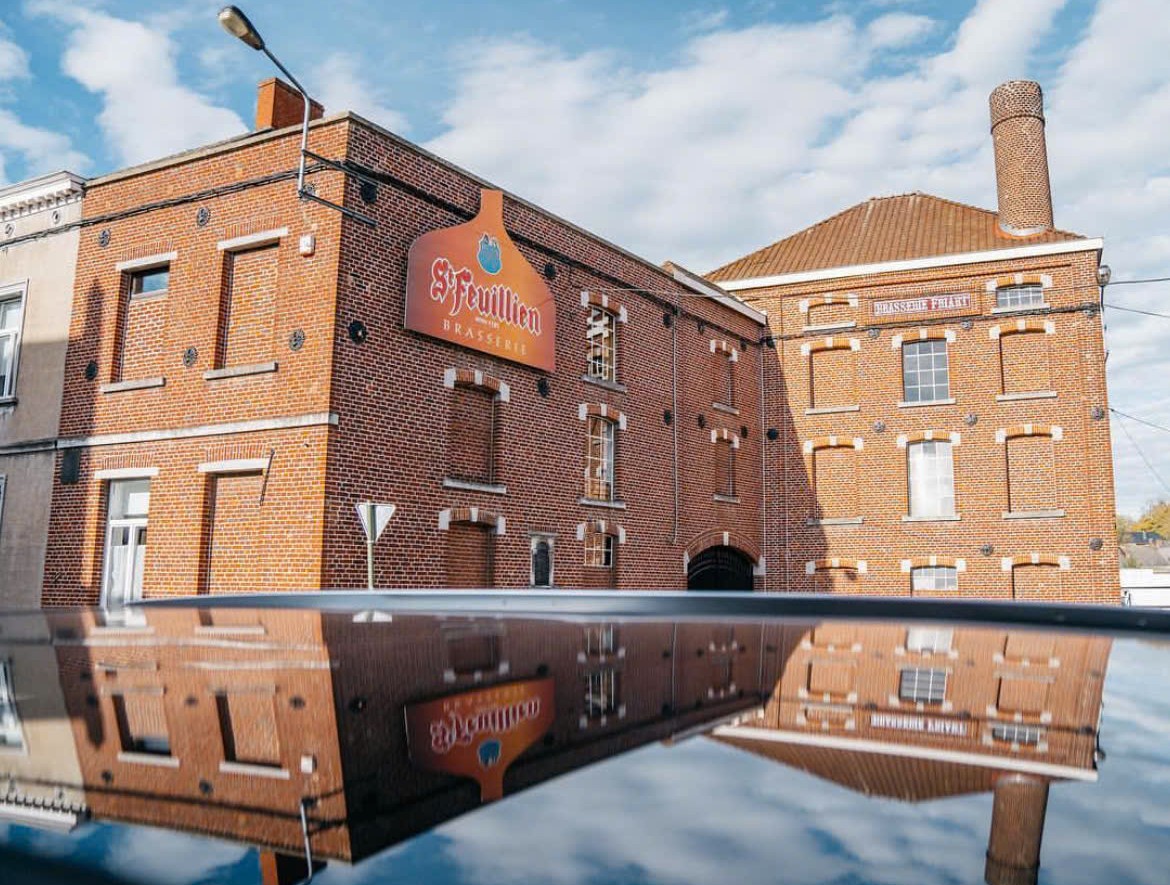
For generations, the name Friart has been inseparable from Brasserie St-Feuillien. This brewery didn't grow through acquisitions or sudden changes, but through careful decisions made by successive generations. The recipe is preserved, the yeast is cared for like a living organism, and each beer style bears the distinct mark of Belgian tradition.
For over a century, St-Feuillien has weathered wars, economic crises, and the increasingly fierce competition of the brewing industry. Instead of losing its identity, it chose to adapt slowly, upgrading equipment, expanding production, but always keeping the craft spirit at its core.
Entering recent decades, Brasserie St-Feuillien The company has invested heavily in modern infrastructure, building new breweries, a visitor center, and experiential spaces for beer lovers from around the world. However, the core remains unchanged: St-Feuillien beer continues to rely on the distinctive Belgian fermentation process, the finesse of the malt, and masterful yeast control.
It is this harmonious blend of past and present that has given rise to iconic beer brands. Among them, St. Feuillien Grand Cru It emerged as a natural peak, not a product of a trend, but the result of over a century of accumulated experience.
2. Analyzing the Flavor Profile of St. Feuillien Grand Cru – As Each Sip Unveils Multiple Layers of Emotion
There are beers you drink to quench your thirst. There are beers you drink to chat with friends. And then there are beers, like... St. Feuillien Grand Cru, It is created for the drinker to engage in a dialogue with themselves. With each lift of the glass, each sip, the flavor doesn't go straight to the surface, but unfolds layer by layer, slowly and deeply, like the stream of thoughts of an introverted person.
2.1 Color – The Beauty of Maturity
In a goblet glass, St. Feuillien Grand Cru It emerges with a deep amber yellow color, the hue of perfectly ripened barley and carefully controlled time. The beer is clear, bright, and unpretentious. A thick, smooth, and persistent white head rises proudly and then settles slowly, leaving delicate streaks clinging to the sides of the glass, like the traces of a conversation that has just taken place.
Its appearance isn't overwhelming, but it's enough to let the drinker know that this is a carefully crafted beer, made without haste or care.
2.2 Aroma – When Yeast Tells the Story of Fruit and Malt
As soon as I brought the glass to my nose, the aroma of St. Feuillien Grand Cru It opens very naturally, without being harsh or forced. First comes the characteristic fermented fruit aroma of the style. Belgian Pale Strong Ale, With ripe pears, golden apples, and a hint of light citrus. Not the bright, fresh kind of fruit, but rather ripe, well-rounded, and deep-bodied fruit.
Next, the malt becomes more prominent, bringing with it hints of pale honey, light caramel, and toasted bread. All of this is supported by the familiar aroma of Belgian yeast, which is sweet, dry, and clean. The slight alcohol content... 9,5% It's only subtly present in the background fragrance, enough to create a warm feeling, without being overpowering or heavy on the nose.
2.3 Beer Taste – Balance Built with Patience
The first sip of beer brings a distinct, yet not heavy, malty sweetness. This sweetness quickly transitions to ripe fruit, then softens with a moderate bitterness from the hops. There's no sudden burst of flavor, no abrupt explosion. Everything unfolds in a steady, slow, and confident manner.
Alcohol inside St. Feuillien Grand Cru It spreads slowly, creating a gradually warming sensation in the throat and chest, like warmth spreading on a cold night. This is a well-controlled type of alcohol, more focused on enhancing flavors than showcasing strength.
What makes Grand Cru so valuable is its seamlessness. There are no broken moments, no disjointed flavors. Everything blends together, yielding to one another, allowing the drinker to leisurely savor the experience.
2.4 Mouthfeel and Aftertaste – A Lingering Remark for the Patient
The beer has a medium to full body, providing a firm feel without being tiring to drink. The moderate, lively carbonation helps maintain its freshness throughout the drinking experience.
Aftertaste of St. Feuillien Grand Cru Dry, clean, and lingering. A slight bitterness at the back of the tongue combines with the malt and remaining fruit, leaving a very long aftertaste—long enough for you to put the glass down, sit still for a few seconds, and think something more for yourself.
3. The Art of Properly Enjoying St. Feuillien Grand Cru
Enjoy St. Feuillien Grand Cru This is not a rushed act. This is the kind of beer that demands attention, much like listening to a classical piece, each section, each note, without missing a beat. Every detail, from the glass and temperature to the pouring technique, contributes to whether you truly grasp the depth of this beer.
3.1 Choose Your Cup – Where Flavors Are Shaped
In the art of enjoying Belgian beer, the glass is not just a container, but an integral part of the recipe. St. Feuillien Grand Cru, The brewer recommends using a glass. goblet or chalice, and that's not just a purely aesthetic choice.
The goblet has a wide body, an open mouth, and a tall stem. This structure allows the beer to have just the right amount of contact with the air, helping to fully release the aromatic compounds from the yeast and malt. When you bring the glass to your nose, the aromas of ripe fruit, pale honey, and toasted malt are not compressed, but spread gently and layered.
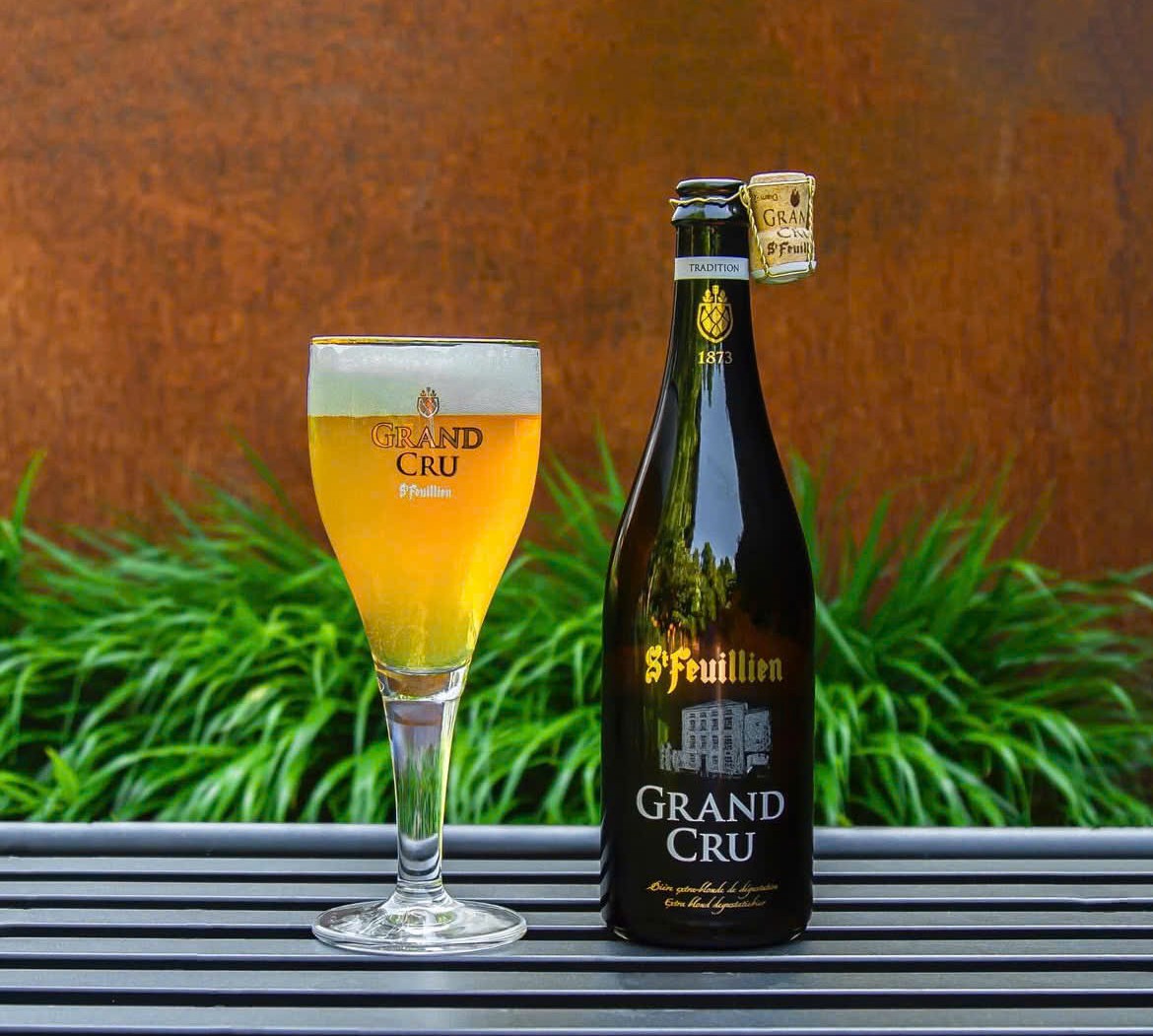
The wide opening of the glass acts like a natural funnel, guiding the aroma directly to the olfactory senses. This is especially important for this style. Belgian Pale Strong Ale, where yeast plays a central role in creating the aroma. If you drink Grand Cru in a straight glass or a narrow-mouthed glass, many layers of aroma will be compressed, making the experience flat and lacking depth.
The thick, heavy body of the glass helps maintain a stable temperature throughout the drinking process, which is essential for a beer with a thick body. 9,5% Alcohol. A stable temperature prevents the alcohol from evaporating too quickly, allowing it to blend gradually into the overall flavor. The tall stem of the glass also prevents the drinker's hand from warming the beer too quickly, maintaining the beer's balanced structure.
In other words, the goblet doesn't make the beer taste better, but it helps the beer express itself in the right way. Brasserie St-Feuillien has created.
3.2 Ideal Serving Temperature – Let the Beer Speak for Itself
Temperature range 8–12°C That's the ideal level to enjoy. St. Feuillien Grand Cru. At this temperature, the beer is cool enough to retain its freshness, but also warm enough for its flavors to fully develop.
If the beer is too cold, the yeast and malt flavors will be locked away, and the taste will become harsh and lacking in emotion. If it's too warm, the alcohol will rise first, disrupting the balance that is the soul of a Grand Cru. Ideally, after taking the beer out of the refrigerator, let it sit for a few minutes to allow it to adjust and unfold at its proper rhythm.
3.3 How to Pour Beer – A Small Ritual Before Drinking
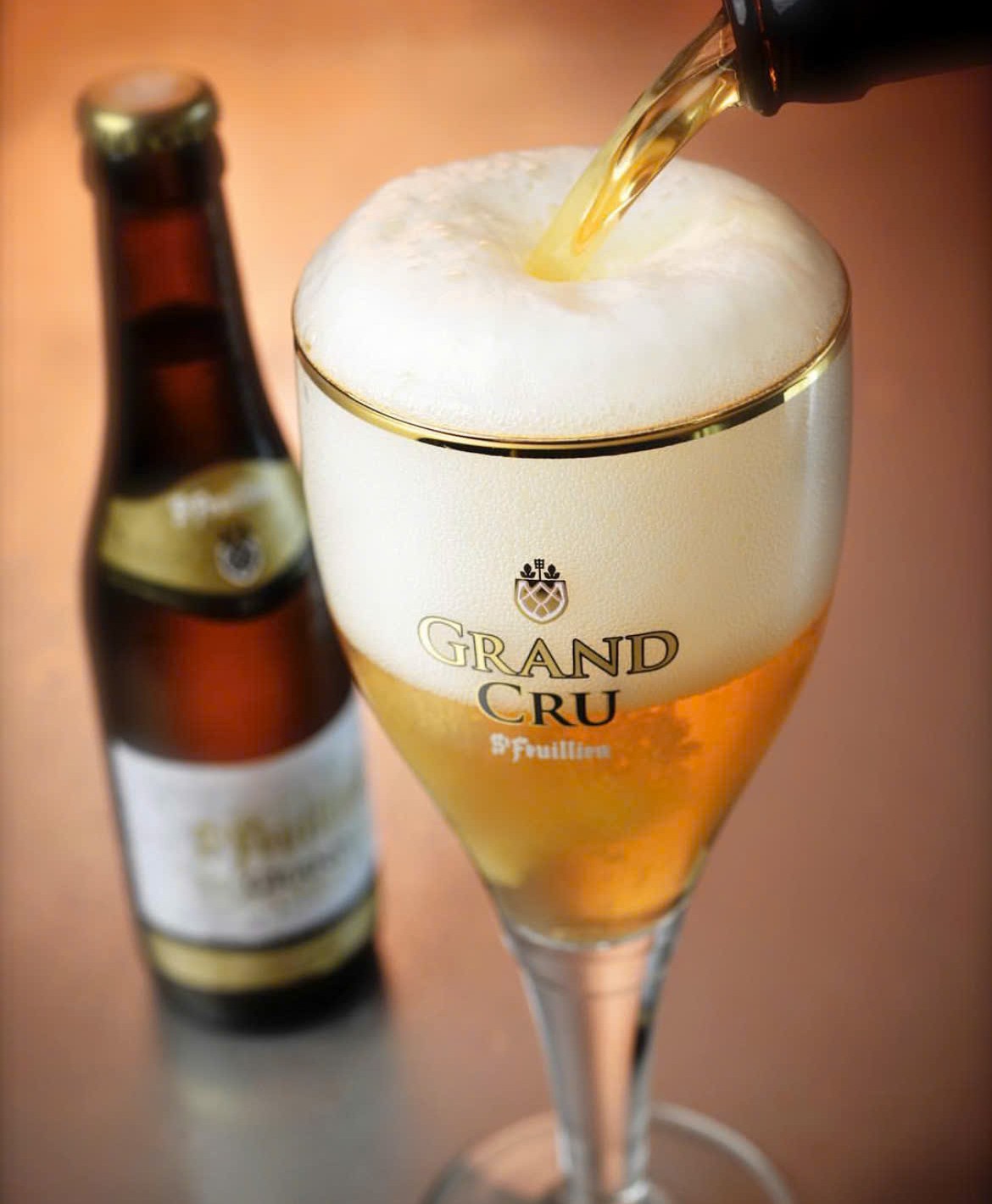
Pour St. Feuillien Grand Cru This is also part of the experience. Tilt the glass at about 45 degrees, pour slowly and evenly so the beer flows down the side of the glass, reducing splashing and maintaining a stable gas structure. When the beer fills about three-quarters of the glass, hold the glass upright to create a thick, smooth, and persistent layer of white foam.
This layer of foam isn't just for aesthetics. It acts as a protective barrier, trapping the aromas inside and helping the beer maintain its freshness throughout its enjoyment. As the foam settles, the beer's aromas begin to unfold, signaling the perfect moment to take the first sip.
Enjoying a Grand Cru doesn't require elaborate rituals, but it does require respect. Only when you give the beer enough space, enough time, and the right glass, St. Feuillien Grand Cru Only then could I tell my complete story.
4. St. Feuillien Grand Cru Food Pairing – Where Beer and Cuisine Reach a New Heights
Food and beer, when paired correctly, don't stand side-by-side but blend together. St. Feuillien Grand Cru, The purpose of pairing food is not to make the beer stronger or the food more flavorful, but to allow them to complement each other, revealing layers of flavor that would be difficult to fully express on their own.
With a firm texture and low alcohol content. 9,5%, dry aftertaste and characteristic yeast aroma of the style Belgian Pale Strong Ale, Grand Cru is particularly well-suited to dishes that are rich in fat, protein, or have deep flavors. It's the beer for slow meals, where each bite has time to engage in dialogue with each sip of beer.
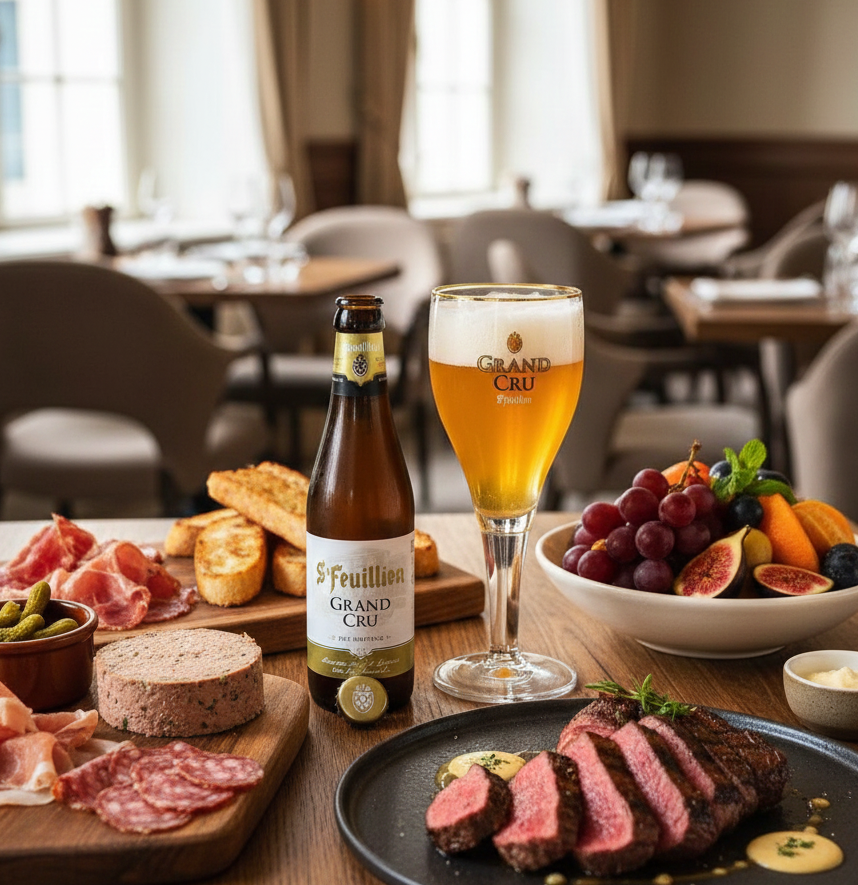
4.1 Grilled and Roasted Red Meats – The Balance Between Boldness and Delicate Flavors
Red meats such as roast beef, roast lamb, or game meat are natural companions to St. Feuillien Grand Cru. The malty sweetness and subtle caramel notes of the beer soften the richness, while the alcohol and carbonation cut through the cloying feeling, keeping the palate alert.
When the meat is lightly seared on the outside, the smoky notes and Maillard reaction blend beautifully with the toasted bread and ripe malt flavors of the beer, creating a well-rounded, full-bodied yet not heavy overall experience.
4.2 Charcuterie and Pâté – When Fats Are Properly Managed
Cold cuts, dried sausages, ham, or liver pâté contain high levels of fat and a distinctly salty flavor. St. Feuillien Grand Cru With a dry aftertaste and moderate carbonation, it cleanses the mouth after each bite, while ripe fruit and yeast notes add depth to the overall flavor.
This is a very typical European combination, where beer is not just for refreshment, but is part of the meal.
4.3 Cheese – A Dialogue of Opposites
Semi-hard cheeses and blue cheeses are ideal pairings for Grand Cru. With semi-hard cheeses, the malt and fruit flavors of the beer highlight the creamy richness, creating a harmonious sensation. With blue cheeses, the sharp saltiness and distinctive aroma are balanced by the beer's subtle sweetness and dry finish, creating an interesting dialogue between contrasting and complementary elements.
This combination requires diners to slow down, chew more thoroughly, and sip slowly, in order to fully appreciate the changing flavors in their mouths.
4.4 Creamy Sauces and Flavorful Cuisine
Dishes that use cream sauces, butter, or cheese often feel heavy on the palate. St. Feuillien Grand Cru With its firm structure and high alcohol content, it helps to balance the overall flavor, making the dish more pleasant on the palate.
Here, the beer doesn't overshadow the food, but rather acts as a pause, allowing you to continue your meal without overwhelming your taste buds.
4.5 Dessert with Caramel and Ripe Fruit
Grand Cru also pairs well with desserts, especially those featuring caramel, baked apples, or malty pastries. The beer's subtle sweetness enhances the flavors of the food, while the dry finish prevents the overall experience from becoming cloying.
This is a relaxing way to end a meal, perfect for long evenings when the conversation just isn't about to end.
Combine the dish with St. Feuillien Grand Cru No need for fuss or extravagance. Just choose dishes with depth, eat slowly, and drink slowly, and you'll find that beer and food gradually merge into one, leaving a lasting impression not only on your tongue but also in your emotions.
5. A Mark in Vietnam – A Memory from the Kingdom of Belgian Beer
There was a period, St. Feuillien Grand Cru It's not easy to find in Vietnam. It used to be distributed exclusively at a very special place in Saigon., Belgian Beer Kingdom Restaurant Beer & Barrel. For me, it's not just a restaurant, but a place that holds a very deep part of my youth, of friendship, and of the days when I had so many people around me.
Back then, I hadn't moved far. I was still living in Saigon, and I still had a friend who always sat at the same table with me every night at Beer & Barrel. He was a guitarist, and also the person who understood me better than anyone else at that time. We weren't two people who met by chance and became close friends; we were true confidants. We went through difficult times together in our careers, unfulfilled relationships, and times when we got drunk more often out of sadness than joy. There were things we understood just by looking at each other, without needing to say a word.
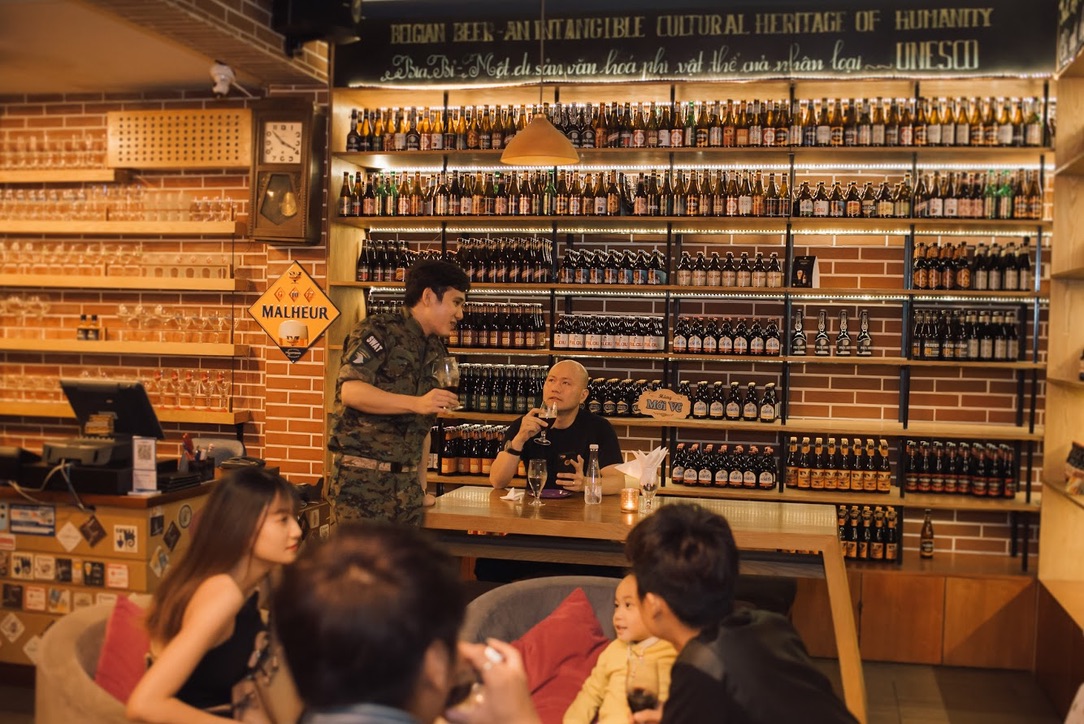
Evenings at Beer & Barrel usually start very slowly. I called. St. Feuillien Grand Cru, He placed the guitar on his lap. Sometimes he played, sometimes he just strummed a few disjointed chords. We drank and shared stories of our everyday weariness, unfulfilled dreams, and love affairs that seemed grand but ultimately dissolved like beer bubbles. At that time, Grand Cru wasn't just beer; it was an excuse for us to sit together, long enough, quietly enough, to say things we wouldn't feel comfortable saying anywhere else.
At Beer & Barrel, Grand Cru is always served in a proper goblet glass. I still vividly remember the feeling of holding the heavy glass, the smooth white foam rising high, and the slow, gentle warmth of the beer. 9,5% The alcohol spread through our bodies. The taste of beer blended with the music, with stories that were half-joking, half-serious, creating a strange kind of bond. We used to think those evenings would last a long time, at least long enough to avoid the thought of parting ways.
Then everything changed. The restaurant closed. I left Vietnam to make a living. He gradually disappeared from our old contacts. Not because of anger or misunderstanding, but simply because life took us in different directions. From people who once knew each other very well, we unknowingly became just memories in each other's lives.
Now, every time I drink St. Feuillien Grand Cru In a foreign land, I not only remember Beer & Barrel, but also the friend who shared with me all the joys and sorrows, the bitterness and happiness. There are friendships that don't need to be met again, but they are always there, silently, in every sip of beer, in every long night. And for me, St. Feuillien Grand Cru Forever connected to Vietnam, to Saigon, and to a soulmate who passed through my life like a beautiful piece of music—not long, but unforgettable.
6. Conclusion: When a Glass of Beer Becomes a Place to Return To
The nights here are just as long. The city I live in hasn't changed much, only I've gotten a little older, more accustomed to sitting alone and listening to time pass very slowly. Before me, St. Feuillien Grand Cru It was still the familiar deep yellow color, the white foam had settled, leaving faint streaks on the glass like the fingerprints of memory.
Perhaps that's why I still choose it. St. Feuillien Grand Cru Among many other types of beer, it's not about seeking new sensations, but about preserving old ones. A feeling that is very Vietnamese, very Saigon, very friendship, and very human. This beer doesn't offer comfort or promises; it simply sits quietly with you, long enough for you to confront yourself.
On behalf of all beer lovers, those who have found more than just yeast and malt in a glass of beer, I would like to express my gratitude to Brasserie St-Feuillien. Thank you for creating a beer that can accompany people through many stages of life, from times of abundance to the very long nights that remain.
When I put the glass down, I knew I was going back to my normal routine. But somewhere deep inside me, St. Feuillien Grand Cru It remains there, like a small anchor, for whenever I miss Vietnam, remember an old friend, or remember my past self…