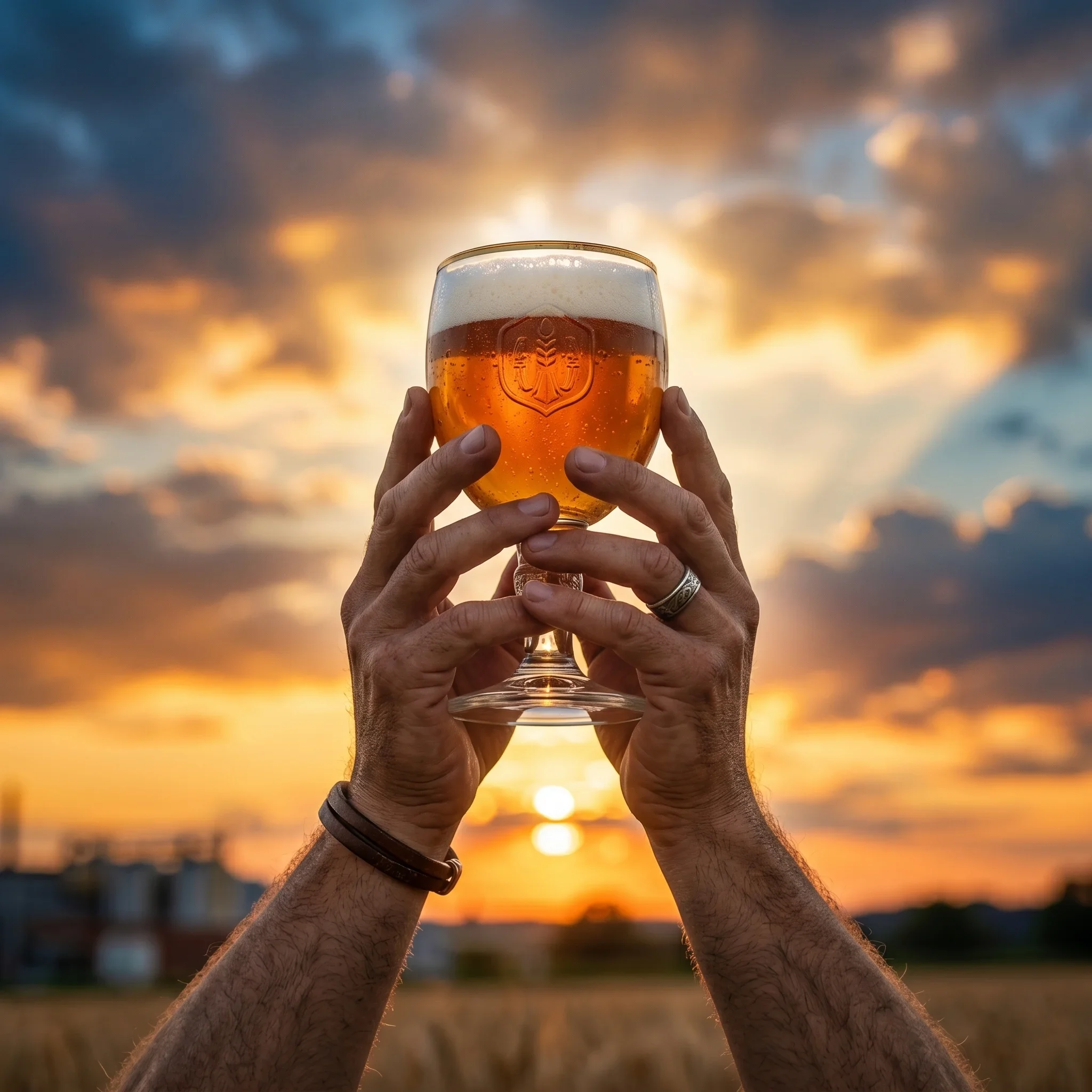

At this point, Achel Beer is no longer considered a genuine Trappist beer, as the Achel Abbey no longer has the necessary Trappist monks to maintain production standards. However, let’s go back in time, to when this beer was still among the six prestigious Trappist beers of Belgium.
I. The fascinating history of Achel Beer
In the heart of Belgium, a country famous for its rich beer culture, Achel – a small town – witnessed the birth of a legend: Achel Beer. This story begins in a mystical place – St. Benedict Abbey.
The abbey, since the 17th century, has been a refuge for monks who have brought with them their passion for the art of brewing. However, historical events have dealt a heavy blow to the abbey several times: the French Revolution closed the abbey and then, during World War II, most of the abbey's facilities were destroyed.
But, like a fine wine that gets better with age, the abbey rose from the ashes, and with its reestablishment, the ancient know-how of brewing returned. Starting in 1998, the Abbey of St. Benedict once again entered the beer-making business, giving the world Achel Beer – a living piece of history.
The story of Achel Beer is not only a rebirth after the storms of history, but also a manifestation of the passion, patience and dedication of the monks. They chose to use the profits from the sale of beer to support the surrounding community and preserve their cultural heritage.
Discovering the history of Achel Beer, we not only learn about a refined drink but also immerse ourselves in a journey through time, a journey through storms to keep the faith and continue the tradition.
II. Achel Beer Production Process: The Art Behind Every Drop
Achel is not a casually produced beer, but rather the result of a meticulous, artistic and passionate production process. Every step of the process is carried out under the close supervision of experienced monks with a deep knowledge of beer.
1. Selecting raw materials
It all starts with the selection of the best ingredients. Barley, hops, yeast and water are the main ingredients. In particular, the water is drawn from the monastery’s ancient well, which helps to give the beer its unique flavor. Although the Achel monastery does not regularly participate in beer competitions, their products are highly regarded by many experts and consumers, holding a precious place in the hearts of beer lovers around the world.
2. Malting process
The barley is ground and mixed with hot water to create a mixture called “mash”. During this stage, the starch in the barley is converted into sugar by enzymes.
3. Boil and add hops
The mixture is then brought to a boil and hops are added. Hops not only add a bitter flavor to the beer, but also act as a natural preservative.
4. Fermentation
After boiling, the mixture will be cooled and transferred to fermentation tanks. Here, yeast will be added. Under the influence of yeast, sugar will be converted into alcohol and carbon dioxide, creating the characteristic flavor of beer.
5. Aging
The beer is then transferred to wooden barrels or stainless steel tanks for long-term aging. During this period, the beer's flavor becomes fuller and more refined.
6. Bottling and distribution
Finally, the beer will be bottled or kegged and ready for distribution to consumers.
III. About Achel's beer styles and lines
1. Achel 8° Blond
- Style: Belgian Strong Pale Ale.
- Describe: The beer is light golden in color, with a slightly sweet malt flavor, a little spice and a slight bitterness from the hops. Its alcohol content is around 8%.
2. Achel 8° Bruin
- Style: Belgian Dark Strong Ale.
- Describe: A dark brown beer with complex flavors of roasted malt, caramel, dried fruit and spices. Its alcohol content is also around 8%.
3. Achel Extra Blond
- Style: Tripel.
- Describe: The beer is bright golden in colour with a spicy, malty flavour and a slight bitterness. The alcohol content is usually higher, around 9.5%.
4. Achel Extra Bruin
- Style: Quadrupel.
- Describe: A dark brown beer with rich flavors of roasted malt, dried fruit, caramel and other spices. Very high alcohol content, up to 9.5% or more.
5. Achel 5°
- Style: Belgian Blonde Ale.
- Describe: A lighter beer with a golden color and a slightly sweet malt flavor. Alcohol content is only about 5%.
All Achel beers are brewed in the traditional Belgian style and in particular in the Trappist abbey tradition. These beers are often complex in flavour, high in alcohol and are perfect for special occasions or to keep.
IV. Choose the right glass when enjoying Achel beer
An important part of enjoying beer, especially complex and unique beers like Achel, is choosing the right glass. Choosing the right glass not only enhances the visual experience but also affects the taste perception of the beer.
- Features of the cup: Each type of beer often requires a specific type of glass to optimize the drinking experience. For example, a glass with a narrow neck helps concentrate the flavors, while a glass that is wider at the mouth helps develop aeration and reveal the complex flavors of the beer.
- Achel beer and Trappist glass: For Achel and most other Trappist beers, a tulip glass (an oval shape that is wide at the top and narrow at the bottom) or a chalice glass (a stemmed bowl) is usually preferred. Both of these glass shapes have a wide mouth, allowing the beer to come into contact with air, allowing the bubbles to develop and recede, while also concentrating the aromas for a more enjoyable drinking experience.
- The role of foam gas: The beer foam is smooth, thick and stable, helping to preserve the aroma of the beer. Using the right glass helps the foam develop best, providing a layer of foam on the top of the glass, keeping the beer fresh and preventing air from coming into direct contact with the beer, minimizing oxidation.
- Vision: For many people, seeing the colour, clarity and aeration of a beer is an important part of the drinking experience. The right glass will enhance this effect, revealing every detail of the beer and creating a beautiful visual sensation.
V. The fragrance lasts forever
At the end of a profound journey through the culture, history and essence of Achel beer, we realize that, despite the changes of time and the appearance of other brands, the name and quality of Achel will never be lost. Although Achel is no longer called Trappist beer, the spirit, tradition and dedication that the monks put into every drop of beer are still there, not overshadowed. It is these immortal values that make Achel beer famous and unique on the world beer map. Every time we raise a glass of Achel, we not only enjoy a great beer but also open our hearts to a rich cultural heritage, a sad and heroic love song of the art of brewing beer over time.