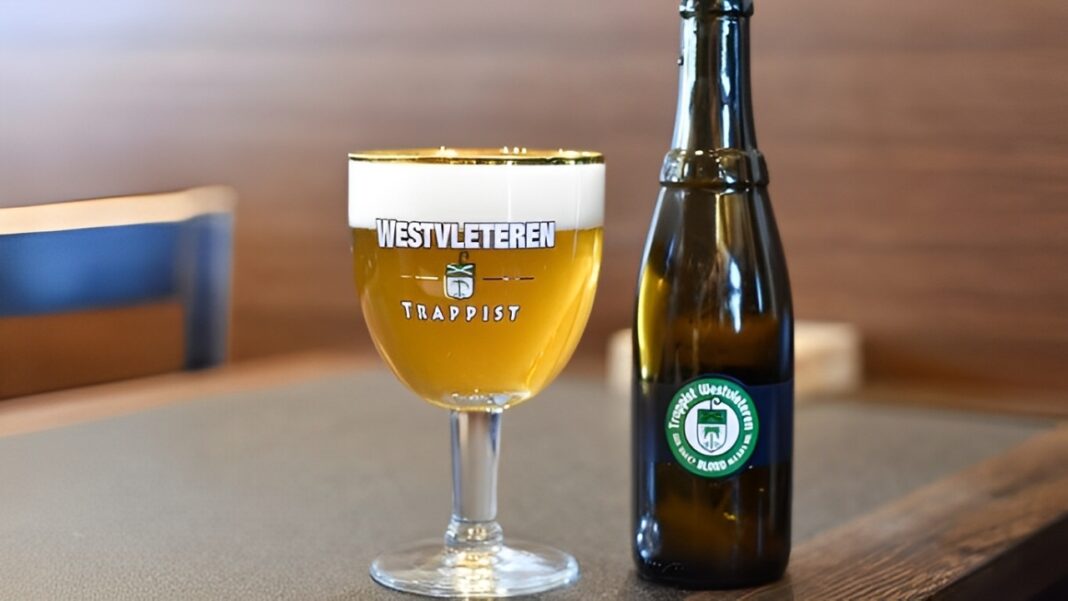

Imagine sitting in the shade of ancient elms in the Belgian countryside, where the church bells gently echo through the tranquil air. In front of you is a glass of sparkling golden beer, with a white foam as soft as the morning clouds. It is a cultural and spiritual experience, the Trappist Westvleteren Blond – a beer that is not just a drink, but a contemplation, a crystallization of the history, devotion and tranquility of the monastery.
1. The Deep History of Westvleteren Monastery
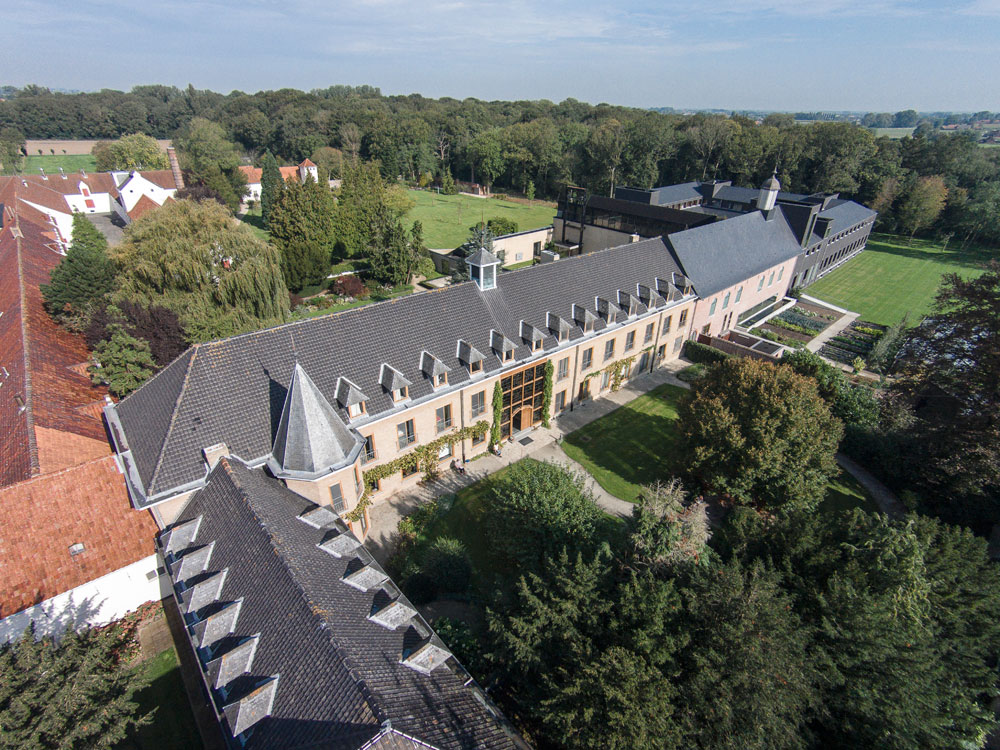
Since 1838, at the Sint-Sixtus monastery in Vleteren, Trappist monks have been brewing beer with a noble mission: to support the monastic community and charitable activities. Without much advertising or mass production, the Brouwerij Westvleteren brewery has remained small, selling its beer only through a limited order system or at the monastery – a humility rarely seen in the commercialized world. This very limitation has become an indispensable part of the attraction of Westvleteren.
Trappist Westvleteren Blond, introduced in 1999, is the lightest of the abbey’s three main products. The green cap – a symbol of freshness and purity – is a distinctive feature. This choice reflects the philosophy: light but not simple, refined but still profound. This is not a beer born to conquer with strength, but to touch the soul with patience and depth.
2. Taste: A Gentle But Lingering Prelude
Trappist Westvleteren Blond has a pure, bright yellow color, transparent and shimmering like a dawn on a peaceful field. When poured into a tulip glass, the white foam floats like a small pillow to cradle each drop of beer, both soft and seductive. The aroma rises with a sweet malt aroma mixed with yeast to create a light fruity aroma - apple, pear, and a bit of orange peel - along with a hint of spices such as cloves and white pepper.
From the first sip, the beer opens up with a wonderful balance between the sweet malt and the subtle bitterness of the hops. The smooth flavor layer gradually changes from sweet to a light and dry finish, evoking a sense of lightness, not at all heavy. The texture is light to medium, but enough to leave an impression. An experience that lasts like a prelude - not rushed, not bustling - just a gentle symphony for the discerning connoisseur.
3. How to Enjoy: When Ceremony Meets Enjoyment
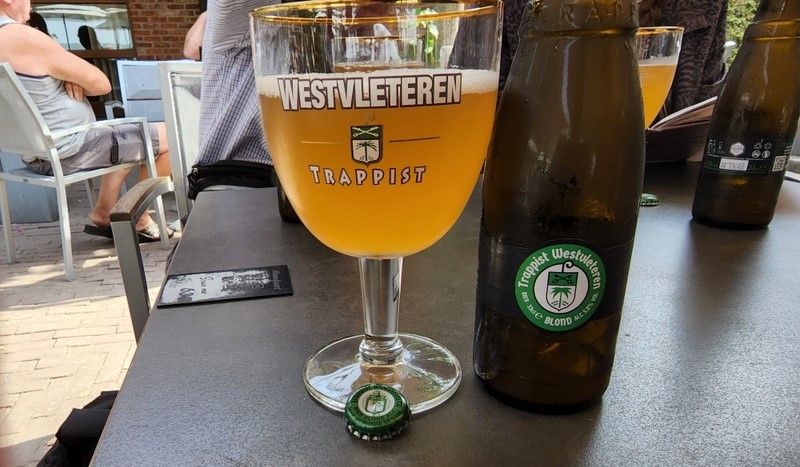
Unlike other beers, Westvleteren Blond needs to be treated with care and prepared properly. It’s a beer where every step of preparation is a ritual: from keeping it chilled at the ideal temperature of 8–10°C, to tipping the glass at a 45-degree tulip angle to retain its clarity and lively foam. Leave the yeast to settle at the bottom of the bottle – that’s the ‘private’ part, for those who want to explore the flavours more deeply.
Combined with the food, Westvleteren Blond is a beautiful color scheme:
- Seafood: Pan-fried salmon, grilled scallops or grilled shrimp bring a harmonious salty feeling, like a gentle sea breeze blowing through a Belgian summer afternoon.
- White meat: herb-roasted chicken, pan-fried duck breast, or even chicken with mushrooms create a subtle resonance between the light beer flavor and herbal aroma.
- Soft cheese: Brie or Camembert with its richness highlights the elegance of naturally fermented yeast.
- Vegetarian dishes: grilled mushrooms, stir-fried vegetables, even steamed tofu with herbs – all seem to be reborn under the clean aroma of this beer.

4. Scarcity and Value Beyond Commerce
Although not as famous as its brother Westvleteren 12 – which is often praised as the best beer in the world – Westvleteren Blond is still highly appreciated in the craft beer community. This is the choice for those who want to feel the light, elegant but no less sophisticated side of the Trappist brewing art.
The scarcity of the limited production, combined with the unique production philosophy, makes this beer a true symbol of spirituality and craftsmanship. Many people queue for hours just to own a few bottles from the abbey – not because of the prestige, but because of the trust in the quality and the respect for the dedication. Even buying the beer requires an ethical commitment – not to resell it for profit.
5. Conclusion: One Sip – A Whole Journey
Trappist Westvleteren Blond is an experience, a journey to find purity and silence in a noisy world. Each sip is a whisper from the ancient walls of the monastery, from the skillful hands and peaceful soul of the monk. When the beer touches your lips, you not only taste the flavor – but also feel the history, love and faith.
And perhaps what makes Westvleteren Blond so magical isn’t just its taste – it’s its ability to make you stop, breathe, and feel a simple yet profound peace. A small moment in the hustle and bustle of life.
Are you ready to raise a glass and feel it?